 Sialkot, Pakistan
 Worldwide enquiries

An oversized T-shirt starts with a silhouette, but the fabric decides how that silhouette behaves. A wide body can hang in soft folds or hold a more defined outline. The same pattern can feel relaxed in one material and unnecessarily bulky in another. Choosing fabric by a photograph or a weight number alone leaves too much of that decision to chance.
For a streetwear brand, the useful question is: which fabric makes this particular T-shirt look, feel and behave the way the collection needs? Build the answer from a physical fabric comparison, a representative garment sample and a written approval record.
This guide covers fabric selection before bulk production. Its images are illustrative concepts, not photographs of available stock or evidence of measured fabric performance.
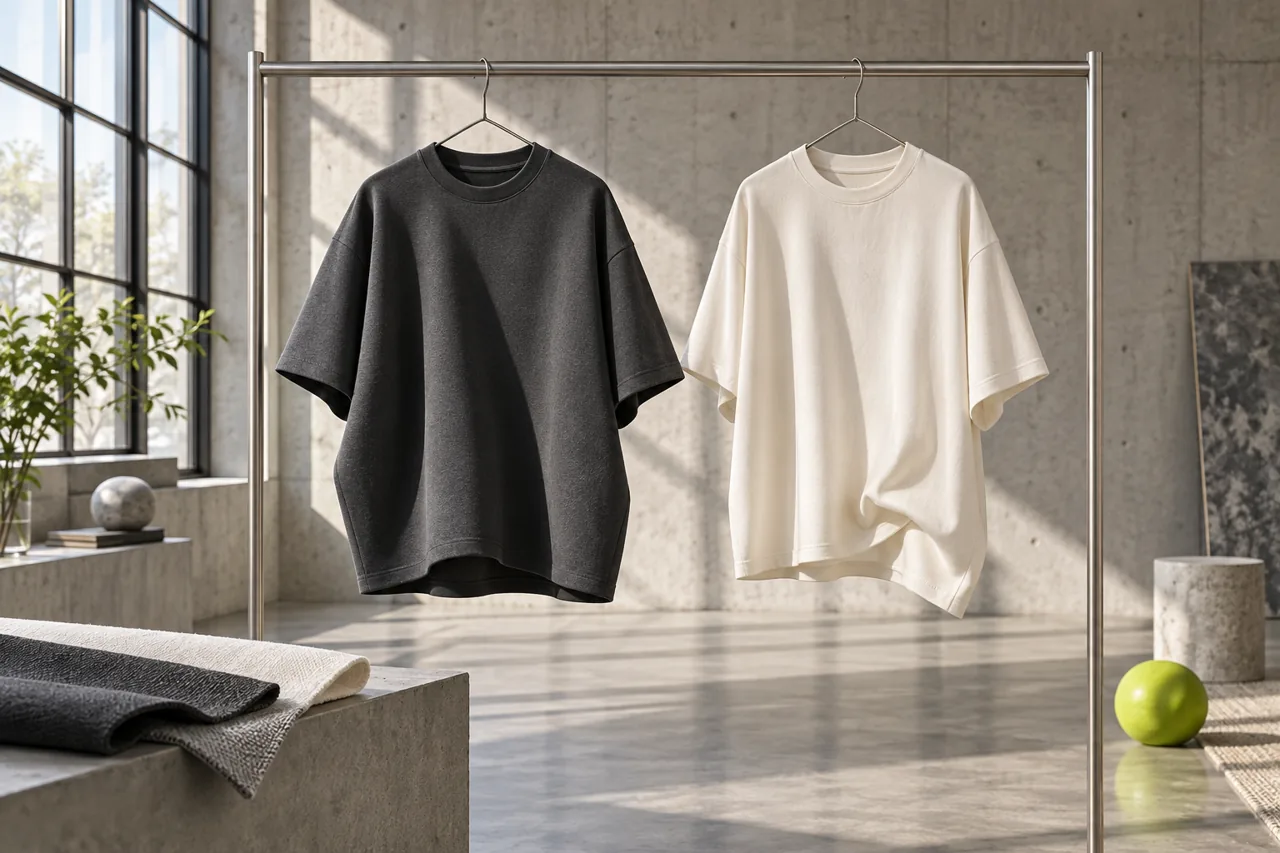
Start with the shape you want to keep
Write down how the garment should sit before asking for a fabric recommendation. Consider the width of the body, shoulder drop, sleeve opening and length. Does the hem need to fall away from the torso, or should it settle close to the wearer? Should the sleeves form a clear shape or soften when the arms move?
Use a reference garment if possible. Describe which features matter instead of requesting an exact copy of an unidentified fabric. For example, a useful brief might say: “Keep the generous body width, but make the sleeve feel less stiff. We want a clean surface for a front graphic and enough coverage in the ivory colourway.”
That gives a supplier several decisions to discuss. “Premium oversized cotton” does not. Premium is a positioning word; it is not a material specification.
A wide pattern does not automatically need the heaviest available cloth. Review the silhouette as a whole, including how the fabric behaves where several layers meet. The neckline, sleeve hems and side seams can feel different from an unfolded swatch.
Compare fabric weight without treating it as a quality score
GSM means grams per square metre: it describes fabric mass per unit area. It does not, by itself, tell you the finished shirt's weight, softness, opacity or durability. A finished garment also includes its size, pattern area, trims and construction.
Ask the supplier to identify the proposed fabric weight and the condition in which it is specified. Keep that information with the fabric reference. If two quotations describe different stages of finishing, clarify the comparison before choosing between them.
Request a small, purposeful shortlist rather than a pile of almost identical swatches. Compare candidates under the same conditions and record what you actually notice. One might hold the desired sleeve shape; another might feel more appropriate for a light layering piece.
Do not give a candidate extra points merely because its number is larger. If it makes the intended summer shirt uncomfortable or the folded hem bulky, that is a trade-off to address in the sample, not a sign of superior quality.
Make drape a separate decision
Lay equal-size swatches side by side, then hang them in the same orientation. Look at the folds and how the edges fall. This is a practical comparison, not a laboratory test. Use it to decide which candidates deserve a garment sample.
Then test the preferred options in a comparable pattern and size. If you change fabric, body length and sleeve width all at once, it becomes difficult to know which change produced the improvement. Keep the first comparison controlled.
Check the front, side and back views, both standing still and moving. Look for a hem that sits as intended, sleeves that do not collapse in an unwanted way and a shoulder line that supports the design. Review the product on a representative wearer rather than approving only a hanging garment.
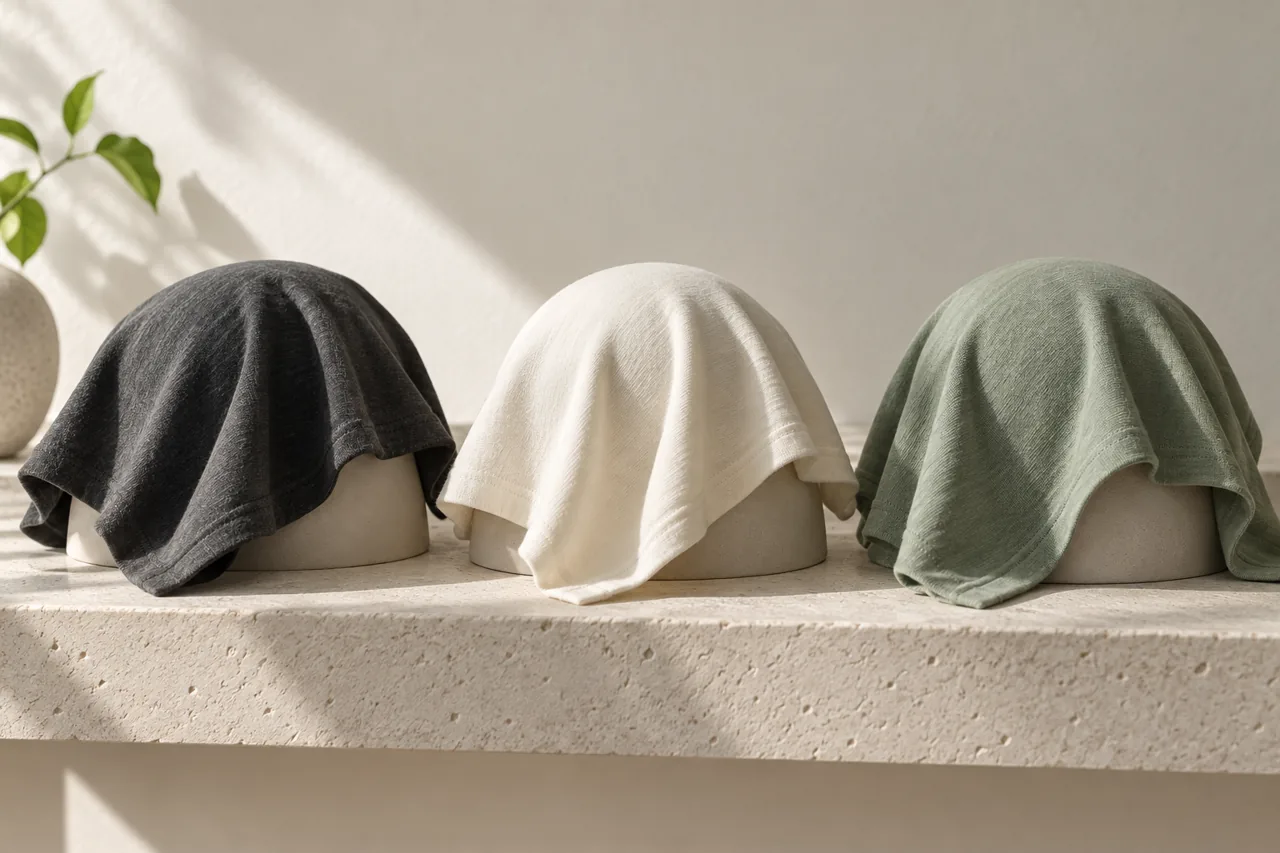
Record fibre composition and surface character
Ask for the exact composition of each candidate. “Cotton feel” is not the same as a verified cotton composition. If a blend is proposed, ask what role it is intended to serve and assess the actual result rather than assuming the blend will solve every fit or care concern.
Examine the surface in normal light and close up. Is the intended appearance smooth, textured or deliberately irregular? Are those characteristics consistent across the sample? Keep the desired surface separate from unintended marks or inconsistencies.
For a graphic-led design, send the artwork direction early. A textured surface may be part of the look, but the decoration still needs a sample on the proposed fabric. For a plain tee, the surface itself carries more of the visual identity, so review it after the agreed care process as well as when new.
Avoid adding sustainability, origin or certification claims simply because a material name sounds suitable. Any claim used in your product description needs its own supporting evidence from the relevant supply chain.
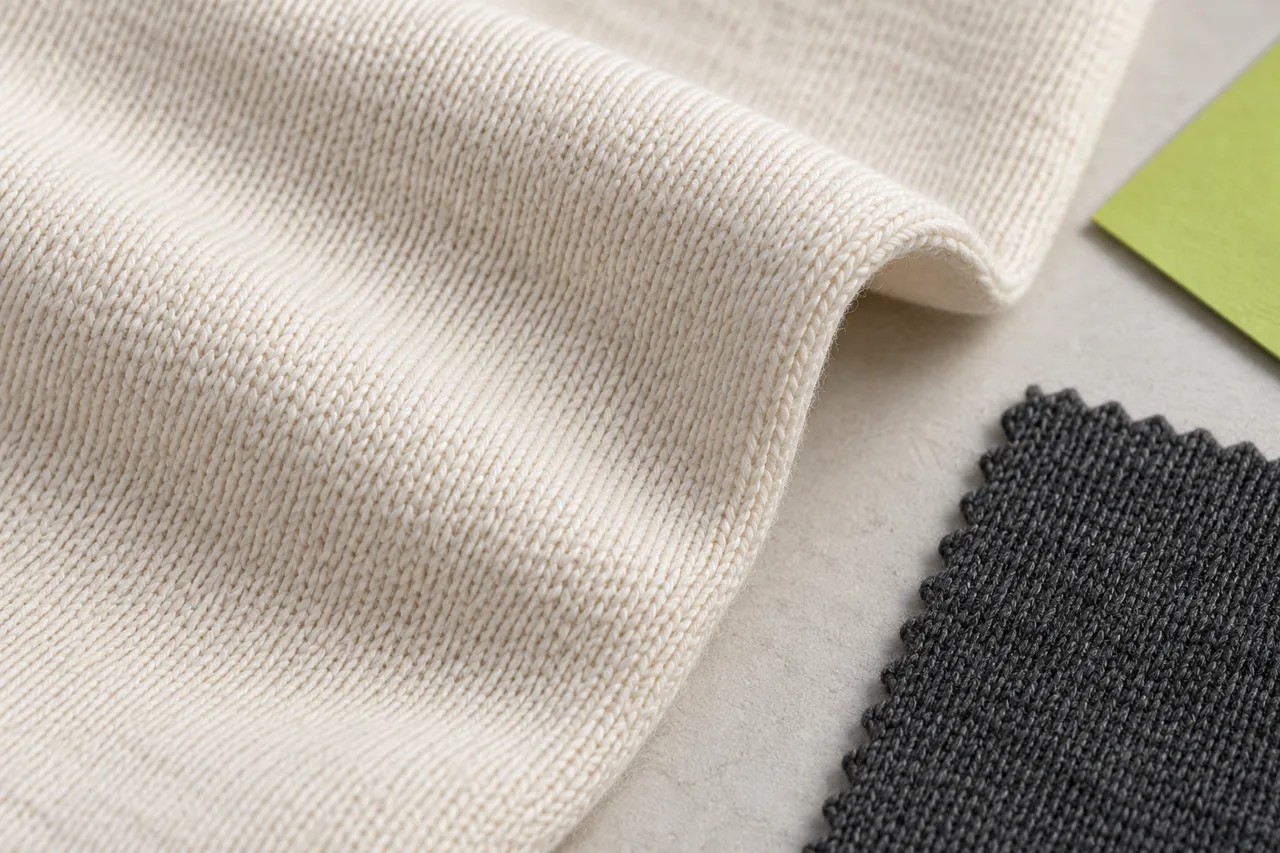
Check coverage in the actual colourway
Review light and dark versions independently. Do not approve an ivory shirt solely because the charcoal sample looks good. Check the intended colour under ordinary indoor light and daylight, with the garment hanging and being worn as intended.
Look at the front and back, areas over the shoulders and locations where the fabric is pulled during normal movement. Decide what level of coverage suits the product. A layering tee and a standalone statement tee may have different requirements.
Photographs can help record a concern, but camera exposure can exaggerate or conceal it. Use a physical sample for the decision. If the result is too transparent for the intended use, discuss alternatives in fabric construction, colour or finishing with the supplier and review the revised sample.
Record the approved colour reference alongside the fabric reference. A general note saying “white approved” is less useful than a dated decision tied to a specific sample.
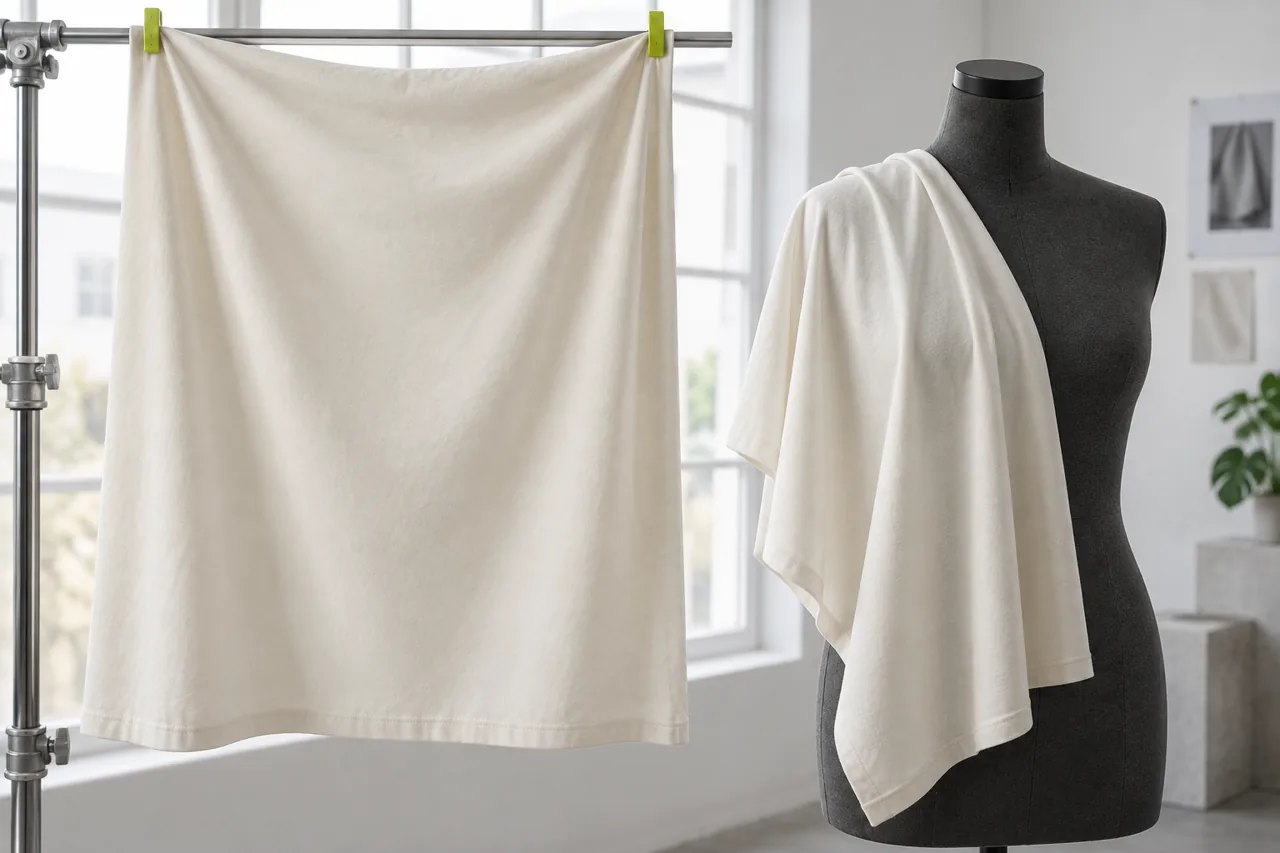
Assess the neckline with the body fabric
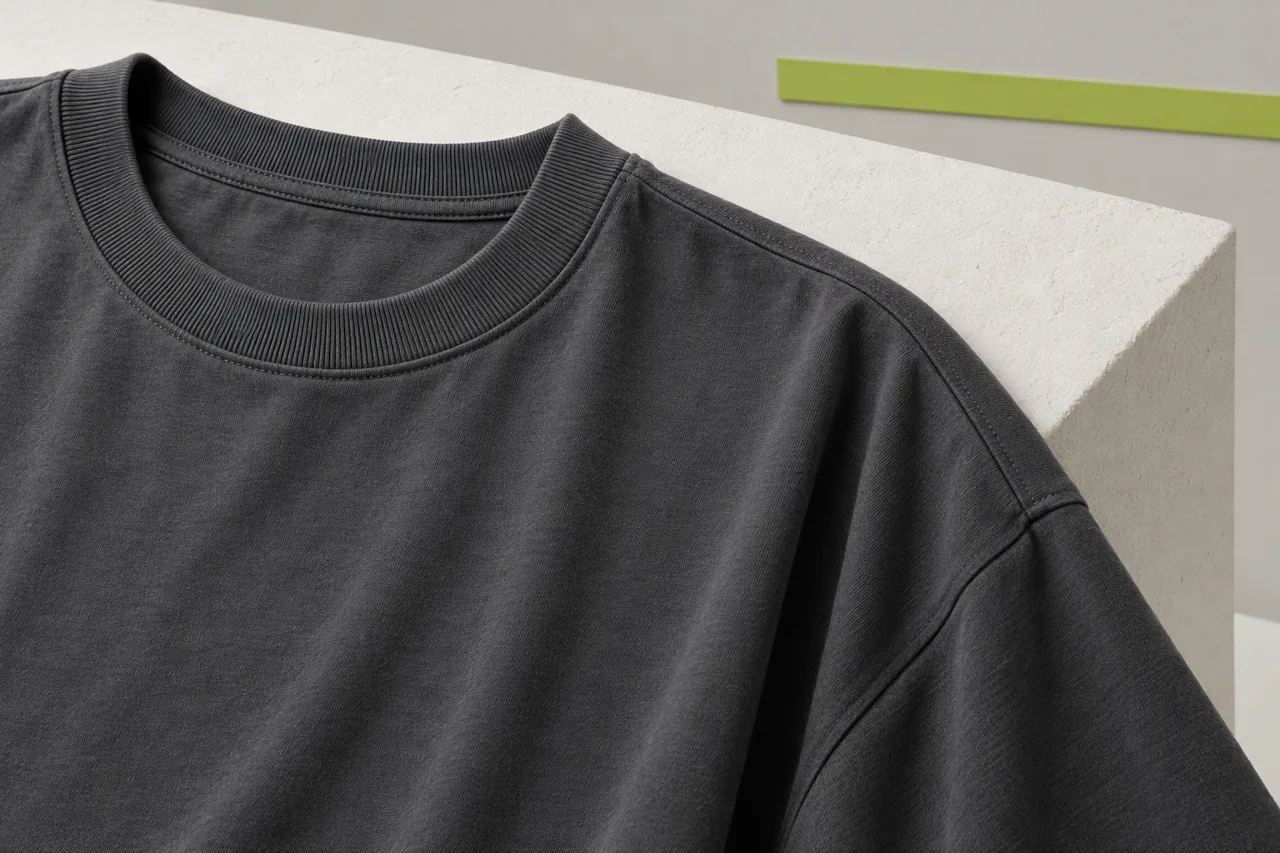
Do not leave the rib collar until after the body fabric is finalised. Review the neckline as an assembly: rib, joining seam, shoulder area and main cloth. The result should support the intended opening and appearance without unwanted rippling or bulk.
Ask for the proposed rib specification and have it included in the sample record. Check how the opening behaves when the garment is put on and taken off normally, then examine its appearance after the agreed care process.
If the neckline changes shape, describe the observation precisely. Is the rib sitting away from the body? Is the joining seam wavering? Does the opening feel too restrictive? These are more useful comments than “make the neck better”.
An oversized tee still needs deliberate neckline proportions. A roomy body does not mean every opening should be enlarged by the same amount.
Review dimensional change before approving bulk
A new sample's measurements are only one part of the decision. Agree how the garment will be cared for during evaluation, which dimensions will be measured and what acceptance criteria apply. Measure consistently before and after that process.
Cotton Incorporated's technical bulletin on cotton knit processing explains that knit construction, processing tension and finishing influence dimensional stability. That is why a fibre name or a weight figure cannot replace a sample assessment.
Record length and width separately. As an illustrative calculation, if a measured body length changes from 76 cm to 73 cm, the reduction is 3 cm, or about 3.9% of the original length. That calculation is not an acceptable-shrinkage recommendation. The permitted change must be agreed for your product and test method.
Also look at seam position, overall balance and the neckline after care. A shirt can remain wearable while losing the proportions you intended. Keep the original measurement points, photographs and sample reference together so the comparison can be repeated.
A supplier's “pre-shrunk” description should lead to a question about the process and expected result, not an assumption of zero change.
Sample the fabric and decoration together
Tell the supplier whether the design involves a large front graphic, embroidery, a wash effect or a plain finish. Ask for the intended treatment on the chosen material and colourway before approving the combination.
Check the decorated area against an undecorated part of the sample. Look for unwanted stiffness, distortion or a visual difference that does not fit the design. Review the result after the agreed care process too. An attractive first photograph does not establish long-term performance.
Use our printing methods overview to frame the discussion, then confirm the actual method and sample with the production team. A method name alone is not approval of the final artwork, application or garment.
If a proposed treatment changes, ask whether the fabric approval also needs to be revisited. Keep changes visible instead of assuming an earlier plain sample covers every later version.
Use a short fabric approval sheet
Choose a reference code for each candidate and keep it attached to every related photograph, measurement and decision. The following is a practical starting point.
| Decision | What to record | Evidence to review |
|---|---|---|
| Silhouette | Intended body, shoulder and sleeve behaviour | Comparable garment sample |
| Material | Supplier reference and stated fibre composition | Specification and supporting documents |
| Weight | Agreed GSM and specified finishing condition | Supplier specification or agreed measurement |
| Surface | Intended texture and appearance | Physical sample in consistent light |
| Colour and coverage | Colour reference and intended use | Sample in actual colourway |
| Neckline | Rib and attachment proposal | Complete neckline before and after care |
| Dimensional change | Measurement points, method and agreed limits | Before-and-after record |
| Decoration | Artwork revision and application method | Decorated sample on chosen fabric |
| Approval | Accepted items and remaining corrections | Dated decision tied to a sample |
Avoid marking the whole sheet approved if only colour and surface have been checked. State what is still outstanding and who will make the final decision.
A practical comparison for a first drop
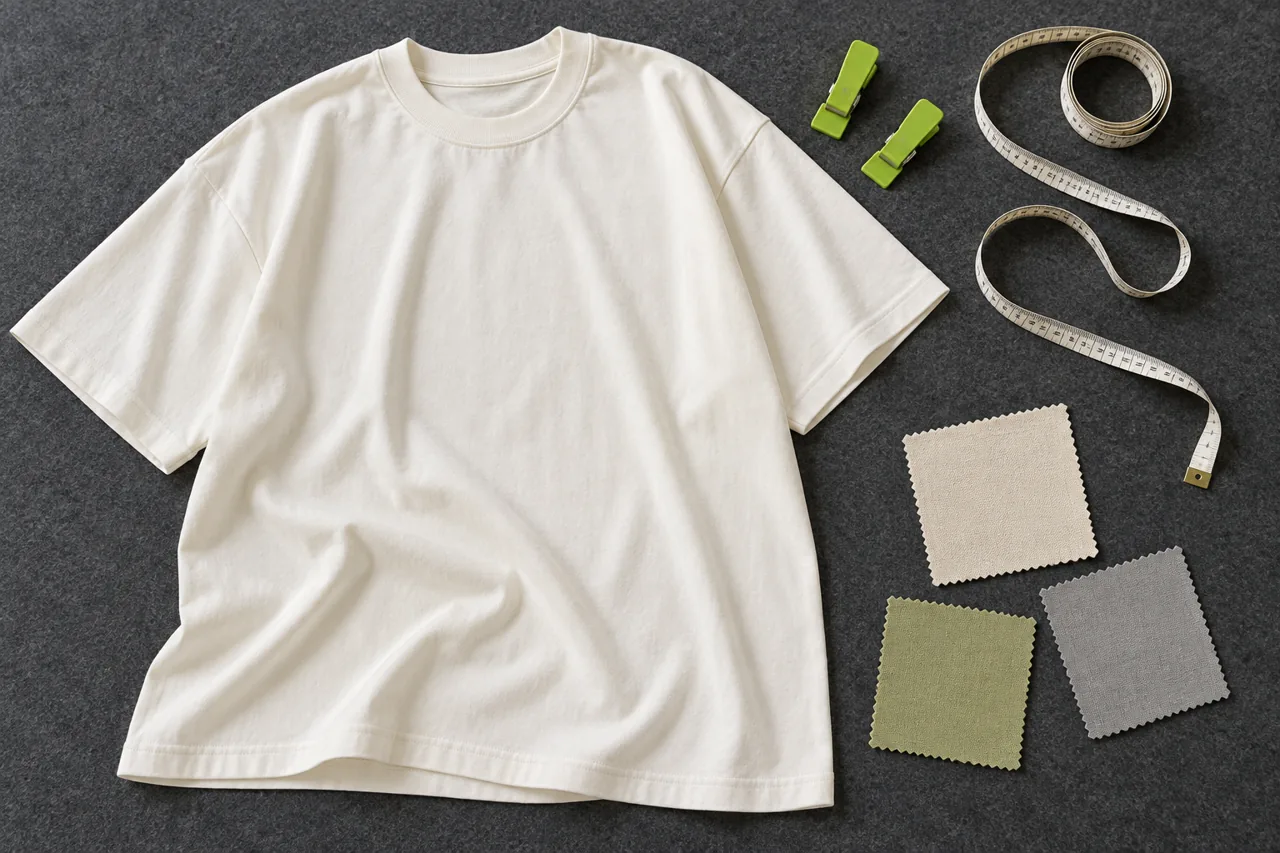
Imagine a brand developing one oversized tee in charcoal and ivory. Candidate A creates the clean sleeve outline the brand wants, while Candidate B gives a softer body. Neither should win from the swatch alone.
The next step is to compare garment samples in the same reference size. The team checks the desired silhouette, each colour's coverage and the planned graphic. It then reviews the agreed care results and neckline behaviour. These are example decision steps, not measured results from an Athletic Rush order.
If A succeeds in charcoal but the ivory version needs another review, keep the approvals separate. If B is attractive but belongs to a different silhouette, save it as a future development option rather than changing the current brief without discussion.
Finish with one controlled approval: fabric reference, colourway, rib, artwork, sample revision and any conditions. That is easier to reproduce than a string of messages saying that different parts “look nice”.
Questions clothing brands often ask
What is the best GSM for an oversized T-shirt?
There is no single number that settles the choice for every design. Compare physical candidates against the intended silhouette, climate, coverage, decoration and care requirements. Agree the final specification after sample review.
Can two fabrics with the same GSM feel different?
Yes. Weight is one characteristic, not a complete description of the material. Compare the surface, drape and finished garment instead of treating matching weight figures as proof that fabrics are interchangeable.
Should I approve the fabric before ordering a sample?
You can shortlist a fabric from swatches and specifications, but keep final garment approval open until the relevant fit, construction, decoration and care checks are complete.
Can I reuse an approved fabric for another T-shirt shape?
Use it as a starting point, then check the new application. Different sleeves, proportions, colours or decoration can change the result. Record what has been reviewed for the new style.
What should I send with a fabric enquiry?
Include the intended silhouette, reference images or garment, target season, colourways, artwork direction, size range, planned quantity and target date. If you have a preferred fabric, include its reference and specification; clearly identify what is still undecided.
Build the fabric brief for your collection
Explore Athletic Rush streetwear T-shirt development and the wider streetwear collection options. Send a concise brief so the proposed fabric and sample route can be discussed together.
Email kamran@athleticrush.co, message WhatsApp, or request a quote. Confirm availability, sample scope, price and timing before placing an order.