 Sialkot, Pakistan
Choose cargo pant fabric by comparing an identified material in the silhouette you intend to sell. Cotton twill, canvas and a lightweight grid-textured woven can be useful starting directions, but the name alone does not settle softness, movement, pocket appearance or care performance. First define the intended look, then compare swatches and complete trousers before approving a specific fabric reference.
For a clothing brand, the important question is which fabric helps this cargo design work for this customer? A structured wide-leg cargo and a softer everyday cargo may need different material choices even if both are olive and have the same pocket layout. This guide helps you choose a material route and write a useful development brief; it does not prescribe a universal fabric weight or a laboratory pass standard.
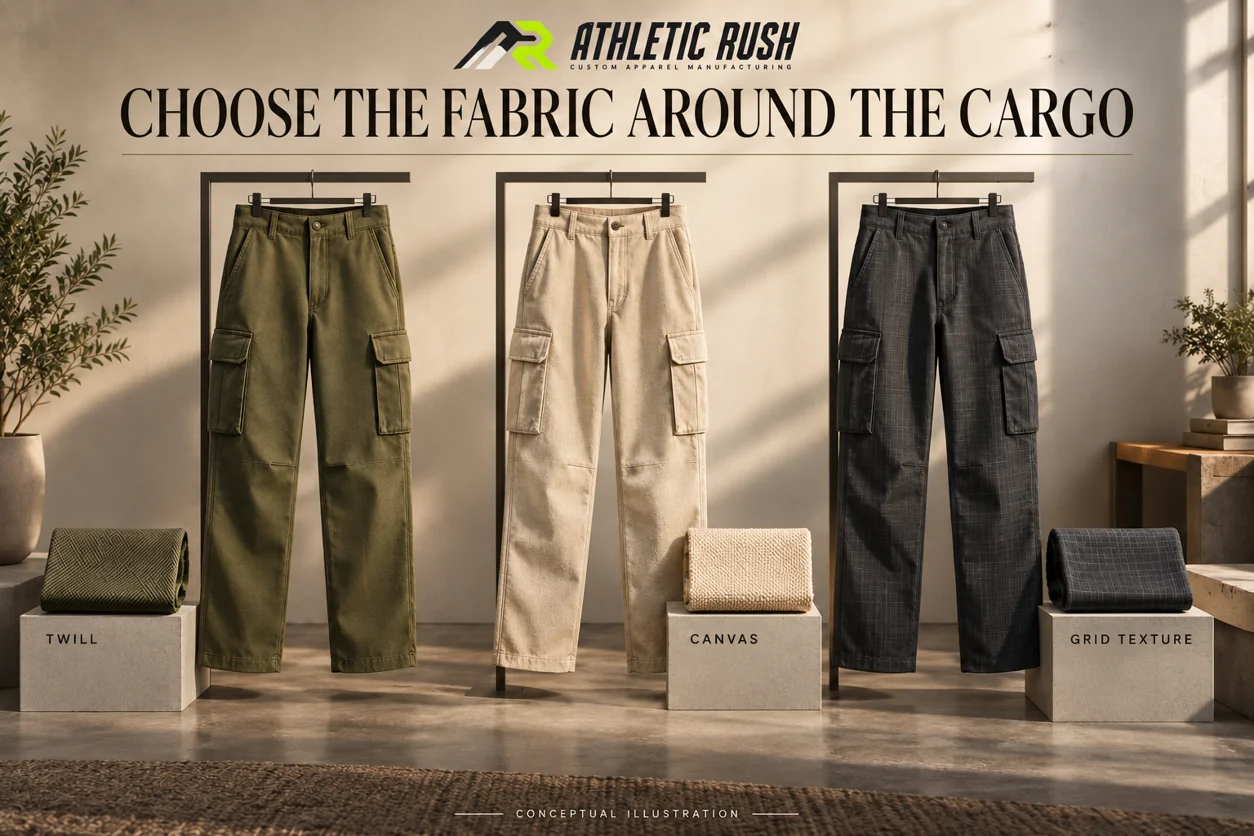
All six images in this guide are original conceptual illustrations. They explain decisions and inspection steps; they are not photographs of available inventory or measured test results.
Start with the cargo you want to make
Before requesting “premium cargo fabric,” describe the wearer, the silhouette and the wearing routine. Is the product a crisp utility trouser, a relaxed everyday cargo, or a light travel-inspired style? Will it be worn with a fitted top, an oversized hoodie or a layered jacket? What should the leg and pocket look like while standing and sitting?
Translate a reference image into observable requirements. “The leg should retain a broad shape below the knee” is more useful than “heavy luxury fabric.” “The flap should lie close to the thigh when the pocket is empty” is clearer than “strong pockets.” Neither instruction specifies a material by itself, but both help a supplier shortlist appropriate candidates.
Three illustrative briefs show how to start:
- Structured wide-leg cargo: a broad leg, visible pocket shape and a substantial surface. Ask for a material comparison that shows how the body fabric behaves at the leg and folded pocket edges.
- Relaxed everyday cargo: a softer visual fall, comfortable sitting and a less rigid pocket outline. Compare fabric candidates in the same trouser pattern before interpreting the result as a fabric difference.
- Light utility cargo: less bulk in the complete trouser, a restrained surface and practical movement. Define any actual performance requirement separately; “technical” is not a test result.
These are design directions, not claims that one fibre or weave automatically produces the outcome. View Athletic Rush's cargo pants development page for relevant silhouettes, then use an identified physical reference to communicate your preference.
Read fabric names as separate pieces of information
Fibre composition, weave, weight and finish describe different aspects of a fabric. Cotton describes a fibre. Twill describes a weave. A weight value describes mass relative to area. A washed or softened description refers to treatment or appearance and needs its own agreed reference.
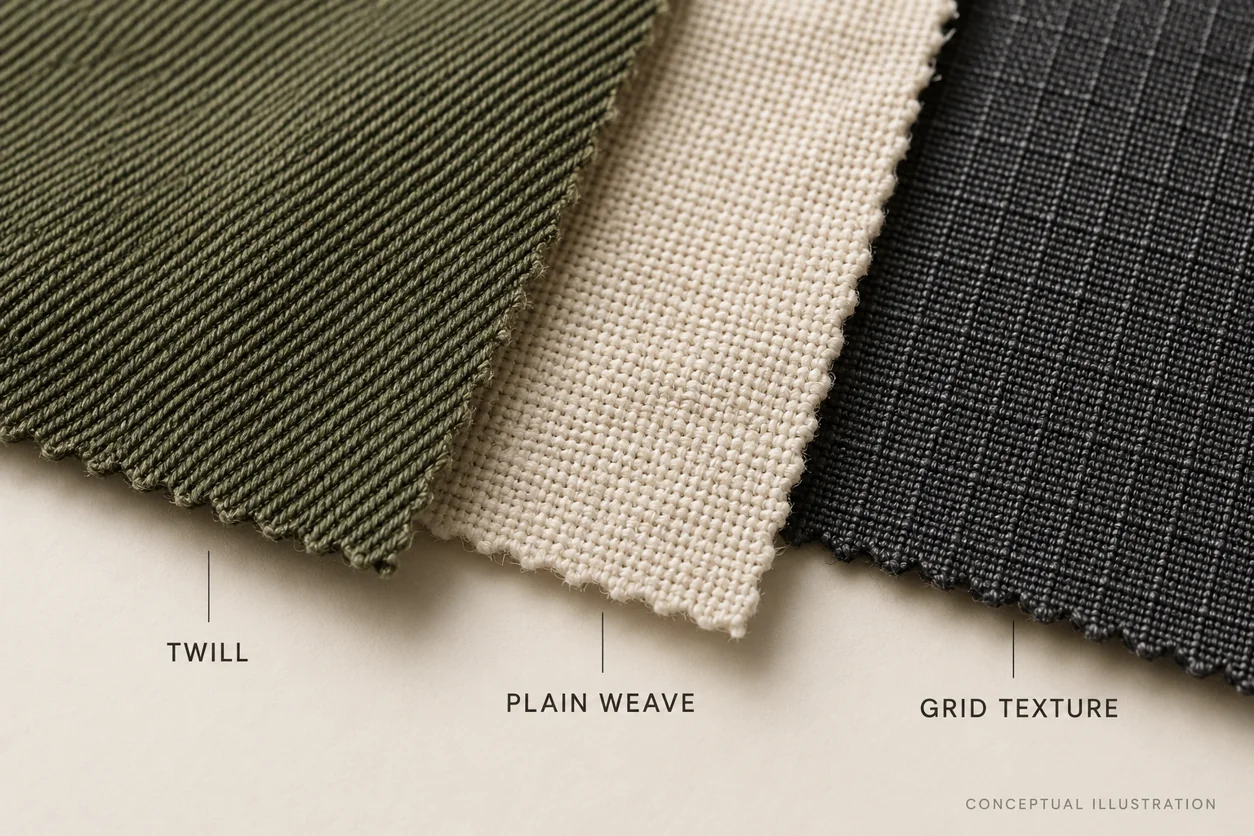
In woven fabrics, lengthwise and crosswise yarn sets interlace. CottonWorks explains that plain weave alternates over and under adjacent yarns, while twill has a characteristic diagonal pattern. Canvas is one example of a plain-weave fabric. These descriptions help identify structure; they do not establish the performance of your particular sample. See CottonWorks' basic woven fabric designs for the underlying constructions.
Cotton twill as a starting direction
A cotton twill candidate is worth comparing when you want a visible diagonal surface in a woven cargo. Ask for the composition, fabric reference, weight and intended finish together. Do not use “twill” as shorthand for an exact thickness, stretch level or softness.
Look at the actual material face and reverse, and then the built garment. Does the diagonal surface suit your brand? Does the pocket flap look as clean as you want? Is the leg sufficiently fluid or too rigid for the intended silhouette? Request an alternative identified sample if the first candidate misses the brief, rather than assuming every twill will behave alike.
Canvas or another plain-weave candidate
Canvas is a useful comparison route when your references emphasise a visibly substantial utility surface. Evaluate the supplied specimen rather than selecting it solely because the name sounds rugged. Inspect folded edges, pocket corners and the waistband, where the design brings multiple layers together.
If you like the leg shape but dislike the bulk at a folded detail, give both observations to the supplier. A different material and a revised construction are different interventions. Ask which is proposed, and compare the revised complete sample before making a decision.
A lighter grid-textured woven
A fine grid texture can suit a light utility aesthetic. Ask whether the proposal is a ripstop construction, another patterned weave or a surface effect, and request the exact fibre composition and material reference. A photograph of a grid does not tell you all of those details.
Do not approve tear resistance, water resistance, drying performance or stretch from appearance. If a product claim matters to your range, agree the claim, relevant evidence and assessment method with the supplier. Keep that requirement separate from the aesthetic choice of a grid texture.
What about stretch or a blend?
If the supplier proposes a blend or a stretch woven, record the composition and the intended stretch direction. Then inspect the actual trousers during movement and after the agreed review. Do not treat a fibre percentage as proof of comfort or recovery, and do not solve a pattern issue simply by asking for “more stretch.”
| Starting material direction | Buyer question to answer | Evidence to request |
|---|---|---|
| Cotton twill candidate | Do the diagonal surface and leg shape match the brief? | Identified swatch and complete trouser in the intended finish |
| Canvas or plain-weave candidate | Does the utility appearance work without unwanted bulk at folds? | Actual waistband, flap and folded corner details |
| Lighter grid-textured woven | Does the lighter visual direction suit the outfit and movement? | Composition, construction identity and a complete garment |
| Blend or stretch candidate | Does the proposed material work with this fit and wearing routine? | Identified material, agreed movement review and appropriate evidence for any claim |
The table is a shortlisting framework. It does not rank materials by durability or establish a particular result.
Compare weight with body and drape
GSM means grams per square metre: a fabric mass per unit area. It helps describe a specimen, but it is not a complete measure of quality. ASTM D3776/D3776M covers methods for determining fabric mass per unit area. A reported value should identify the material and the condition or stage in which it was assessed.
Ask for comparable information. A weight reported before a proposed treatment is not automatically the same reference as the finished fabric you will approve. Keep the material code and finish beside the value, and avoid mixing observations from different specimens.
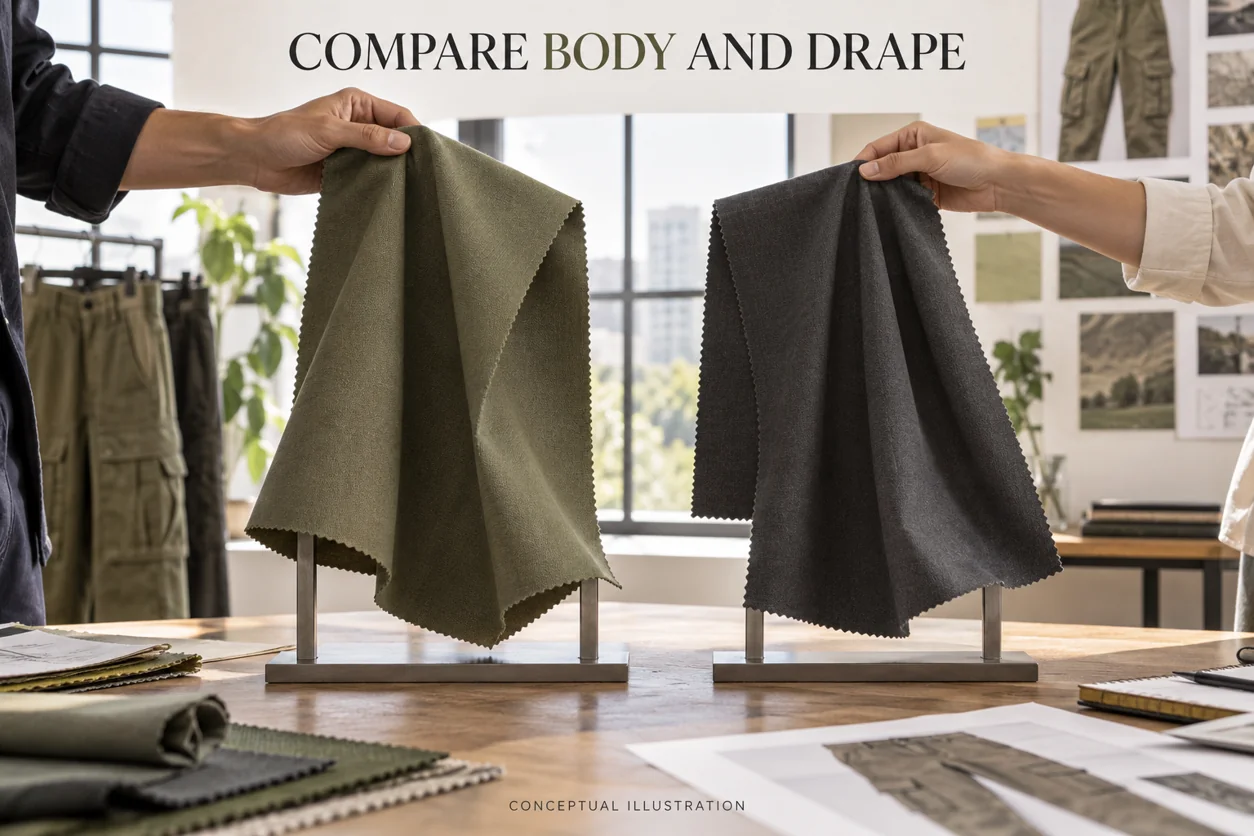
For a practical comparison, use similarly sized swatches and view them under the same conditions. Hold each freely, place each over the same support and fold each into a comparable stack. Notice how it falls, how it feels at an edge and how the surface reflects light. This is an informal design review, not a standardized drape or stiffness test.
Write observations without guessing causes. “Candidate B forms broader, less fluid folds in this comparison” is a usable note. “Candidate B is stronger” is a different claim requiring different evidence. Similarly, a heavier specimen is not automatically the more comfortable or more suitable cargo material.
For a shortlist, request a clear contrast that relates to your brief: for example, one candidate closer to the crisp reference and another closer to the softer reference. Avoid collecting many nearly indistinguishable swatches without a decision criterion. Choose the promising route, then evaluate it in the actual garment.
Separate a fabric issue from a fit issue
A cargo silhouette comes from the material and the pattern together. If two trousers differ in rise, thigh width, knee shaping and fabric, you cannot attribute every visible difference to the fabric. Ask which variables changed before drawing a conclusion.
For a material comparison, use the same agreed pattern and construction where practical. If an adjustment is needed to make a candidate workable, record it explicitly. The comparison can still be useful, but it is now between two garment proposals rather than isolated fabric choices.
The baggy jogger fit guide explains the importance of defining where volume sits. Apply that principle thoughtfully to a woven cargo; do not copy a jogger measurement chart as a finished cargo specification.
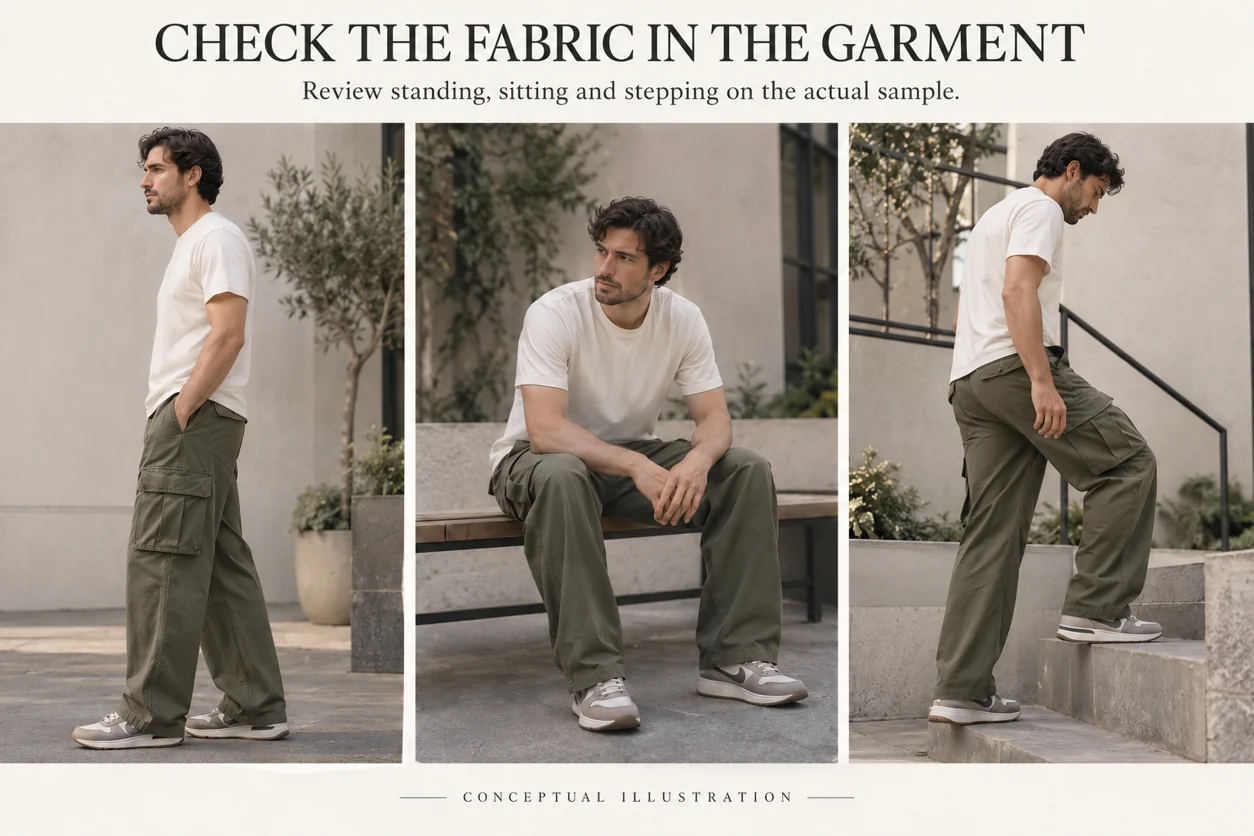
Review the sample on the intended reference wearer with the footwear and waistband position recorded. Look at it standing, seated and during a step or bend relevant to its use. Ask the wearer about pressure and restriction, and note where they occur. These observations help direct a revision; they do not certify a performance rating.
Pay attention to the whole leg. Does the material hold the desired volume, or collapse into a shape you did not intend? Does the hem interact with the chosen footwear as expected? Is a crease simply the natural appearance you want, or an unwanted result in a particular position? Use photographs from consistent views to describe the difference.
Avoid changing both the pattern and fabric without a revision record. If the next sample looks better, you should be able to identify what was changed. That record also makes a future reorder more useful than a vague instruction to “repeat the nice olive cargo.”
Check the built details before selecting the material
A flat swatch cannot show every part of a cargo. Inspect the actual waistband, fly, pocket flap and hem. Open the garment and examine the reverse as well as the face. Where several folded layers meet, check whether the appearance and feel are acceptable for the design.
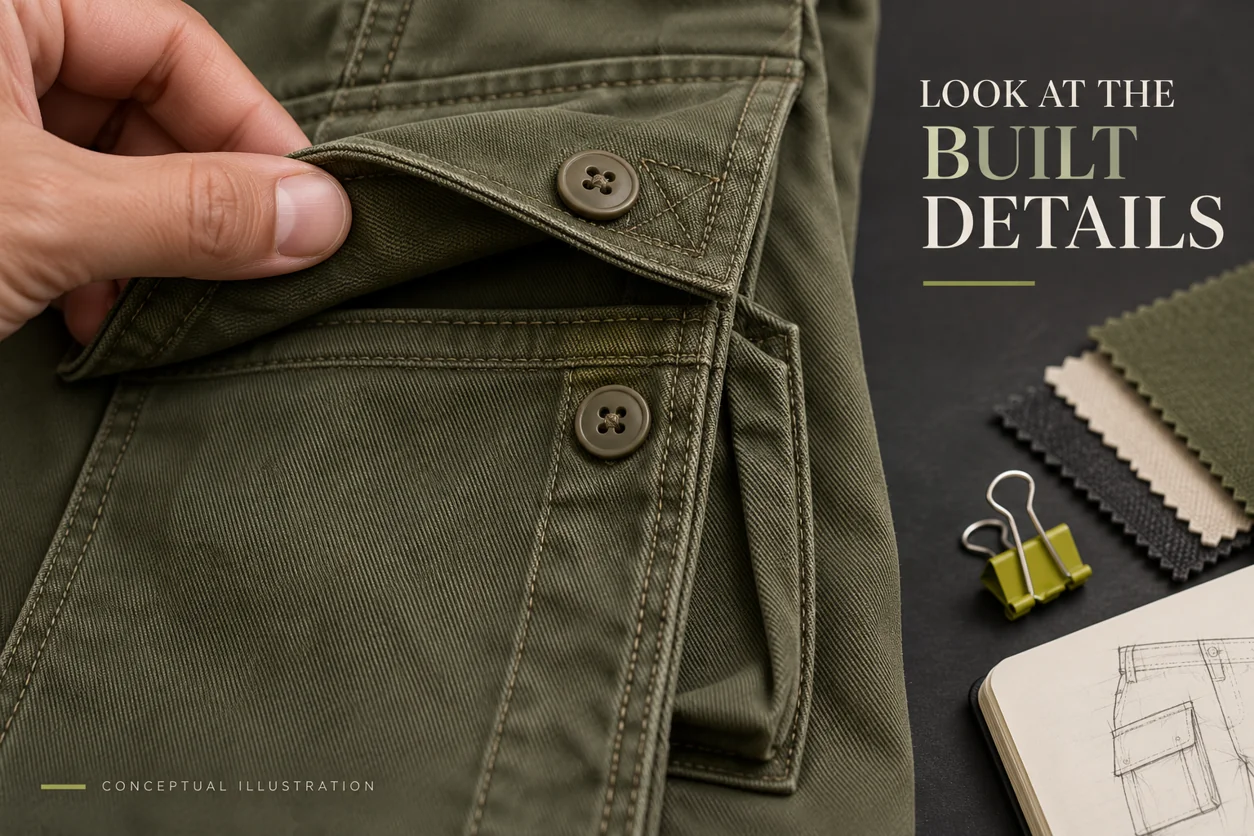
Keep this review focused on how the material works in construction. Pocket placement and carrying function need a separate design discussion. Here, the useful questions are whether the proposed fabric produces the desired edge, whether the inside feels acceptable against the wearer, and whether the assembled detail matches the reference.
For each concern, identify the location and condition. “The lower flap corner looks bulky when the empty pocket lies flat” is actionable. “The fabric is bad” is not. Ask the supplier to explain whether the response is a material substitution, a finish change or a construction revision; then review that response in a complete sample.
Where you intend embroidery, patches or another decoration, request a representative detail on the proposed material. Record whether the surface and surrounding fabric look acceptable. Do not assume a plain swatch settles compatibility with every decoration process.
Review care using an identified sample
Agree the intended care instructions and the review procedure before checking a sample. Record the sample revision, material reference, finish and relevant measurements. Compare the same points before and after the agreed care, using a consistent measuring approach and documented sample condition.
The public scope of AATCC TM150 concerns garment length and width changes after home laundering. It notes that the method may not apply to certain stretch fabrics. The public summary is not the complete method, a universal acceptance limit or proof that your cargo sample passed.
Separate dimensional change from appearance. Record whether the leg, pocket edge, colour or surface changed as an observation. A length measurement does not establish colourfastness or seam strength. If you need formal evidence for those requirements, agree the relevant assessment and acceptance criteria separately.
Do not approve a washed aesthetic from a differently finished sample and assume it will transfer unchanged. The material, treatment and complete garment are part of the proposal. Keep the approved reference and any measured results linked to the version you intend to order.
Send a brief that supports a clear decision
A useful cargo fabric brief names the desired garment and the evidence needed to choose its material. Include an identified reference image or physical sample, but explain which aspects you want to retain. A reference may communicate colour and silhouette without specifying the same fibre or finish.
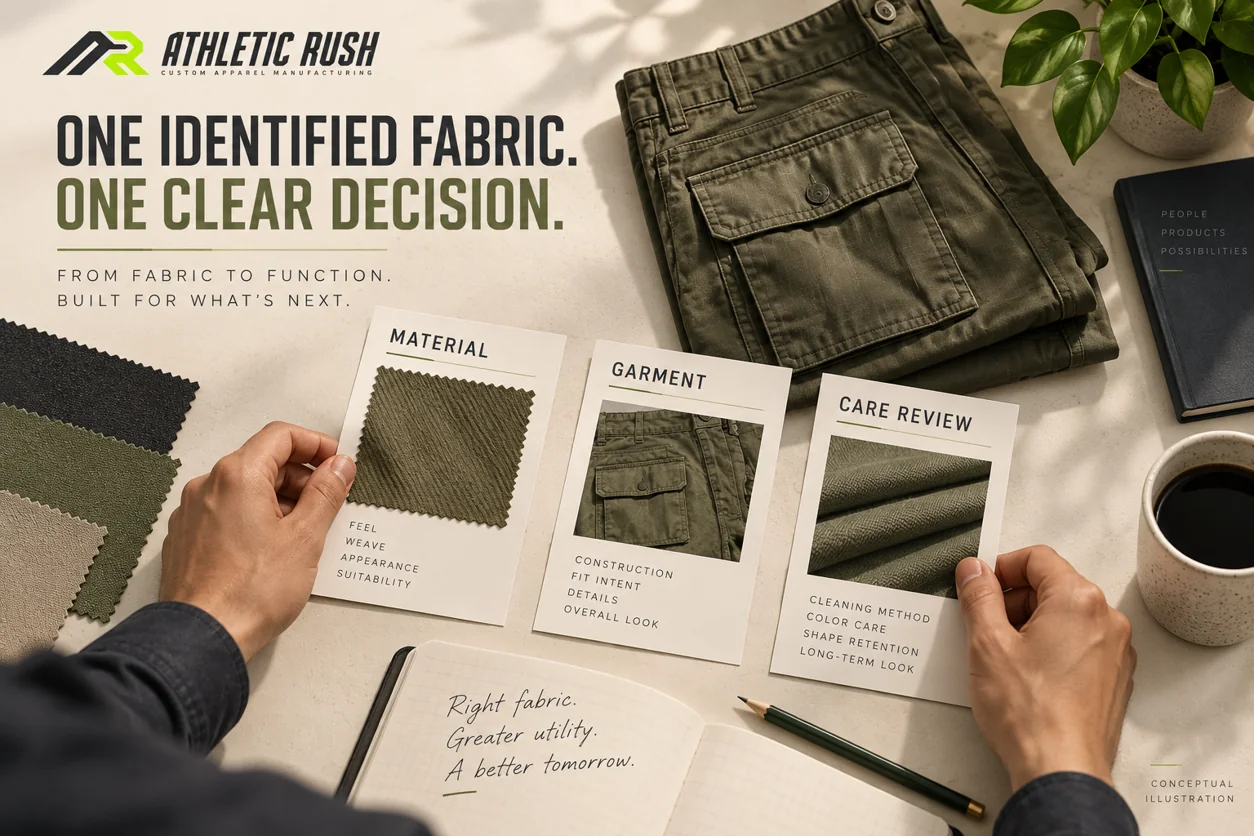
Use this checklist before requesting the development sample:
- Product and use: intended wearer, wearing routine and cargo silhouette.
- Material identity: supplier reference, composition, weave or construction, reported weight and finish stage.
- Visual target: desired surface, fold character, pocket appearance and an identified colour reference.
- Garment proposal: fit reference, waistband type, key construction and any representative decoration.
- Review plan: movement observations, built detail checks, care procedure and any formal evidence required for specific claims.
- Decision record: accepted details, open corrections and which specimen must be revised.
For example, a fictional development brief could say: “We want an olive wide-leg cargo with a clean utility surface and broad leg shape. Please compare an identified twill candidate and a plain-weave candidate, stating their composition, weight and finish. Keep the pattern consistent for the first comparison, show the folded pocket corners, and propose the care review for the complete sample.” This is an illustration of a clear request, not an actual order, price agreement or recommendation that both candidates will be available.
| Observation on the sample | Useful request to the supplier |
|---|---|
| The leg falls softer than the agreed crisp reference | Propose a material or finish revision, identify it, and retain the agreed fit for comparison |
| The leg shape is acceptable but a folded corner looks too bulky | Review the specific detail and state whether material or construction will change |
| The surface matches, but sitting feels restrictive | Identify the affected location and review fit and material separately |
| The finished sample differs from the approved swatch | Confirm the material, finish and specimen history before proposing a replacement |
| The care review changed a relevant dimension | Record the measured change and conditions, then agree the corrective proposal and recheck |
Keep the approval specific. Record the exact accepted fabric and garment revision, and ask for substitutions to be discussed before production. A supplier's newer material is a new proposal until you have reviewed its relevant differences.
Cargo fabric questions from clothing brands
Is cotton twill always the best fabric for cargo pants?
No universal choice follows from the name. Twill gives a recognizable diagonal woven surface, but the appropriate candidate depends on the specific garment brief. Compare an identified material with alternatives in the desired silhouette and finish.
What GSM should I choose for streetwear cargos?
Set a target through physical references and garment comparison rather than a single universal number. Record the reported weight with composition, construction and finish. Use the actual trouser to decide whether its body, folded details and wearing feel suit your range.
Does a ripstop-looking grid prove the material is tear resistant?
No. Ask the supplier to identify the construction and provide relevant evidence for any performance claim you need. A grid seen in a conceptual image or swatch photo is an appearance cue, not a test report.
Can I approve only the fabric swatch before ordering?
Use the swatch to shortlist and identify the material. Review the complete development sample as well, because the silhouette, folded layers, decoration and care observations belong to the assembled garment. Keep both references linked in the approval record.
Discuss your cargo material direction
The practical goal is to connect one identified fabric with one clear garment brief. Choose a promising material route, review it in the complete cargo and document the accepted version and any remaining questions.
Athletic Rush develops custom apparel from Sialkot, Pakistan. Explore our fabric sourcing and development page, then send your cargo reference, desired silhouette and material priorities to kamran@athleticrush.co or WhatsApp +923279008337 to discuss a development sample.