 Sialkot, Pakistan
How do you make a jogger look intentionally baggy without making the waistband loose or the legs excessively long? Define where the garment sits, where you want volume, and how the leg finishes before asking for a sample. A useful baggy jogger brief separates waist security, seat and thigh room, leg shape and finished length. The word “baggy” alone cannot communicate all four.
For a clothing brand, the approval question is whether the sample creates the intended silhouette on the intended wearer while remaining comfortable during ordinary movement. A larger size label, a wide flat measurement or a good front photograph cannot answer that question on its own.
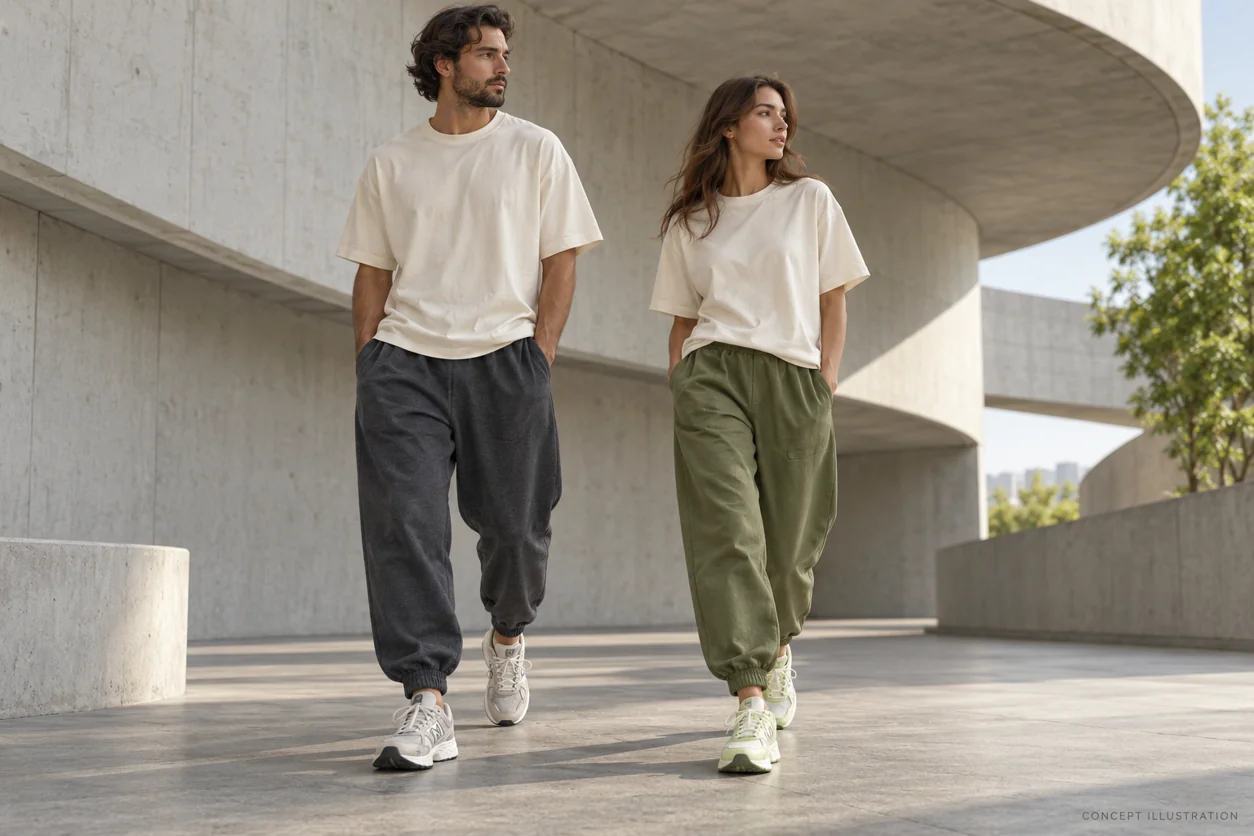
Original concept illustrations throughout this guide show design and inspection ideas. They are not photographs of Athletic Rush inventory, customer orders or tested samples.
1. Define the shape before choosing a size
Start with a plain sentence that describes the finished garment. For example: “A mid-position waistband, generous seat and thigh, a gradual taper below the knee, and a cuff that sits above the shoe with a small amount of fabric gathering.” This is an illustrative design direction, not a universal definition of baggy fit.
An alternative might be: “A roomy upper leg with a straighter lower leg and a deeper stack above the cuff.” Both can be described as baggy joggers, yet they need different pattern and length decisions. Record which one belongs in your collection.
Baggy is a distribution of volume
Simply ordering a larger size changes several dimensions together according to that style's grading. It may alter the waist, seat, rise, leg width and length in ways you did not intend. If the waist already fits but the thigh needs more volume, “size up” is an imprecise development instruction.
Instead, keep the approved features visible in the brief. Say which area needs additional room and which areas should retain their current appearance. The pattern maker can then propose a coordinated revision. Do not assume each dimension can change independently without affecting the rest of the garment.
A deliberately baggy jogger can have a secure waistband and a controlled ankle opening. It does not need to slip down to look relaxed. Conversely, an oversized-looking waist does not prove that the seat provides enough room when the wearer sits.
Choose the waistband wearing position
Ask the fit wearer to put the sample on at the intended position before reviewing length or rise. Photograph that position and describe it in the fit notes. If the waistband moves lower between photographs, the apparent crotch depth and hem position also change, making comparisons unreliable.
For a streetwear capsule, decide whether the jogger is shown with a tucked tee, a short top or a long hoodie. An obscured waistband can hide slippage or bunching in a styled photograph. Review the waist uncovered as well as in the complete outfit. For coordinated outfits, use the separate top and bottom checks in our hoodie and jogger set approval guide.
Separate body information from garment measurements
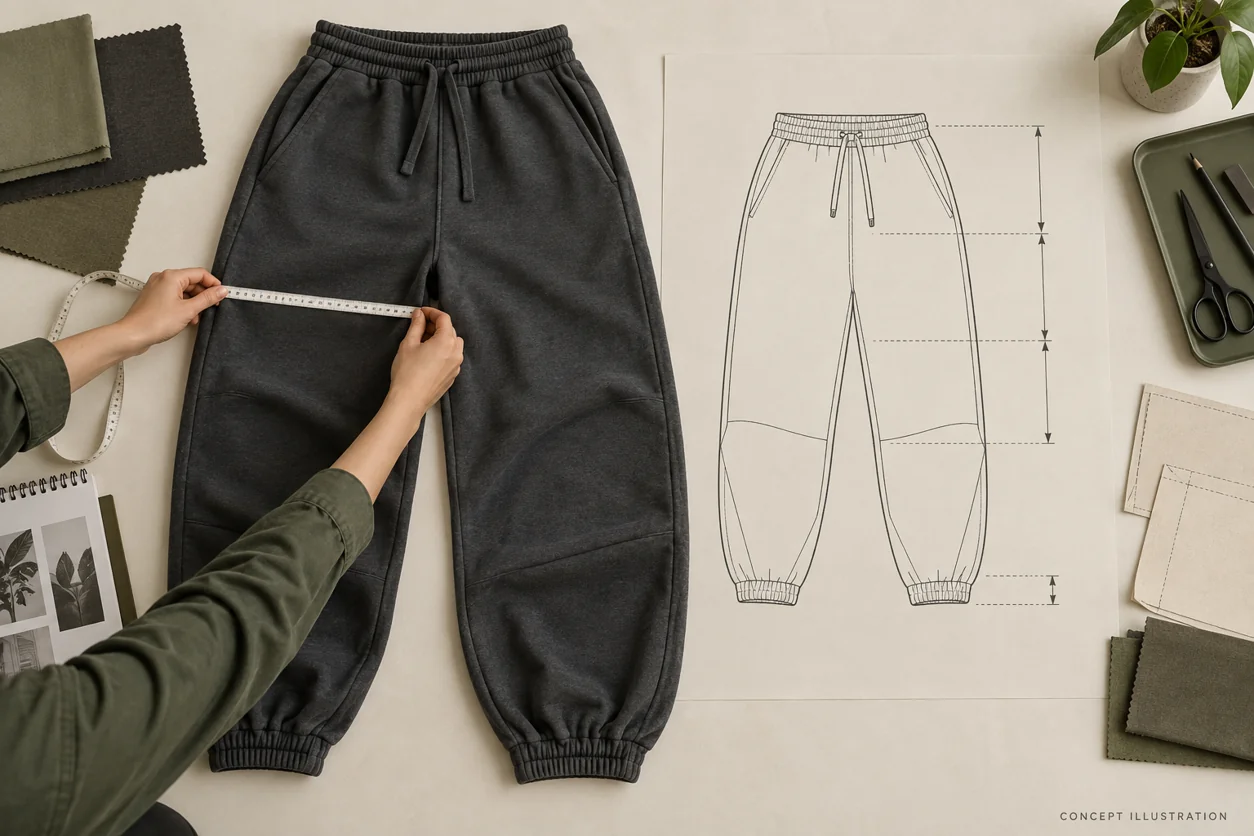
Your intended customer's body measurements and the finished jogger's measurements serve different purposes. Keep separate records for the reference wearer and the garment specification. Identify the sample size and the measuring method so the next sample can be compared consistently.
ISO 8559-1 describes body measurements used in clothing development. Its scope helps establish a consistent body-measurement vocabulary; it does not provide a ready-made baggy jogger specification or a universal amount of extra room.
For garment measurements, agree the actual endpoints with your supplier. State whether a width is measured flat or as a circumference, where the thigh and knee are measured, and whether the waistband is relaxed or measured under an agreed extension method. A number without these details can mean different things to two people.
| Decision area | What to describe in the brief | What to inspect on the sample |
|---|---|---|
| Waist position and hold | Intended wearing position and the agreed waistband measurement method | Whether it remains in position without uncomfortable tightening |
| Seat and upper leg | Where the relaxed volume should be visible | Front, side and back appearance, plus comfort when sitting |
| Rise and crotch | Intended crotch position and the supplier's defined measurement endpoints | Whether the garment hangs as intended and permits ordinary movement |
| Knee and lower leg | Where taper begins and how strongly the leg narrows | Whether the lower leg supports the design without pulling during movement |
| Length and cuff | Shoe reference, desired gathering and cuff position | Standing, walking and seated hem position with the intended footwear |
2. Control the leg from the seat to the shoe
Review the silhouette as a continuous line. A generous thigh paired with a very narrow lower leg creates a different appearance from a wide leg with a gentle taper. Neither is automatically better. The right choice follows your customer, styling direction and actual sample review.
Cuffed baggy joggers and open-hem trousers are different briefs
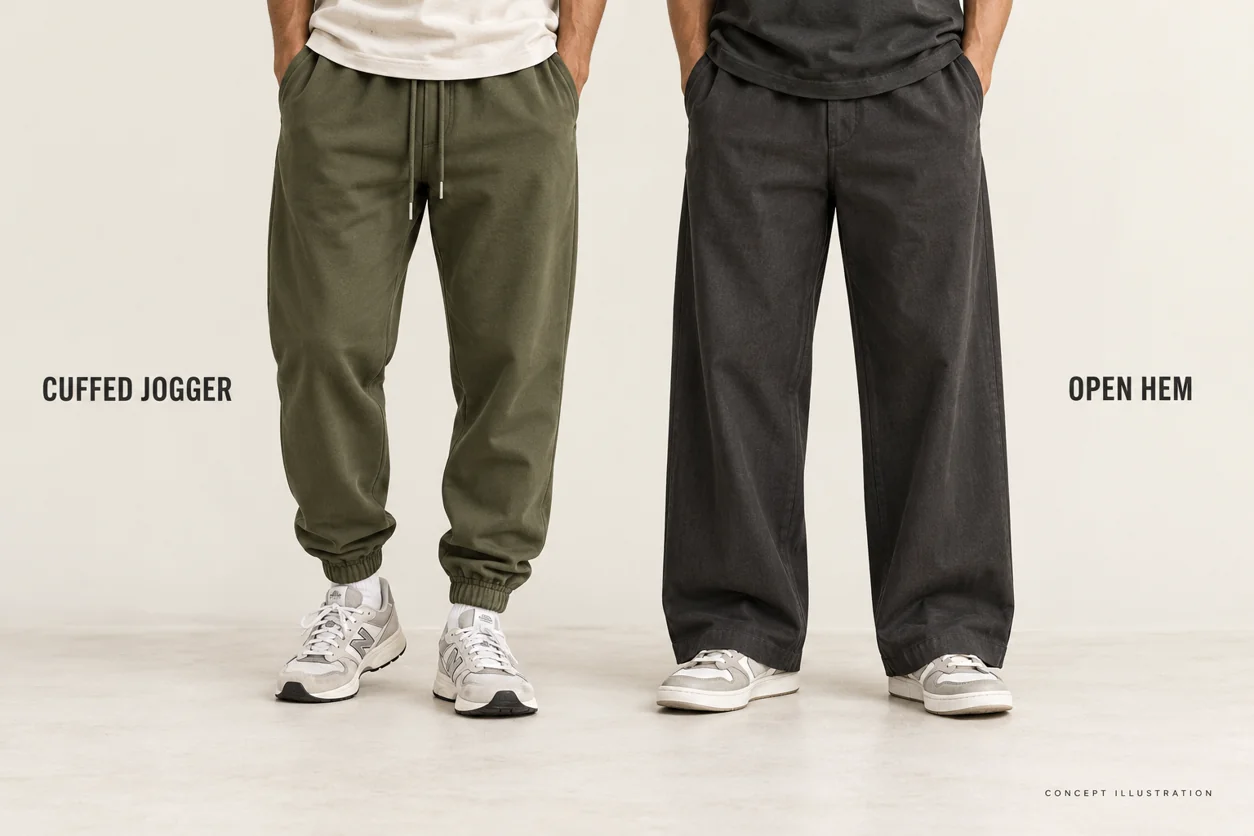
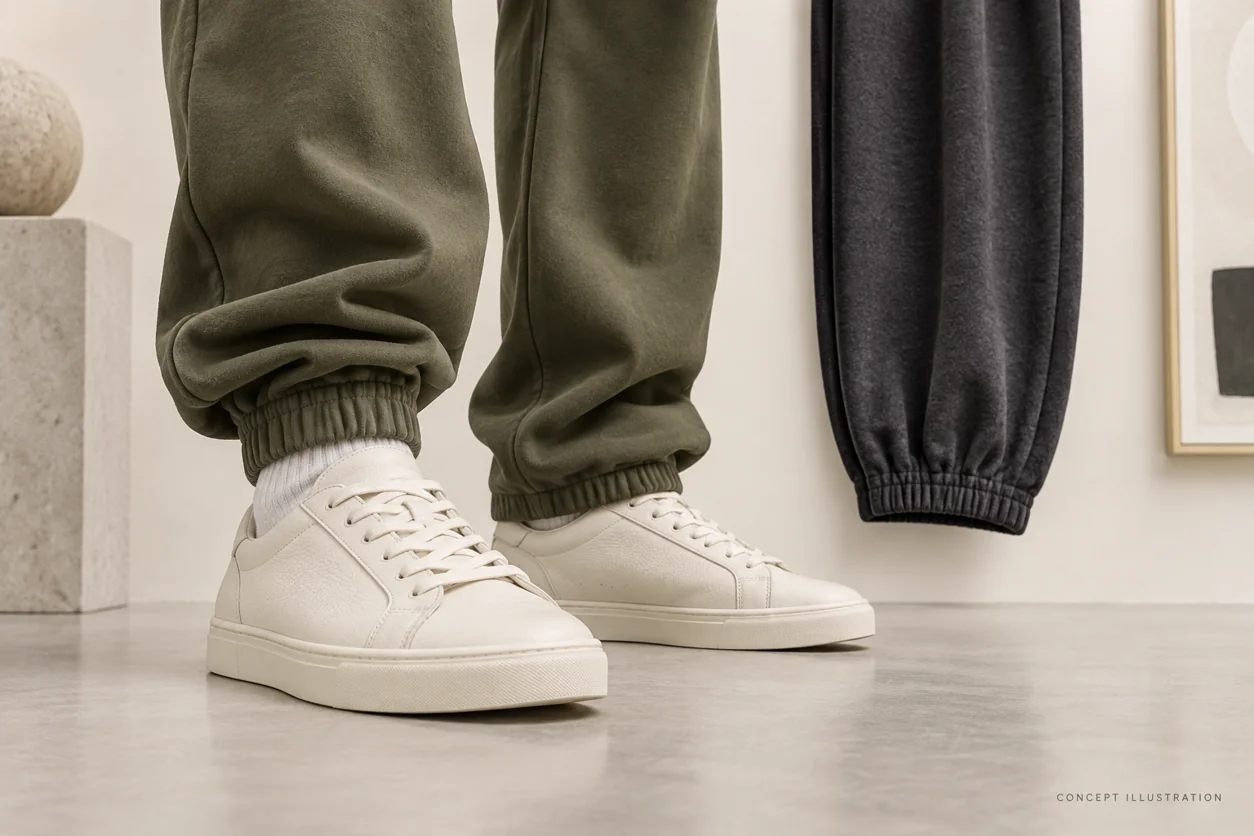
In this guide, a cuffed jogger means a trouser whose ankle opening is gathered or finished with a fitted cuff. A wide open-hem sweatpant keeps a broader opening over the shoe. Brands sometimes use these names loosely, so include a clear sketch or reference photo rather than relying on the name alone.
The cuff changes how the fabric ends at the ankle. An open hem changes how the leg falls around the shoe. Approving one and changing to the other later may require a fresh length and silhouette review, even if the upper-leg measurements stay the same.
Use three distinct design examples
Roomy tapered jogger: generous seat and thigh, a visible narrowing towards the cuff, and restrained gathering above the ankle. Review the balance between upper-leg volume and the narrower lower section. A front photograph alone can conceal pulling at the back when seated.
Soft stacked jogger: a relaxed leg with intentional folds above the cuff. Define the amount of stacking visually on the fit wearer with the agreed shoe. Additional length should serve that appearance; it should not be an accidental consequence of choosing a larger size.
Straight relaxed sweatpant: a loose leg with an open hem. This can belong beside joggers in a collection, but should have its own hem and footwear approval. Do not transfer cuffed-jogger length comments to it without checking the sample.
These are useful design descriptions, not standardized size categories. A supplier should be able to explain how the proposed sample addresses your chosen direction, rather than claim that one measurement makes every style “baggy.”
Check the fabric in the intended shape
Two fabrics can show a similar flat outline but create different folds when worn. Handle the actual proposed fabric and view it in a complete sample before approving the silhouette. Record the fabric reference and finish alongside the fit comments so a material substitution does not quietly become a fit change.
If you are considering sweatshirt fabrics, our French terry and fleece comparison explains the material decision. For joggers, use that discussion as a starting point and approve the trouser itself. A hoodie sample made from the fabric cannot demonstrate how a jogger hangs at the knee or cuff.
Pocket construction also belongs in the worn review. Check the openings with hands in and out, then with the ordinary item you expect the pocket to carry. Note gaping, pulling or unwanted bulging as observations. Do not diagnose the pattern correction from a single photograph.
3. Approve movement and repeatability, not just a standing pose
A sample can look convincing on a hanger and behave differently on a wearer. Set up a repeatable fitting session: the same reference wearer, intended waistband position, shoe type and comparable photographs. Keep an unstyled view in addition to the outfit photograph so the garment is easy to assess.
Run a short, practical fit review
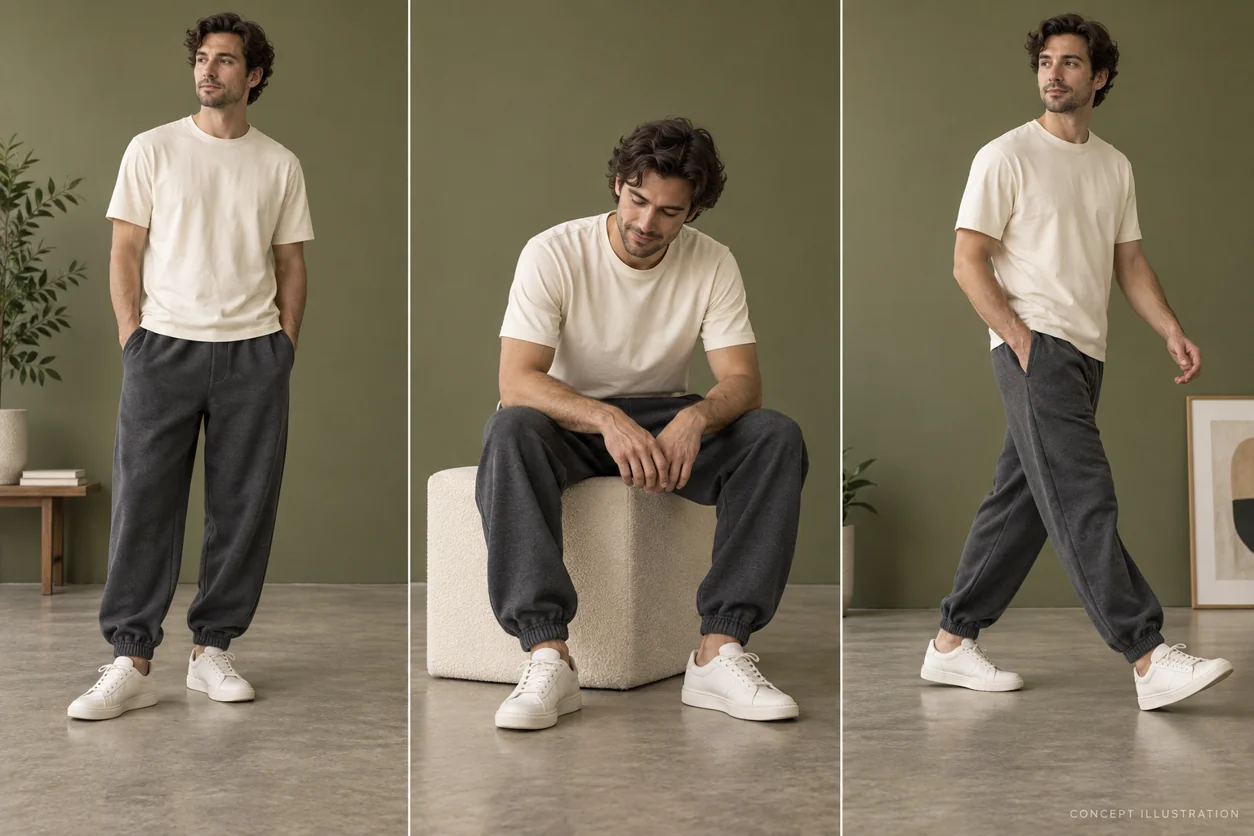
- Stand naturally. View the front, back and both sides. Confirm the waistband position, seat volume, side-seam appearance and leg shape without a model deliberately pulling the fabric into place.
- Sit in an ordinary chair. Ask about pressure at the waist, seat, crotch and knee. Observe any waistband movement and pocket opening change. Record the wearer's feedback as well as photographs.
- Walk and take a normal step up. Check whether the cuff or lower leg interferes with the intended movement. A fashion fitting is a practical review, not a claim that the garment has passed a performance standard.
- Use the pockets. Inspect access and shape with hands and the intended everyday item. Empty the pockets before taking comparison photographs for the base silhouette.
- Return to standing. Let the garment settle naturally and check whether it still creates the intended outline. Note what changed rather than smoothing every fold away for the camera.
Keep comments specific. “Tight when seated across the upper thigh” is more useful than “bad fit.” “Waistband moves down during walking at the intended wearing position” is more useful than “make the jogger smaller.” Ask the supplier to connect the proposed correction to the observed problem and resample when needed.
Decide the hem with footwear present
Record the type of shoe used for the fitting. A bulky trainer and a low-profile shoe can make the same hem look different. If both are part of your styling plan, inspect both before choosing the finished length.
For a stacked cuffed jogger, distinguish deliberate folds above the cuff from unwanted excess that interferes with walking or hides the shape you want. For an open hem, check where the back edge falls and how the opening meets the shoe. Avoid approving length only from an overhead flat photograph.
Review the sample after the agreed care procedure
The approval should identify whether the measurements and photographs are before or after care. Agree the care procedure, the number of cycles, the measuring conditions and acceptance criteria with the supplier or testing provider. Do not mix before-care dimensions with after-care photographs without labelling them.
AATCC TM150 covers evaluating garment dimensional change after home laundering. Its published scope includes different laundering conditions and notes limitations for certain stretch fabrics. A suitable test method and agreed acceptance criteria should be selected for the actual garment; citing the method does not mean a sample has been tested or passed.
For a baggy jogger, recheck the areas that define the design: seat and thigh room, leg length, lower-leg appearance and cuff position. Review worn appearance as well as measured dimensions. If the result no longer matches the brief, resolve it before treating the original fit approval as final.
Check the intended size range
One approved reference size does not demonstrate the entire range. Agree which additional sizes require physical samples and which wearers or fit forms represent those sizes. Review how the intended volume and leg shape carry through the range rather than adding an identical amount everywhere by assumption.
Keep the size chart, sample measurements and fit photographs linked to the same revision. If you change the reference sample after checking other sizes, ask which size-range checks need repeating. For a matching set, the bottom should have its own approval even if the hoodie has already passed its review.
Turn fit comments into a controlled revision
Send one consolidated comment sheet for the sample. Identify the sample code, revision, size, fabric, care state and fit wearer reference. Mark approved areas so the supplier knows what should remain stable while addressing the outstanding issue.

| Vague comment | A clearer buyer instruction | Evidence to request on the revision |
|---|---|---|
| Make it more baggy | Retain the approved waist position; propose more visible upper-leg volume while preserving the chosen cuff appearance | Revised measurement sheet and comparable front, side and back views |
| The crotch is wrong | Record the observed pulling or unwanted drop at the intended waistband position; review the rise and seat relationship | Worn standing and seated review with the proposed correction explained |
| Make it shorter | Show the intended cuff position with the agreed shoe and mark the unwanted excess in the current sample | Revised length record and a new footwear photograph |
| The pocket looks bad | Identify whether the issue occurs empty, with hands, or carrying the intended item | Repeat the same pocket-use check on the revised garment |
| Fit approved | Specify the exact sample revision, approved size and care state, with remaining range checks listed separately | Matching final specification and retained approval sample |
For example, a brand might approve the waist and seat but find the lower leg too narrow during its fitting. A useful request is to review the lower-leg shape while retaining the approved upper section, then provide a new sample and measurement comparison. This is a hypothetical revision example, not a fixed pattern-making prescription.
Avoid changing the fabric, leg shape, waistband and length in several separate messages without a consolidated record. When multiple features must change, list them together and ask the supplier to explain any interactions. The goal is a traceable approved garment, not a collection of disconnected corrections.
Before you release the jogger for bulk production
- The intended silhouette, waistband position and cuff or open-hem finish are clear.
- The reference wearer information is separate from garment measurements.
- Measurement endpoints, units and relaxed or extended conditions are agreed.
- Front, side and back appearance have been reviewed with the intended footwear.
- Standing, sitting, walking and pocket-use observations have been resolved.
- The actual material and relevant after-care result match the approval basis.
- The required size-range checks are complete or explicitly outstanding.
- The final sample, specification and written approval share the same revision.
An unresolved fitting issue should remain visible in the record. Do not write a general “approved” message while expecting the supplier to infer which parts still need correction.
Frequently asked questions
Is baggy fit the same as buying one size larger?
No. Buying a larger size follows that style's grading, which may change several areas together. Developing baggy jogger fit means choosing where you want volume while controlling waist position, leg shape and length for your intended customer.
How wide should the thigh be on a baggy jogger?
There is no single width that suits every wearer, fabric and silhouette. Define the reference body, measurement location and intended appearance, then approve a worn sample. Avoid copying a flat width from another brand without understanding its size and measuring method.
Can a baggy jogger still have a tapered ankle?
Yes. A roomy seat and thigh can transition to a narrower lower leg and cuff. The taper should support the intended look and movement on the sample. If the lower leg pulls during the fit review, ask for a coordinated revision rather than assuming the upper leg also needs to change.
Should I approve the jogger before or after washing?
Record the initial fit, then assess the result after the agreed care procedure where that is part of your approval plan. Label both states. The final decision should reflect the garment and care expectations you intend to offer, with testing methods and criteria agreed for the actual material.
Prepare a clear baggy jogger sampling brief
Send Athletic Rush your intended customer and size range, silhouette references, waistband wearing position, preferred fabric, cuff or open-hem choice, shoe reference and the quantities you are considering. Include your existing measurement chart if available, with its measuring method. We can discuss the sampling requirements against that brief.
Explore Athletic Rush jogger development, email kamran@athleticrush.co, or send your jogger brief on WhatsApp. A clear fit brief gives the sample review a specific decision to reach.