 Sialkot, Pakistan
 Worldwide enquiries

Choose French terry when you want a visible loopback interior; choose brushed sweatshirt fleece when a soft, raised inner surface is central to the hoodie. Neither name is a complete fabric specification. Before placing an order, approve the actual composition, finished weight, surface finish and garment sample together.
For a clothing brand, the useful question is not simply which fabric is better. It is which approved material delivers the intended feel, silhouette and care experience at a workable cost. This guide turns that decision into a practical sampling brief, rather than relying on a supplier's photograph or the word premium.
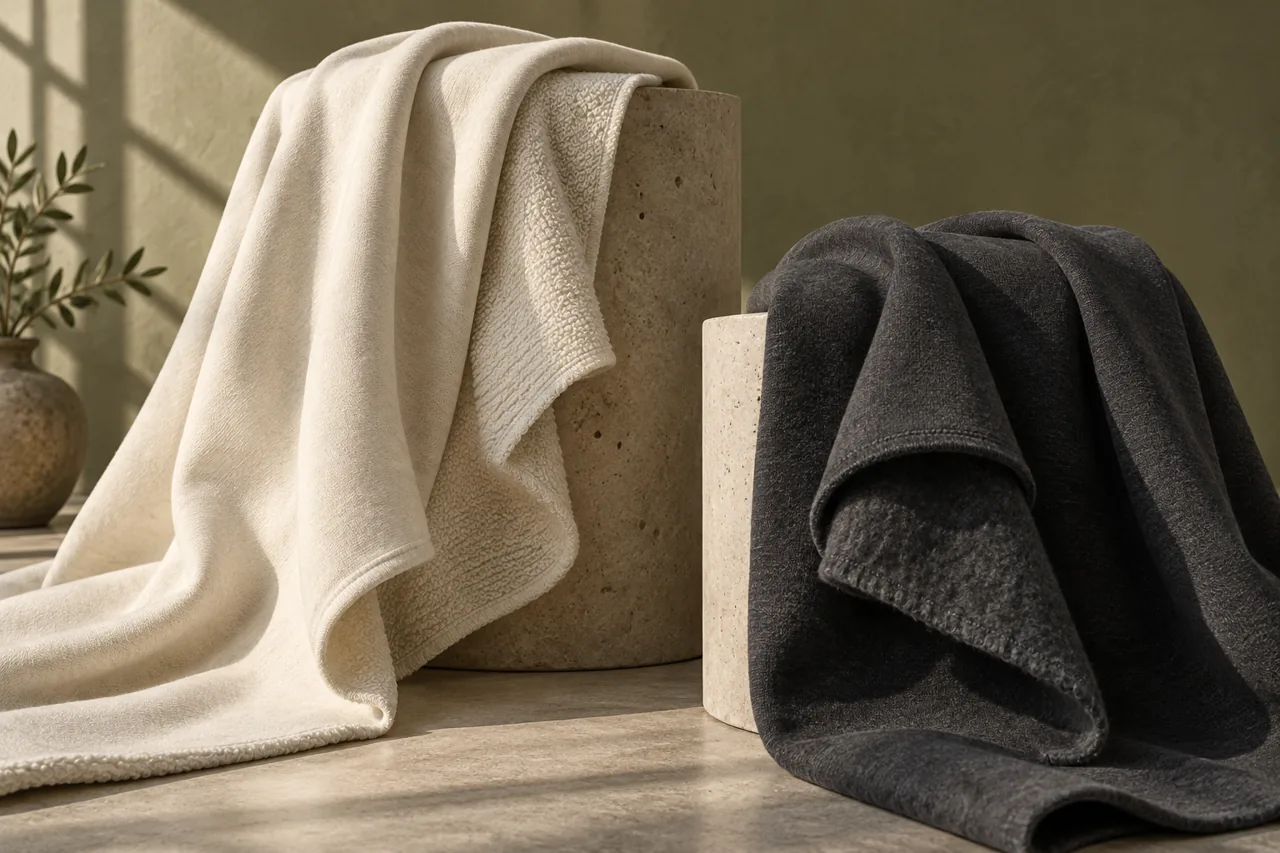
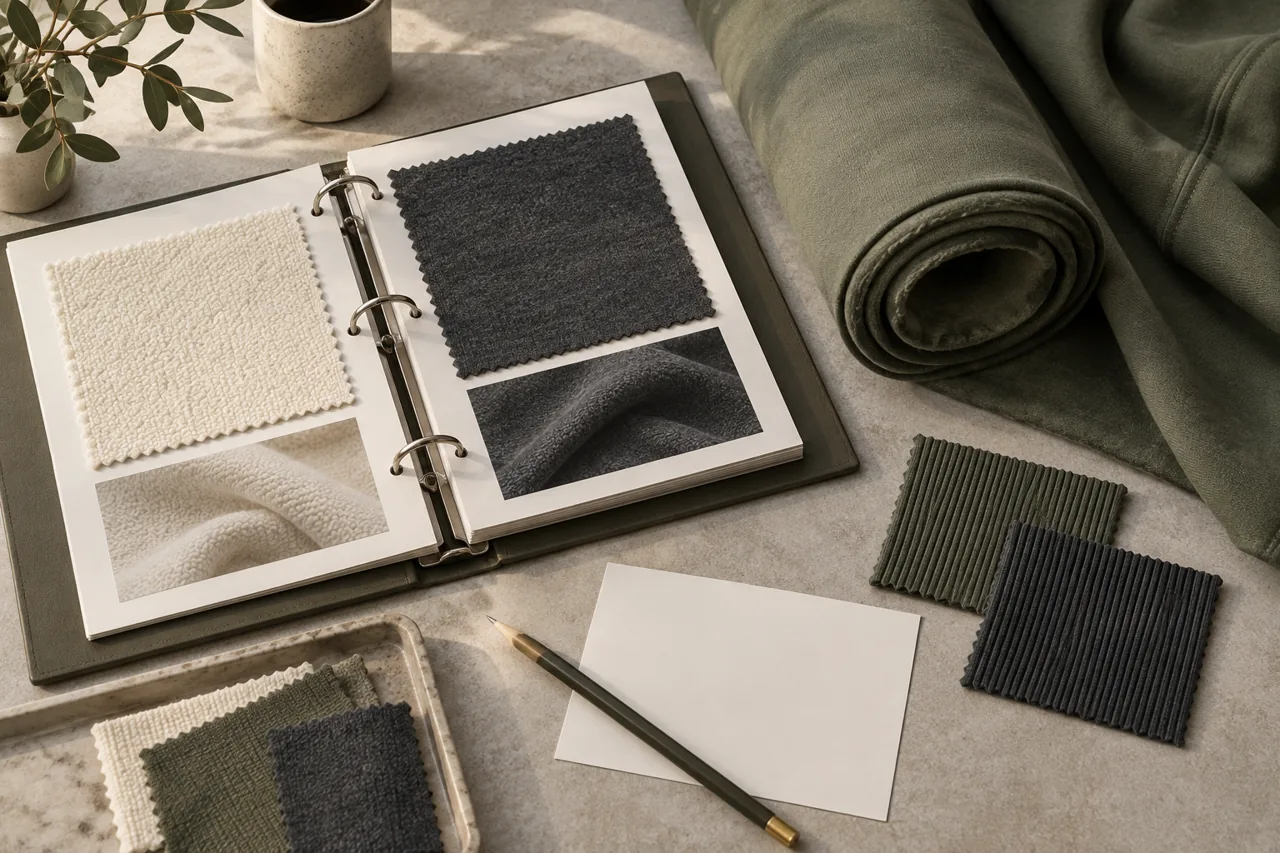
All six illustrations in this guide are original AI-generated concepts. They show selection and review ideas, not Athletic Rush inventory, factory photographs or measured test results.
Start with the inside surface, then confirm the construction
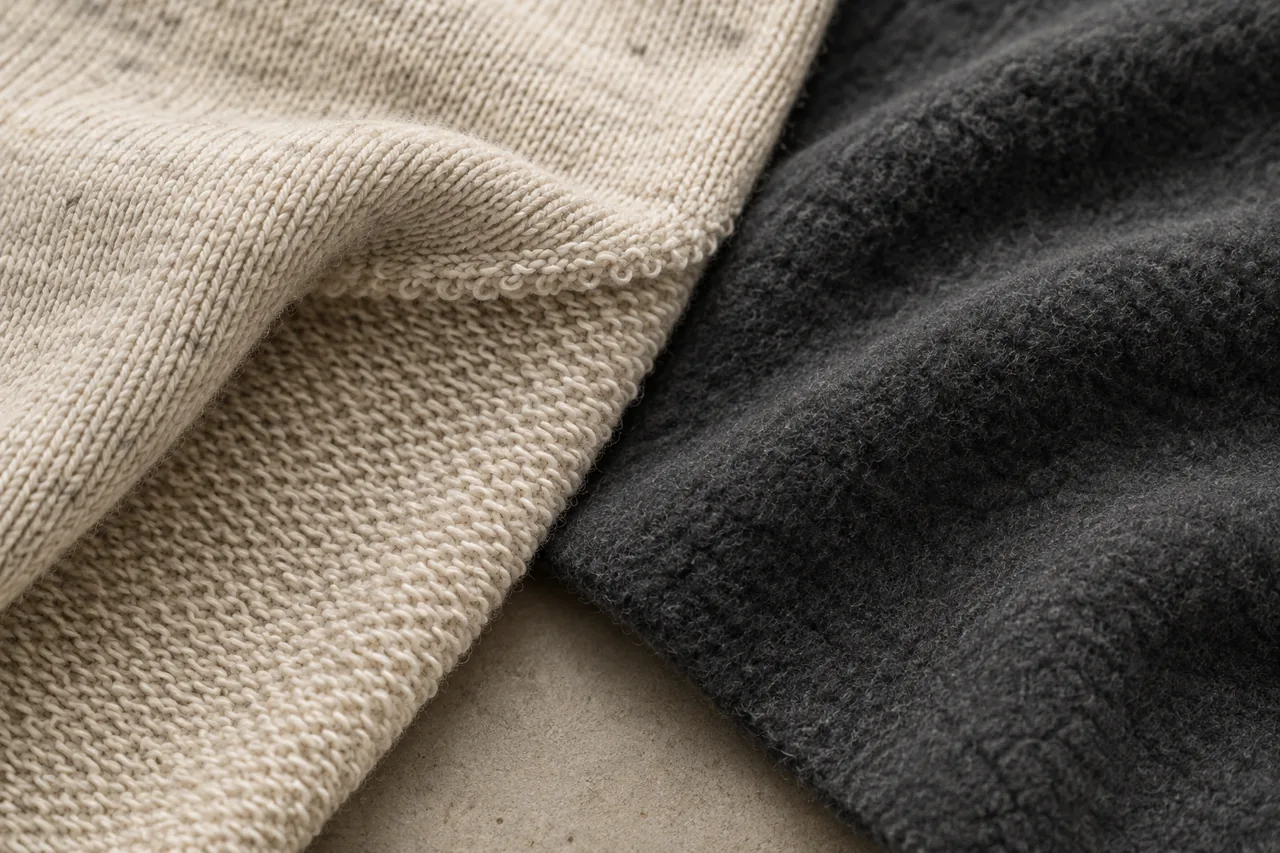
French terry and sweatshirt fleece can look similar from the outside. Turn the sample over: the loopback material shows an unbrushed knitted reverse, while brushed fleece has raised fibres on its inner surface. This article compares these sweatshirt materials, rather than using fleece as a catch-all name for every fuzzy fabric.
CottonWorks explains that industry French terry can be an unnapped two-end fleece construction with floats on the back. Brushing or napping differentiates the raised reverse of sweatshirt fleece. Its guide also distinguishes two-end and three-end constructions and notes that fleece can use cotton, blends or synthetic fibres. Consequently, neither terry nor fleece tells you the fibre composition on its own.
Ask the supplier to identify the face, reverse and construction of each swatch. Keep that description beside the swatch reference. A material sold as lightly brushed terry needs clarification: approve what is actually supplied rather than arguing over a name that different suppliers may use differently.
Compare the two options against your actual brief
Use this table to narrow the sample request. Each suggested check is an action for your development team. Actual performance differences must be established for the particular samples being compared.
| Decision | French terry candidate | Brushed fleece candidate | What to approve |
|---|---|---|---|
| Interior appearance | Visible loopback texture | Raised, soft-looking reverse | A labelled reverse-side swatch |
| Intended wearing experience | Consider when an unbrushed interior is wanted | Consider when a brushed interior is wanted | Wear trial with the intended base layer |
| Surface consistency | Inspect loop appearance across the piece | Inspect consistency of the brushed surface | Accepted sample and defect examples |
| Silhouette | Review the complete hoodie, not the name | Review the complete hoodie, not the name | Front, side and back fit photographs |
| Decoration | Approve artwork on the actual face | Approve artwork on the actual face | Decorated sample after intended care |
| Repeat orders | Preserve material and finish references | Preserve material and finish references | Written limits on substitutions |
Avoid assuming French terry is always lightweight or fleece is always bulky. Weight and finish vary. Likewise, do not promise customers a temperature range, breathability rating or resistance to pilling from a fabric name. Ask for appropriate evidence if those claims matter to the product you are developing.
Write a wearing brief before asking for a price
Describe the customer's routine in one or two sentences. For example: a roomy everyday hoodie worn over a T-shirt for commuting, indoor work and short outdoor trips. Then list the priorities: preferred inner surface, intended silhouette, acceptable layering bulk and planned decoration.
A second brand might want a brushed-feel lounge hoodie with a generous hood. That is a different development brief even if both buyers initially ask for an oversized hoodie. Neither example establishes a universal seasonal fabric rule; it gives the supplier enough context to propose relevant samples.
For your first comparison, ask for two clearly labelled candidates rather than ten loosely described options. Keep the garment size, pattern and decoration brief as consistent as practical so you can understand what the material changes. If several specifications change at once, record them instead of attributing every difference to brushing.

During the wear review, ask the wearer to sit, reach forward and put on the outer layer they would normally use. Record specific observations: the sleeve feels crowded under the jacket, the hood pulls backwards, or the inner surface feels preferable against a short sleeve. Those comments are more actionable than simply writing comfortable or uncomfortable.
Compare equivalent specifications, not just matching GSM
GSM means grams per square metre: fabric mass per area. It is useful information, but an equal GSM figure does not make two fabrics interchangeable. Ask whether quoted weight refers to the finished material and agree how it will be checked, including an acceptable tolerance.
Your comparison sheet should include composition, construction, finish, usable width, colour reference and intended care instructions. Where available, identify the face yarn and reverse yarn separately. This is especially helpful if a supplier describes a cotton face but quotes a different overall fibre blend.
Here is a hypothetical comparison, not an Athletic Rush stock specification: Candidate A and Candidate B are both quoted at 320 GSM, but one is loopback and the other is brushed. Record both as distinct candidates. Do not copy the approval for A onto B merely because the quoted mass is the same. Make and inspect the second sample before accepting the substitution.
Request prices against the same quantity, size range, decoration, packaging and delivery basis. Ask which changes are included in sample development and which create a new charge. A cheaper quote is not directly comparable if it silently changes the blend, finish, rib, hood lining or approved testing scope.
Inspect the hoodie where material layers meet
A swatch is a starting point. The actual hoodie shows how the chosen material behaves at the neckline, hood, pocket opening, cuffs and hem. Inspect those areas in the construction you plan to sell, including any double-layer hood or lined pocket.
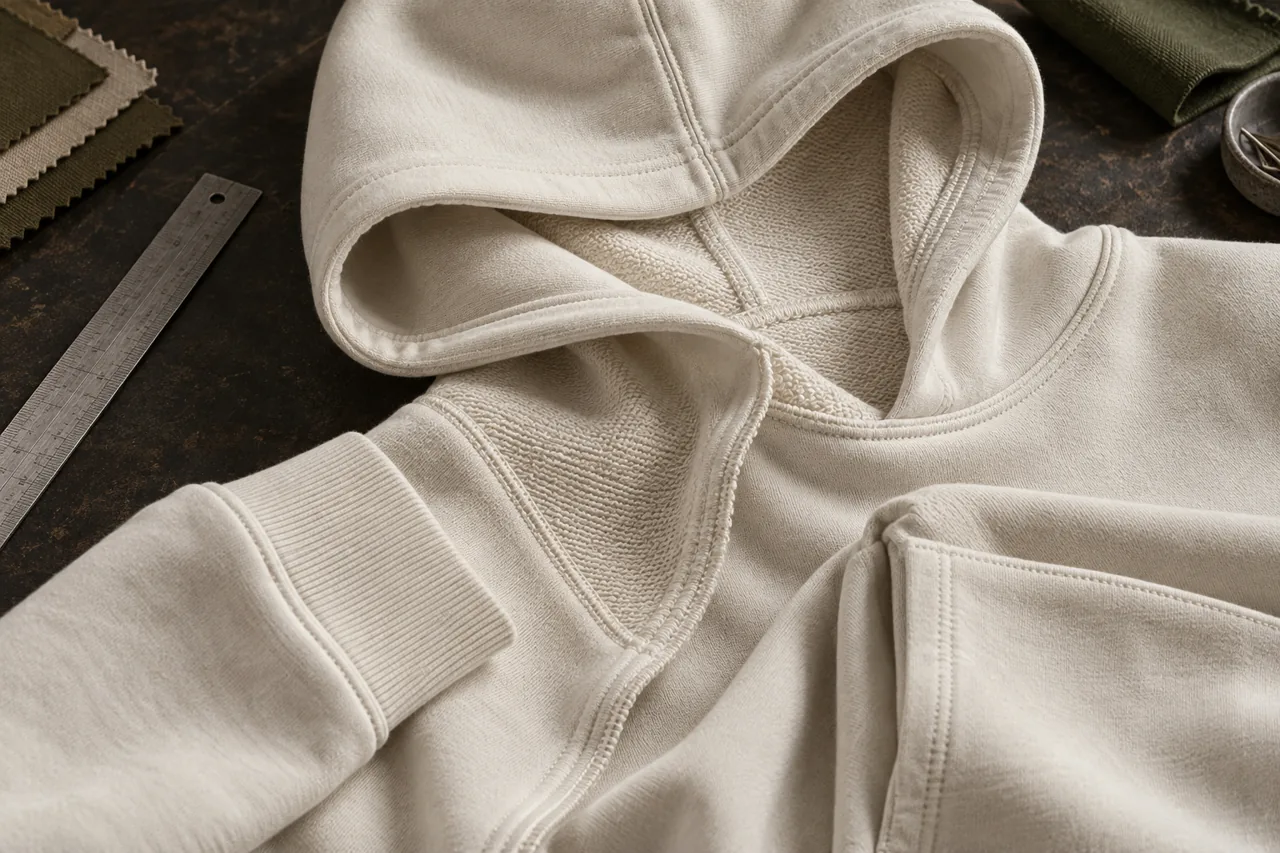
Lay the hoodie flat without stretching it. Check that the hood opening looks balanced, pocket corners sit cleanly and the hem is not visibly distorted. Turn it inside out and inspect the junctions where several layers meet. Then put it on: a tidy flat sample can still need a change in hood balance or sleeve shape.
Do not automatically solve a fit complaint by changing the fabric. Separate the observations. If the body length is wrong, compare it with the agreed measurements. If the measurements match but the outline is not what you wanted, review the pattern and material together. The related boxy hoodie fit approval guide covers that garment-level review in more detail.
Treat rib as its own approval item. Keep the cuff and hem rib reference with the body fabric, check their colour relationship under consistent light, and observe their appearance after the agreed care trial. Do not assume a matching colour name means the two materials will look identical.
Approve decoration on the chosen fabric
Do not transfer artwork approval from a T-shirt or a different hoodie material without checking the result. Request a sample using the selected fabric, intended colour, actual artwork size and agreed decoration process. The approval should identify those choices together.
For a printed hoodie, inspect edges, coverage, placement and the feel of the decorated area. Check it when worn as well as when flat. For embroidery, inspect the visible surface and reverse, and note any distortion or uncomfortable finish. If a method or setting changes, ask what must be sampled again.
The supplier should propose the process suitable for the actual material and artwork. Your role is to define the visual and wearing result you will accept, then approve an identified sample. Use the streetwear print sample checklist to record artwork version, placement and any outstanding correction before production.
Check care behaviour before approving the order
Keep one sample as the original reference and use another for the agreed care trial where possible. Record the sample identity, measurements, photographs and instructions before the trial. Follow the intended washing and drying conditions; do not change several conditions and then compare the results as if the test were controlled.
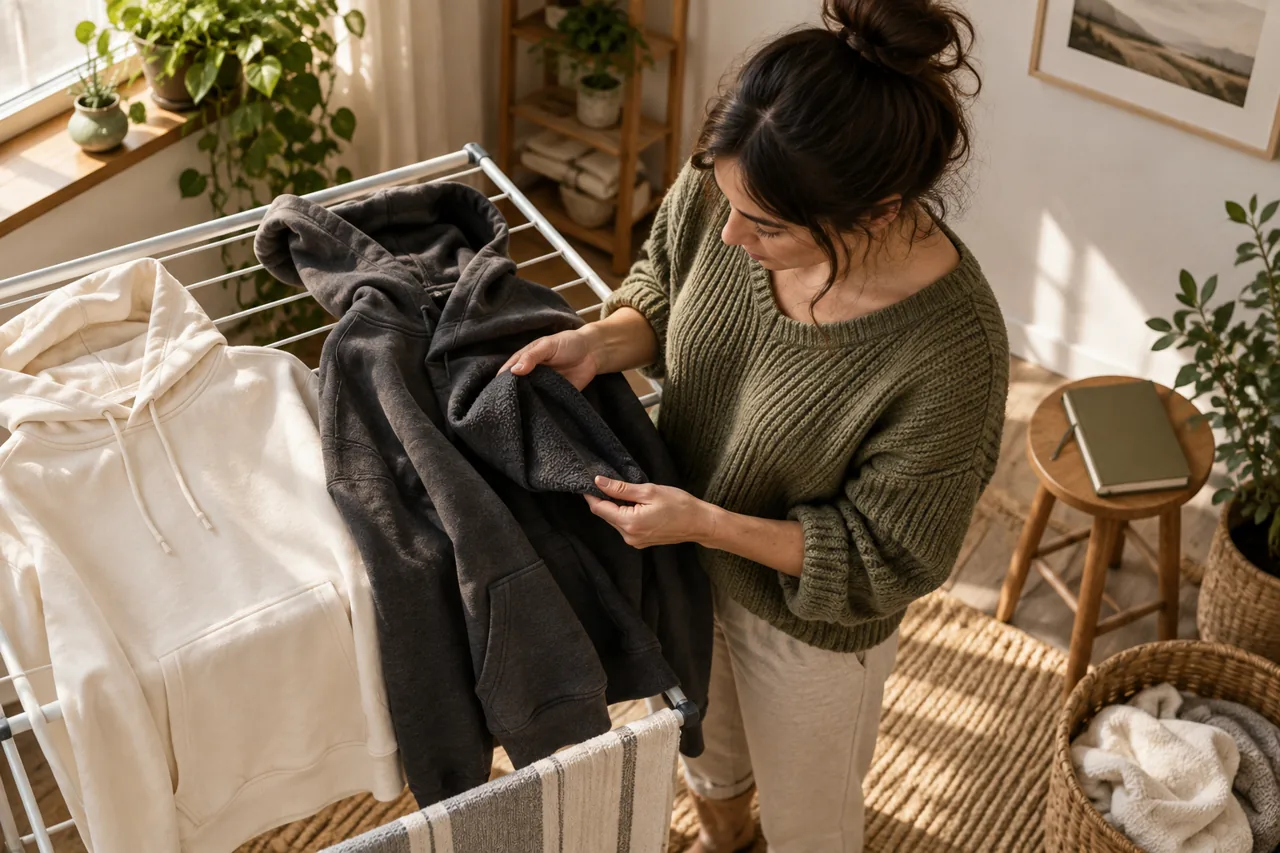
After the sample is dry and ready for measurement under your agreed procedure, review dimensions, seam alignment, colour appearance, rib shape and decoration. Inspect the inside surface too. Note visible lint, surface change or snagging if present, with photographs and the location. Do not claim that a single home wash proves long-term durability.
If a surface issue appears, send evidence to the supplier before approving an explanation or replacement. Ask whether the material, finishing or care instructions need investigation, and request a revised sample when necessary. A different finish is a change to the approved product, even when its outer colour looks the same.
For formal claims or contractual acceptance, agree the relevant laboratory methods, number of cycles and pass criteria with a competent testing provider. A buyer's sample review is useful quality control, but it does not replace a laboratory report. Avoid describing either candidate as shrink-proof or pill-proof on the basis of this checklist.
Send a specification that can be quoted and repeated
The best handover connects the physical sample to a written record. Give every candidate an identifier, then state which one is approved and for what purpose. If colour is approved but the fabric finish is still under review, say so explicitly.
| Brief field | What to record | Why it helps |
|---|---|---|
| Material reference | Supplier code and your retained swatch ID | Makes the decision traceable |
| Fibre content | Agreed overall composition and any relevant yarn detail | Avoids relying on a cotton-feel description |
| Construction and finish | Loopback or brushed reverse, construction if specified, finishing reference | Prevents a silent material swap |
| Finished weight | Target, tolerance and checking basis | Makes weight discussions specific |
| Colour and rib | Body colour approval plus separate rib reference | Keeps coordinated parts identifiable |
| Garment sample | Pattern version, size, hood construction and measurement sheet | Links fabric choice to the actual hoodie |
| Decoration and care | Artwork version, process, care trial and findings | Records what was reviewed |
| Production release | Approver, date, exceptions and permitted substitutions | Defines what may proceed |
An example instruction is: Please quote the hoodie using material sample FT-A, the retained unbrushed reverse reference, pattern H-02 and artwork version 3. Confirm the full composition and finished-weight tolerance before sampling. Do not replace the fabric or apply brushing without written agreement. This is a communication example, not a product currently offered under those codes.
Keep a retained swatch and the final garment reference after approval. When reordering, ask the supplier to identify any material, dyeing or finishing change before production. If the original material is unavailable, review the proposed replacement as a new decision rather than accepting similar as a complete specification.
Frequently asked questions
Which is better for a first streetwear hoodie?
Neither is automatically better. Start with the intended inside feel and wearing brief, then compare identified samples within your budget. Choose the candidate that passes your garment, decoration and care review. A clearly approved ordinary material is a more useful starting point than an impressive name with an incomplete specification.
Is all sweatshirt fleece polyester?
No. Fleece can use different fibre compositions. Ask for the exact composition of the offered material, rather than inferring it from a fuzzy reverse or a soft hand. Confirm what the supplier means if the face composition differs from the overall fabric description.
Can I replace French terry with fleece without changing the design?
You can propose the change, but sample it before approving production. Review fit, layered seam areas, hood shape, decoration and the intended care procedure again. Keep the old and new material references separate so a later reorder does not mix them up.
Does a heavier hoodie fabric always mean better quality?
No. Weight should match the product brief; it is not an acceptance decision by itself. Inspect the finished garment and document the results that matter to your customer. A weight figure does not establish warmth, comfort or durability on its own.
Discuss your hoodie fabric brief with Athletic Rush
Explore Athletic Rush custom hoodies and the wider streetwear collection, then send your intended hoodie shape, target customer, quantity, sizes, decoration and preferred inner surface. If you already have a reference garment, include clear photographs of both sides of the fabric and explain what you want to retain or change. Availability, sample specifications and commercial terms should be confirmed for your project.
Email kamran@athleticrush.co or message Athletic Rush on WhatsApp to discuss the next sampling step.