 Sialkot, Pakistan
 Worldwide enquiries

Approve a streetwear print sample by checking the actual garment, artwork version, colour reference, dimensions, position, surface feel and appearance after agreed care. Record the result against one identified sample. A message saying “looks good” is not a reliable production specification when several versions are circulating.
For clothing brands, the goal is to make approval repeatable. The supplier should know exactly what has passed, what needs correcting and whether production may start. Your team should be able to compare the finished order with the same reference later.
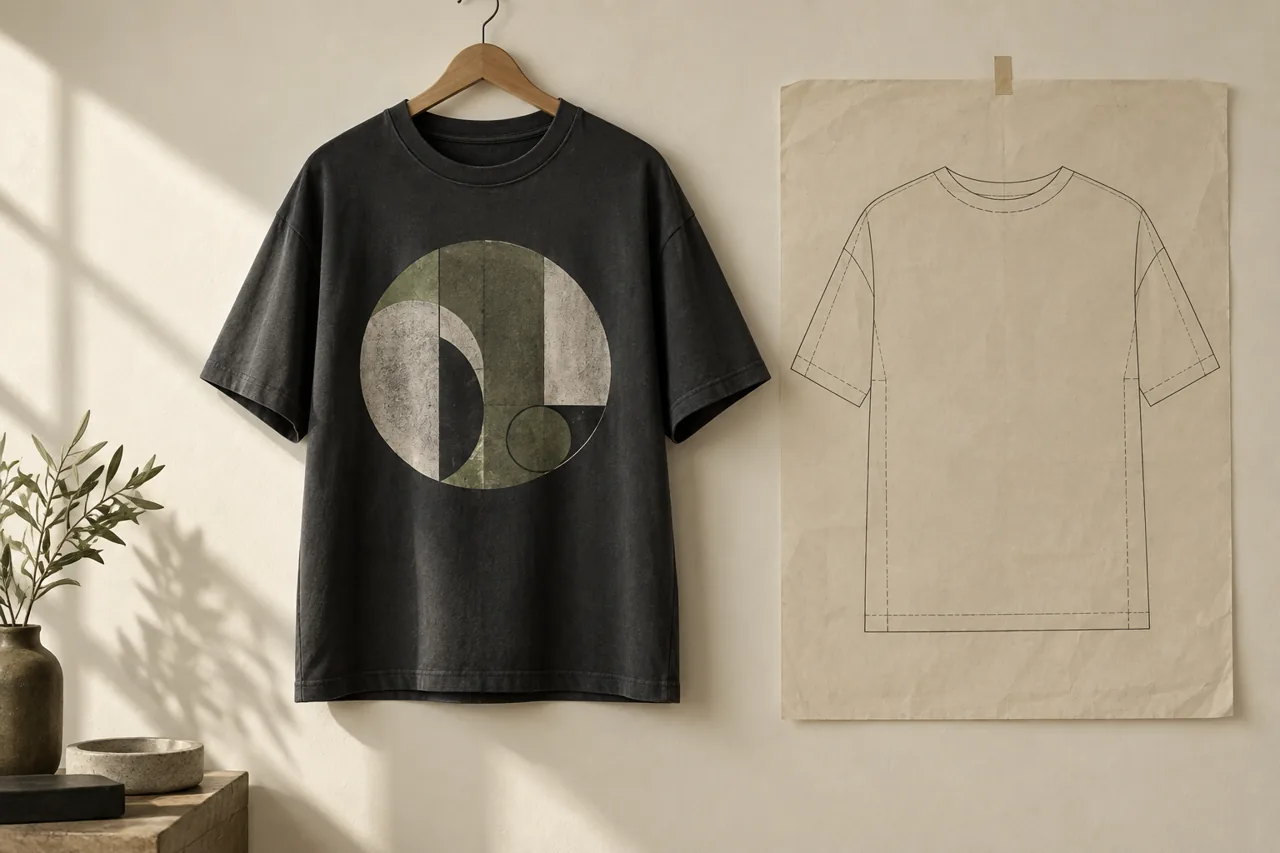
These original AI-generated images illustrate a review process. They do not show Athletic Rush stock, factory operations, laboratory testing or measured performance results.
Know which sample you are approving
A digital mockup, a print trial on spare fabric and a finished garment sample answer different questions. The mockup helps communicate appearance. A fabric trial helps assess a decoration approach. A finished sample lets you review the print together with the garment that carries it.
Start by asking what the sample represents. Is it the proposed production fabric and colour? Does it use the intended printing method? Is the artwork the latest revision? Has it already been washed or finished? Write down any substitution so an early development sample does not accidentally become full production approval.
Use a simple identifier, such as a style code plus artwork revision and sample date. The identifier itself can follow your own system; consistency matters more than the format. Put that reference in photographs, feedback and the final approval message.
If the print method is still undecided, first compare the trade-offs in our screen printing versus DTF guide. This article focuses on the next decision: whether a particular sample is ready to become the production reference.
Lock the review brief before inspecting details
Put the agreed artwork beside the garment and check that nothing changed during preparation. Confirm spelling, orientation, visible shapes, colour count and any deliberate distressed effect. A missing part of a deliberately worn-looking design can be difficult to discuss unless the approved artwork is available.
Record the intended design dimensions and garment position separately. A print can be the correct width and still sit too low. Identify the reference point for each measurement: for example, from a named garment seam to the top edge of the artwork. State whether left and right refer to the wearer.
Use the large T-shirt print placement guide to define the measuring points. Do not invent a tolerance after inspecting the delivery. Agree acceptable variation with the manufacturer before approving production, taking the garment and printing process into account.
| Item to identify | Why it matters | Evidence to keep |
|---|---|---|
| Garment style and size | The same graphic can sit differently on another fit | Style reference and sample size |
| Fabric and colour | The sample needs to represent the intended product | Fabric reference and shade identification |
| Artwork version | Old files can look similar at a glance | Named source file and dated preview |
| Print method | Different processes should not be treated as equivalent | Supplier confirmation of the intended method |
| Dimensions and position | Size approval does not automatically approve location | Marked drawing and measurement photographs |
| Care history | A fresh and a previously washed sample are different references | Recorded preparation and care procedure |
Compare colour under agreed conditions
Compare the physical sample with the agreed physical colour reference where colour is important. A phone photograph is useful for discussion, but its appearance depends on capture, lighting and display settings. Do not use an uncalibrated screenshot as the only evidence that a production shade is correct.
X-Rite explains that two samples may appear to match under one light source and differ under another, a phenomenon called metamerism. Its visual evaluation guidance supports using controlled viewing conditions when assessing colour. Agree with the supplier which conditions and reference will govern approval rather than moving between random room lights.
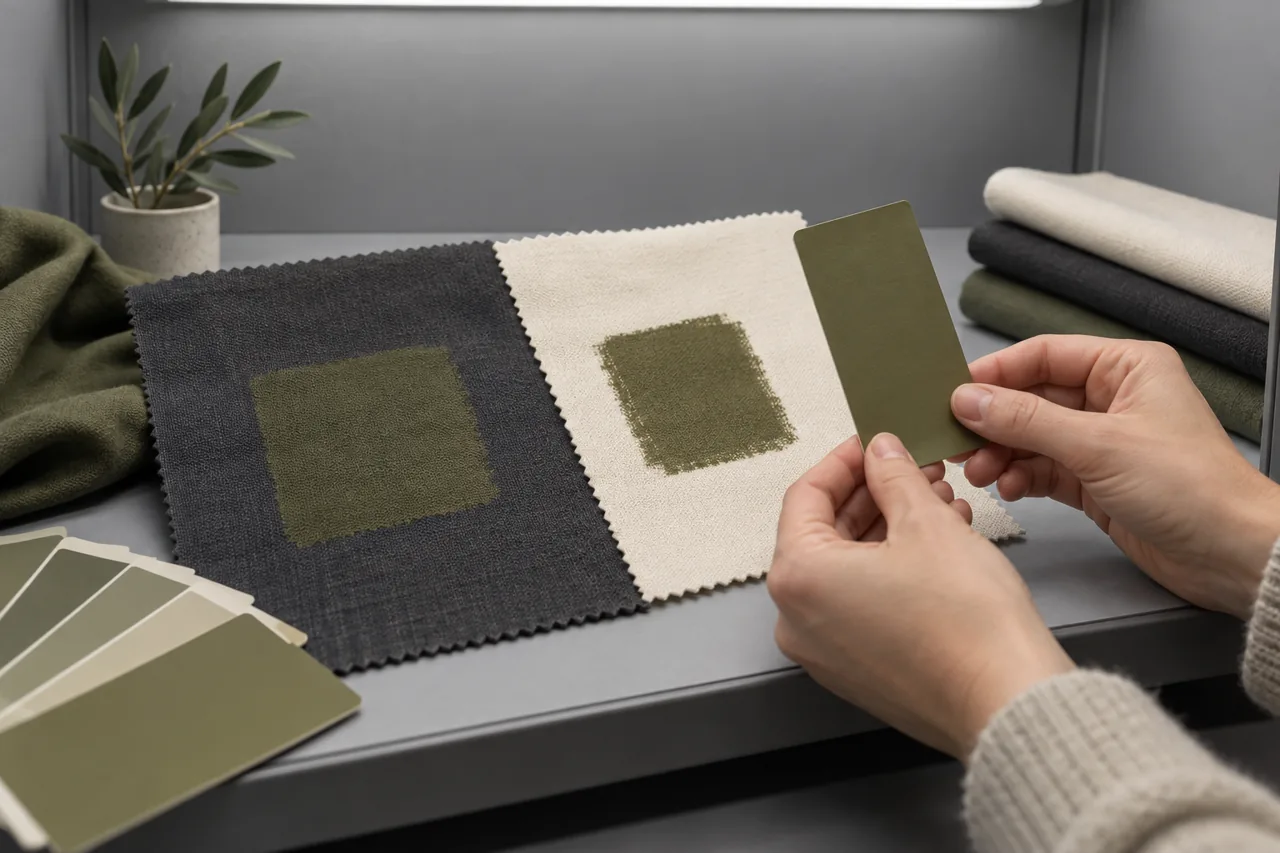
For a small brand without a formal colour programme, the practical starting point is a documented, consistent comparison with a retained sample. If the customer requires instrumental measurements or a formal tolerance, arrange the relevant process with the supplier or testing provider. Do not describe a casual visual comparison as formal colour approval.
Check the print on each planned garment colour when the appearance is important to the collection. Approval of a pale graphic on ivory does not, by itself, document how the same graphic should look on charcoal. Record accepted differences explicitly instead of leaving the production team to interpret them.
Inspect detail at normal distance and close up
First view the garment as a customer would wear it. Does the graphic communicate the intended visual weight? Is the main design readable? Do the artwork and garment proportions work together? Then inspect fine detail.
Look for unwanted marks, uneven-looking edges, missing small elements, unclear lettering and visible misalignment between intended colour areas. Separate a deliberate texture from an accidental inconsistency by comparing the sample with the artwork. Photograph the exact area under discussion rather than sending several unlabelled close-ups.
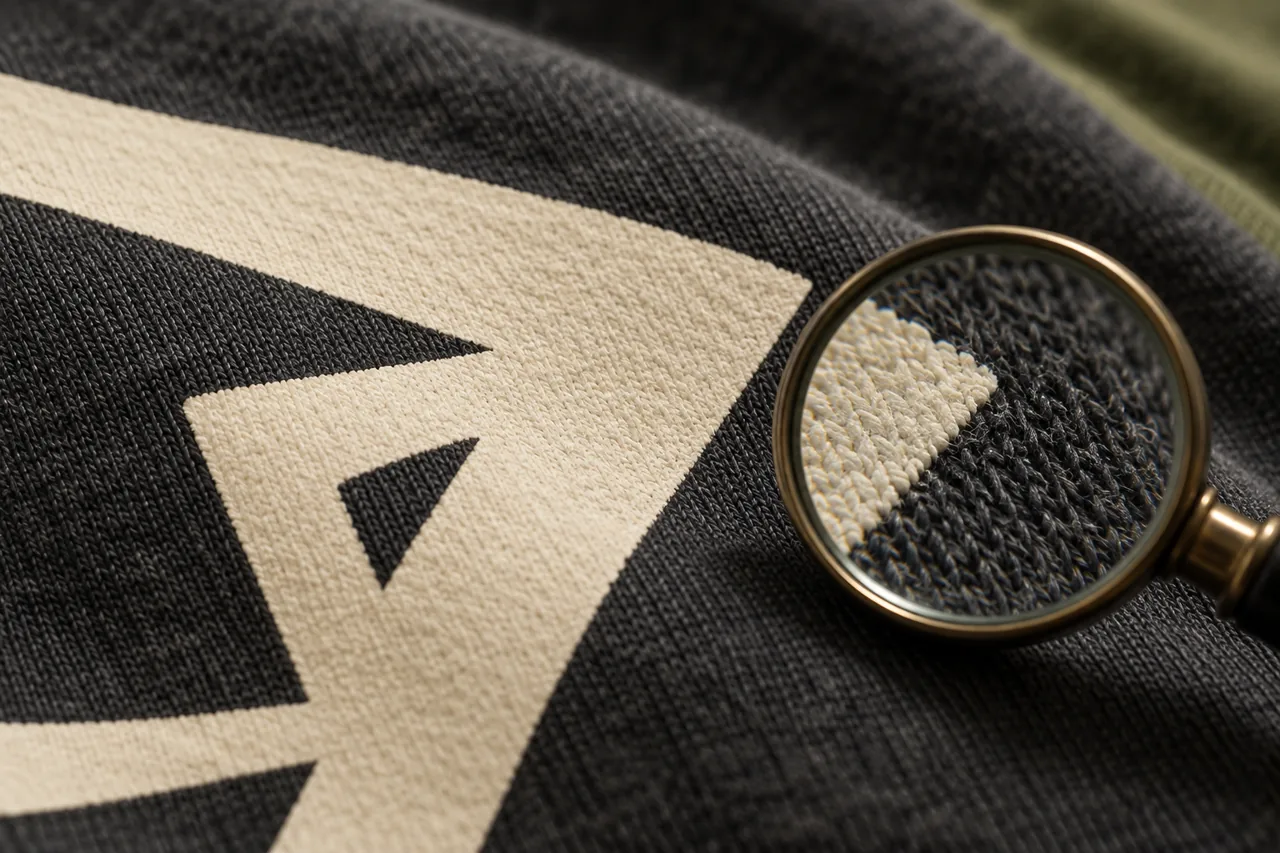
Do not make the close-up your only purchasing criterion. An enlarged photograph can reveal tiny irregularities without showing whether they are meaningful at normal viewing distance. Conversely, a good full-garment photograph can conceal a detail that matters to a small logo. Review both and agree the acceptance standard.
Avoid improvised destructive demonstrations as a substitute for an agreed assessment. If durability is a requirement, specify an appropriate procedure and criteria. A supplier's quick video can support a discussion, but it should not become an unsupported claim about every finished garment.
Measure placement on the complete garment
Lay the sample in the agreed measuring condition and confirm the artwork dimensions. Check the named distance to the neckline, seam or other reference point. Keep the tape or ruler in the photograph when reporting a placement issue, without pulling the garment into a different shape.
Then review the garment on a wearer or suitable form. A graphic that appears centred on the table may not create the intended look once the garment hangs. Oversized bodies, wide sleeves and short lengths can change how a design reads in use.
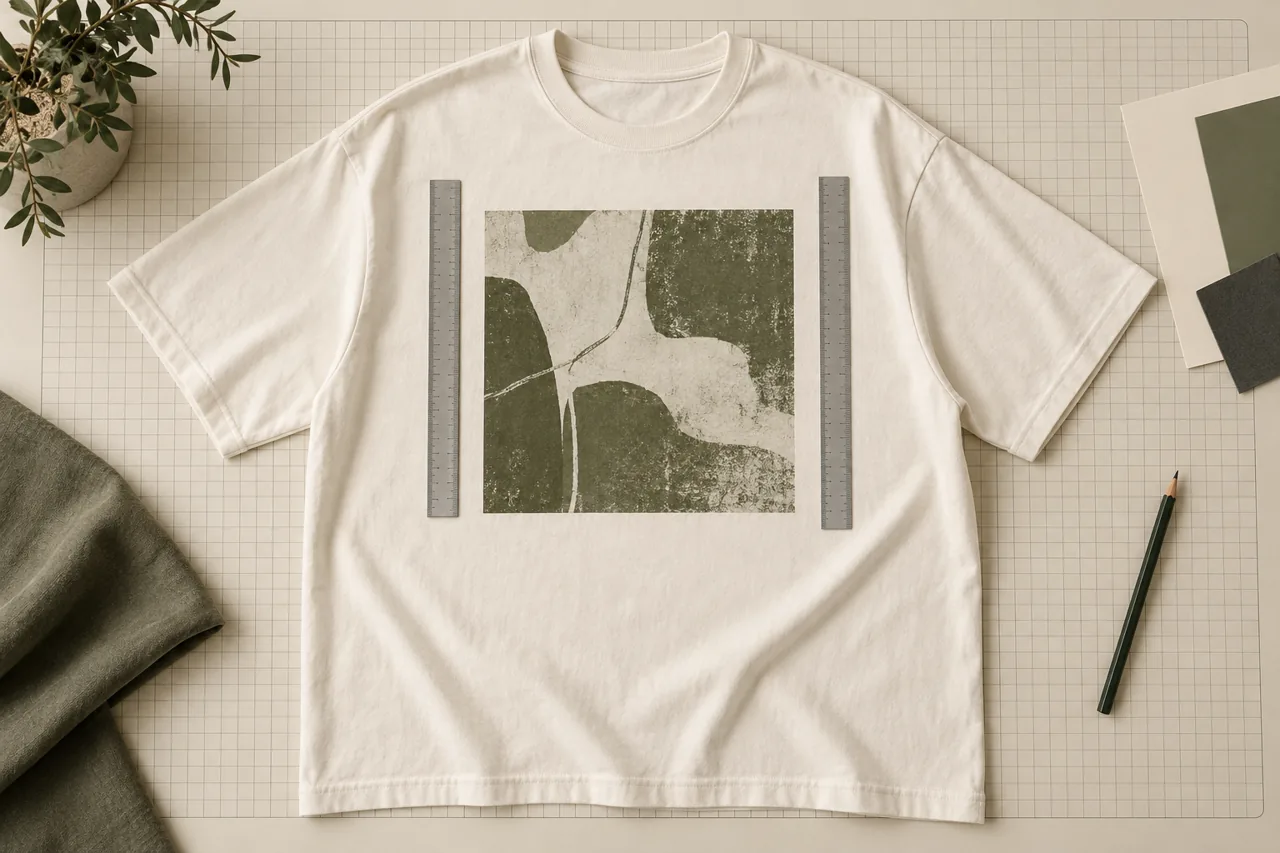
Decide how the print will be managed across the size range. Will all sizes share the same graphic dimensions? Will the position use the same reference measurement? Are separate print sizes needed? Ask the manufacturer to flag a conflict before production rather than assuming a middle-size sample answers every question.
For a new fit, link decoration approval with the T-shirt size chart. If garment dimensions change after the print sample is approved, confirm whether the position needs another review.
Review feel and care without inventing test claims
Handle the printed area and compare it with the approved expectation for that printing method. Consider surface texture, flexibility, coverage and how the garment drapes. Describe what you observe rather than treating one particular feel as universally superior.
Agree how the sample will be cared for before assessing it afterwards. Record the garment's intended instructions, the procedure used and which observations you are reviewing. Keep an unwashed reference where practical. Photograph samples under comparable conditions so a change in lighting is not mistaken for a change in the print.
AATCC publishes a specific method for accelerated laundering colourfastness. This illustrates why a formal test is more than an unspecified wash: the method and the question being assessed matter. A home care check is useful development information, but it is not evidence that a product has passed that laboratory method.
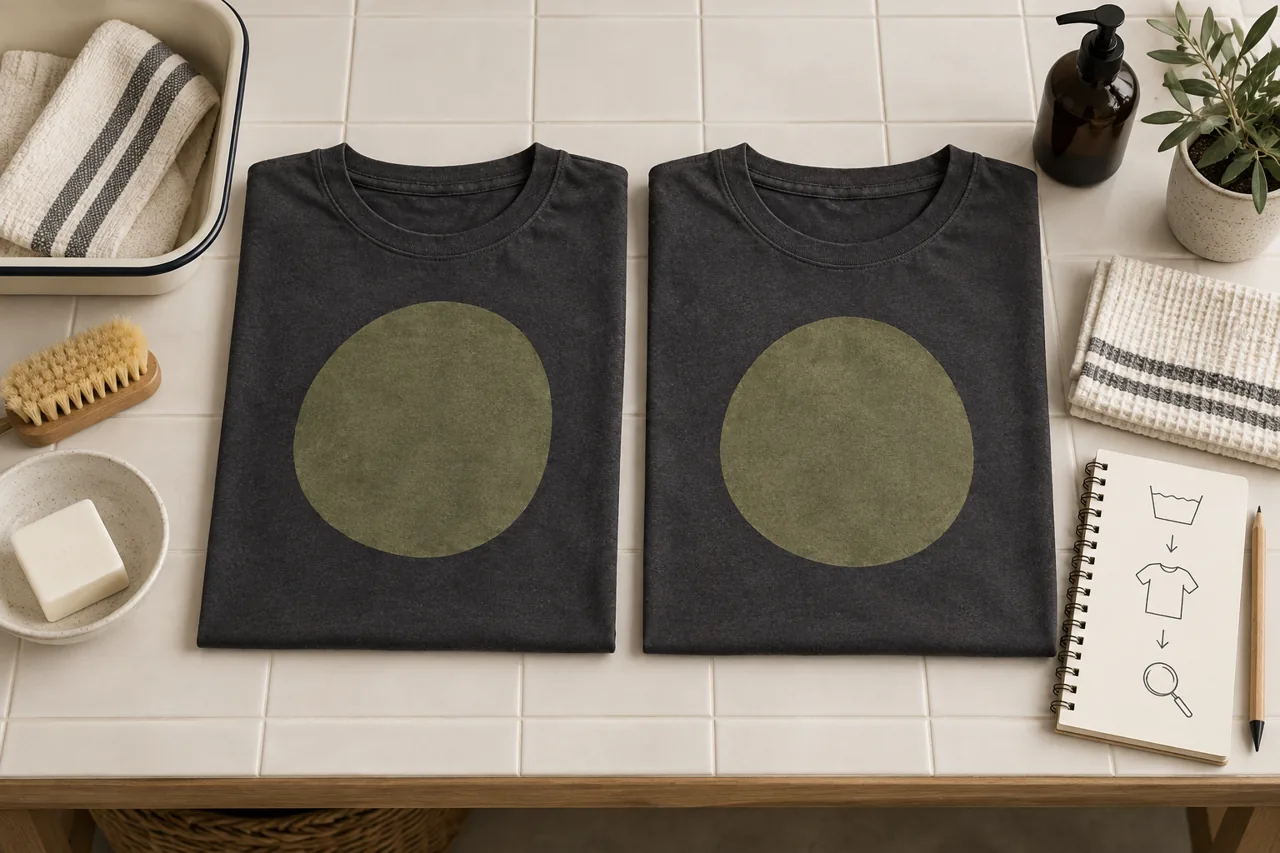
After the agreed care procedure, review appearance and garment dimensions together. Record visible colour change, damage or distortion as observations requiring assessment, without guessing the manufacturing cause. The T-shirt shrinkage guide explains how to document dimensional change separately.
If the care result is unacceptable, pause the affected approval and ask the supplier for an explanation and revised sample. Do not solve an unexplained problem merely by changing the customer-facing care instruction without checking that the proposed instruction is appropriate for the actual product.
Write feedback that leads to one clear decision
Separate each issue into an observation, a requested correction and the evidence needed to close it. For example: “The artwork sits below the position in drawing revision B. Please return it to the specified reference and send a measured full-front photograph.” If the change affects feel, colour or durability, a photograph alone may not close the issue.
Use three clear outcomes: approved, revision required, or approval limited to a named aspect. Limited approval needs particular care. “Artwork approved; placement not approved; do not start bulk” is clearer than “approved with comments.”
| Review outcome | Meaning | Next action |
|---|---|---|
| Approved as reference | The identified sample meets the agreed brief | Record production release and retain the reference |
| Revision required | One or more material points remain unresolved | Issue numbered corrections and review the revised evidence |
| Artwork only approved | Design is accepted but garment or execution is not | Keep production on hold until remaining points are closed |
| Provisional development approval | A substituted material or process was used | Identify what needs rechecking on the final specification |
Keep a production reference and a change record
Retain the approved sample with its identifier, photographs and written decision. Ask the supplier to retain a matching reference where practical. Confirm which specification the production order references, especially if several colourways or artwork versions were sampled.
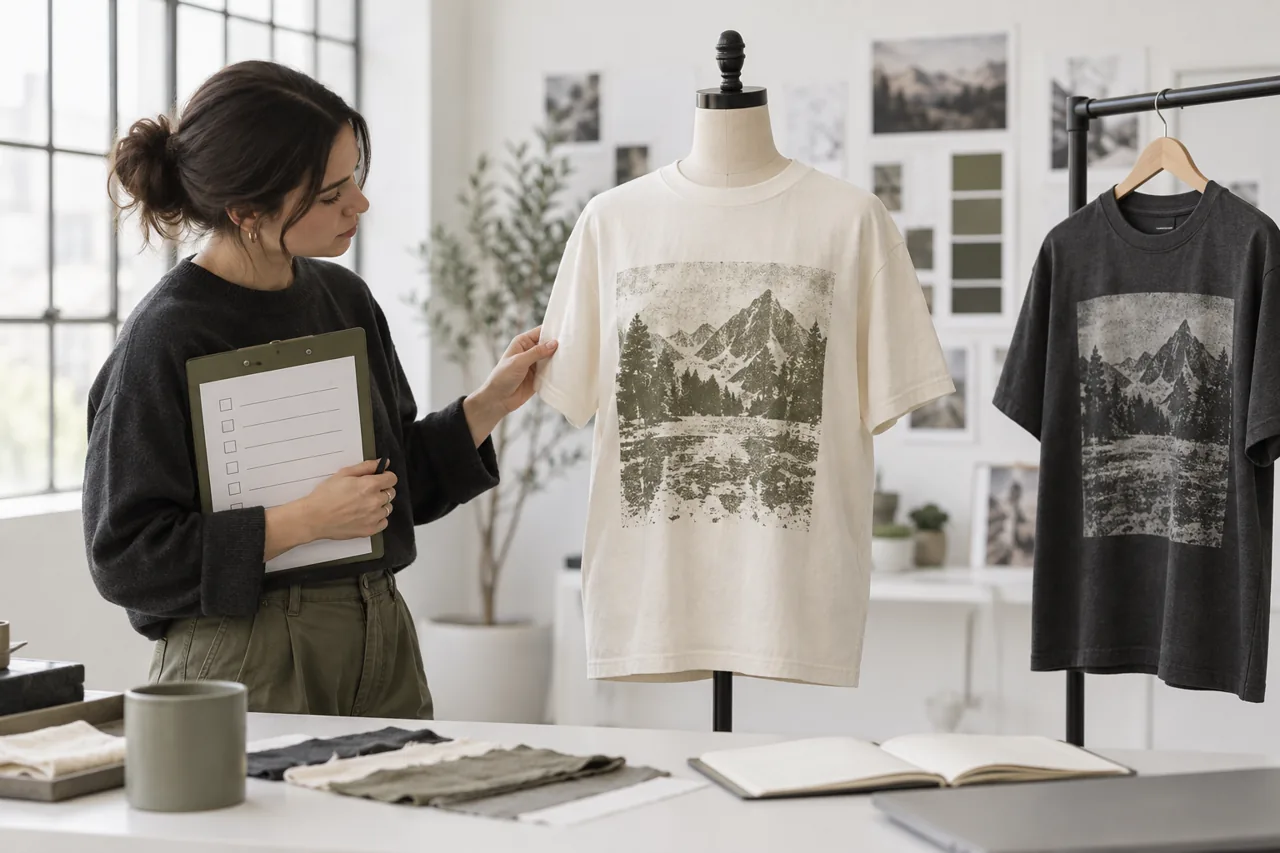
If the supplier proposes a change after approval, ask what changed and why. A new fabric, artwork revision or decoration process should trigger a review of the affected approval, not a silent substitution. The degree of resampling should follow the significance of the change.
For delivery inspection, compare the order with the accepted reference and order details. Keep customer preference separate from a production discrepancy: deciding later that a smaller logo would look better is different from receiving a logo smaller than the approved specification.
Frequently asked questions
Is a photograph enough to approve a print sample?
It can help confirm visible artwork and document revisions. It cannot fully communicate surface feel, garment drape or performance after care. For a new product, use a physical sample when those factors matter to your purchasing decision.
Do I need a sample for every colourway?
Agree a sampling plan that represents the variations in the order. Different garment colours, artwork colours or printing processes may introduce questions that one sample does not answer. Ask the supplier to explain what each sample covers and what remains unverified.
Should I approve the artwork before the sample arrives?
You can approve a named artwork version for sampling while keeping bulk production approval separate. State the scope clearly so an artwork sign-off is not interpreted as approval of the finished garment.
What if the revised sample is late?
Reassess the delivery plan with the supplier and identify the unresolved decisions. A deadline does not make an unchecked sample equivalent to an approved reference. Discuss options and consequences before committing to production.
Prepare your sample review with Athletic Rush
Send your artwork version, garment reference, planned colours, quantities and the points you need the sample to prove. Explore Athletic Rush streetwear, then email kamran@athleticrush.co or share your brief on WhatsApp.
A useful brief identifies the decision you need to make. A useful approval identifies the sample and specification you are ready to produce.