 Sialkot, Pakistan
 Worldwide enquiries

Choose screen printing or DTF by comparing your actual artwork, garment, quantity per design and approved physical sample. A simple repeat graphic and a collection of many small artwork runs create different production problems. Neither method is automatically the premium option, and a low unit quote means little if the print does not match the feel or appearance your brand needs.
This guide helps clothing-brand buyers prepare a useful comparison brief before ordering printed streetwear. It focuses on the decisions you can document: artwork versions, print coverage, garment compatibility, sample results and comparable costs.
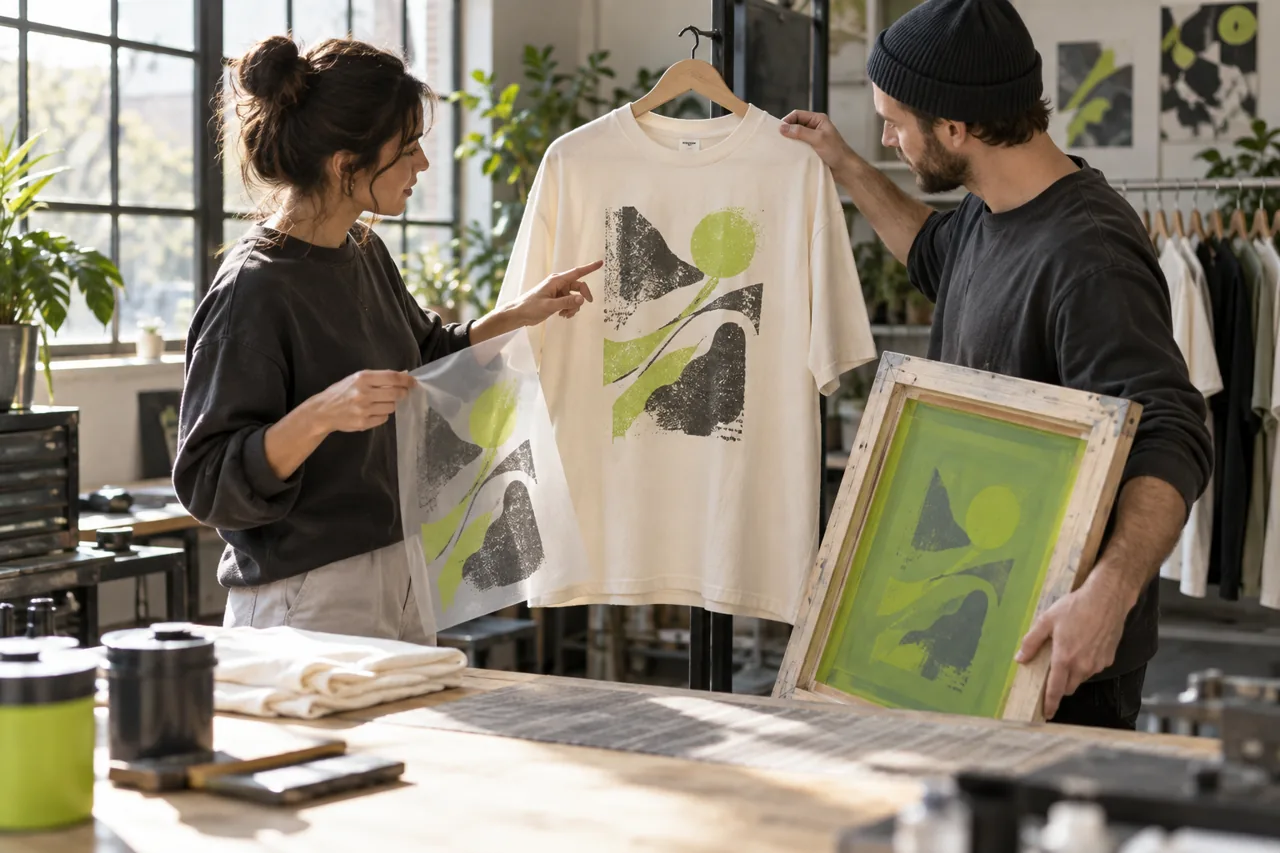
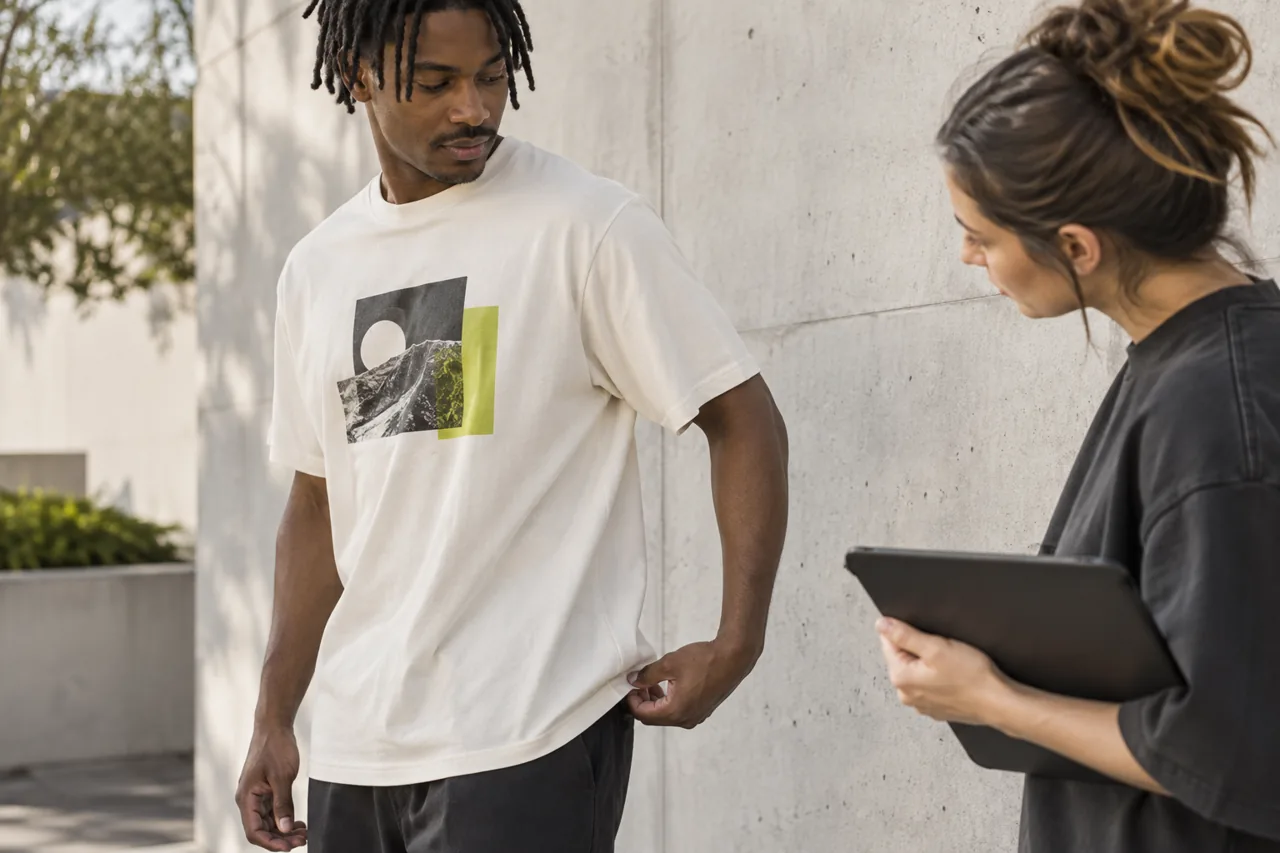
All images are original conceptual illustrations. They do not show Athletic Rush equipment, current inventory or measured test results.
Start with the same brief for both methods
A fair comparison needs the same garment and artwork. If one quotation uses a different fabric, smaller back print or fewer decorated positions, the apparent price advantage may come from the changed specification.
Write down the garment style, composition, colour, approved size range and quantity split. Add the visible artwork width and height for each position, not just the dimensions of the file canvas. Identify which designs are identical and which change between garments. A collection of 120 shirts divided across six different graphics is not the same production brief as 120 copies of one graphic.
State what matters most: a subtle printed surface, saturated colour, small readable details, a particular special effect, or flexibility for later small reorders. Rank these priorities. Asking for every possible advantage without identifying trade-offs makes sample approval harder.
For artwork positioning, use our large T-shirt print placement guide. Keep placement approval separate from choosing the decoration process: the right method can still produce the wrong garment if the artwork sits in the wrong place.
What the two processes mean
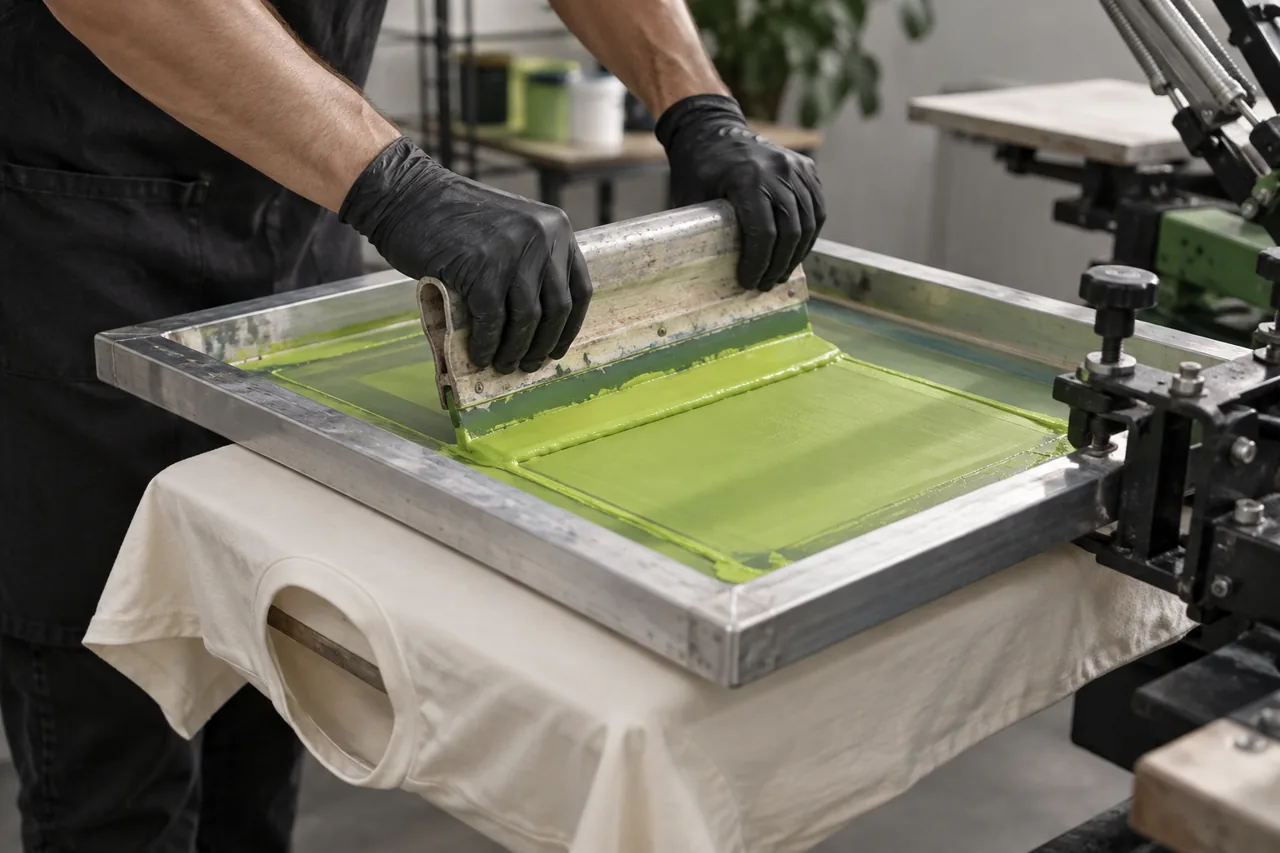
In direct screen printing, ink passes through the open areas of a prepared mesh stencil onto the garment. Multicolour work requires coordinated screens and registration. The ink must then receive the curing process specified for that system. Ryonet explains these stages in its screen-printing process guide.
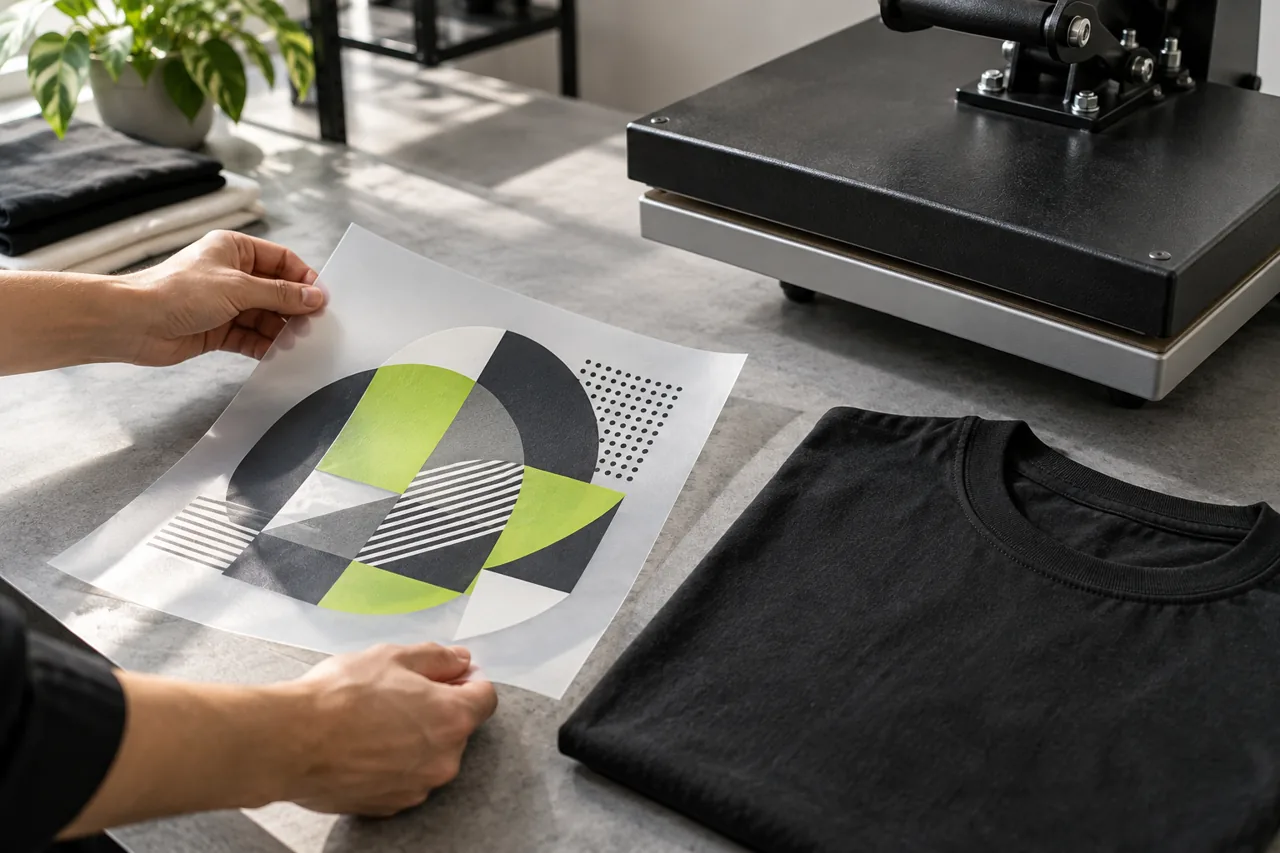
DTF means direct-to-film. Artwork is printed onto transfer film and subsequently applied to the garment using a heat press. Epson's DTF film printing guide describes a workflow involving printed film, powder processing, heat transfer and film removal. It also directs users to the instructions for the selected materials. A buyer should therefore request the decorator's validated application and care instructions rather than copy a universal temperature from the internet.
Confirm terminology on the quote. A screen-printed transfer is not the same thing as direct screen printing onto the shirt, and DTF is not DTG. Ask the supplier to name the proposed process clearly. The remainder of this comparison refers to direct screen printing and garment DTF transfers.
Use a buyer decision table
Treat this as a shortlist for questions, not a promise that one process always wins. The decorator's equipment, materials and workmanship influence the finished result.
| Your requirement | Question for the screen-print proposal | Question for the DTF proposal |
|---|---|---|
| One repeated graphic | What setup and screen charges apply to this exact artwork? | How is the transfer priced at this size and quantity? |
| Several small design runs | Which artwork changes require new preparation? | Can the different graphics share the quoted production arrangement? |
| Complex multicolour artwork | What separations, underbase and proof are required? | What colour and fine-detail limits apply at final size? |
| Large solid chest or back area | Which ink system and coverage produce the approved feel? | How does the finished transfer feel and drape at full coverage? |
| Special raised or textured finish | Is the requested effect available and separately sampled? | Is this an actual supported effect, rather than a printed simulation? |
| Small repeat orders | What setup is retained and what is charged again? | What transfer and application minimums apply on a reorder? |
A useful decision is conditional: “We approve this process on this fabric, with this artwork, at this size.” Avoid approving a method in the abstract and allowing the actual materials to change later without review.
Compare cost per design, not only total shirts
Request a breakdown that separates garment cost from decoration. Ask for artwork preparation, setup, print positions, sampling, packing and any other project charges to be shown consistently. Confirm whether the quote covers supplied garments or finished garments, and whether freight or taxes are included.
For your own comparison, calculate total quoted decoration cost divided by the number of acceptable decorated garments covered by the quote. Do not assume a fixed industry break-even quantity: artwork, print size, colour requirements and supplier workflow change the result.
Here is a purely illustrative calculation, using invented currency units rather than Athletic Rush prices. Suppose proposal A includes 90 units of preparation plus 2 units per shirt, while proposal B includes 10 units of preparation plus 4 units per shirt. At 20 shirts the totals are 130 and 90; at 100 shirts they are 290 and 410. This explains why setup matters. It does not establish the price or crossover point for either printing method in your project.
Repeat that calculation for each distinct design. Confirm whether artwork revisions, extra positions and repeat orders change the setup. A smaller launch can also be commercially sensible even if the unit cost is higher, when it reduces the quantity of unproven designs you must hold. Make the stock decision separately from the decoration-quality decision.
Check full-size coverage and hand feel
Hand feel is the way the decorated surface feels and moves. A small chest mark is not a reliable sample for a large solid back graphic. Ask to inspect the proposed artwork at its intended size on the intended garment.
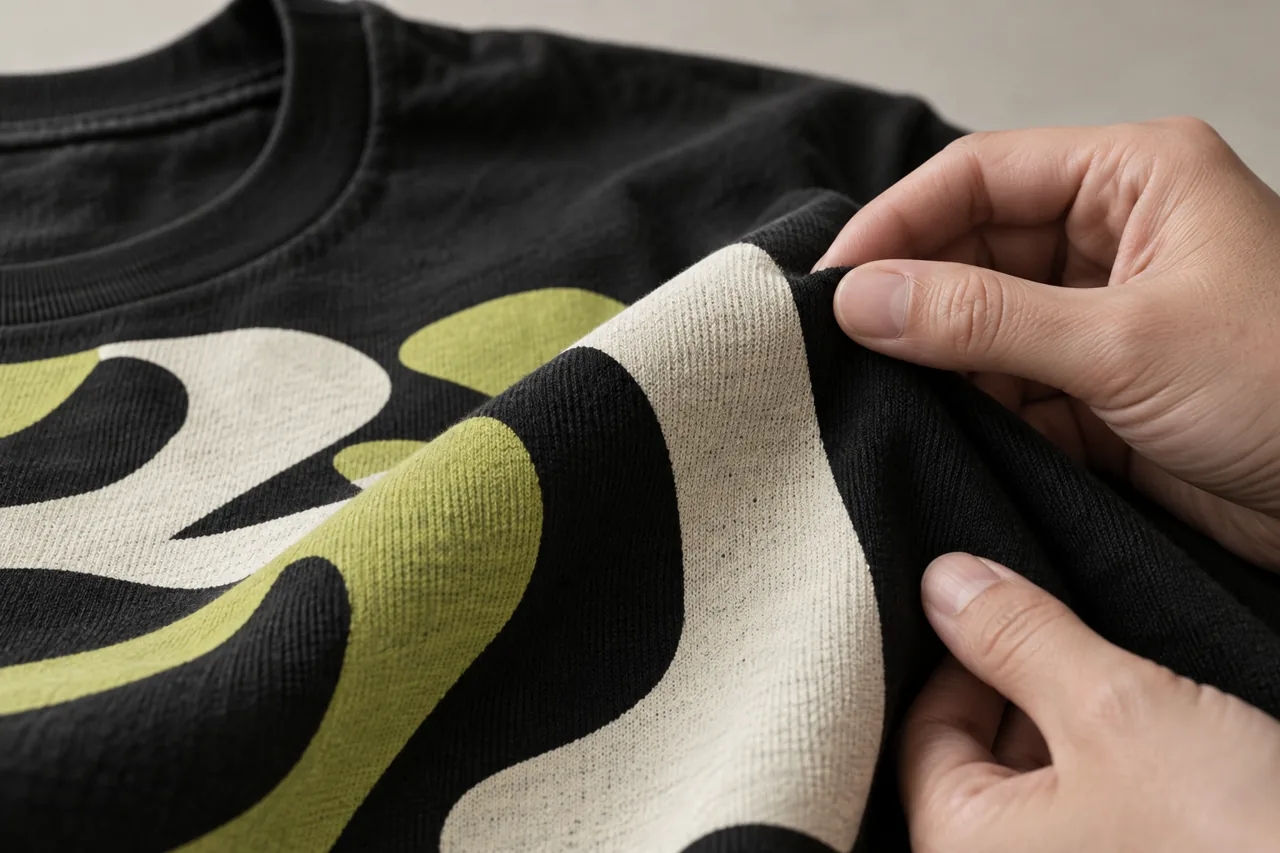
Place the sample flat, lift a natural fold, then examine it worn. Consider whether the decorated area interrupts the drape you want. Compare its inside feel, edge visibility, surface appearance and comfort with an undecorated area of the same shirt. Record observations in ordinary language, such as “the large chest panel feels too firm when seated,” rather than simply “poor quality.”
Do not use aggressive stretching as a substitute for an agreed test. A garment can be damaged by handling outside its intended use. If stretch performance matters, explain the wearer movement and ask the supplier to propose a relevant check.
Avoid assuming that every screen print is soft or every DTF transfer is heavy. The useful evidence is the exact approved sample. Equally, a thinner-looking print is not automatically the right choice if its opacity or appearance fails the brief.
Treat fabric and garment colour as part of the print specification
Keep the sample fabric consistent with production. Note fibre composition, surface texture, garment colour and any finish or wash treatment. Our cotton jersey specification guide explains how to make the underlying fabric brief clearer.
Ask the decorator to confirm compatibility with the proposed garment. For a dark garment, review coverage and the appearance of the graphic edges. For a heat-sensitive or unusual fabric, request a sample check for surface marking, colour changes and unwanted distortion. If the garment or dye lot changes later, ask whether the existing approval still applies.
Inspect under consistent lighting. A photograph taken under warm indoor lights can be a useful progress record but is not a complete colour reference. Agree what physical reference will control acceptance. If an exact colour target is important, state it before sampling and ask what can realistically be achieved with each proposal.
Plan artwork variants and reorders early
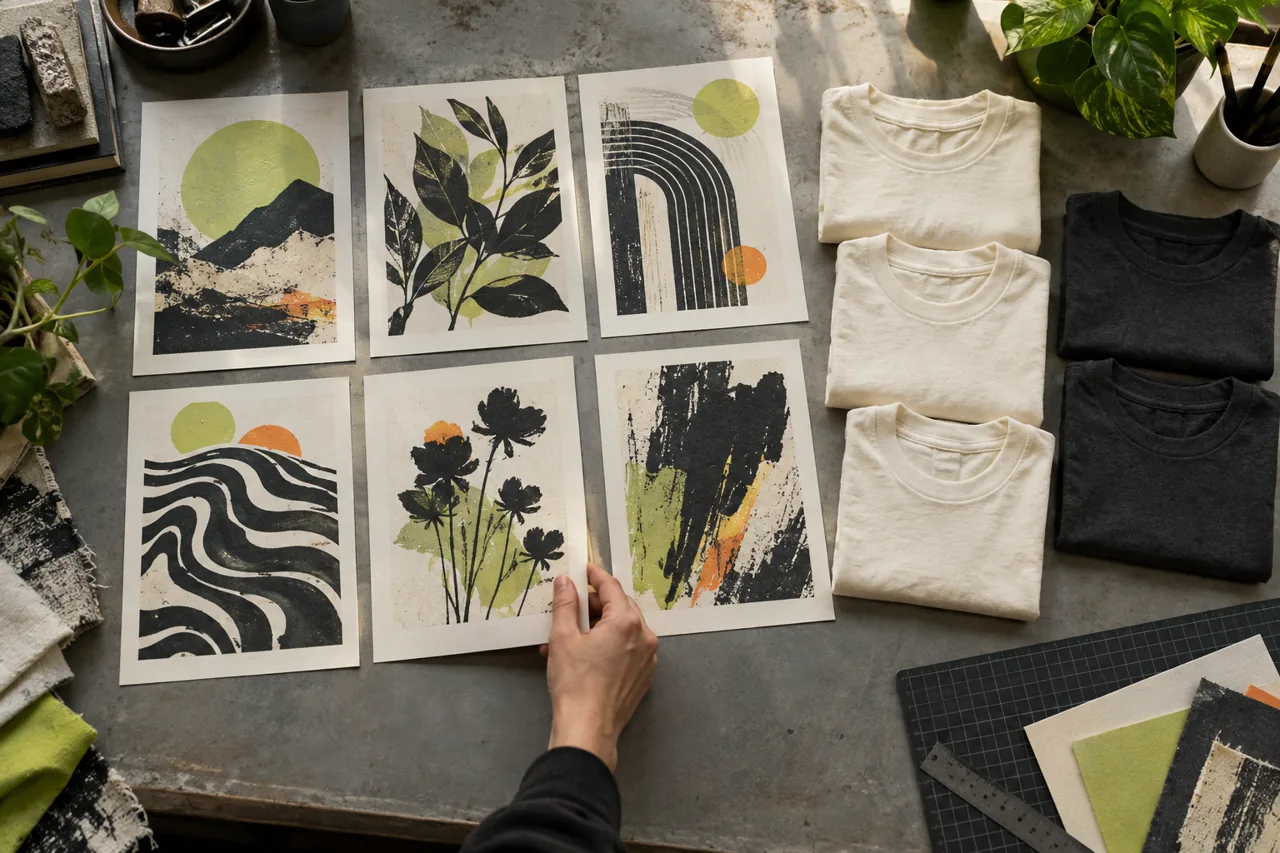
Create an artwork register with a version number, garment colour, print position, dimensions and quantity for each design. Ask the decorator to return a proof against that register. A filename such as “final-new-final” is not a reliable production instruction.
For a collection with many graphics, identify which choices must remain visually consistent. For example, the small front mark may stay the same while each back graphic changes. Require separate approval where the changed coverage could alter the appearance or feel.
For reorders, record whether the supplier retains artwork preparation, how long relevant records or materials are retained, and what must be checked again. Do not assume a future order will use identical materials simply because the digital artwork has not changed. Keep an approved physical reference where practical, with its date and specification attached.
Approve a sample with a written comparison record
Ask for comparable physical samples when both methods remain realistic candidates. If budget only permits one, record why that proposal was shortlisted and what the sample must prove. The sample should resolve uncertainty before a larger commitment.
| Check | What to record | Decision before bulk production |
|---|---|---|
| Identity | Garment, artwork version, print method and material reference | Matches the quotation and brief |
| Position and scale | Visible graphic dimensions and named placement references | Approved against the intended size range |
| Appearance | Colour, coverage, fine details and visible edges | Accepted with any exceptions written down |
| Feel and wear | Surface feel and drape during normal movement | Suitable for the intended product |
| Care result | Agreed wash/dry method, observations and photographs | Accepted or revised before release |
| Repeatability | Approved reference and checks for substitutions | Supplier confirms how changes will be handled |
Wash and dry the sample using the proposed care instructions, with the evaluation conditions agreed in advance. Photograph it before and after under similar lighting. Record visible changes rather than promising a universal number of washes. For garment measurements, follow the separate T-shirt shrinkage checking guide.
Look at print appearance and garment dimensions as separate results. If the shirt changes shape, it may also change how the graphic looks when worn. If a problem occurs, send the supplier the sample identity, care conditions and photographs, then request a revised sample or explanation. Do not approve bulk while leaving an unresolved result hidden in a message thread.
A short quotation brief you can copy
Send the following information with your artwork:
- Garment style, fabric composition, colour and size breakdown.
- Quantity for each artwork version, including expected reorder quantities if known.
- Visible print dimensions and placement for every position.
- Required colour reference, appearance and surface feel.
- Any special finish, with a physical or visual reference clearly identified.
- Request for direct screen printing and DTF options where suitable.
- Separate setup, sample, decoration and other project charges.
- Physical sample, proposed care instructions and approval requirements.
- Delivery destination and requested schedule, subject to supplier confirmation.
Then ask: “Which option do you recommend for this exact brief, what trade-offs should we expect, and what will the physical sample demonstrate?” This invites a useful technical response rather than a generic claim that one process is best.
Frequently asked questions
Is DTF suitable for a premium streetwear brand?
The process name alone does not determine the product's positioning. Judge the exact garment, graphic, feel, appearance and sample outcome against your brand brief. A well-presented photograph cannot replace handling the finished sample.
Is screen printing always cheaper for a bulk order?
Do not assume so. Compare actual quotations for the same garment and design breakdown, including setup and every print position. Quantity per artwork matters, and a supplier-specific quotation is more useful than a universal online threshold.
Can I approve colour and print feel from a digital mockup?
A mockup helps communicate layout and intent. It cannot prove physical feel, production colour, care performance or garment compatibility. Use it as a preparation step and approve the physical result separately.
Can I change the fabric after approving the print sample?
Treat a fabric change as a specification change. Ask the decorator whether compatibility, appearance or application conditions need another sample check. Record the revised approval rather than silently carrying the old one across.
Discuss your streetwear printing brief
Explore Athletic Rush streetwear and send your garment brief, artwork versions, quantities and required finish. Ask the team to confirm the available process, sampling scope, price and timing for your project.
Contact kamran@athleticrush.co or send the details through WhatsApp. Include a clear reference for the result you want, then use an agreed sample to make the final production decision.