 Sialkot, Pakistan
 Worldwide enquiries

To order custom cricket uniforms in bulk, define the match format, complete garment range, fit groups, fabric performance, artwork rules, player roster and approval process before production begins. Approve a production-representative sample and one controlled specification pack so cutting, sewing, decoration, personalization, quality checks and packing all follow the same reference.
This guide is for cricket clubs, schools, academies, leagues, teamwear brands, retailers and distributors building a repeatable uniform programme rather than buying an isolated batch of shirts.
Start with a comparable quotation: Explore the Athletic Rush cricket range, then compare supplier quotations against the same garment, fabric, decoration and delivery requirements. Email kamran@athleticrush.co or contact Athletic Rush on WhatsApp at +92 327 9008337. Share your product list, quantities, destination and required date so the quotation can be checked against one clear brief.
1. Define the Cricket Kit by Format and Use
“Cricket kit” is not a complete manufacturing brief. The clothing can change by format, competition, climate and whether the order covers match play, training or travel.
Build the RFQ around exact products, such as:
- Short-sleeve and long-sleeve match shirts
- Match trousers
- Sleeveless or long-sleeve sweaters
- Training shirts and shorts
- Warm-up tops, tracksuits and travelwear
- Playing caps, sun hats and other soft accessories
- Staff and coach garments
- Home, away, tournament or limited-overs colourways
- Traditional white or cream kits where required
- Replacement and spare garments
For every item, state the intended competition, estimated quantity, size range, fit group, colourway, personalization, destination and required arrival date. Keep playing kit, training kit and supporter merchandise as separate styles even when they share visual branding.
Cricket regulations can differ between international, national, league, school and tournament play. The ICC Clothing and Equipment Regulations apply to international matches and set detailed controls for logos, commercial identification and clothing. Buyers should also obtain the current rules from the governing body or competition that controls their own order before artwork approval. The official ICC Playing Conditions and regulations are a useful reference, but they do not replace local competition requirements.
2. Choose the Uniform System Before Final Artwork
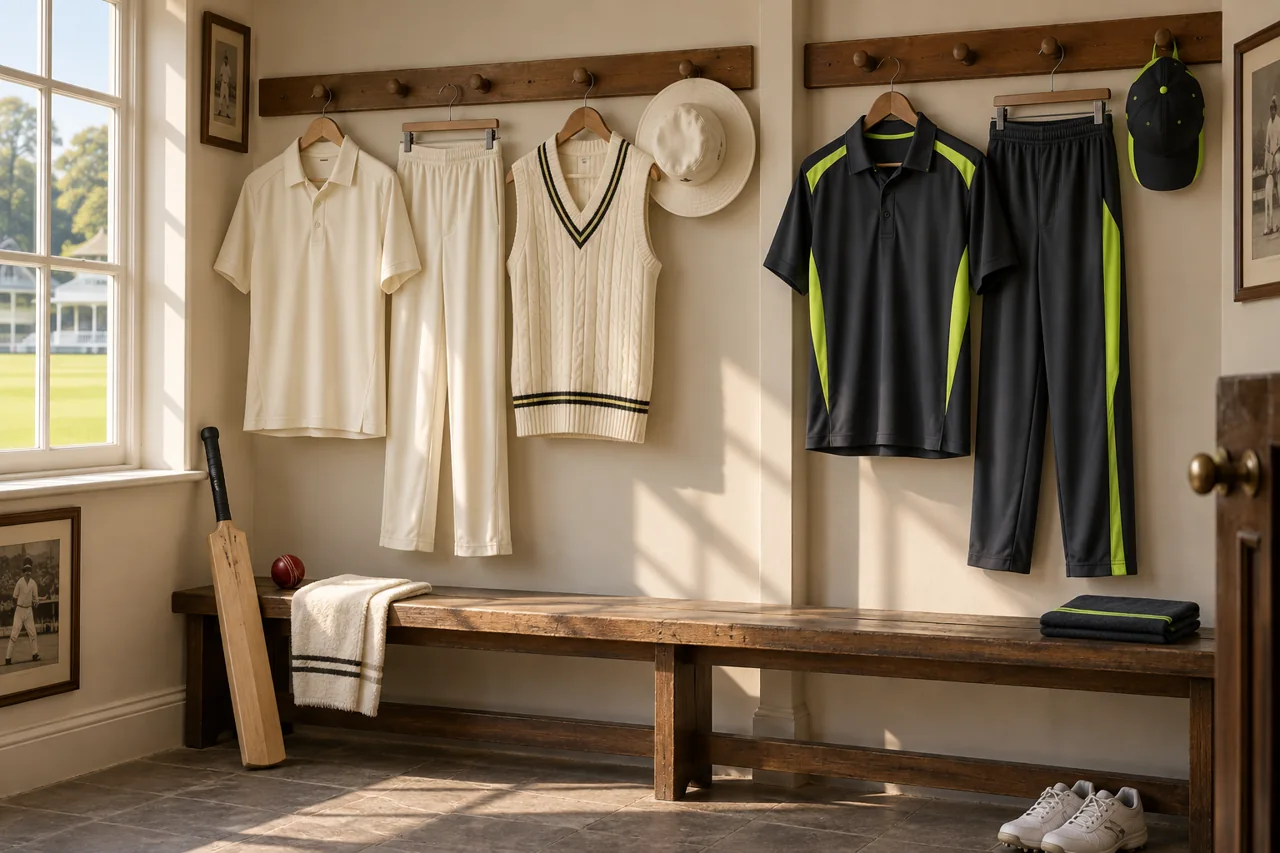
Compare a traditional cream match kit with a coloured limited-overs kit; specify each as a separate style. Illustrative AI-generated scene; not a photograph of Athletic Rush staff or a production sample.
The format and garment system affect colour, construction and decoration decisions.
White or cream match kits
Longer-format competitions may require a predominantly white or cream appearance. Confirm the exact permitted shade, contrast trims, sponsor marks, player identification and sweater details with the competition organiser. A digital screen colour is not enough: approve a physical fabric or colour standard because white, optic white and cream can appear different under daylight and floodlights.
Coloured limited-overs kits
Coloured kits can support more complex graphics, but each panel still needs a controlled colour reference, artwork scale and placement. Decide whether the design will be fully sublimated, cut-and-sew colour blocked, decorated after assembly, or use a combination.
Training and travelwear
Training garments may need different breathability, durability and pocket requirements from the playing shirt. Travelwear may prioritize structure, warmth and presentation. Treat each product as a separate specification instead of applying the match-shirt fabric to the complete range.
3. Specify Fabric by Garment Function
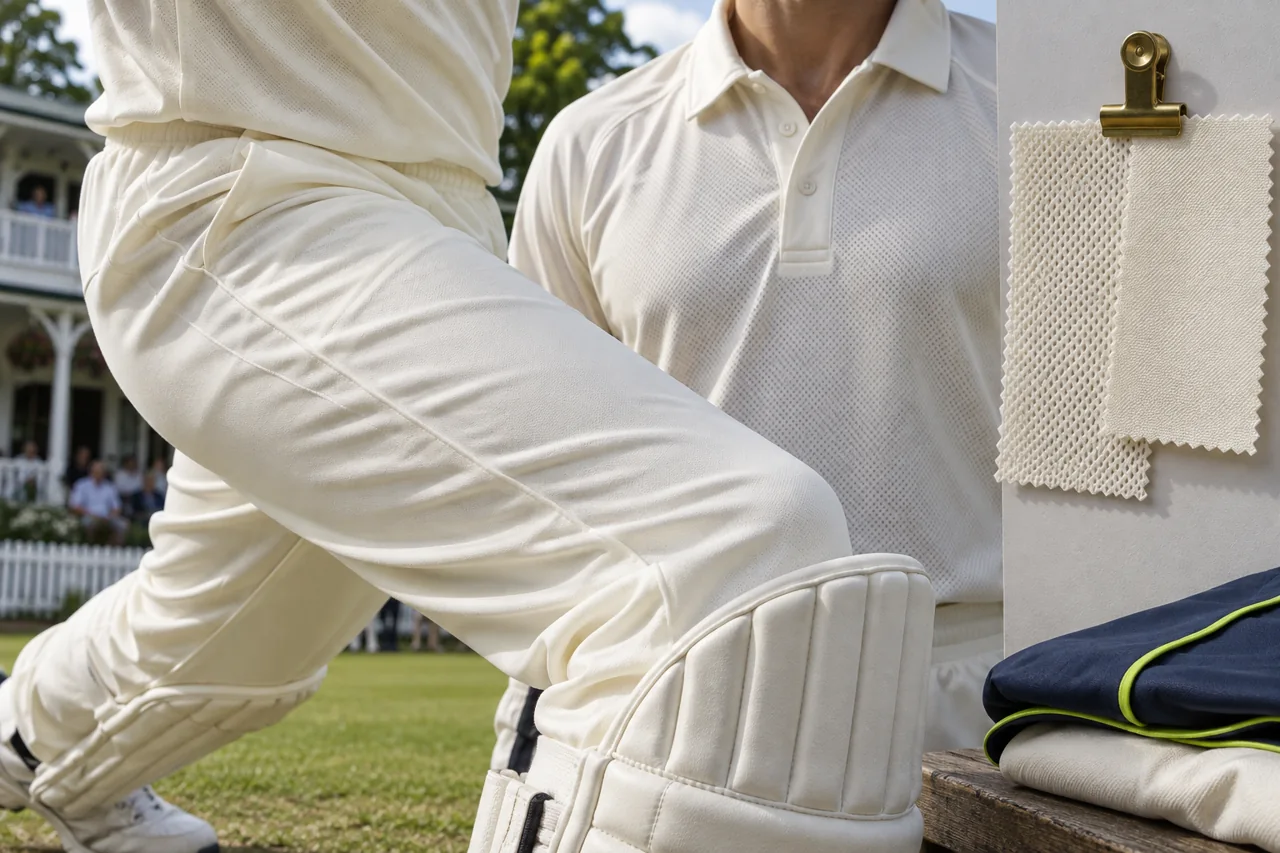
Check trouser coverage in a batting lunge and assess the shirt knit and fabric references separately. Illustrative AI-generated scene; not a photograph of Athletic Rush staff or a production sample.
GSM records fabric weight; it does not by itself confirm breathability, stretch, recovery, opacity, snag resistance, colour behaviour or durability. A usable fabric brief should also identify fibre composition, knit or weave structure, finish, stretch direction, recovery, hand feel, opacity and decoration compatibility.
Use the following as development discussion ranges, not as automatic specifications:
| Garment | Development starting point | What the sample must confirm |
|---|---|---|
| Match shirt | Lightweight polyester jersey, interlock or bird-eye; often discussed around 140–190 GSM | Airflow, opacity, snagging, sweat handling, colour and print clarity |
| Match trouser | More substantial woven or knit polyester, sometimes with mechanical or elastane stretch; often discussed around 180–240 GSM | Seat and knee durability, stride comfort, opacity, pocket stability and recovery |
| Sweater or slipover | Knitted or performance-layer construction selected for climate and dress rules | Warmth, shape retention, trim stability and layering comfort |
| Training top | Lightweight performance knit chosen for repeated practice use | Abrasion, drying behaviour, stretch and decoration |
| Warm-up jacket | Tricot, interlock or woven shell route appropriate to weather | Mobility, lining, zip function, pockets and embroidery support |
The final range should be set through swatch and garment sampling. For pale trousers, check opacity while the player bends, stretches and takes a batting stance. For lightweight shirts, check whether logos or underlayers show through. For outdoor programmes, compare appearance in direct sun as well as indoor lighting.
Ask the supplier to identify the active fabric reference in the approved specification. Descriptions such as “premium dry fit” are not precise enough for bulk control or future reorders.
4. Engineer the Fit for Cricket Movement
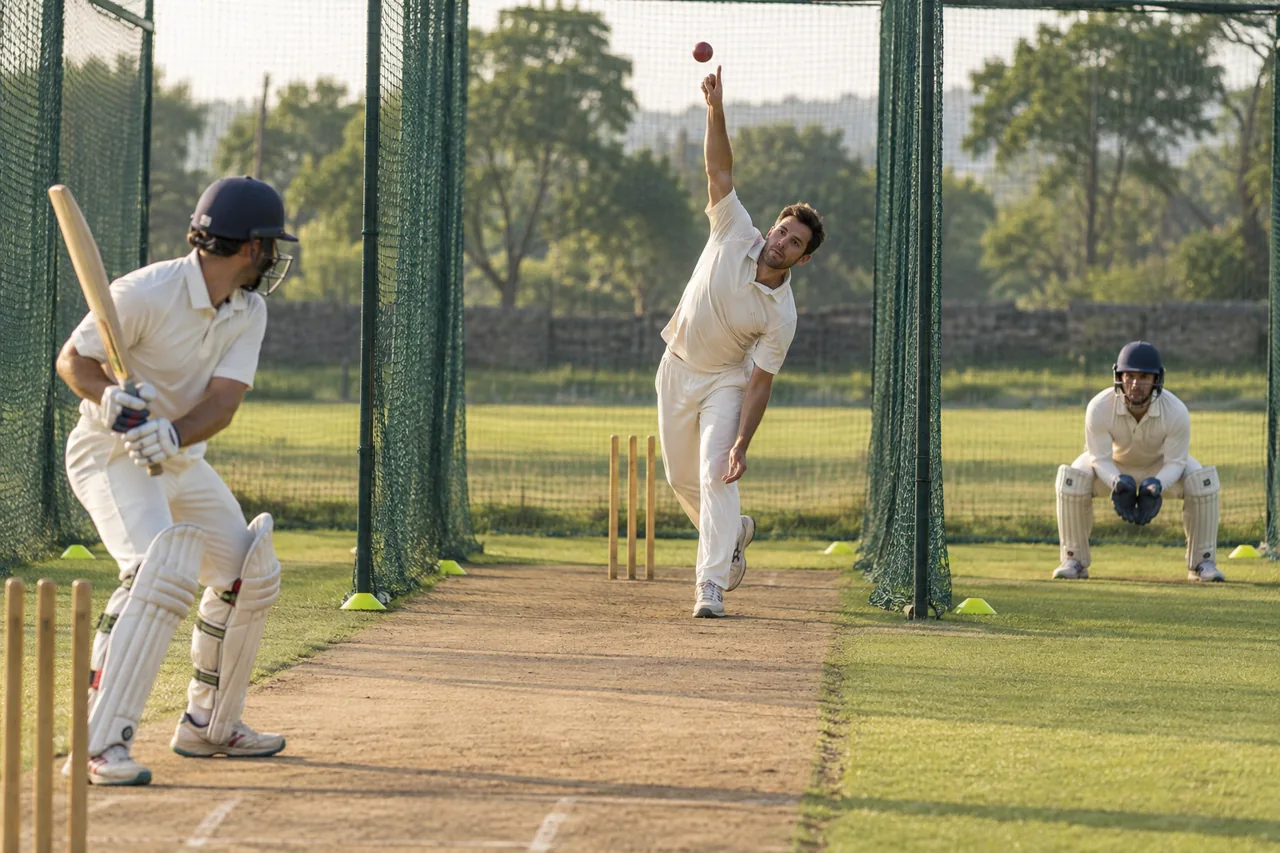
Test the complete cricket kit through batting, bowling and wicketkeeping movements. Illustrative AI-generated scene; not a photograph of Athletic Rush staff or a production sample.
A cricket uniform must work through batting, bowling, fielding, wicketkeeping and long periods of wear. A standing fit photo cannot confirm movement performance.
The sample review should include:
- Full bowling-arm rotation
- Forward and lateral lunges
- Batting stance and follow-through
- Sprinting and sliding movements
- Squatting in a wicketkeeping stance
- Bending at the waist and knees
- Reaching overhead
- Wearing approved base layers or protective equipment where relevant
Control shirt chest, shoulder, sleeve opening, body length and hem movement. For trousers, control waist, seat, thigh, front and back rise, knee, inseam, hem opening and pocket position. Make sure the trouser remains secure during running and bending without restricting stride.
If the programme covers adult, women’s and youth players, decide whether separate fit blocks are needed. Do not assume that one unisex pattern, merely graded up or down, will provide the required proportions for every group.
Keep two separate documents:
- A player-facing size guide used to select sizes.
- A finished-garment measurement chart used to approve samples and inspect production.
State the measurement method and units for every point. Record whether values are measured flat, around, relaxed, stretched, straight or along a curve.
5. Confirm Logos, Numbers and Competition Compliance
Artwork approval must happen against the actual rules governing the team. Use the current clothing rules issued by the organiser of the actual competition. International rules are a reference, not a substitute for the requirements of a club, school or league. Record the applicable document, version and approval contact with the artwork so changes can be checked before production.
Before production, obtain written answers for:
- Team crest and governing-body mark
- Sponsor names and logo hierarchy
- Manufacturer identification
- Player names and numbers
- Match format and colourway
- Permitted placement on shirt, trouser, sweater and headwear
- Maximum dimensions or surface areas
- Prohibited sponsor categories or messages
- Event-specific artwork
- Home and away contrast requirements
- Approval authority and deadline
Do not resize sponsor graphics informally at the factory. Put the permitted dimensions and placement coordinates into the artwork map and approve them at actual production size.
If a team competes under several organisers, create a compliance matrix by competition. A single artwork version may not be suitable for every event.
6. Select Decoration for the Fabric and Design
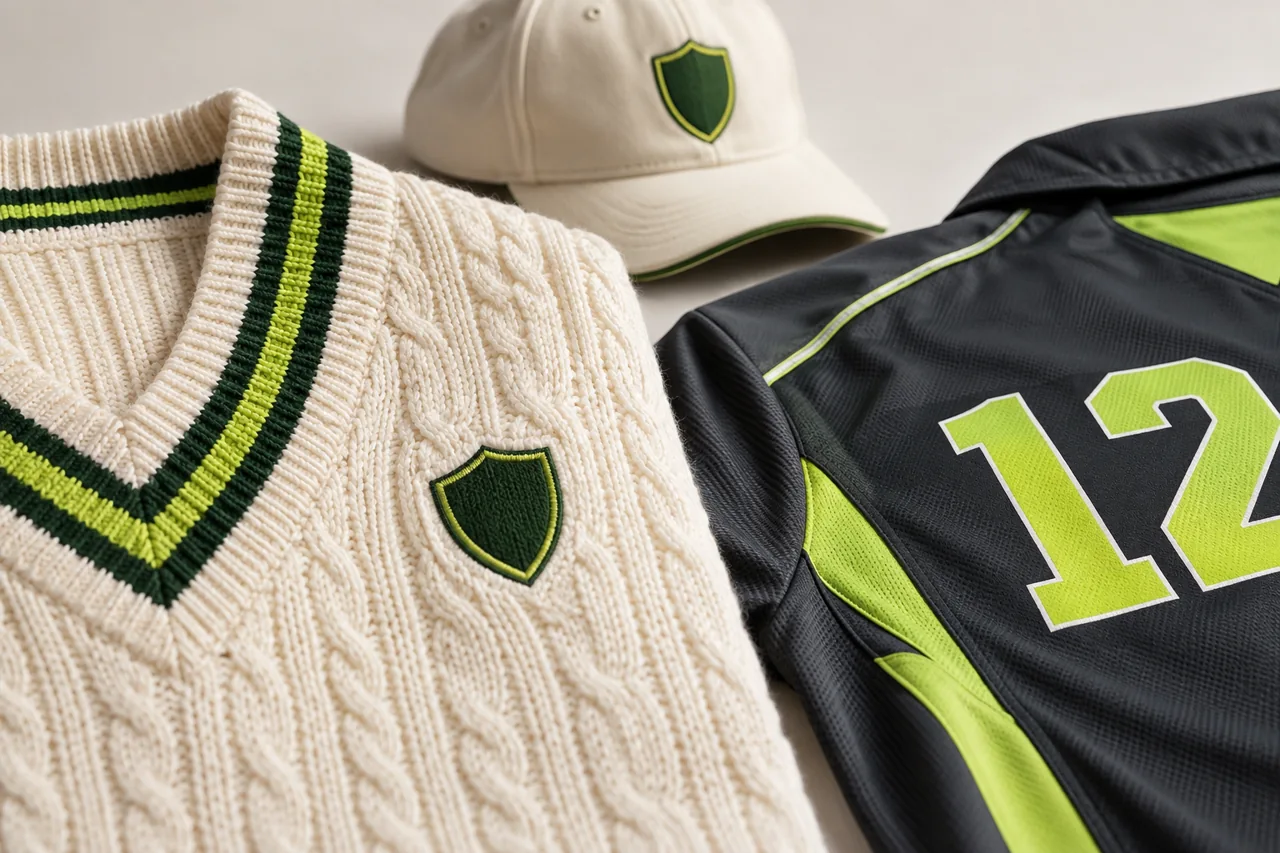
Compare embroidery on a structured crest area with printed graphics on a lightweight coloured shirt. Illustrative AI-generated scene; not a photograph of Athletic Rush staff or a production sample.
The right decoration method depends on the garment, substrate, graphic, expected use and competition rules.
Sublimation
Sublimation is suited to compatible polyester fabrics when a coloured kit requires integrated patterns, gradients, crests, sponsors, names or numbers. It keeps the decoration within the fabric rather than adding a thick surface layer. Approval should cover colour targets, panel alignment, scale, white retention, show-through and shade consistency.
Screen printing or transfer applications
These routes can suit selected graphics and fabrics, including some training or supporter products. Confirm ink or film compatibility, adhesion, stretch, hand feel, edge finish, colour migration risk and wash performance on the actual substrate. A process approved on one fabric should not automatically be transferred to another.
Embroidery and patches
Embroidery can suit crests on stable zones, sweaters, caps, jackets and bags. Review stitch density, backing, puckering, weight and skin-side comfort. Lightweight match shirts may require a lighter construction or a different method than outerwear.
Athletic Rush’s manufacturing services page can be used to start the capability discussion. The chosen method, materials and limitations still need written confirmation for the specific cricket programme.
7. Build One Controlled Tech Pack and Artwork Map
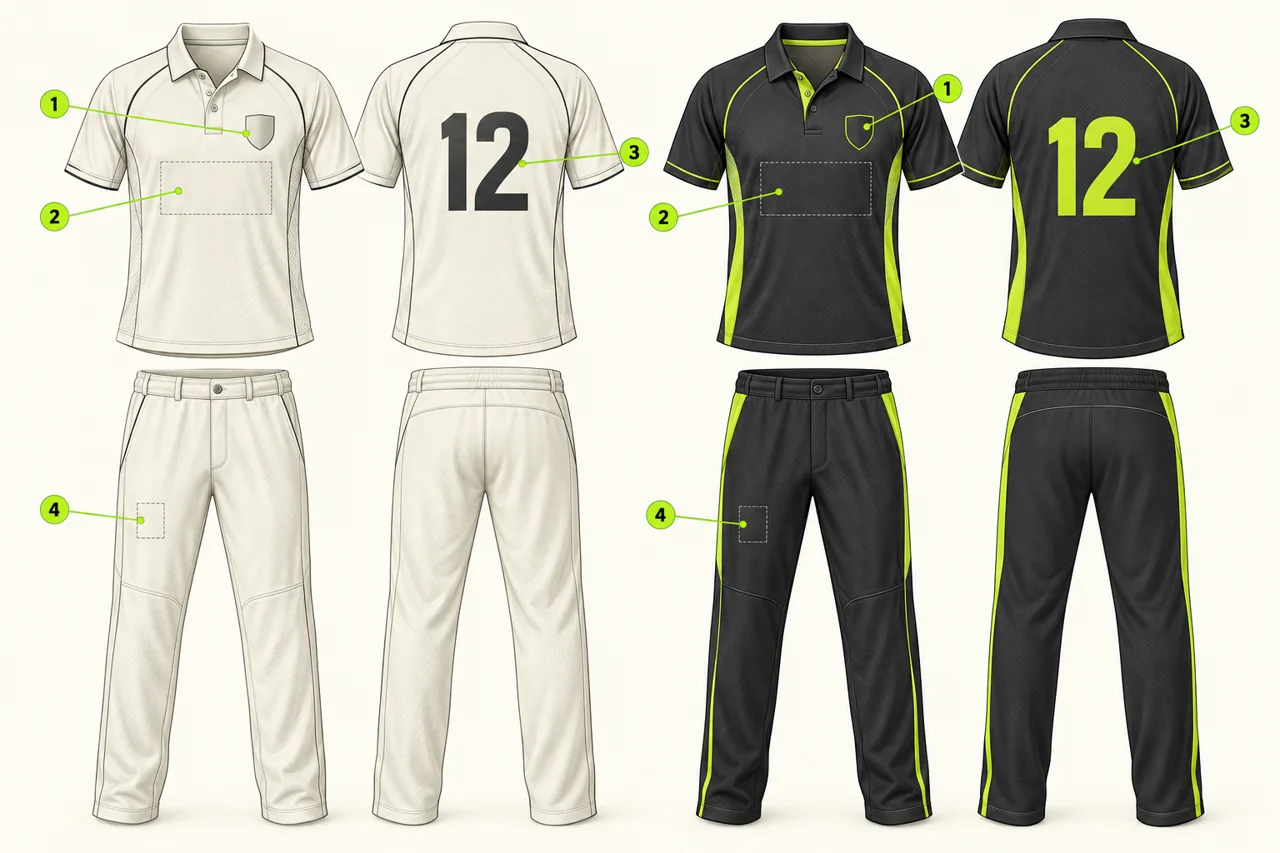
Use front and back artwork views to locate the crest, sponsor, player identification and trouser details. Numbered markers are discussion references, not official permitted logo positions. Illustrative AI-generated scene; not a photograph of Athletic Rush staff or a production sample.
One approved information set should control the order. It should include:
- Stable style ID for every garment
- Front, back and relevant side views
- Construction notes and seam requirements
- Fabric and trim references
- Finished-garment measurement chart
- Size range and fit group
- Colour references
- Crest, sponsor, name and number files
- Decoration method for each graphic
- Placement measurements from fixed garment landmarks
- Label, care-label and packaging instructions
- Revision number and approval date
Supply vector artwork where possible. Check small text, outlines, transparent effects and fine details at actual size. For sublimated panels, review how graphics cross seams and how scale changes across sizes.
Do not approve a mockup that lacks production dimensions. A visual layout and a manufacturing artwork map are different documents.
8. Lock the Player Roster Before Personalization
Use one row per player or ordered set. Separate columns should record:
- Player or order reference
- Shirt size
- Trouser size
- Sweater or training-wear size
- Player name exactly as it must appear
- Number
- Sleeve length or garment variant
- Colourway
- Quantity
- Packing group
- Approval status
- Notes
Include coaches, officials, spares and unpersonalized garments as explicit rows. Check spelling, capitalization, duplicate numbers, blank fields and totals. The sum of every roster line must reconcile with the purchase order, artwork proofs and packing plan.
Use version control. If a player changes size or number after approval, issue a dated revision that identifies the affected row and confirm whether production has reached a stage where the change can still be applied.
9. Approve a Production-Representative Sample
The sample should test the variables that will be repeated in bulk. Where practical, use the intended fabric, trims, construction and decoration.
Review the sample in this order:
- Confirm the style ID, tech-pack revision and artwork revision.
- Verify fabric identity, weight, stretch, recovery, opacity and hand feel.
- Measure the garment against the approved chart.
- Test cricket-specific movement and layering.
- Check seams, collar, cuffs, hem, waistband, pockets and zip components.
- Inspect every crest, sponsor, name and number at actual size.
- Review colour under relevant lighting.
- Check comfort around the neck, underarms, waistband and decoration backing.
- Conduct agreed wear or wash evaluations when required.
- Record every correction in one dated approval document.
If a buyer approves only a digital mockup or a partial sample, document which variables remain untested. Bulk production should not silently convert assumptions into approved facts.
10. Control Bulk Production and Quality Checks
Bulk inspection should use the same active specification, sample reference, artwork and roster.
Incoming materials
Check:
- Fabric type, shade, width and lot consistency
- Agreed weight and stretch characteristics
- Visible faults, marks or contamination
- Rib, elastic, zips, buttons, labels and thread
- Decoration materials and colour references
Cutting and sewing
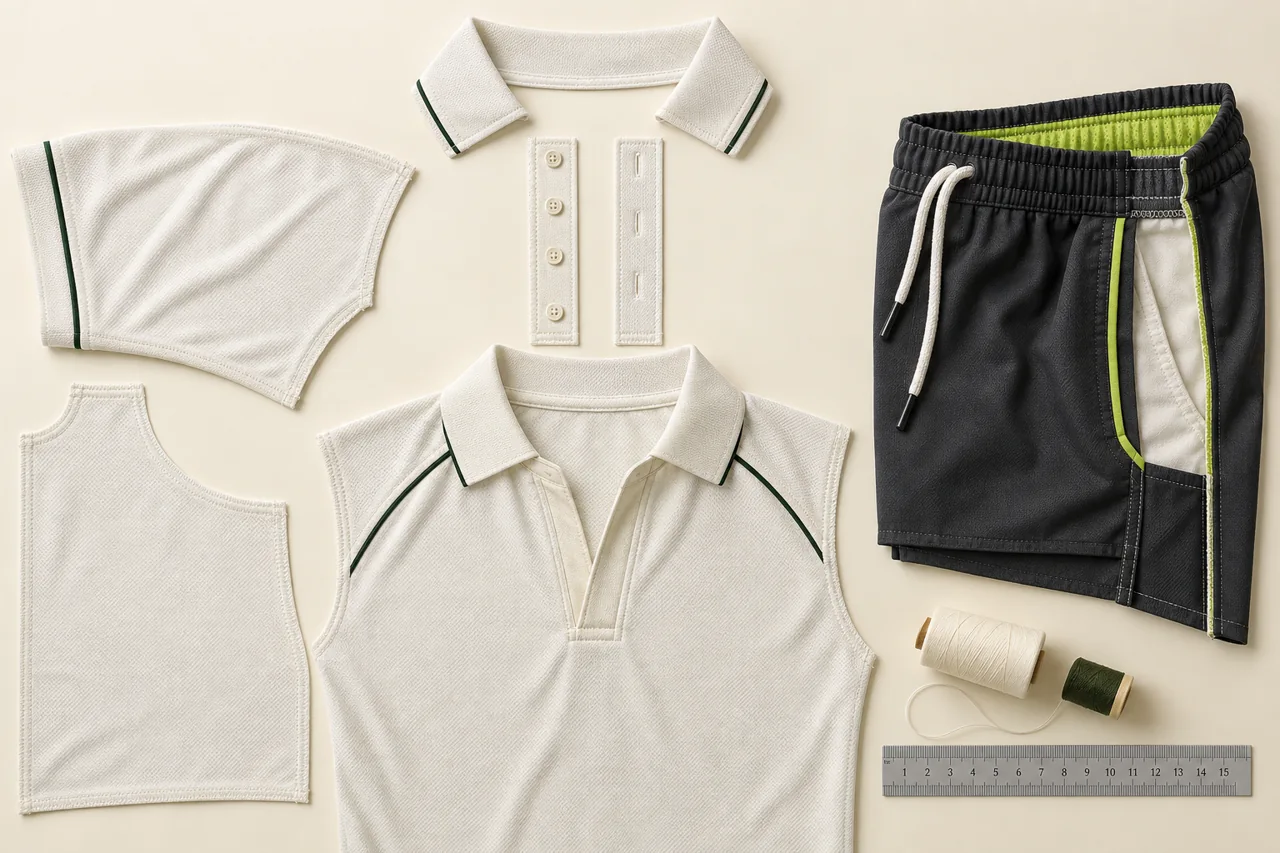
Review how collar, placket, sleeves, body panels and trouser details join into the approved garment. Illustrative AI-generated scene; not a photograph of Athletic Rush staff or a production sample.
Check:
- Correct pattern and grading revision
- Panel orientation and bundle identification
- Seam security and stretch compatibility
- Collar, cuff and placket consistency
- Trouser rise, waistband, pockets and hem
- Key finished-garment measurements
Decoration and personalization
Check:
- Crest, sponsor, name and number accuracy
- Colour, scale, orientation and placement
- Print registration and panel alignment
- Transfer adhesion or embroidery stability
- Correct player data and colourway
Final reconciliation and packing
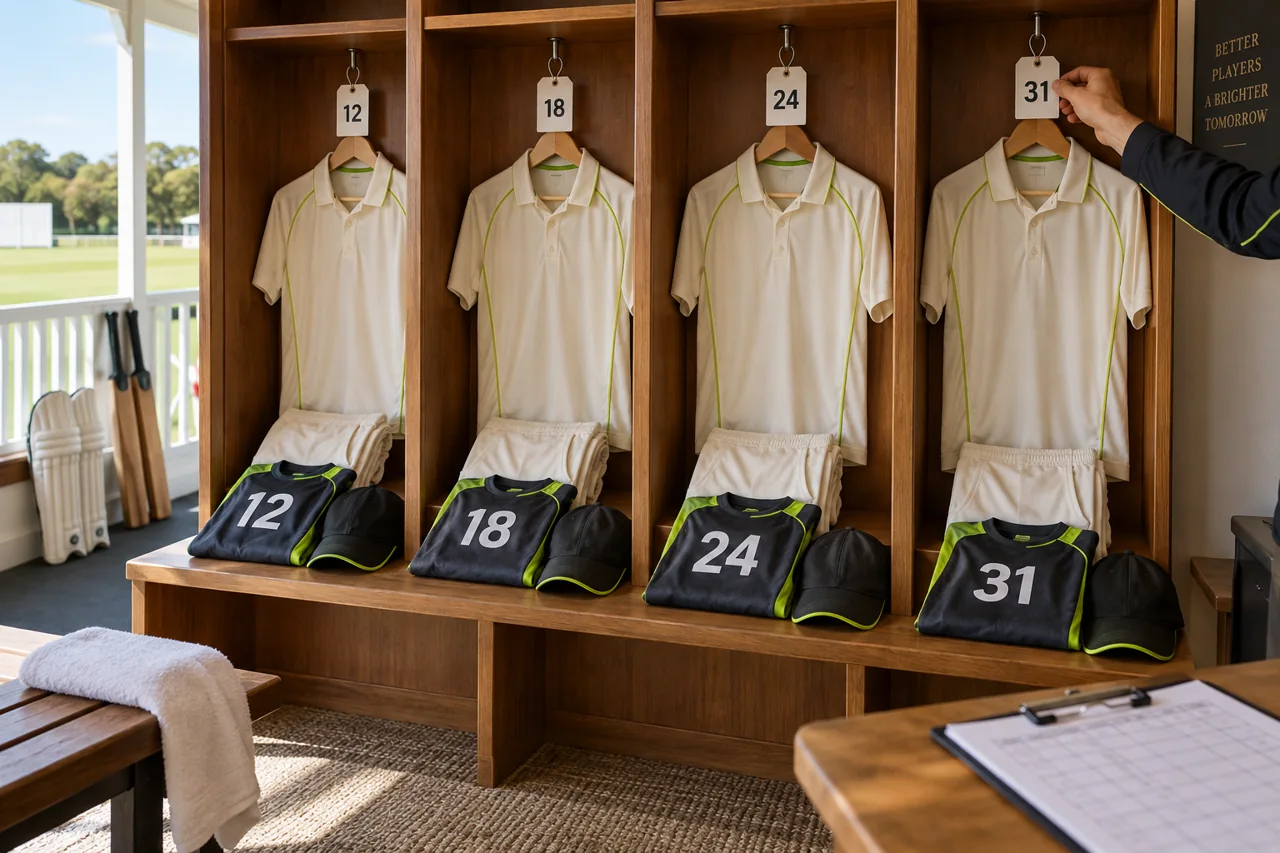
Allocate each finished kit to the correct player record and reconcile every garment before dispatch. Illustrative AI-generated scene; not a photograph of Athletic Rush staff or a production sample.
Check:
- Player-level shirt and trouser combinations
- Spares and staff garments
- Size labels and care labels
- Folding and individual packaging
- Size stickers, barcodes or buyer labels
- Team-based, player-based or size-based packing
- Carton quantities and carton marks
Use the manufacturing and quality-control overview as the route for discussing the inspection framework. The exact checkpoints, sampling level, tolerances and evidence required must be agreed for the order.
11. Plan Reorders Before the First Shipment
Cricket clubs and teamwear sellers may need replacements, late player additions and repeat season orders. Reorder accuracy depends on the records retained from the first order.
Keep the approved:
- Style IDs and fit blocks
- Pattern and grading revision
- Fabric and trim references
- Colour standards
- Artwork files and placement map
- Decoration settings
- Measurement charts
- Roster format
- Label and packaging specifications
- Sample approval record
- Final production and packing records
A reorder should still be reconfirmed. Fabric lots, trims and colour processes can change, so compare new materials with the approved reference instead of assuming an automatic match.
Bulk Cricket Uniform RFQ Checklist
Before requesting a quotation, confirm:
- Buyer, club, school, brand or distributor name
- Match format and governing competition
- Complete garment list
- Estimated quantities by style and colourway
- Adult, women’s and youth fit requirements
- Size chart or measurement reference
- Fabric performance and colour requirements
- Crest, sponsor, player-name and number artwork
- Applicable logo and clothing rules
- Decoration method preferences
- Player roster
- Labels, packaging, barcodes and carton marks
- Destination
- Required arrival date
- Sample and approval requirements
- Reorder expectations
Frequently Asked Questions
What information is needed to quote custom cricket uniforms?
Provide the product range, match format, quantities, size groups, fabric requirements, artwork, colours, personalization, roster, competition rules, packaging, destination and required arrival date. Identify whether the programme includes match, training, travel and supporter garments.
Should cricket shirts and trousers use the same fabric?
Not automatically. The shirt may prioritize low weight and airflow, while trousers often require more opacity, structure and resistance at the seat and knees. Specify and sample each garment independently.
Is sublimation suitable for cricket uniforms?
It can be suitable for compatible polyester coloured kits requiring integrated graphics and personalization. The fabric, colour targets, opacity, panel alignment and competition rules still need approval. White or cream kits and mixed-material programmes may use a different route.
How should buyers handle white and coloured cricket kits?
Treat them as separate styles and colourways. Confirm the competition rules, fabric colour, trim, sponsor placement, player identification and decoration for each. Do not assume one artwork or material specification controls both.
Why is a physical sample important?
It allows the buyer to check fit, movement, fabric, opacity, construction, colour and decoration on an actual garment. A digital mockup cannot confirm those physical variables.
How can roster errors be reduced?
Use one controlled roster, keep shirt and trouser sizes in separate fields, preserve exact spelling and capitalization, check duplicate or blank numbers, reconcile totals and inspect finished garments against the same approved version.
Do ICC clothing rules apply to every club or school competition?
No. The ICC regulations cited in this guide apply to international matches. Clubs, schools, leagues and tournaments should obtain the current rules from their own governing authority and submit them with the manufacturing brief.
What should be retained for future reorders?
Retain the style IDs, pattern revision, fabric and colour references, artwork, decoration settings, measurement charts, roster format, label and packing specification, and approved sample record.
Request a Cricket Uniform Manufacturing Review
Send Athletic Rush your garment list, format, estimated quantities, fit groups, artwork, player roster, competition rules, fabric direction, destination and required date. The team can review the brief for missing information and confirm the appropriate development route for the actual programme.
Request a production quote when the brief is ready. Commercial terms, timing, minimums and manufacturing capabilities must be confirmed for the specific order.
Explore the Athletic Rush cricket range, then compare supplier quotations against the same garment, fabric, decoration and delivery requirements. Email kamran@athleticrush.co or contact Athletic Rush on WhatsApp at +92 327 9008337. Share your product list, quantities, destination and required date so the quotation can be checked against one clear brief.
For the order spreadsheet, use the team uniform size chart and player roster guide.