 Sialkot, Pakistan
 Worldwide enquiries

Adding three new players should begin with your existing uniform specification, rather than a fresh design brief. A repeat order needs enough information to reproduce the right kit, identify anything that has changed and agree on a realistic delivery plan.
This guide explains how to prepare an enquiry for replacement team kits. Availability, minimum quantities, prices and timing must be confirmed for the actual order; they should not be assumed from an earlier purchase.
1. Decide what needs replacing
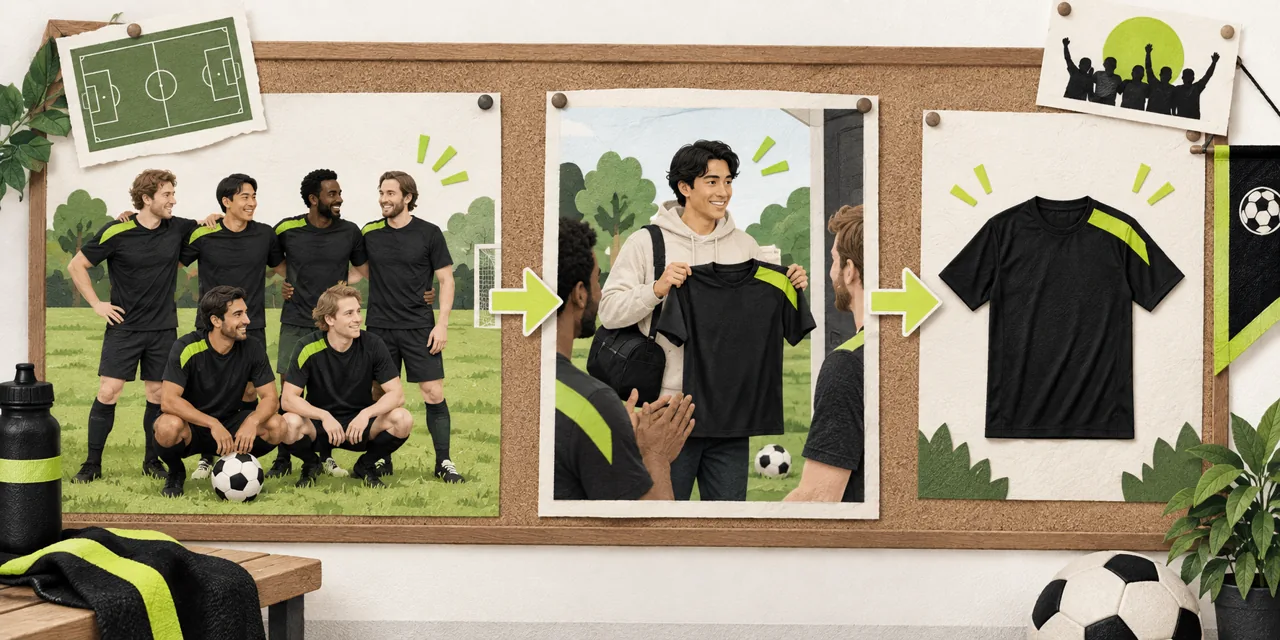
Plan new arrivals and replacement garments as part of the same team uniform programme. AI-generated educational illustration, not a photograph of Athletic Rush staff or a production sample.
Separate new-player kits, damaged garments, size changes and reserve stock. List each garment separately: a jersey may need replacing while the shorts remain usable. Identify the team, age group, season and match or training range so the supplier knows exactly which design you mean.
Build a simple request with garment type, quantity, size, player name and number. Include your required delivery date and destination. Mark uncertain details clearly rather than allowing a provisional name or number to be mistaken for final production information.
2. Retrieve the approved version
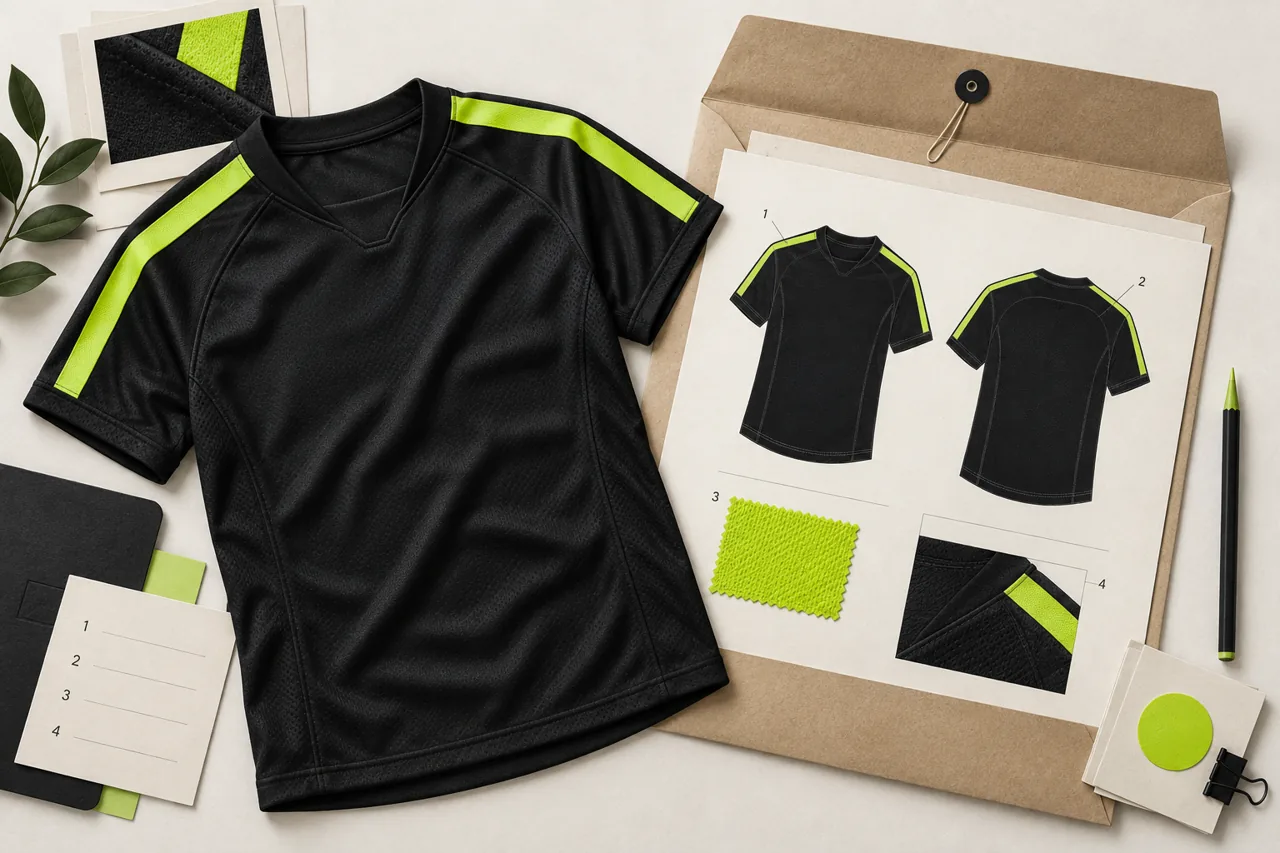
Retain the approved garment, artwork version and colour reference together. AI-generated educational illustration, not a photograph of Athletic Rush staff or a production sample.
Find the original order reference, approved artwork and measurement chart. Add photographs of the existing kit, but treat them as supporting evidence. A phone photograph alone may not reliably show the original colour, print scale or construction.
If several artwork versions exist, identify the one actually approved for production. Check front and back layouts, sponsor positions, number style, sleeve details and any labels included in the original specification. Ask the manufacturer whether the corresponding production files and material references are still available.
Buyer checkpoint: “Use our previous design” is incomplete if the supplier cannot identify the previous approved version. Attach the reference you want them to reproduce.
3. Compare colour using an agreed reference
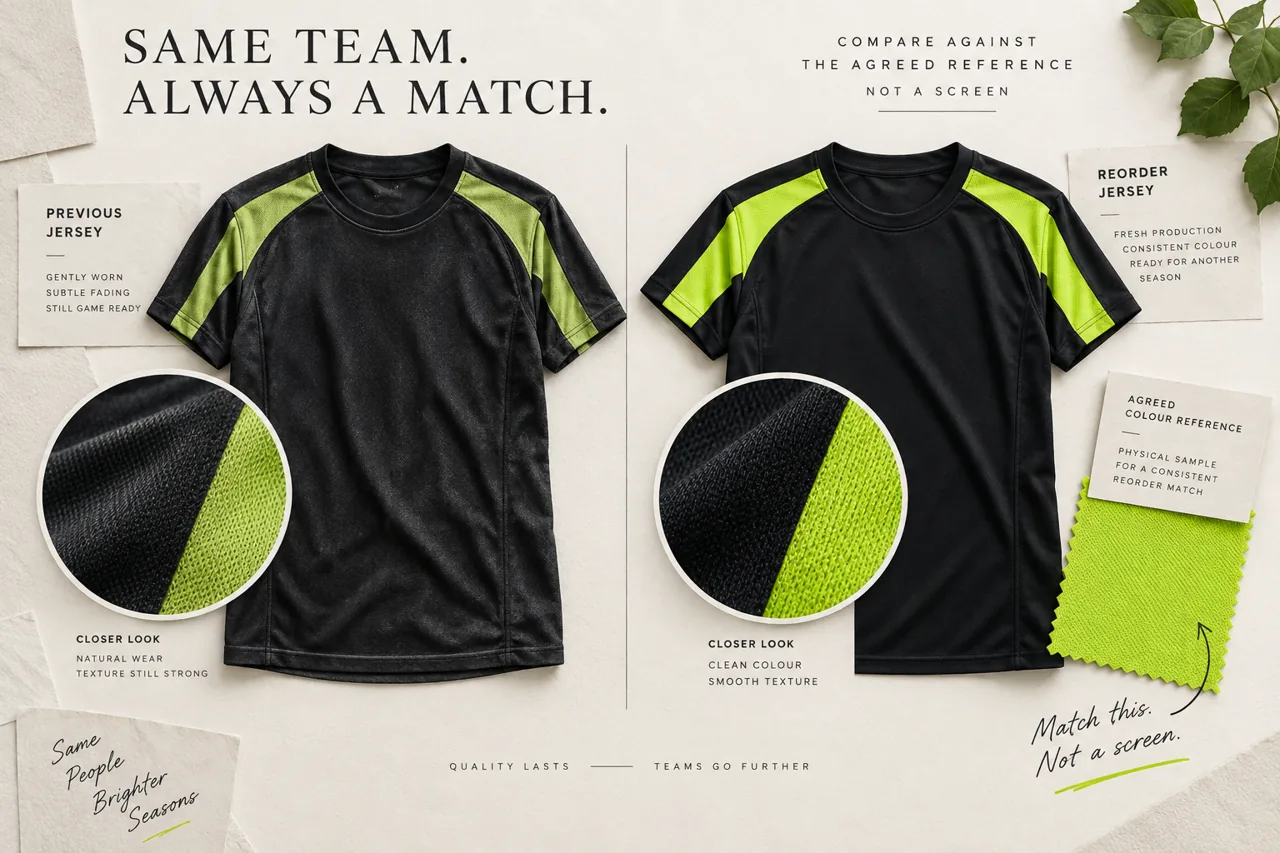
Compare a repeat order against an agreed reference; wear can change the appearance of an older kit. AI-generated educational illustration, not a photograph of Athletic Rush staff or a production sample.
An older garment can look different after wear and washing. Compare the proposed repeat order against the agreed colour reference or retained approved sample, rather than relying only on a worn shirt or a screen image.
Ask whether the original fabric and colour specification remain available. If a substitution is proposed, request a clear explanation of what changes and how it may affect the appearance beside the existing kit. Where a close match matters, agree whether a fresh physical sample is needed before the repeat order proceeds.
Record the decision in writing. Specify which reference is authoritative and which differences you have accepted. Do not rely on an informal statement that the new order will be “the same” when the material or printing specification has changed.
4. Confirm fit again for the new players
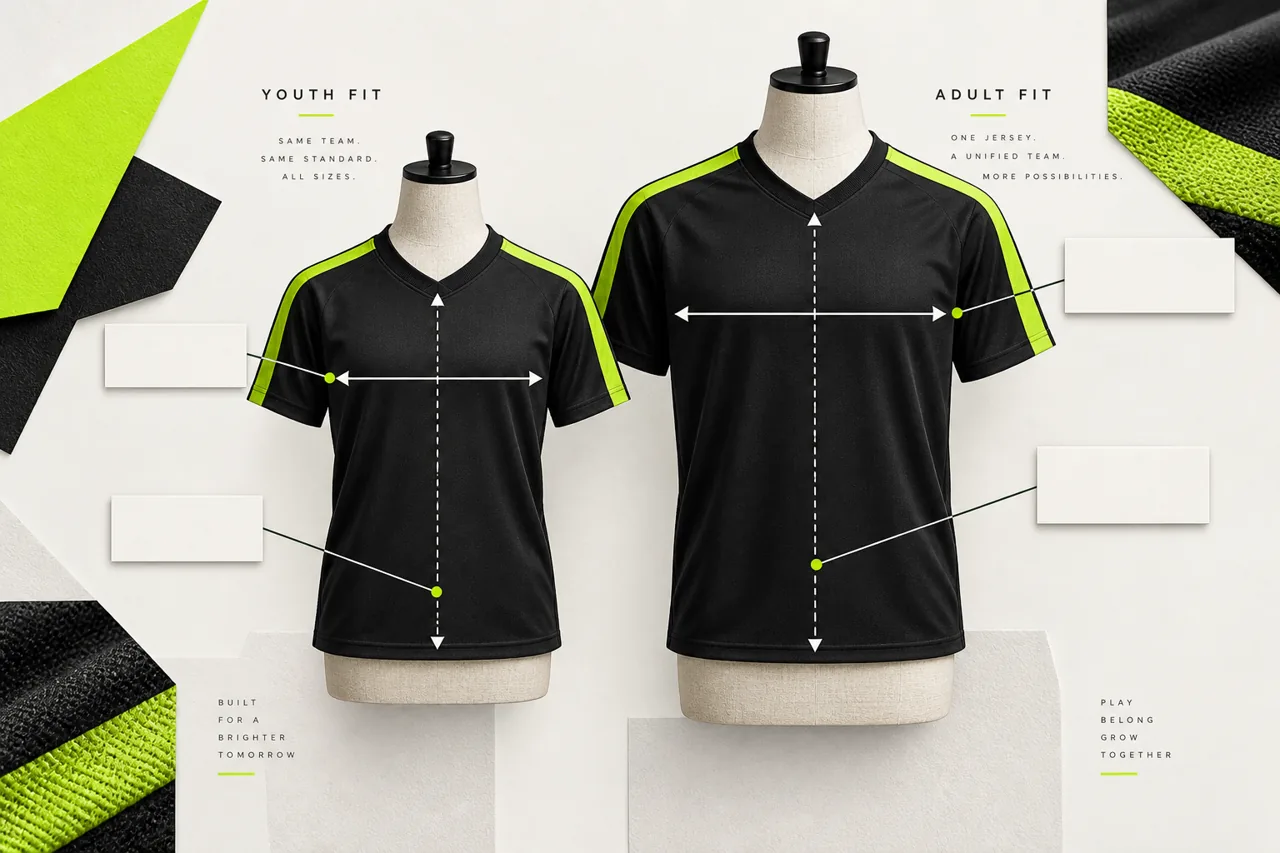
Confirm youth and adult fit references separately; arrows illustrate measurement directions, not universal dimensions. AI-generated educational illustration, not a photograph of Athletic Rush staff or a production sample.
Use the measurement chart associated with the approved garment. A size label by itself is not enough to establish equivalence between different garment patterns or suppliers.
Collect the new players’ required sizes using the manufacturer’s stated measuring method. If body measurements and finished-garment measurements are both provided, keep them clearly separated. Check youth and adult fits separately and note requests for different garment lengths or cuts.
For an existing player changing size, confirm the new requirement rather than copying the previous roster. Read the team uniform size chart and player roster guide when assembling the final list.
5. Check names, numbers and sponsor changes
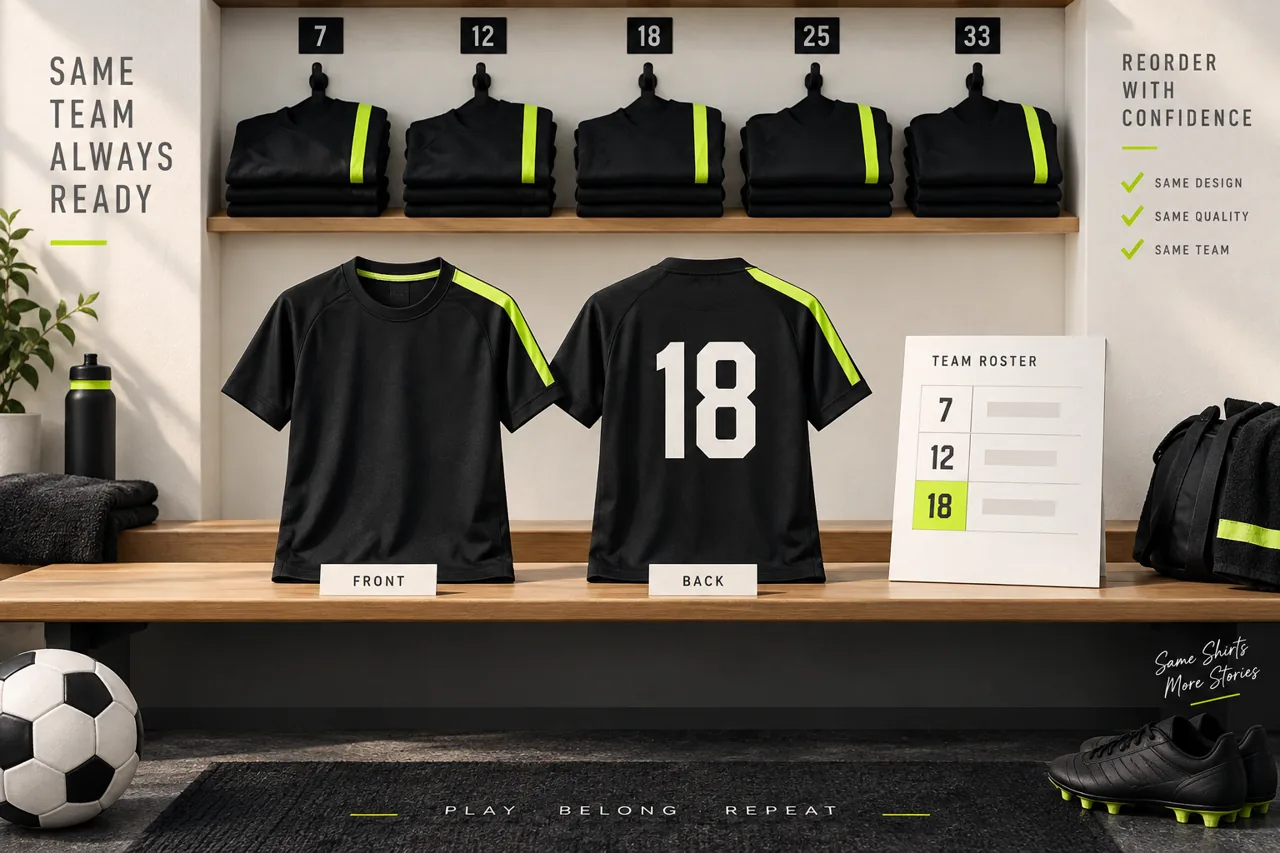
Match each new player to the correct shirt number and check the full current roster for conflicts. AI-generated educational illustration, not a photograph of Athletic Rush staff or a production sample.
Compare the repeat-order roster with the full current squad, not just the new-player list. Look for duplicate numbers, spelling differences and players whose details have changed since the original order.
Decide whether a sponsor change applies only to the replacement kits or to the whole team. Ask for an updated artwork proof where relevant. Keep a clear distinction between an exact repeat and a revised version, so the supplier does not reproduce an outdated sponsor or silently alter the established layout.
Nominate one person to approve the consolidated roster and artwork. Multiple independent messages from coaches and players can introduce conflicting instructions.
6. Ask for a repeat-order quotation
Send the reference pack, itemised quantities, delivery location and required date together. Ask the supplier to confirm current minimum quantities, any setup or sampling charges, garment prices, shipping arrangements and the point at which the production timeline begins.
A small repeat order may have different economics from the original bulk purchase. Compare quotations on the same specification and total order scope. If the supplier suggests combining replacements with another planned order, weigh the timing and actual team need before adding stock.
For Athletic Rush, send your enquiry to kamran@athleticrush.co or WhatsApp +92 327 9008337. Include your previous order reference if available. The quotation should confirm what can be reproduced and identify any proposed changes.
7. Approve changes before production
Make a short written approval record: artwork version, colour reference, material, garment fit, quantities and personalisation. Attach the final roster. If a sample or revised proof was requested, record its approval before proceeding to the production stage agreed with the manufacturer.
Keep the original specification alongside the new approval. This makes it easier to see whether the order is an exact repeat or a replacement based on an updated specification.
8. Check delivery and update your team archive
When the kits arrive, compare quantities, sizes, names and numbers with the approved list. Check the appearance against the agreed reference and report discrepancies with clear photographs and the relevant order details.
Save the final artwork, chart, roster, quotation and approval together. That archive becomes the starting point for the next new player or replacement order.
Frequently asked questions
Can I reorder just one uniform?
Ask the manufacturer. Minimum quantities and repeat-order availability depend on the garment, materials and production requirements. Do not assume that a one-piece repeat is available because the original bulk order was accepted.
Will a new kit look identical to an older one?
A precise specification improves the comparison, but wear, material availability and production differences need to be considered. Agree the reference and any acceptable differences before ordering.
What if I do not have the original artwork?
Start with the previous order reference and ask what files the supplier retains. Provide photographs and existing samples if requested. If the design has to be reconstructed, approve the reconstruction as a new version rather than treating it as an unverified exact repeat.
Should we order spare kits now?
Base the decision on likely team changes, sizes, personalisation and storage needs. Ask for the price and timing implications, then choose quantities that fit your team’s requirements rather than an arbitrary spare-stock percentage.