 Sialkot, Pakistan
 Worldwide enquiries

How short should a cropped hoodie be? Start with where the finished hem should sit on your intended wearer, wearing the trousers you expect to pair with it. Then agree the garment's measuring points, body width, hem treatment and sleeve balance. A cropped hoodie is a deliberately shortened silhouette; it is not automatically a smaller size, a tight fit or a garment with exposed midriff.
For a clothing brand, the useful approval question is: does this sample keep the intended proportion while the wearer stands, reaches and sits? A front photograph alone cannot answer that. Neither can a body-length number without a defined measuring method.
This guide focuses on three linked decisions: hem position, the shape above that hem, and how to approve the finished sample. It is for adult streetwear development; the example briefs below are illustrative choices, not universal measurements or Athletic Rush stock specifications.
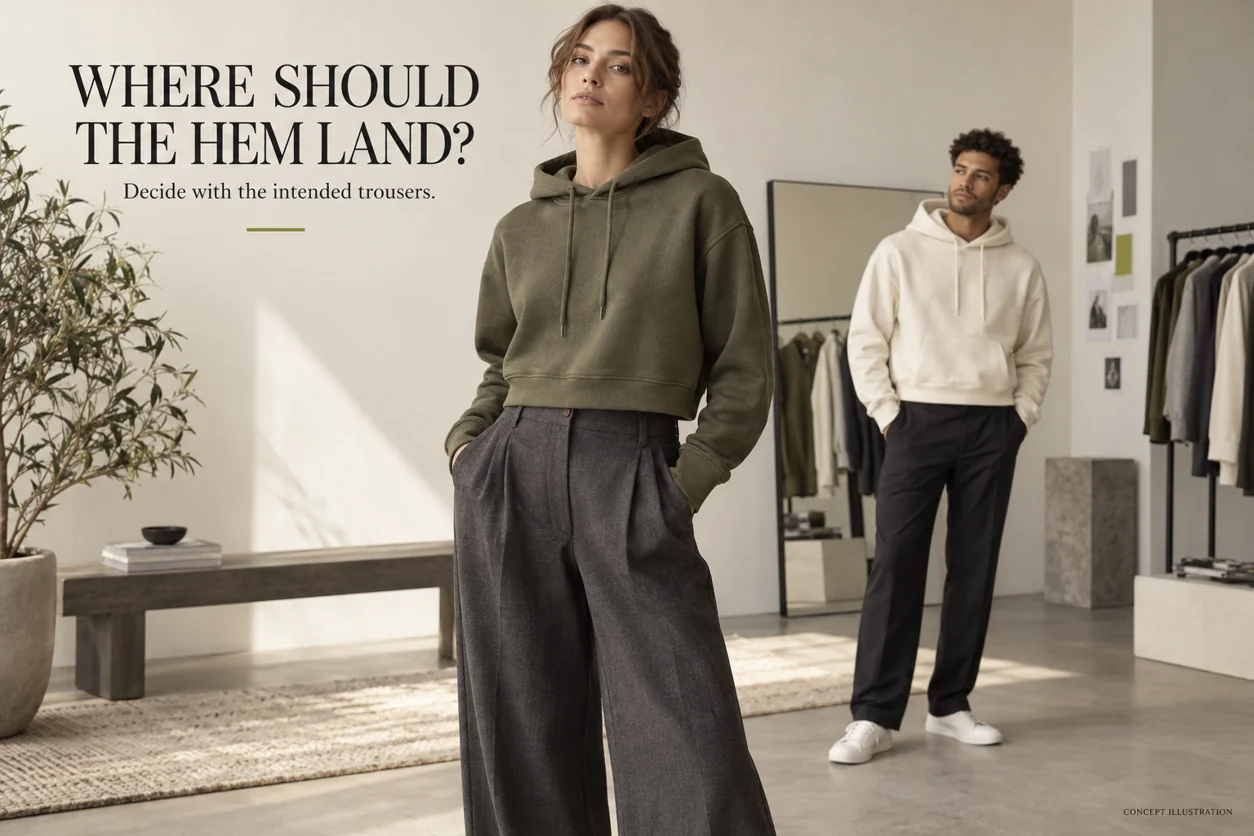
All six visuals are original conceptual illustrations. They explain development decisions and do not document actual inventory, customer orders or measured test results.
1. Set the hem position before choosing a length number
“Cropped” can mean a hem meeting a high waistband, a short boxy body over a longer base layer, or an intentionally higher hem. Those choices create different products. Tell the supplier which relationship you want instead of sending “cropped fit” with a size label.
Begin with one reference wearer and the actual type of bottom: high-rise wide-leg trousers, regular-rise jeans or coordinated sweatpants. Record the wearer measurements relevant to your fit review privately in the development file. Include the trouser rise and waistband position in the photos. A hoodie can look balanced with one bottom and unexpectedly short with another.
Use plain outcome language, for example: “On the reference wearer, the relaxed hem should meet the top of these trousers when standing naturally, with no deliberate gap.” If your intended design includes a visible gap, specify that instead. Neither outcome is inherently correct for every brand.
Turn that intention into a repeatable measurement
Agree a sketch showing the exact start and finish of body length. A supplier might use high point shoulder, centre back or another defined point. Those measurements are not interchangeable. State whether the measurement runs straight down the front, where the neckline reference sits, and whether the bottom rib is included.
For this guide's example brief, body length runs from a clearly marked high shoulder point at the neck to the finished lower edge, including rib. That is an example convention to agree, not a claim that every factory measures this way. Measure the sample flat and relaxed using the same method each time.
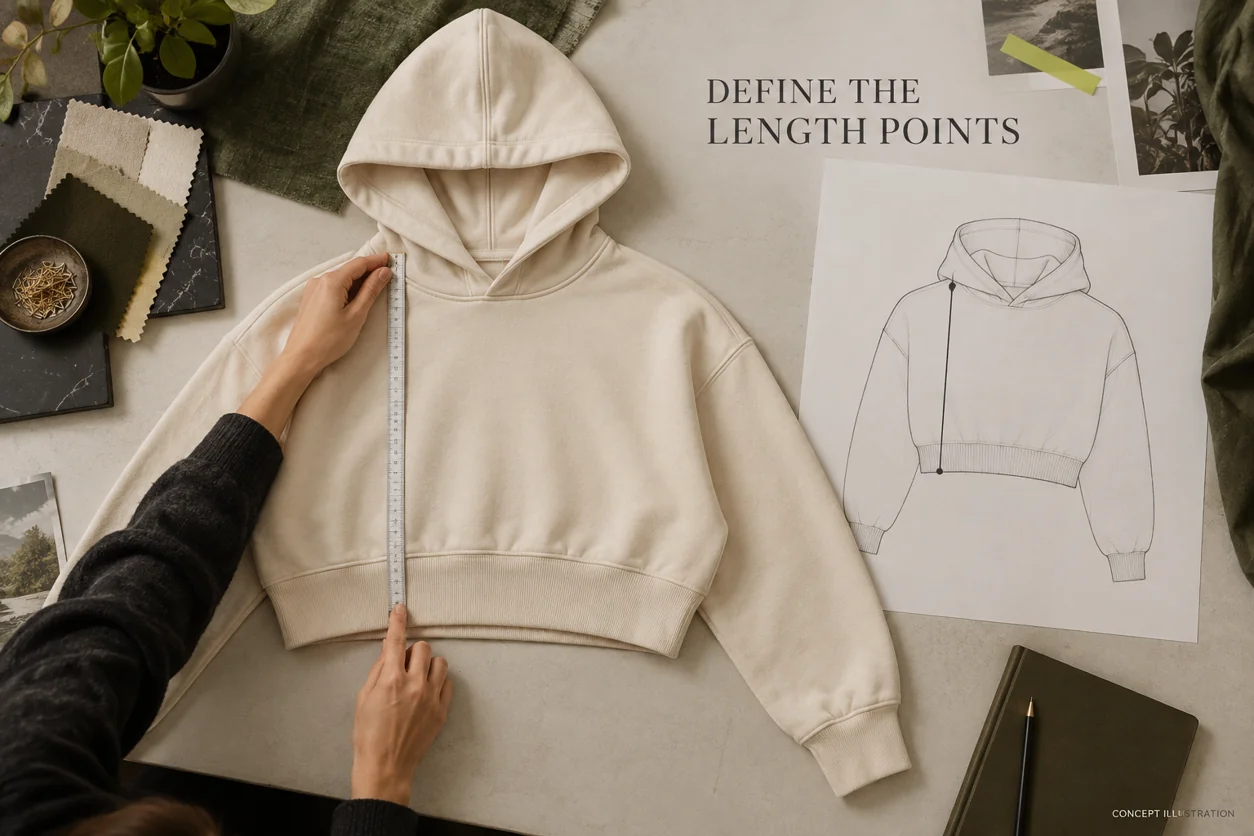
A diagram should remove ambiguity about endpoints. Use your agreed technical sketch for actual production measurements; this illustration is not a scaled pattern.
A useful measurement record separates body length from hem-band depth. If the supplier changes the rib depth but keeps the cut body panel unchanged, the finished total may change. If the total stays the same while the rib becomes deeper, the visible main body becomes shorter. Both changes can affect how a pocket or graphic fits into the remaining area.
Check front and back appearance as well as the agreed main length. A hem that appears level on a hanger may sit differently on a wearer. Ask for front, side and back photographs with natural posture, rather than judging from a pose that lifts the chest or pulls the garment down.
Three possible briefs—not three standard sizes
| Buyer intention | What to specify first | What to check on the sample |
|---|---|---|
| Waistband-meeting cropped hoodie | The intended trousers and resting hem relationship | Coverage standing and sitting, without pulling the hoodie into place |
| Boxy cropped layer over a longer tee | The visible tee relationship, body width and open hem shape | Whether the layers sit cleanly instead of bunching or sticking out unevenly |
| Higher fashion crop | The intended exposed area and movement expectations | Whether the actual wearer is comfortable with the additional lift during reaching |
Do not copy a sample's length into every size unchanged unless that is an intentional, reviewed design choice. A single size can establish direction, but it cannot prove that the whole size range works.
2. Balance the short body with the hem, shoulder and sleeve
Once the hem position is clear, choose the volume above it. A short narrow body, a short wide body and a short body gathered into rib can share a similar flat length while looking quite different when worn.
If you already have an approved boxy hoodie fit, use it as a reference for width and overall ease. Still develop the cropped version as a new proportion. Simply removing a strip from the bottom can put a pocket too close to the hem or leave the graphic visually crowded.
Straight hem or fitted rib: choose the intended shape
A relaxed straight hem can leave a more open outline. A narrower rib opening can draw the lower edge toward the body and create fabric volume above it. The result depends on the complete assembly: body width, rib dimensions, material behaviour and how the wearer moves.
Avoid instructing the supplier to make the rib “as tight as possible.” Ask for the intended resting position and comfortable access over the body instead. On the sample, see whether the hem stays where expected, climbs upward after movement or needs repeated adjustment.
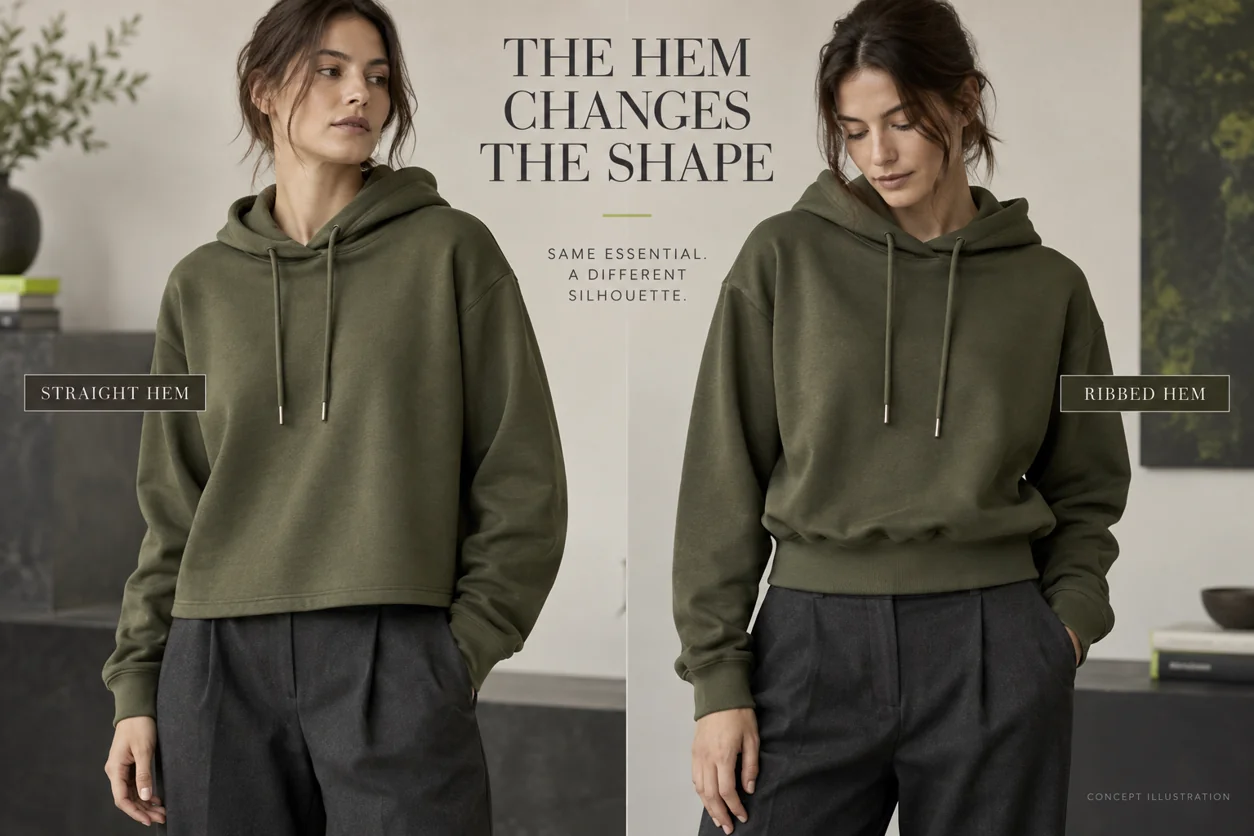
The comparison illustrates two design directions. It does not establish a universal rib ratio, recovery value or fit result.
Consider the hoodie material in this decision. For cotton French terry or cotton fleece, approve the exact proposed construction and finishing state. A prototype in a substitute material can help discuss shape, but do not treat its drape as evidence of how the intended bulk fabric will behave.
Likewise, fabric weight alone does not determine the cropped silhouette. Review the finished garment in the selected fabric. Note what you observe—such as a hem standing away from the waist or fabric pooling above rib—rather than assuming a weight label will deliver a particular look.
Keep sleeve length and shoulder width connected
A cropped body does not automatically need cropped sleeves. Many adult streetwear concepts combine a shorter body with full-length sleeves. Decide that relationship deliberately, including where the cuff should finish and how much sleeve volume you want.
With a dropped shoulder, the shoulder seam sits farther along the upper arm than it would in a conventional shoulder position. Read sleeve length together with shoulder width and the agreed measuring method. Changing both without reviewing their combined effect can move the cuff farther than intended.
Ask the wearer to relax their arms, bend their elbows and reach forward. Check cuff position and comfort at the armhole. Record whether a correction is to body length, shoulder placement, sleeve length or sleeve width; “make it smaller” is too vague to guide a revision.
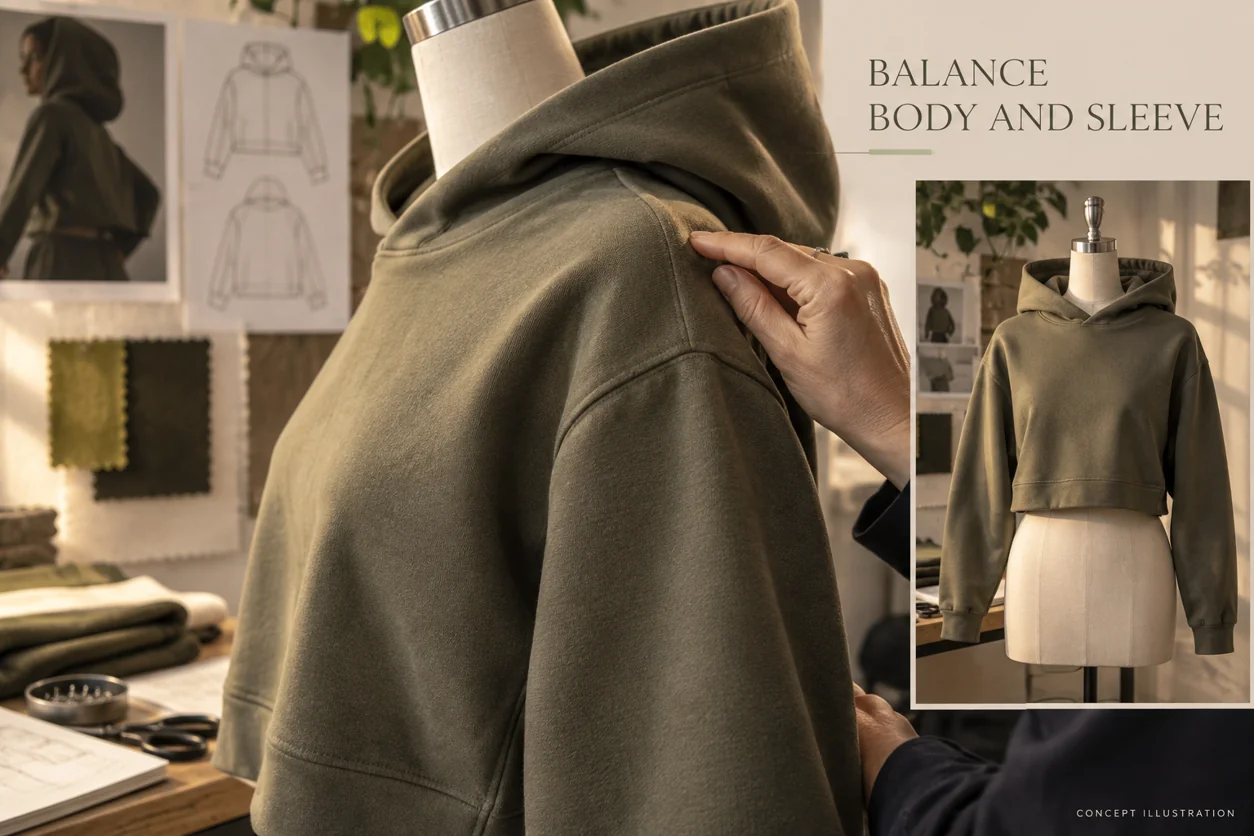
Check what still fits on the shorter front
A kangaroo pocket, chest artwork and hem band compete for space on a cropped front. Confirm these details on the actual revised garment rather than shrinking their placement from a longer hoodie in a design mockup.
For the pocket, inspect hand entry, usable space and the distance to the hem assembly. For artwork, show the full garment with the planned placement so the buyer can judge the remaining visual margins. Do not let a good close-up hide an unbalanced overall arrangement. The separate hoodie pocket and cuff guide explains functional sample checks in more detail.
Also look at the hood worn down. On a short body, its visual relationship to the back can be especially noticeable. Review the complete hoodie from behind instead of approving the hood and body independently.
3. Approve coverage in motion and after the agreed care review
A sample can match its flat measurement sheet and still miss the intended fit. Use both a measurement review and a wear review. They answer different questions: the first checks the specified dimensions; the second checks how the garment works on the intended wearer.
Keep the review consistent. Use the same sample revision, the same relevant underlayer and the intended trouser type. Let the wearer move naturally. Do not pull the hem back into position between every photograph without recording that it needed adjustment.
A short, repeatable fitting sequence
- Stand naturally. Photograph front, side and back. Record where the hem rests relative to the waistband.
- Reach forward. Check upper-back comfort, sleeve pull and the resulting hem position.
- Raise the arms to an agreed everyday position. Observe the coverage change. Decide whether it matches the intended use rather than expecting the hem never to move.
- Sit. Check whether the front bunches, the back coverage changes or the hem presses uncomfortably.
- Return to standing. See whether the garment settles by itself or requires adjustment.
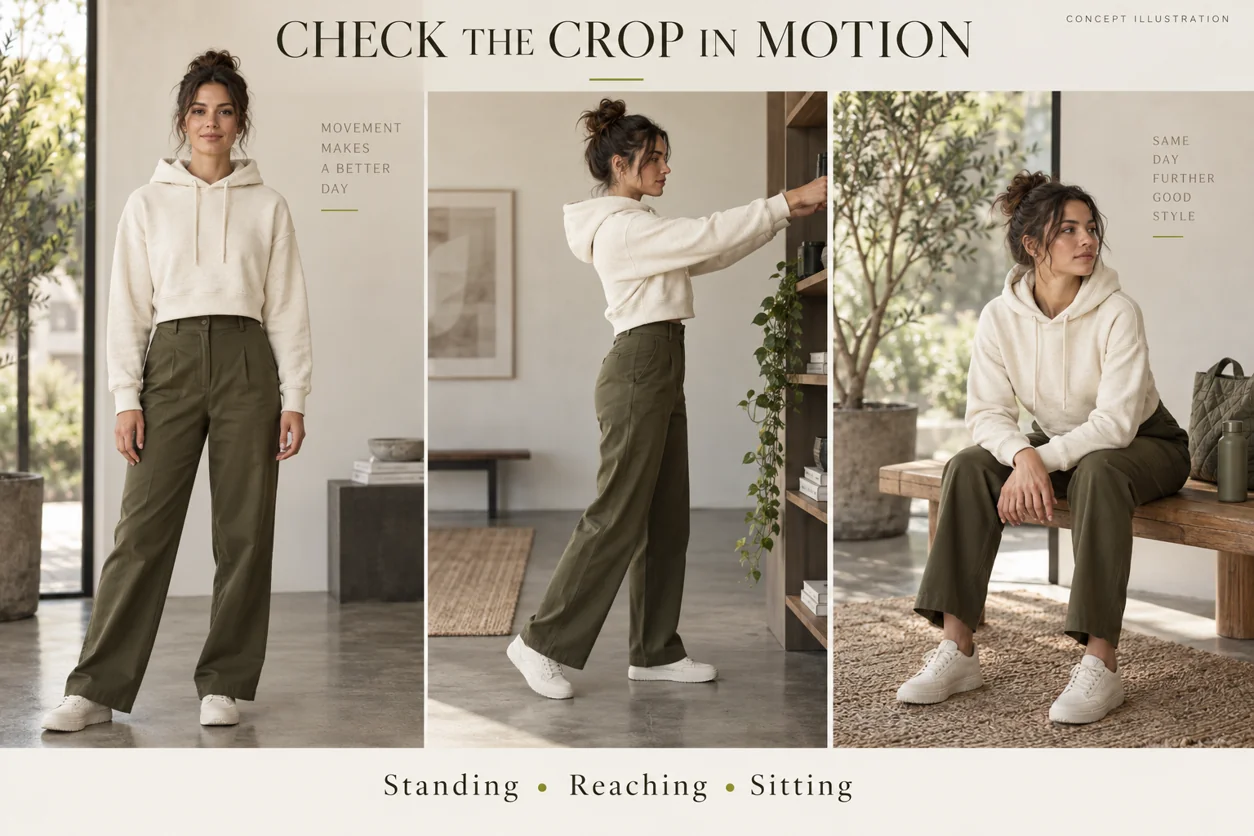
These poses are a suggested review sequence, not a laboratory test or evidence that the illustrated garment has passed.
Agree the acceptable outcome before judging the sample. A fashion crop designed to show a layer underneath has a different coverage brief from a waistband-meeting style. A useful correction identifies the observed problem, the desired outcome and the dimensions or construction to review.
For example: “The hem meets the waistband at rest but stays above it after sitting. Review hem opening and body length together; preserve the approved chest width.” This is more actionable than asking for extra length everywhere, which may remove the intended cropped character.
Review more than the base size
After the initial direction is approved, select additional sizes or relevant wearer proportions for checking. Agree which sizes need physical samples before bulk approval. Do not assume that adding an identical length increment across the range will preserve the same relationship to the waist on every wearer.
Keep garment measurements separate from wearer measurements. A garment chest width taken flat is not a body circumference measurement. Document the size chart's meaning clearly, and specify the flat measuring points and tolerances with the supplier. The goal is a repeatable product, not a claim that one cropped silhouette fits every body identically.
Care can change the approved relationship
If the development brief includes a care review, measure and photograph the same identified sample before and after the agreed procedure. Record the care settings and drying method, sample condition and measurement points. Recheck the hem relationship on the wearer as well as the flat length and width.
AATCC's TM150 method summary describes assessment of garment dimensional change after home laundering. A formal test should use the agreed applicable method and competent testing; an informal fitting-room wash check is not automatically a TM150 test.
Do not promise a universal shrinkage percentage for cotton fleece or French terry. Ask for results for the selected fabric and complete garment. A reported change needs its conditions and sample identity to be meaningful. If the short body becomes shorter after care, review whether it still meets the original coverage brief before approval.
A cropped hoodie brief your supplier can act on
The most useful brief combines a silhouette reference, defined dimensions and observed sample outcomes. Reference photos communicate intent; the agreed specification and approved sample make the instruction repeatable.
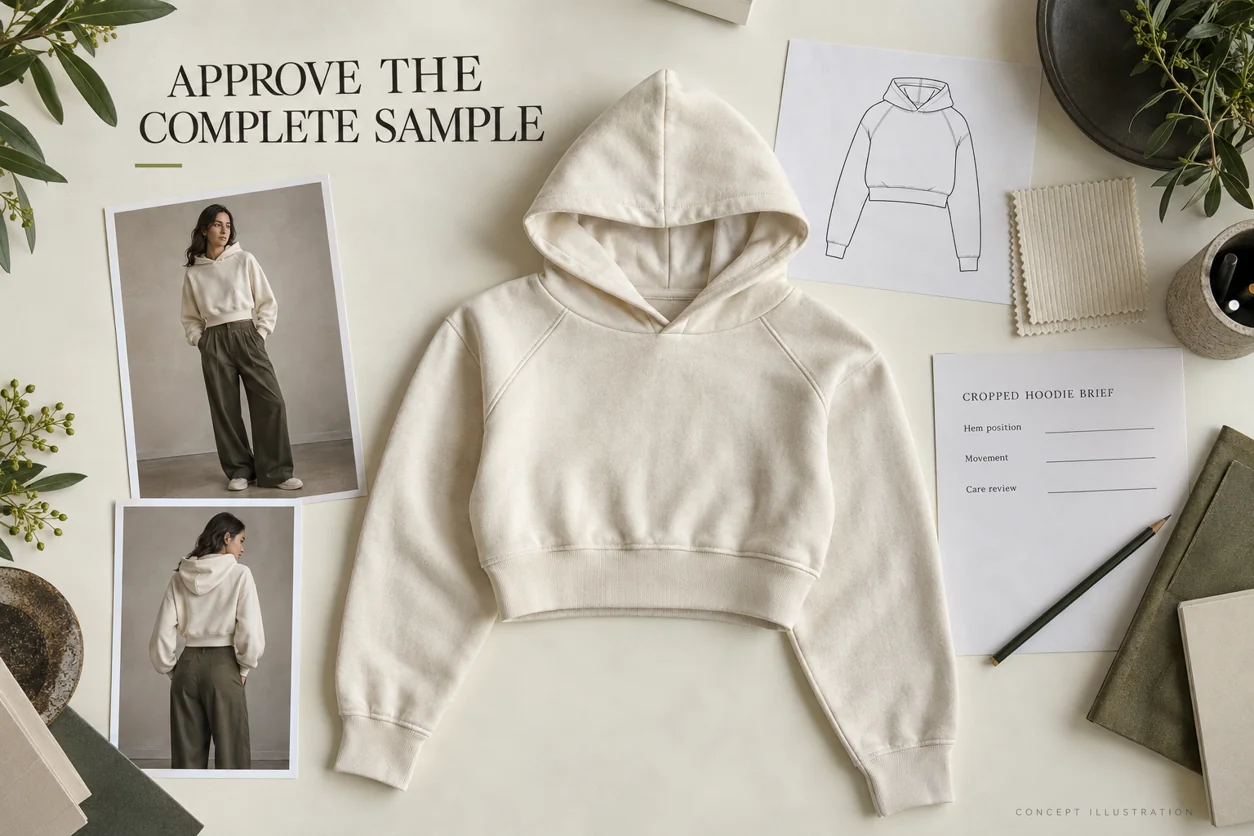
| Brief field | What to record |
|---|---|
| Intended wearer and styling | Adult fit direction, relevant wearer measurements, underlayer and intended trousers |
| Resting hem position | Where the finished hem should sit in a natural standing pose |
| Body length method | Start point, finish point, front/back convention and whether rib is included |
| Body and hem shape | Chest/body width, hem opening, rib depth or straight-hem construction |
| Shoulder and sleeves | Shoulder position, sleeve measuring method and intended cuff position |
| Front layout | Pocket dimensions and placement, artwork position and clearance to the hem |
| Sample review | Standing/reaching/seated findings, selected size checks and care observations |
| Approval record | Revision ID, agreed dimensions and tolerances, photos, open corrections and final decision |
Keep the correction narrow
Suppose the width and sleeve shape are approved, but the garment is too short with the intended trousers. Ask for a revised body length and a review of the affected pocket or artwork position. Do not silently accept a new shoulder, fabric or hem treatment in the next sample.
If both length and rib behaviour need review, list them separately. Ask the supplier to identify what changed, then repeat the same fitting sequence. Retain the earlier photos and measurements so the discussion is based on visible differences rather than memory.
A practical approval note might read: “Approve the overall cropped direction subject to the revised hem position. Keep the approved body width and sleeve shape. Confirm the final measurements and repeat the seated and care checks on the revised sample.” Conditional notes must be resolved before treating the sample as fully approved for bulk.
Common buyer questions
Is a cropped hoodie just a smaller regular hoodie?
No. A smaller regular size can change chest, shoulder, sleeve and other dimensions together. A cropped design may deliberately retain generous width and full-length sleeves while shortening the body. Specify those choices separately.
What is the best cropped hoodie length?
There is no single length suitable for every wearer and collection. Start with the intended hem position, trouser relationship and coverage preference, then establish the finished garment length using agreed measuring points and a physical sample.
Should a cropped hoodie have rib at the bottom?
Either a ribbed or straight hem can suit the design. Choose according to the silhouette and comfort you want. Check the actual sample for resting position, movement and adjustment rather than selecting rib solely because another hoodie uses it.
Can we approve the fit from a digital mockup?
A mockup helps communicate colour, artwork and general intention. It cannot establish real drape, comfort, movement or care performance. Use it to brief the supplier, then approve those outcomes on an identified physical sample.
Choose a hem position, then approve the complete proportion
Before requesting a cropped hoodie sample, prepare the intended trousers, a clear resting-hem reference and a measurement sketch. Review body width, hem construction and sleeve balance together. Approve the result in natural movement and under the agreed care conditions—not only in a styled front image.
For a development discussion, explore Athletic Rush hoodies and share your fit reference, target size range and sampling questions. Email kamran@athleticrush.co or contact Athletic Rush on WhatsApp.