 Sialkot, Pakistan
 Worldwide enquiries

Approve hoodie pockets and cuffs on the complete garment: check access and placement on the wearer, inspect the seams inside and out, then repeat the relevant checks after the agreed care procedure. A tidy flat photograph cannot establish pocket usability or cuff fit.
This guide is for clothing brands developing an adult streetwear hoodie. The body silhouette may already be approved, yet a pocket can be awkward to reach or a cuff can feel different from the reference. These details deserve their own review before a sample becomes the production standard.
Start with one identified sample, the intended fabric and rib references, and a drawing showing the measurement points. Record what the customer should be able to do in the garment. Then separate appearance, wearing experience and any formal performance requirements so each decision has an appropriate check.
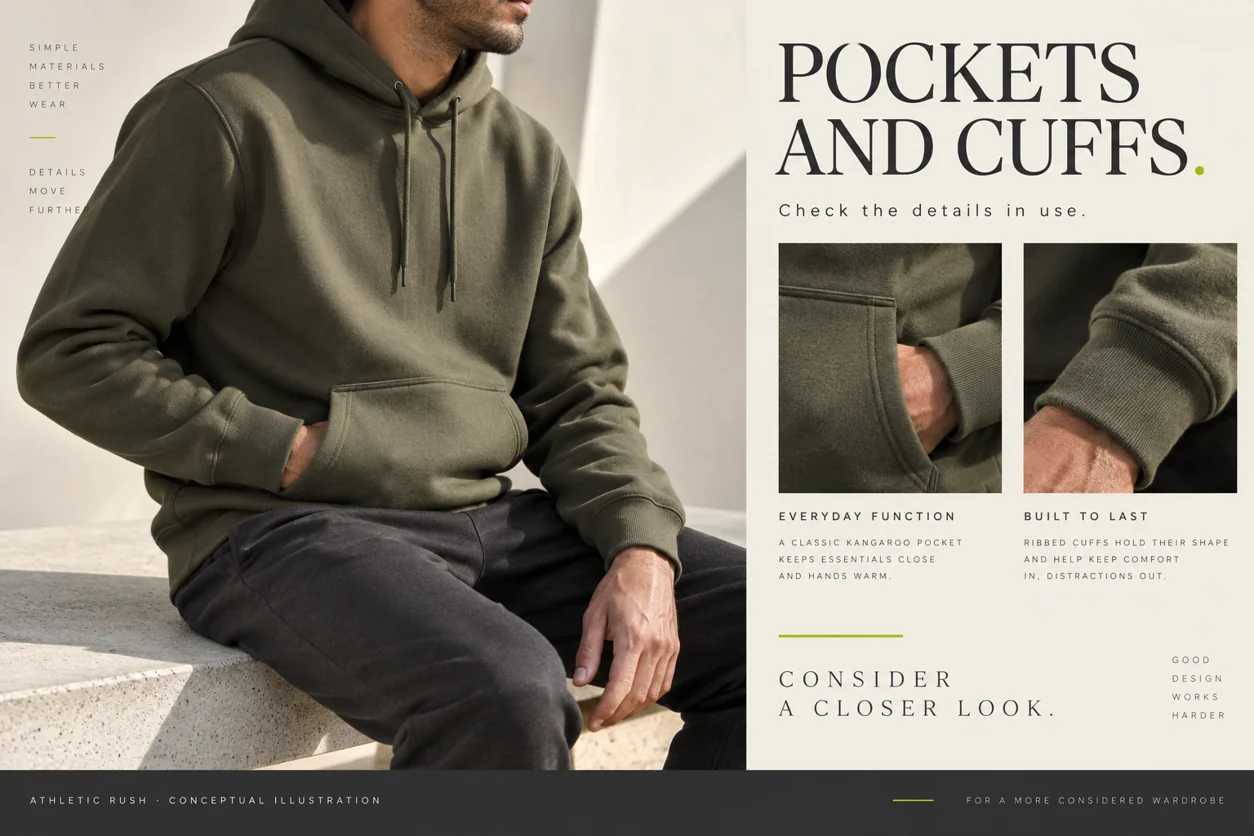
The six original AI-generated illustrations in this guide are development concepts. They are not photographs of Athletic Rush stock, customer orders or measured test results.
1. Check the pocket as a usable part of the garment
A kangaroo pocket, two separate patch pockets and a concealed pocket are different development briefs. Name the construction and show its position on the garment drawing. If a reference photograph hides the pocket interior, ask the supplier to explain the proposed construction instead of assuming what is behind the opening.
Specify the purpose as well. Is the pocket mainly a place to rest the hands, or is it intended to hold particular everyday items? If carrying an item matters, use an agreed representative object in the sample review. An open pocket should not be described as secure storage merely because an object fits inside.
Define placement and the opening separately
Mark the pocket position relative to agreed garment reference points. Identify the opening length, pocket dimensions and distance from the hem where relevant. State whether measurements are taken flat and relaxed, and include a drawing of the endpoints. Avoid a universal pocket size: the appropriate dimensions depend on the style and size range.
For a symmetrical design, compare both sides against the same centre reference. Review the top edge and openings on a level garment rather than judging from a tilted hanger. A difference should be documented against the agreed tolerance, not accepted or rejected solely because a photograph looks slightly uneven.
Inspect the opening corners and inside finish
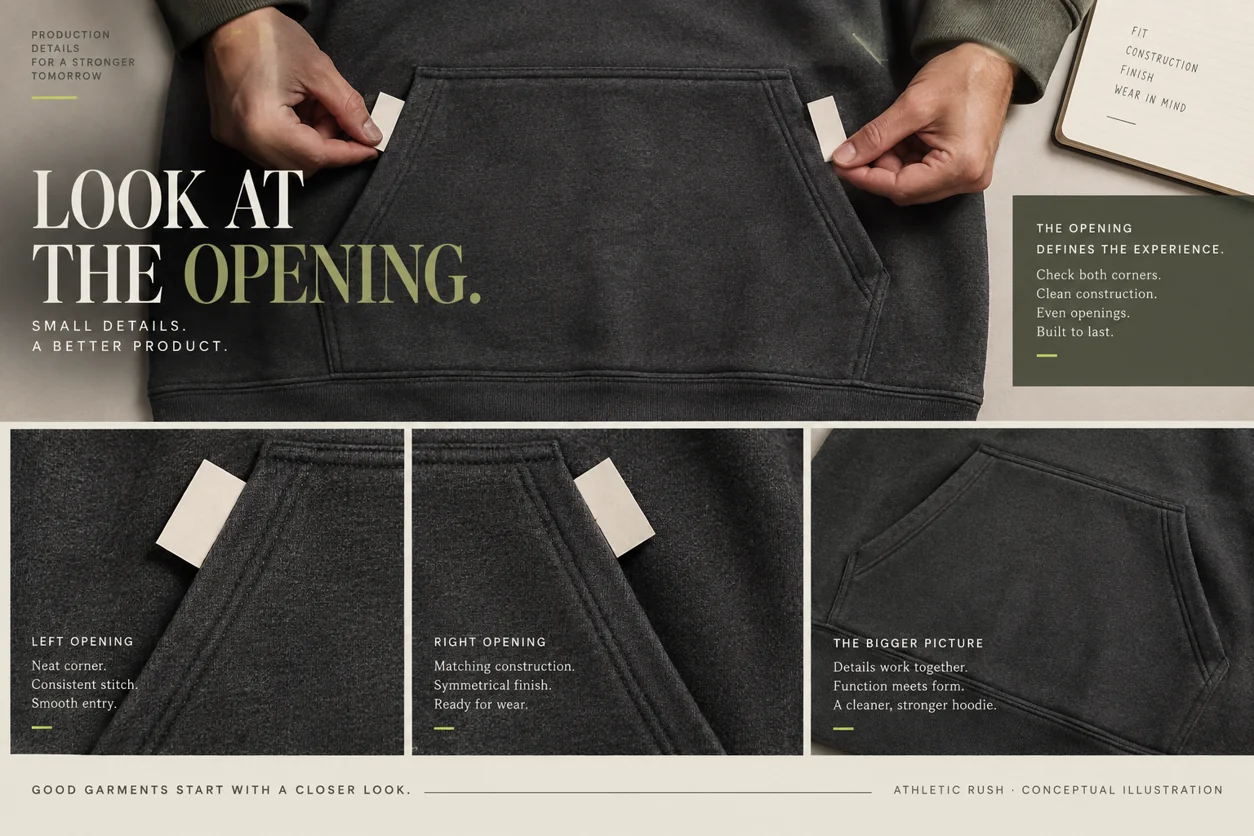
Look closely where the opening meets the attached edge. Record loose threads, visible damage, skipped stitches or an edge that turns in an unintended direction. Gently handle the sample as it would be used; do not substitute an uncontrolled forceful pull for a specified strength test.
Ask the manufacturer to show the proposed reinforcement and explain why it suits the material and intended use. More visible stitching is not a universal quality score. The review should establish the construction you are approving, including its appearance on the outside and feel on the inside.
Coats' soft and secure seams guidance treats seam strength, appearance, stretch, bulk and softness as related design considerations. Use those dimensions to frame the discussion with the supplier. The document does not establish that one reinforcement pattern is right for every hoodie pocket.
Turn the relevant area inside out where possible. Check how allowances and edges are finished, whether the interior matches the drawing, and whether an unintended ridge is noticeable when the hands enter. Photograph the actual issue with its location identified.
Try reaching the pocket while standing and sitting
Use the complete garment in the intended sample size. Ask the wearer to enter and remove their hands naturally, first standing and then seated. Observe whether the hoodie needs repeated adjustment, whether the opening catches the hand, or whether the intended pocket position becomes awkward in either posture.
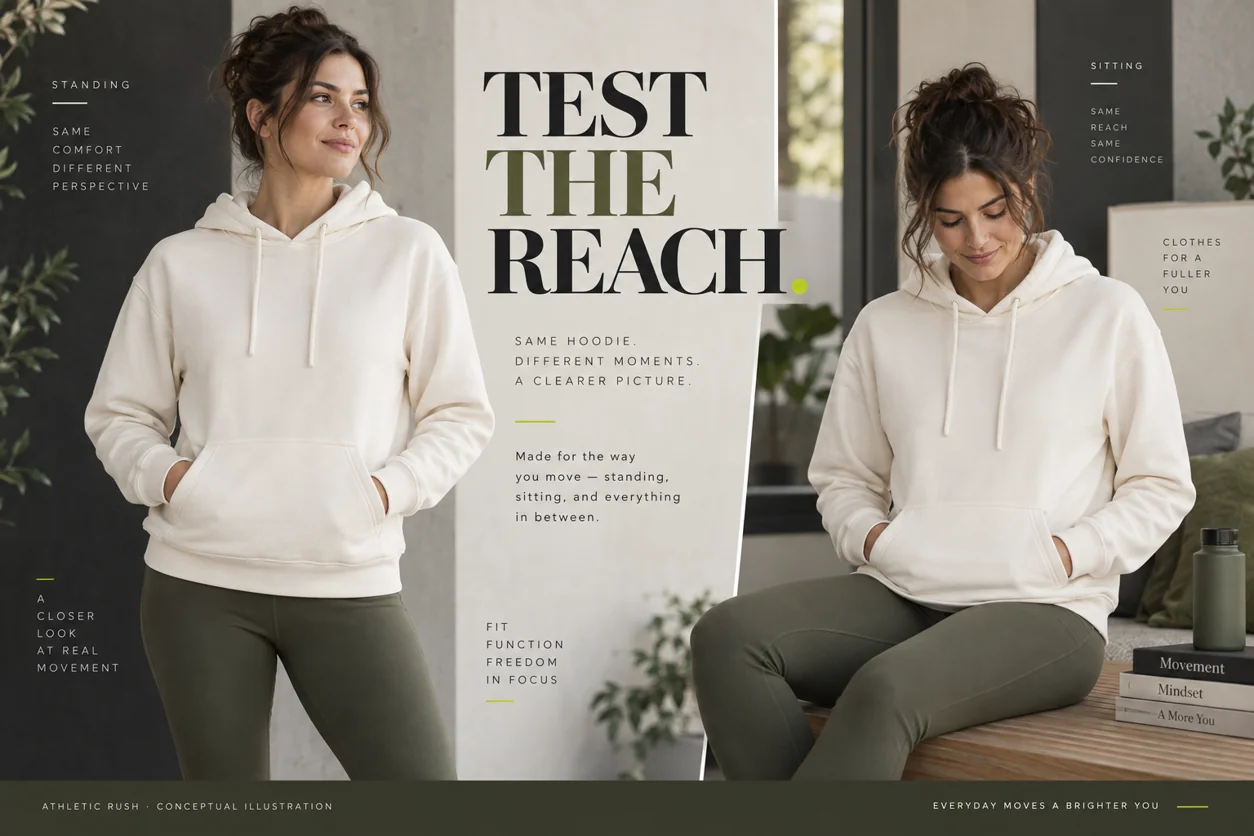
These are observations from a particular sample and wearer, not a claim that every customer will have the same experience. If a different size group is important to your collection, include appropriate fit samples and reviewers rather than extending one person's approval to the whole range without review.
Where carrying an object is part of the brief, check its placement in both postures and during ordinary movement. Record the object used and the limits of the check. Consider whether a closure or another pocket construction needs to be discussed; do not promise retention without evidence.
| Pocket check | Record | Development question |
|---|---|---|
| Position | Reference points and sample measurements | Is the placement consistent with the drawing? |
| Access | Standing and seated observations | Can the wearer use the opening as intended? |
| Corners | Close photographs inside and outside | Does the proposed reinforcement suit the assembly? |
| Interior | Edge finish and handling observations | Is there an unwanted ridge or exposed edge? |
| Intended contents | Agreed object and review conditions | Does the construction suit the requested use? |
2. Approve the cuff material and the finished fit together
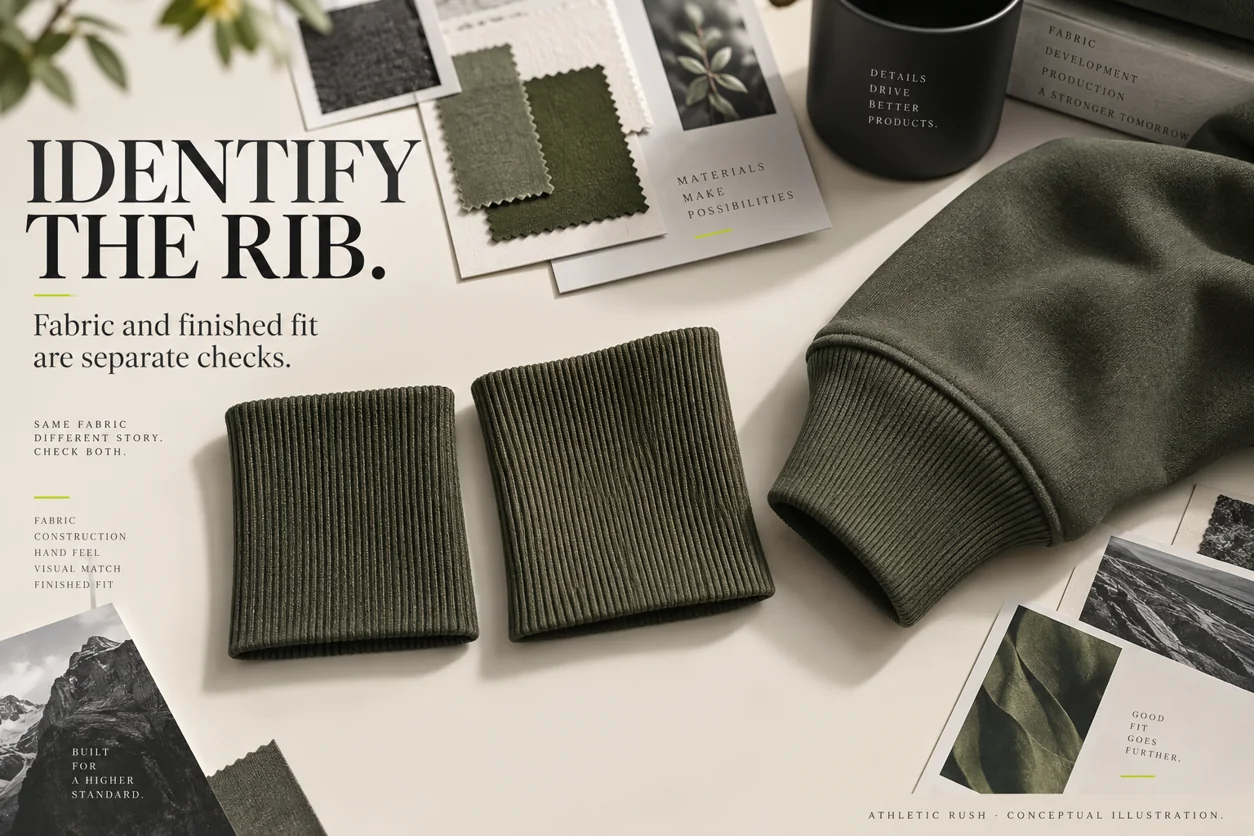
A rib swatch is useful, but the customer wears a cuff sewn to a sleeve. Identify the rib separately from the body fabric: reference, composition supplied by the manufacturer, construction, colour and finish. Keep an approved swatch with the sample record so a visually similar material is not silently substituted later.
Specify the finished cuff depth and relaxed opening using agreed measurement points. Clarify whether a recorded width is a flat measurement or a circumference. Mixing those conventions can create a substantial misunderstanding even when both parties use the same unit.
Review hand entry, resting position and movement
Put the complete hoodie on and take it off normally. Check whether the hand passes through the cuff as intended, whether the cuff sits at the desired wrist position, and how it behaves when the arm reaches forward or bends. Record wearer feedback alongside the actual measurements.
Do not correct every cuff concern by changing the rib alone. Sleeve length, sleeve volume, cuff dimensions and assembly can all belong to the development discussion. If the cuff appears to ride up, compare the complete sleeve and the intended fit before deciding what to revise.
For a style intended to be worn with sleeves pushed up, include that use in the brief and review it on the sample. Record the position and duration used for the review. Avoid assuming that a one-time handling check establishes long-term recovery.
Distinguish stretch from recovery
How far a fabric extends and how it behaves after extension are different questions. A rib that feels easy to stretch during a quick swatch check has not automatically demonstrated suitable finished-cuff behaviour.
ASTM D2594/D2594M addresses stretch properties of knitted fabrics having low power, including fabric stretch and growth. Its scope helps explain why an extension observation alone is incomplete. It does not provide a universal pass value for your hoodie cuff; confirm the applicable method and acceptance criteria with a competent testing provider when formal evidence is needed.
For development, compare identified candidates under a consistent review procedure and retain the results with the material references. Label an informal wear review accurately. Do not describe it as laboratory testing or attach a recovery percentage that was never measured.
Inspect the cuff-to-sleeve join
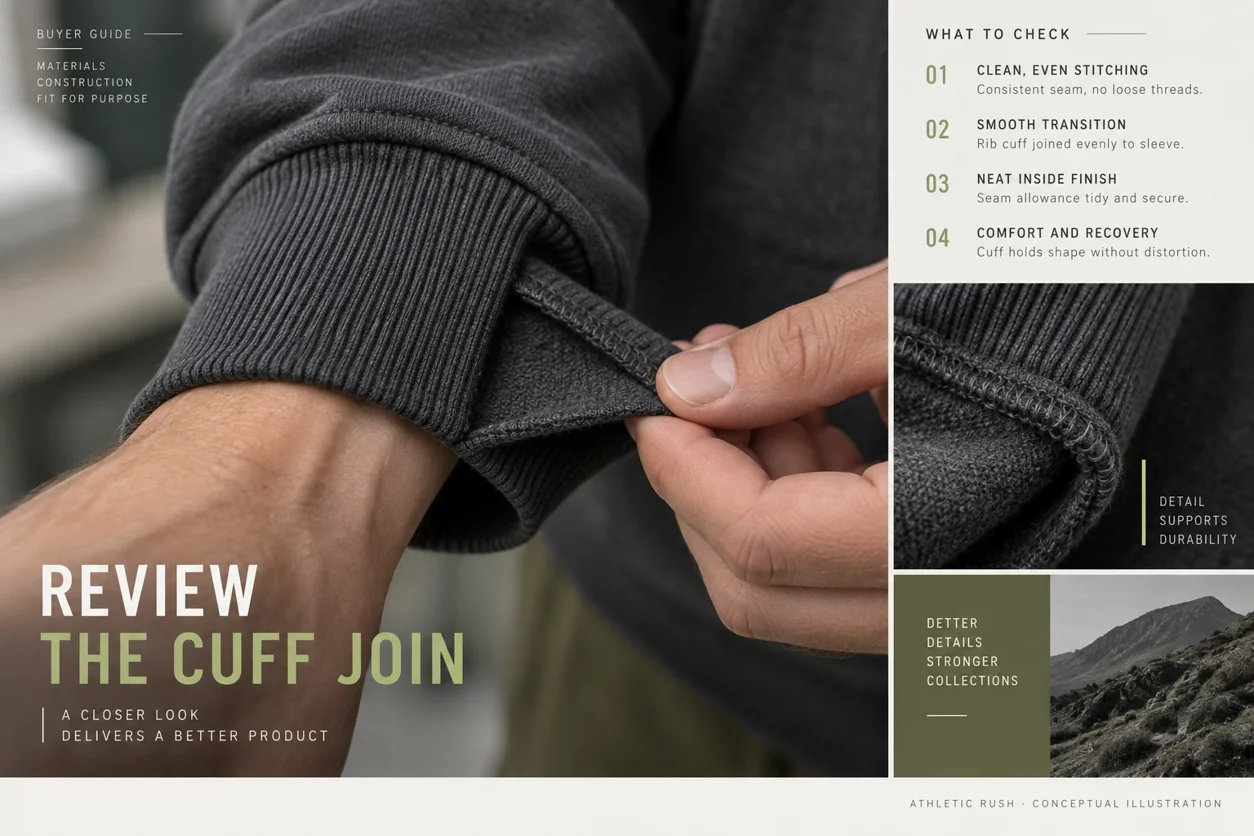
Review the seam around the entire opening, inside and outside. Look for unintended puckering, twisting, damage or uneven attachment. Compare the two sleeves and note whether the result reflects the approved design.
Check the seam during normal hand entry and arm movement. If the join restricts an otherwise suitable cuff, document that observation rather than specifying a thread or machine setting from appearance alone. Ask the supplier to propose a correction and demonstrate it in a revised sample.
Keep the intended appearance clear. A gathered sleeve at the cuff may be part of the silhouette; an unintended fold is a different issue. A drawing and approved reference help the reviewer distinguish a design feature from a correction.
3. Repeat the important checks after agreed care
Review a garment made with the proposed body fabric, pocket construction and cuff material. If the sample contains substitutes, list them and identify which approvals remain open. A sample with temporary rib can help discuss the body silhouette, but it cannot settle the final cuff material decision.
Agree the care procedure, garment preparation and comparison method before reviewing changes. Record the sample revision and size, take consistent photographs, and measure from the same defined points. Keep an original reference where feasible.
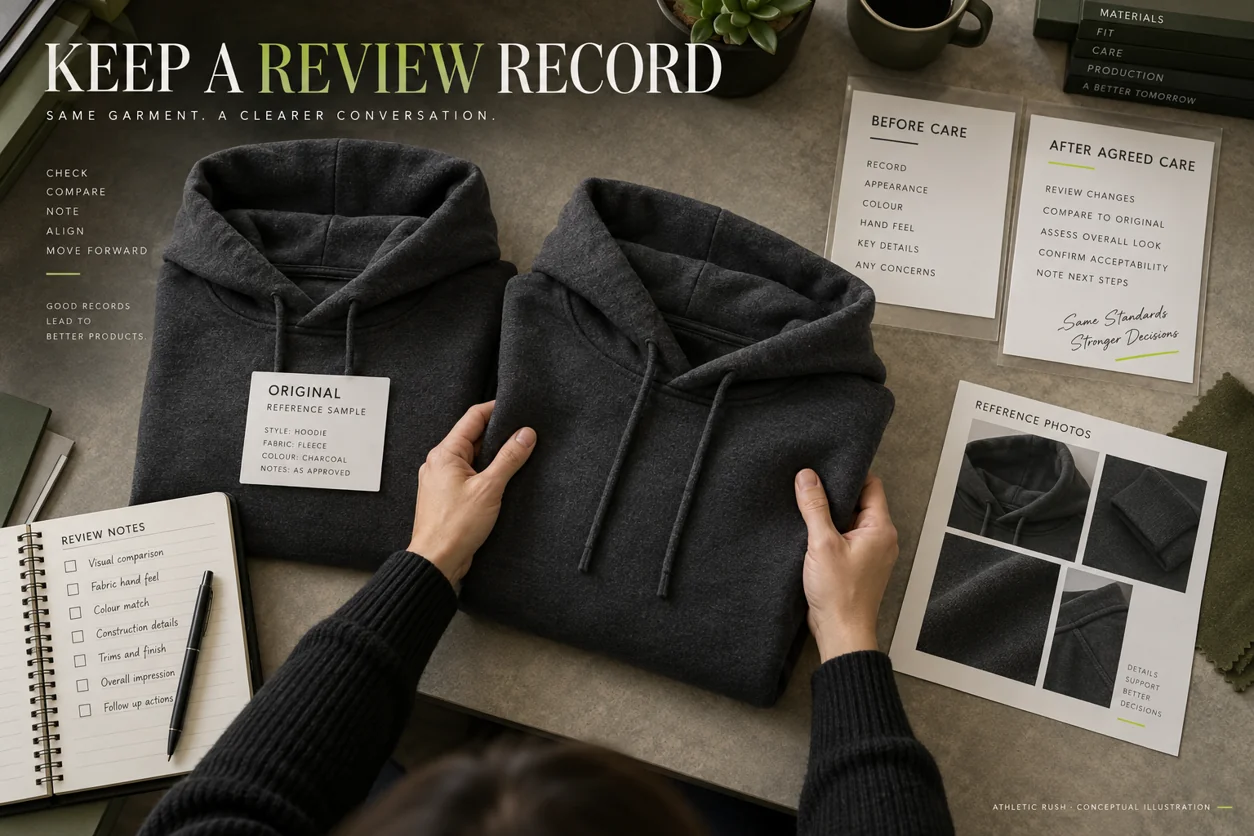
After the sample is ready for comparison, look again at pocket openings, corners, edge shape, cuff dimensions and the attachment seams. Repeat the relevant wearing checks. If the pocket edge now sits differently or the cuff feels different, record both the observation and the care conditions.
A casual wash is not proof of long-term durability. Equally, an unexpected change is a useful reason to investigate before bulk approval. Agree any formal testing requirements separately, using an appropriate method and project-specific acceptance criteria.
| Observation | Avoid assuming | Useful next action |
|---|---|---|
| Pocket is awkward to reach | The pocket must simply be larger | Review placement, opening and worn garment together |
| Corner shows an unexpected change | Extra stitches will always solve it | Ask for an assembly review and revised sample |
| Cuff feels restrictive | Body fabric weight is the cause | Compare cuff dimensions, rib and join |
| Sleeve twists at the cuff | The wearer put it on incorrectly | Review paired sleeves, pattern and assembly |
| Shape differs after care | All material with that fibre label behaves alike | Compare the actual references and recorded conditions |
Write corrections that can be verified
Use a location, an observation and a next check. For example: “On sample P2, the right pocket opening turns outward after our recorded care review. Please identify the cause and return the revised assembly for the same comparison.” The sample identifier is illustrative.
For a cuff issue, a useful note might be: “The approved body fit is retained, but reviewers find hand entry restrictive in this sample size. Please review the cuff dimensions and join, then show the proposed change in the complete sleeve.” This leaves room for a supported technical solution without approving an unexamined substitution.
Close each correction against a specific sample revision. If material or construction changes after that approval, assess whether another review is needed. Keep the drawing, photographs, material references and agreed exceptions together for production and reorders.
A short supplier brief
“We are developing an adult hoodie with [pocket construction] and [cuff direction]. The attached drawing defines pocket placement, opening measurements and finished cuff measurements. Please identify the pocket finish, reinforcement and rib reference, then provide a complete sample for standing, seated and sleeve-movement review. List any substitute materials. We will agree care conditions and acceptance criteria before final approval.”
Include quantity, size allocation, artwork and the intended market when requesting a quotation. Ask the supplier to identify the sample scope and proposed materials. This makes competing quotations more comparable than a request for a “high-quality pocket and cuff.”
If the garment shape is still unresolved, start with the boxy hoodie fit approval guide. For the upper part of the garment, use the double-layer hood specification guide. Each decision should feed into one identifiable complete sample.
Frequently asked questions
Is a bigger kangaroo pocket always better?
No single size suits every silhouette and size range. Define placement, opening and purpose, then evaluate access on the complete garment. A larger flat outline does not establish comfortable reach.
Should cuff rib match the body fabric?
Specify the desired colour and appearance, but identify the rib as a separate component. Review the actual combination and finished cuff rather than assuming a colour match establishes fit or recovery.
Can I approve a cuff by stretching it once?
One handling check may reveal a concern, but it does not establish long-term behaviour or a formal test result. Review normal hand entry and movement, the seam, and the agreed care comparison. Use suitable testing when a measurable performance claim is required.
Do pocket and cuff checks replace the full sample review?
No. They are focused parts of the complete garment approval. Preserve the body fit, hood, artwork and other agreed checks, and identify the exact revision being approved.
Plan a complete hoodie sample
Explore Athletic Rush custom hoodies, then send the pocket reference, cuff direction, garment drawing and size allocation. A clear brief makes it easier to identify what needs sampling and what remains undecided.
Contact kamran@athleticrush.co or WhatsApp +923279008337 to discuss your sample requirements.