 Sialkot, Pakistan
 Worldwide enquiries

For a double-layer hood, specify the outer and inner fabric separately, define the shape on the wearer, and approve the complete hoodie after the agreed care review. Two layers alone do not establish comfort, warmth or a better fit.
This guide is for a clothing brand developing an adult streetwear hoodie. Your reference may show a substantial hood that holds a particular silhouette, but the instruction “make it double-layer” leaves important choices unresolved. The supplier still needs to know what goes inside, how the opening should sit and what sample you will approve.
The useful starting point is the result you want: a clean interior, a contrasting lining, a particular hood-down shape or a defined wearing experience. Translate that result into an identifiable fabric combination and a garment sample. Avoid using “premium” as the only construction requirement.
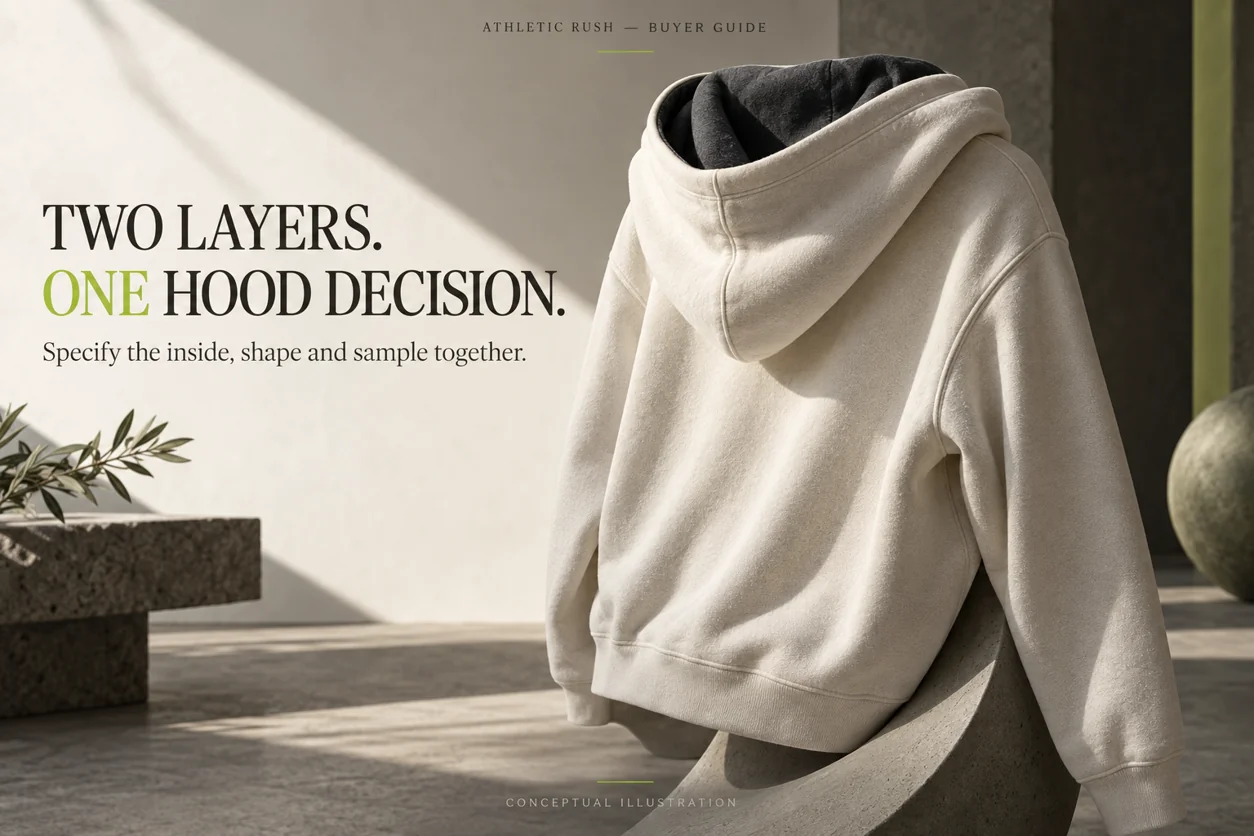
These six original AI-generated illustrations are development concepts, not photographs of Athletic Rush inventory, customer orders or measured test results. Confirm materials and construction for your own project.
1. Define the two layers before discussing the silhouette
A double-layer hood has an outer shell and an inner layer. It does not necessarily mean the entire hoodie is double-layered. State which parts of the garment are lined so that a request for the hood does not become an ambiguous request for the body, sleeves or pocket as well.
“Self-lined” usually communicates that the inner hood uses the same fabric as the outer hood. Still identify the actual fabric on the specification rather than relying on the term. A contrast-lined hood may use a different colour, a different fabric or both. Record those decisions separately.
For example, a brand might compare a hood made from the body fabric on both sides with one using the body fabric outside and another approved knit inside. Neither is automatically the correct answer. Ask for the proposed combination, then examine its appearance and handling in the complete sample.
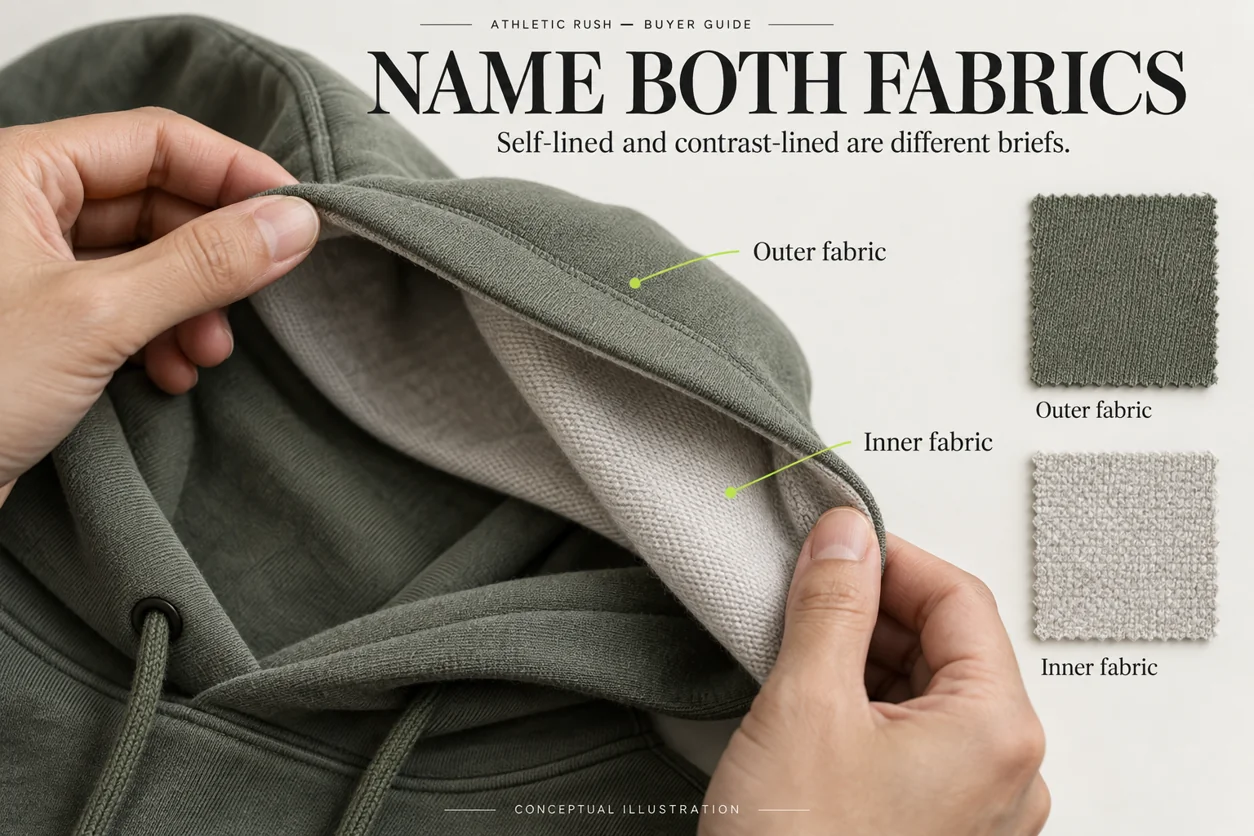
Specify the inner face the customer will actually see
Record the fabric identity, composition supplied by the manufacturer, construction, colour reference and intended face orientation. If a fabric has visibly different faces, indicate which faces the head and which faces outward. A close photograph or labelled swatch can make this clearer than a long verbal description.
Do not assume the interior must be brushed, smooth or made from the same material as the body. Explain the intended feel and ask the supplier to propose an available material. Then evaluate the actual proposal. A descriptive phrase such as “soft lining” is a development direction, not a complete fabric specification.
Review the fabrics together in consistent light. An inner colour that looks suitable as a small swatch may become a strong visual feature when the hood hangs open. Check the visible edge and the hood-down view as well as the inside of the raised hood.
| Decision | Record in the brief | Verify before approval |
|---|---|---|
| Scope | Hood only, with other lined areas listed separately | The sample matches the intended scope |
| Outer fabric | Identified reference and intended face | Actual fabric matches the reference |
| Inner fabric | Identified reference, colour and face | The visible interior is the intended one |
| Colour relationship | Matching or deliberate contrast | Both fabrics viewed together |
| Finish | Proposed fabric treatment and care direction | Sample reflects the planned process |
Keep fabric weight and total garment weight separate
If the supplier quotes fabric GSM, ask which material that figure describes. Do not add the two fabric GSM values and present the result as the weight of the entire hoodie. Fabric mass per unit area and the mass of a finished garment describe different things.
Ask for separate outer and inner fabric details, then request the actual garment weight if that matters to your specification or shipment planning. The hood pattern, size and other components also belong to the finished garment. Use the hoodie fabric weight and season guide for the broader fabric decision rather than treating this article as a universal GSM recommendation.
2. Specify the hood as a worn shape
Decide what the hood should do when raised and when lowered. A photograph taken from one angle is useful visual direction, but it cannot establish depth, opening position or the way the hood rests at the back. Supply front, side and back references where those views matter.
Define the intended wearing context. Will the customer normally wear the hood over their head, under another layer, or down as part of the silhouette? Is there a particular hairstyle or headwear allowance to consider during fitting? Treat these as fitting requirements to check with suitable wearers, not assumptions about every customer.
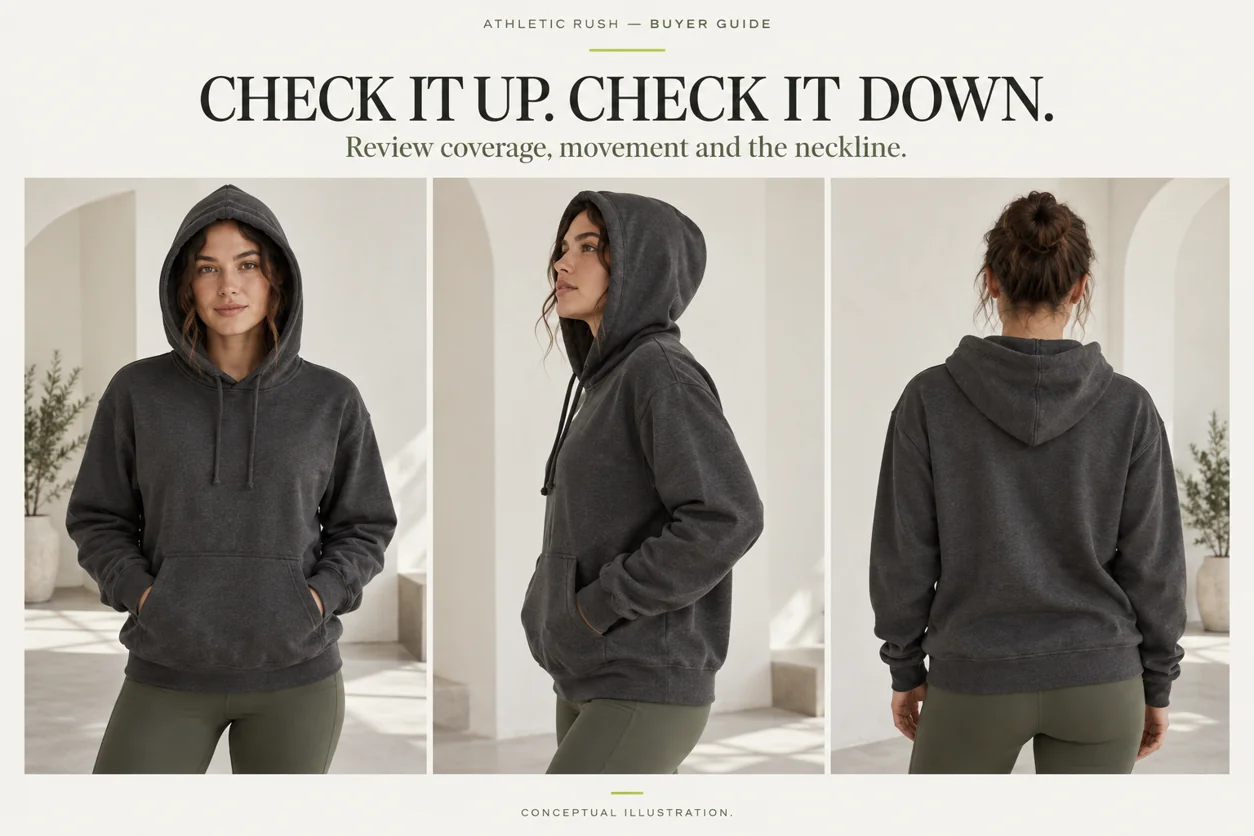
Evaluate the opening, depth and neckline together
On the sample, check where the face opening sits, how the crown feels and how much the hood changes position during ordinary head movement. Note whether the wearer adjusts the garment repeatedly to keep the intended position. Record the observation and ask the development team to investigate the pattern or assembly as appropriate.
With the hood down, review its position across the upper back and around the neck. Check the front of the hoodie too. A hood cannot be approved independently of the garment to which it is attached. If you are still choosing between an open front and a pullover, the pullover versus zip hoodie guide addresses that earlier decision.
Agree measurement points with the supplier using a drawing. Labels such as hood height and depth can be measured differently unless the endpoints and garment position are defined. Request a size-specific specification and tolerances agreed for the project; do not copy a universal measurement from an unrelated style.
Separate panel layout from layer count
A two-piece or three-piece pattern description concerns the panel arrangement. A double-layer description concerns the outer and inner construction. They are not interchangeable terms. Ask for a sketch showing the panels, seams and lining arrangement instead of assuming that the number in one description explains the other.
Panel seams can be a visible design feature. Decide whether you want a centre seam, another arrangement or particular alignment with artwork. Let the supplier explain the proposed pattern, and evaluate it in the sample rather than treating a larger number of panels as a quality score.
Look closely at the hood-to-neck join
Inspect the inside and outside where the hood meets the body. Feel the seam area and review how it sits against the wearer. If the layers create an unwanted ridge or an awkward fold, document the location and request a construction review. Avoid prescribing machine settings from a photograph without knowing the materials and assembly.
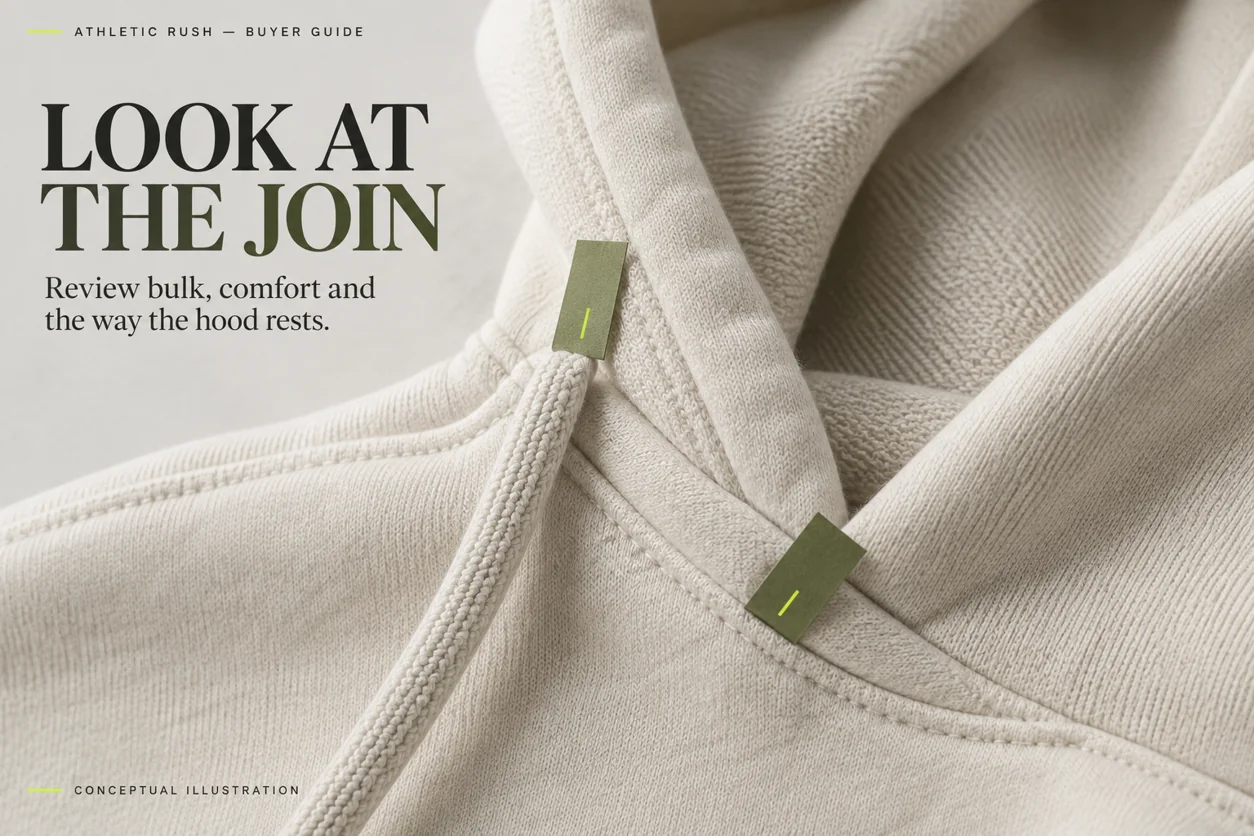
Coats' guidance on soft and secure seams identifies appearance, stretch, bulk and softness among the considerations in seam design. Use that as a reason to evaluate the actual assembly, not as evidence that a particular stitch or thread will suit every hoodie. The manufacturer should select and demonstrate a suitable construction for your specified materials.
If the design includes a drawcord, opening or hardware, document its position and construction separately. This guide is for adult development and is not a children's drawstring compliance guide. For a children's collection, obtain guidance for the destination market before carrying over adult details.
3. Approve a complete sample, including the care review
Request the intended outer fabric, inner fabric, pattern and assembly in the same sample. If the development sample uses a substitute, list the difference and the decisions that remain open. A sample can help you approve a shape while still leaving the production fabric combination unapproved.
Use a short review sheet with three sections: appearance, wearing behaviour and condition after the agreed care procedure. Record the sample version, size, material references and any treatments. This connects observations to a specific garment instead of an unlabelled photograph.
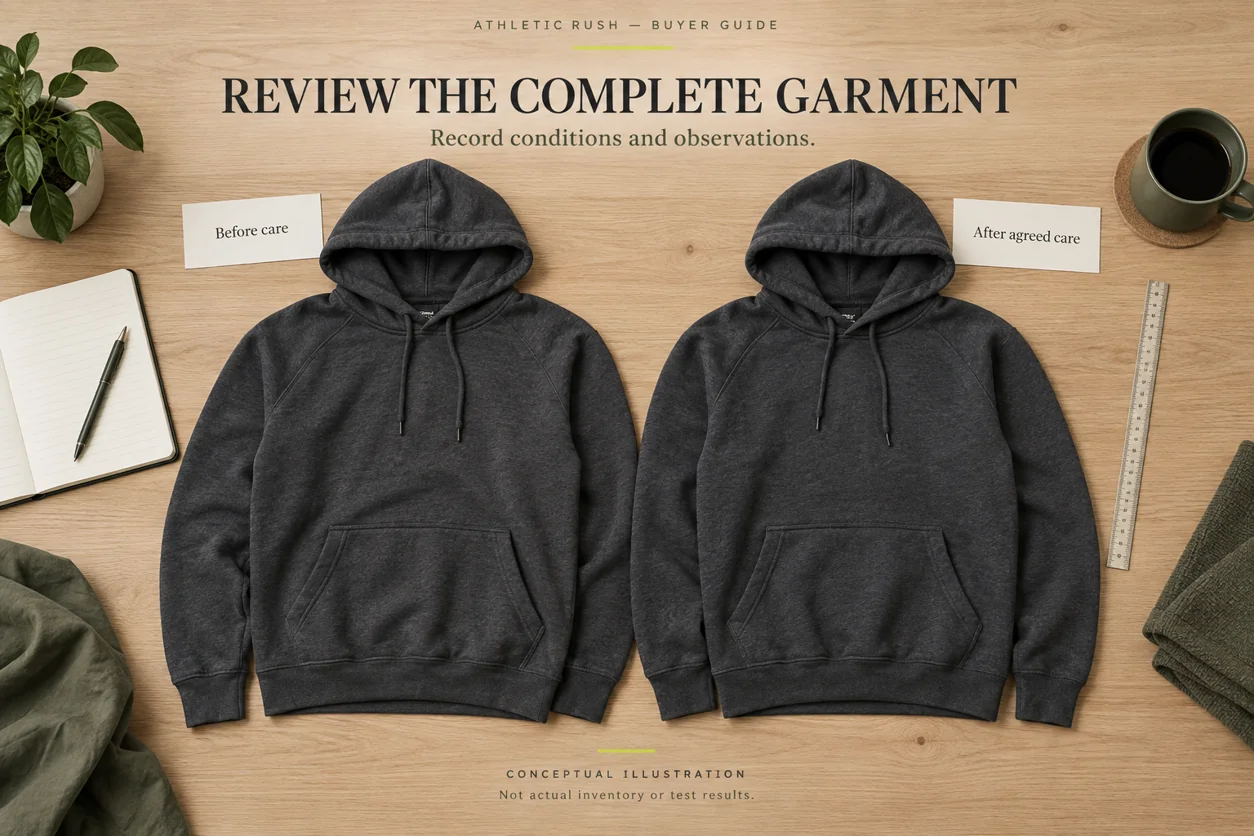
Check both layers after the planned care procedure
The two fabrics must be reviewed as a combination. Inspect the face edge, inner surface, seams and neckline after the agreed care process. Look for changes in shape, exposed inner fabric, unwanted folds or a different relationship between the two layers. Do not assume that matching fibre labels establish matching behaviour.
Use the same documented measurement method before and after the review. Keep the garment presentation consistent and record the washing and drying conditions. When a formal dimensional-change assessment is required, agree the applicable method and acceptance criteria with the supplier or testing provider.
AATCC TM150 addresses garment length and width changes after home laundering. Its public scope describes several laundering options; it does not supply a universal pass percentage for your hoodie. A casual home wash should not be described as a completed standardised test unless the specified method was actually followed.
Turn observations into useful corrections
| Observation | What to document | Next development action |
|---|---|---|
| Inner layer shows unexpectedly at the face edge | Photo, location and sample revision | Review the edge construction and fabric relationship |
| Hood shifts during normal head movement | Wearing sequence and views | Review the fit and pattern with the supplier |
| Unwanted ridge at the neckline | Inside and outside close-ups | Evaluate the seam assembly in a revised sample |
| Shape changes after care | Before/after records and conditions | Investigate materials and construction together |
| Interior colour differs from the approved direction | Swatch references and consistent-light photos | Resolve the actual colour reference before production |
The table identifies investigation steps, not a diagnosis from appearance alone. More than one cause may produce a similar symptom. Ask the supplier to explain the proposed correction and show it in the revised garment.
A useful comment is: “Sample H3 exposes the inner fabric at the left face edge after the agreed care review. Please compare the assembly with drawing B, identify the cause and return a revised sample.” The identifiers are illustrative. This is more actionable than “make the hood better.”
Keep approval boundaries clear
Approve the exact sample revision and list any exceptions. Keep the material references, colour references, measurement drawing and photographs together. If a later change replaces the lining or alters the panel layout, review the effect before treating it as equivalent to the approved sample.
For repeat orders, request confirmation that the approved materials and construction remain available. A similar-looking inner fabric should not silently replace the original reference. If a change is necessary, agree what needs to be sampled again.
A practical brief for your supplier
Use this starting point and replace the bracketed fields with your actual requirements:
“We are developing an adult [pullover/full-zip] hoodie for [customer and wearing context]. The hood should be double-layered; the rest of the garment is [specified separately]. Please quote outer fabric [reference] and inner fabric [reference or requested proposal], with [matching/contrast] colour direction. Our drawing identifies the intended opening and measurement points. Please propose the panel layout and seam assembly, then provide a complete sample for hood-up, hood-down and agreed care review. Confirm sample scope, quantity, size allocation and lead time.”
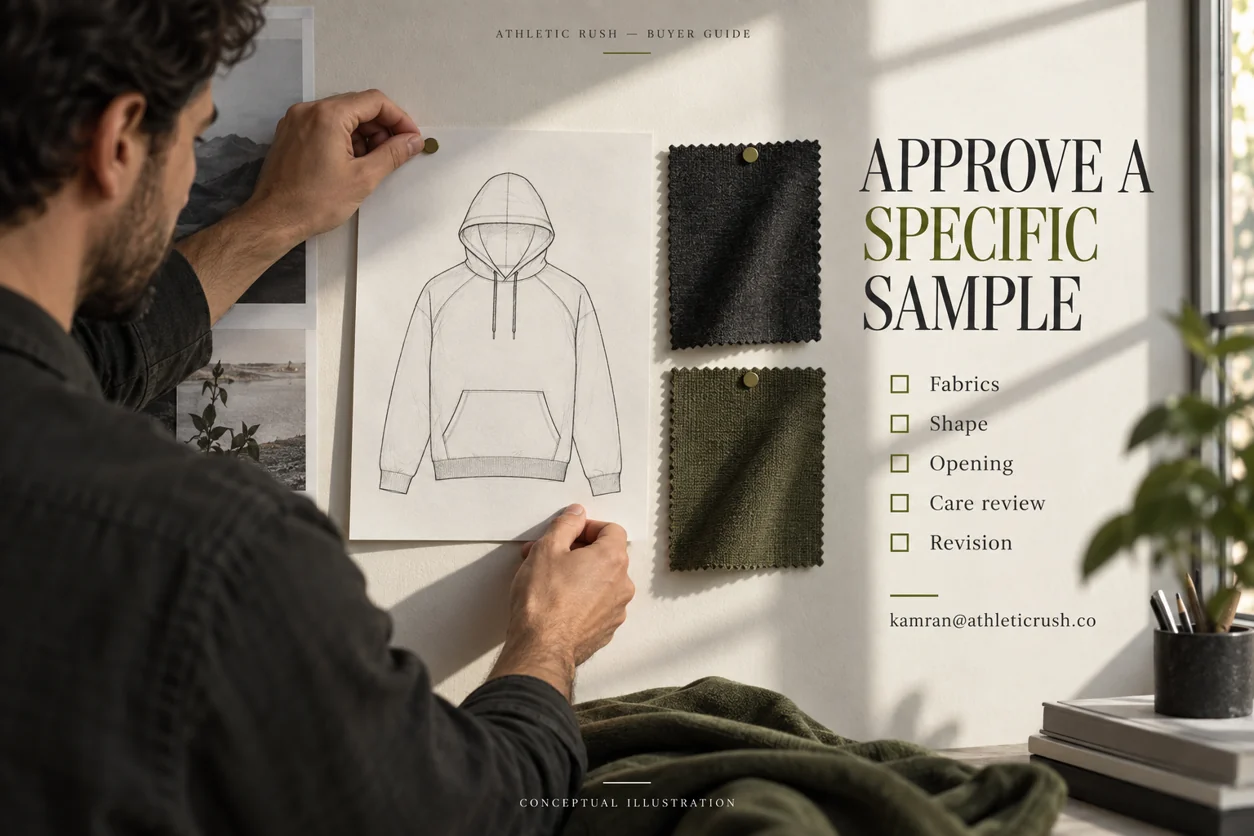
Ask quotations to identify the same scope. One price might assume self-lining while another includes a different inner fabric or additional treatment. Resolve those differences before comparing totals. Do not treat a conceptual picture as confirmation of material availability or an agreed price.
Frequently asked questions
Is a double-layer hood always warmer?
Layer count alone does not establish thermal performance. Review the actual fabric combination, construction and intended use. If your marketing needs a specific warmth claim, obtain suitable evidence rather than deriving it from the word “double.”
Does double-layer mean the whole hoodie is lined?
No. Specify the lined areas explicitly. A double-layer hood can be part of a garment with a single-layer body and sleeves.
Should the inner hood use the body fabric?
That is one possible brief, often described as self-lining. Another approved fabric may be considered for a different interior appearance or handling. Identify both materials and review the combination in a complete sample.
Can I approve the hood from a flat photograph?
A photograph supports visual direction. It cannot establish the worn fit, handling or care result. Review front, side and back views with the hood up and down, along with the physical sample.
Develop your hood sample with Athletic Rush
Browse Athletic Rush custom hoodies, then send your hood references, fabric direction, size allocation and order quantity. The useful next step is a clear outer-and-inner specification and a complete sample you can evaluate.
Contact kamran@athleticrush.co or WhatsApp +923279008337 to discuss the sample brief.