 Sialkot, Pakistan

Techwear / A buyer’s field guide
A utility vest can look convincing in a collection mockup while its pockets pull the front down or its armholes catch the layer underneath. This guide helps your brand choose a useful storage layout, define the layering fit and brief the hardware before paying for the next sample.
In short. Start with the items your wearer actually carries; choose a clear vest role; identify the proposed materials and hardware; review the complete garment over named layers; and retain a written sample decision before production.
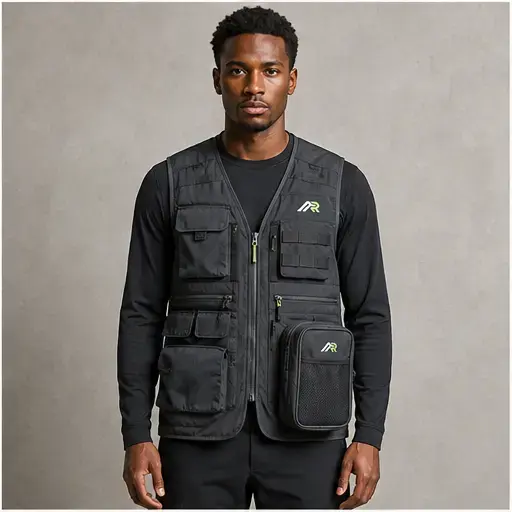
Website design illustration; material and physical sample details require confirmation. Source: Athletic Rush utility vest directions.
01
Choose the job before adding pockets
Write one sentence describing the vest’s place in your range: a light everyday layer, a pocket-led field style or a compact commuter piece. A reference image communicates appearance, but it does not decide how the garment should work. Start from your customer’s routine rather than the maximum number of visible compartments.
List the intended contents, the pocket assigned to each item and the access action. A phone used frequently needs a different review from a small item stored securely. Record actual object dimensions for sampling. Discuss the intended loading with the manufacturer; this editorial guide does not assign a safe load rating.
Compare directions within Athletic Rush’s utility vest development page. Its illustrations show starting points, not proof that a particular construction, detachable module or material is available for your order. The broader techwear range can help position the vest alongside your proposed outer layers.
| Vest direction | What you are deciding | Review before acceptance |
|---|---|---|
| Light everyday vest | A few identified essentials with straightforward access | Bulk from pocket layers and balance over the intended tee |
| Modular field direction | Defined compartments and any specifically requested removable pouch | Attachment proposal, contents, adjustment and access while worn |
| Compact commuter direction | A close layering shape with secure, low-profile storage | Seated comfort, hem position and clearance under an outer layer |
| Longline direction | More body coverage with deliberately positioned storage | Reach to lower pockets, sitting and front-to-back balance |
| Insulated direction | A proposed warming layer with integrated storage | Complete material assembly, underlayer room and intended care |
These are proposed development directions, not a stock list or tested product comparison. Choose the role first, then write the specific construction you want reviewed.
02
Match the material proposal to the whole vest
Request identified fabric proposals with composition, construction, weight, finish and color reference. Ask what is proposed for the outer body, pocket bags, facing, lining and reinforcement. A black technical appearance does not establish waterproofness, abrasion performance or a particular fiber. Keep any required performance claim separate until suitable evidence supports it.
A flexible shell may suit a light layering direction, while a more structured proposal may help communicate a pocket-led shape. Review both as complete constructions: extra pocket layers, webbing and facings can change the finished feel. Use the fabric development information to frame questions, then identify the actual swatches submitted.
Ask whether pocket edges need support and how that support affects stiffness against the wearer. Compare the outer shell with the pocket bag under the agreed care procedure. Record appearance, dimensions and any mismatch after care; a fabric swatch by itself cannot close the assembled-garment review.
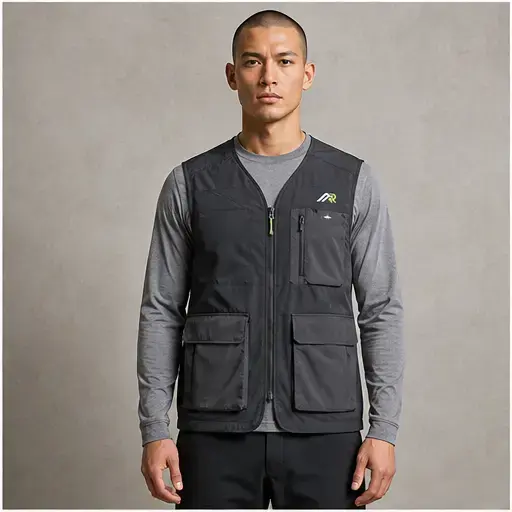
Website design illustration; material and physical sample details require confirmation. Source: Athletic Rush utility vest directions.
03
Set fit over named layers, empty and loaded
Specify the intended underlayer and whether an outer jacket will also be worn. Agree the vest’s body length, chest, shoulder, armhole and hem measuring points. Keep body measurements separate from garment measurements. For adjustable sides, define the measuring condition and how the loose strap ends should be managed.
Review the same sample empty and with the agreed contents. Check front and back balance, neckline position, pocket reach and clearance when sitting or reaching forward. Observe whether the hem lifts, the front twists or the armhole presses into the underlayer. Photograph the concern on the identified sample instead of asking vaguely for “more comfort.”
Fictional example: A startup plans a vest over a training tee and a lightweight sweatshirt. Its first sample clears the tee, but the sweatshirt bunches under the armhole when the wearer reaches forward. The brand records the layer, size and movement, asks for a pattern proposal and repeats that comparison on the revision. This is an invented review scenario, not an Athletic Rush customer or test result.
Put the agreed layer references, measuring method and unresolved questions into the tech pack and sampling brief. Recheck the relevant size range rather than assuming the result from one sample size transfers unchanged.
Review the vest with the layers and contents that define its intended use.
Turn the reference into a sample brief. Share the intended layers, contents and unresolved details. Request a utility vest proposal or discuss the brief on WhatsApp.
04
Specify closures, webbing and removable parts
Create a hardware map listing the main opening, each pocket closure, adjustment points and any detachable component. Identify proposed zipper type, length, opening direction and puller; for buckles, record the matching parts and webbing width. A visual match is incomplete if replacement components cannot be identified later.
Review zipper clearance in the assembled pocket. YKK’s zipper precautions warn against forcing a caught slider and advise allowing room around it when sewing. Apply that narrow point by checking whether lining, a pocket edge or a stored item interferes with operation. This is a review prompt, not evidence that the pictured vest uses YKK hardware.
Separate water resistance from a waterproof claim. YKK’s AquaGuard and AQUASEAL guidance distinguishes specific water-repellent and waterproof zipper products. A coated-looking zipper in a picture identifies neither the component nor the protection of a complete vest. Request the exact component proposal and evidence relevant to the claim you intend to make.
For removable pouches, define attachment position, compatibility and the way the vest looks with the pouch removed. Check adjustment, access and loose ends during the intended movements. Keep attachment observations and any proposed validation separate from an unsupported promise about carrying strength.
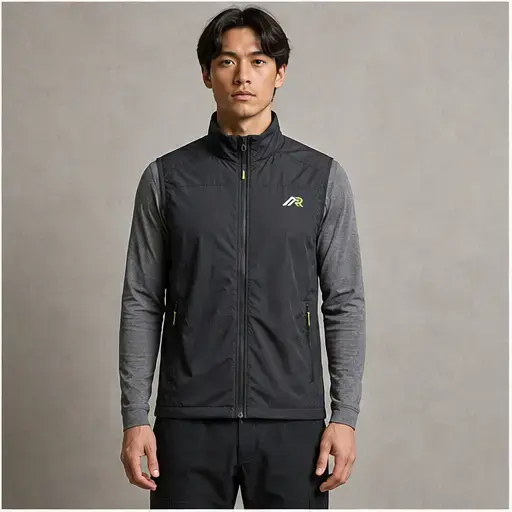
Website design illustration; material and physical sample details require confirmation. Source: Athletic Rush utility vest directions.
05
Place branding without blocking the function
Map decoration on the actual panel layout. A chest mark can conflict with a pocket opening, zipper path or reinforcement; a large back design may cross seams. State the artwork dimensions, placement references and the proposed method. Review access and inside feel after decoration, not only the flat artwork.
Discuss methods using the printing and decoration options. Screen printing, embroidery, DTF, DTG and woven patches are available development routes, but the chosen fabric, finish and construction need a compatible proposal. Ask for a representative trial before approving the finished appearance and care requirements.
Keep brand labels and care information distinct from decorative branding. Identify where a label sits against the underlayer and how it is attached. For precise revision wording, use the sample correction worksheet approach: name the sample, describe the observation, request a specific next review and leave the decision open until checked.
06
Close the sample and quotation decisions together
Give every sample a style code, revision, size and color. Maintain one decision record with accepted details, open questions, requested revisions and the person responsible for the next action. The checklist below is a review record; it is not a certification, laboratory method or substitute for an agreed production inspection plan.
Compare quotes for the same specification: materials, pattern work, pocket construction, hardware, decoration, size range and packing. Ask what is included in sampling and which substitutions require another review. More compartments, extra materials and removable parts add work to discuss; they do not justify an invented unit-price estimate.
Athletic Rush offers development, sampling, cut and sew, decoration, finishing, QC and packing under one roof in Sialkot, Pakistan. Review the manufacturing process when agreeing responsibilities. The current planning baseline is samples in about 7–10 days, bulk in about 14 working days and MOQ from 20 pieces; final price, MOQ and timing are confirmed in the written quote for each style. Shipping and receiving need their own allowance.
For a repeat order, retain the accepted garment reference, component map, artwork, measurements and packing instructions. List changes separately and confirm current availability. A saved rendering does not establish that a replacement fabric or buckle matches the earlier physical baseline.
Utility vest sample checklist
- Sample identity, revision, size and color match the brief.
- Outer, pocket, lining and reinforcement materials are identified.
- Measuring points and adjustment conditions are repeatable.
- Named layers have been checked with the vest empty and with agreed contents.
- Pocket access, sitting, reach and garment balance are documented.
- Closures, pullers, webbing and any detachable parts match the component map.
- Decoration, labels and inside construction have been reviewed.
- Care observations and every open correction have a recorded next action.
Read next
For more detailed access decisions, use the pocket position and access guide. Its garment examples concern cargo pockets; adapt the review questions to your vest instead of copying their dimensions.
Send a clearer utility vest enquiry
Copy this brief and replace the brackets before sending it.
We are developing [vest direction] for [wearer/use], worn over [named layers]. The intended contents are [items and dimensions]. Our size range is [sizes], quantity is [quantity], and decoration is [artwork/method questions]. Please propose identified fabrics, pocket construction and hardware, explain the sample review needed for [open decisions], and confirm price, MOQ, timing and delivery responsibilities in writing for [city/country].
Request a utility vest quote · Talk on WhatsApp
Athletic Rush · Sialkot, Pakistan · kamran@athleticrush.co
Questions brands often ask
Can a utility vest be developed from a reference image?
Yes. Use the image to describe the direction, then identify intended contents, layers, measurements and open material or hardware questions. A picture does not replace a physical sample specification.
How many pockets should a utility vest have?
Start with the items and access actions your wearer needs. Remove compartments without a clear job, then review the proposed arrangement on the complete garment with agreed contents.
Does a coated zipper make the vest waterproof?
No. Identify the actual zipper and complete garment construction, then request evidence appropriate to the claim. A visual coating or component name alone does not establish whole-garment protection.
Should removable pouches be included in the first sample?
Include them when they are part of the intended product. Define compatible attachments and review the vest with the pouch fitted and removed; keep unresolved construction questions visible.
What should a brand send for a utility vest quote?
Send the vest direction, intended layers and contents, size range, quantity, decoration, destination and open decisions. Ask for an identified material and hardware proposal, sample scope and written order terms.
Sources and image scope
Reviewed November 5, 2026; prepared for the November 6 Pakistan review slot. The YKK references support only the component precautions linked above; no brand affiliation or particular component supply is implied. The comparison and checklist are editorial tools, with no measured sample or customer evidence claimed. Images are existing Athletic Rush website design illustrations, not proof of manufactured stock, tested performance or customer orders. The utility vest page currently offers cut directions rather than linked catalogue products.