 Sialkot, Pakistan

A dealer sample bag can look complete while leaving buyers unsure which fit they are actually reviewing. Build your teamwear size set around identified garment families, deliberate size coverage and a controlled lending record. This guide helps brands and distributors choose useful samples without turning every sales visit into a new development round.
01
Define the job
Separate fit, decoration and range-presentation samples.
02
Choose coverage
Map each size to a named garment and fit family.
03
Control identity
Keep sample, chart and specification revisions connected.
04
Track every loan
Record condition, return and any decision still pending.
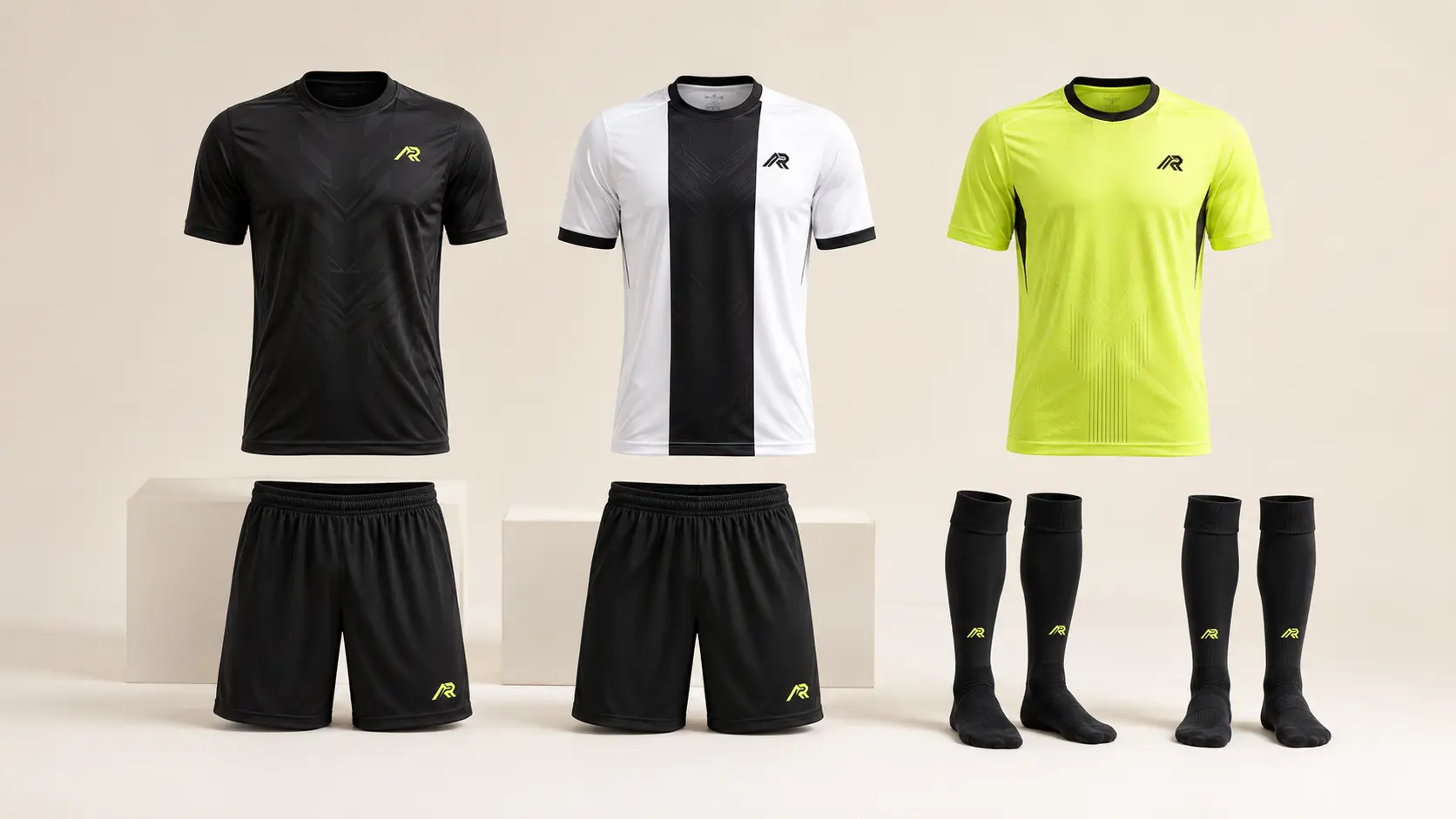
Match-range illustration from Athletic Rush. Use it to identify garment roles; it is not a physical dealer size set, stock list or fit result. View the source teamwear page.
Give each sample a clear job
Begin with the buyer conversation your kit must support. A prospective stockist may need to compare jersey cuts, inspect shorts construction or understand a coordinated training range. Write those decisions down before choosing garments. A bag containing many colors can still leave a basic fit question unanswered.
Use three sample roles: fit reference, decoration reference and range example. One garment can serve more than one role when its identity and approval status are clear. A development sample with an unresolved neckline should not quietly become the sales team’s accepted fit reference.
Review the teamwear product range to identify the garment families you intend to offer. For your own label, discuss the relevant private-label development scope. Keep this kit focused on the brand or dealer’s repeatable sales program; individual customer orders still need their own confirmed specification.
Choose size coverage by fit family
List every proposed style beside its fit family, intended size range and current chart revision. A close-cut match jersey, relaxed training tee and layered warm-up top should not be represented by an unexplained “medium.” Record which pattern and material proposal each sample represents. Treat the match top and shorts as separate coverage decisions.
The public abstract for ISO 8559-1 concerns body-measurement definitions used in clothing size development. That scope is different from measuring a finished garment. Keep the customer-facing body-size guidance and the garment specification clearly identified; neither should be copied into the other without explanation.
Choose a full size run, selected sizes or a single reference according to the questions you need answered. Selected sizes can help an early comparison, but leave unrepresented sizes explicitly unresolved. The comparison table below is a planning tool, not a recommended universal size range or a prediction of what your buyers will order.
Choose what each part of the kit can show
On a small screen, scroll across the table to read all three columns.
| Kit component | Useful decision | Limit to record |
|---|---|---|
| Single reference size | Shows one identified garment and its construction | Other sizes and grading remain unrepresented |
| Selected size coverage | Supports named comparisons without a complete run | List exactly which sizes and fit families are absent |
| Full proposed size run | Lets buyers compare every supplied size in that style | Does not automatically cover another pattern or material |
| Decoration reference | Shows the identified artwork and application proposal | Mark any differences from the fit-reference garment |
| Duplicate representative kit | Keeps an accepted set available to another seller | Match revision IDs and maintain a separate loan record |
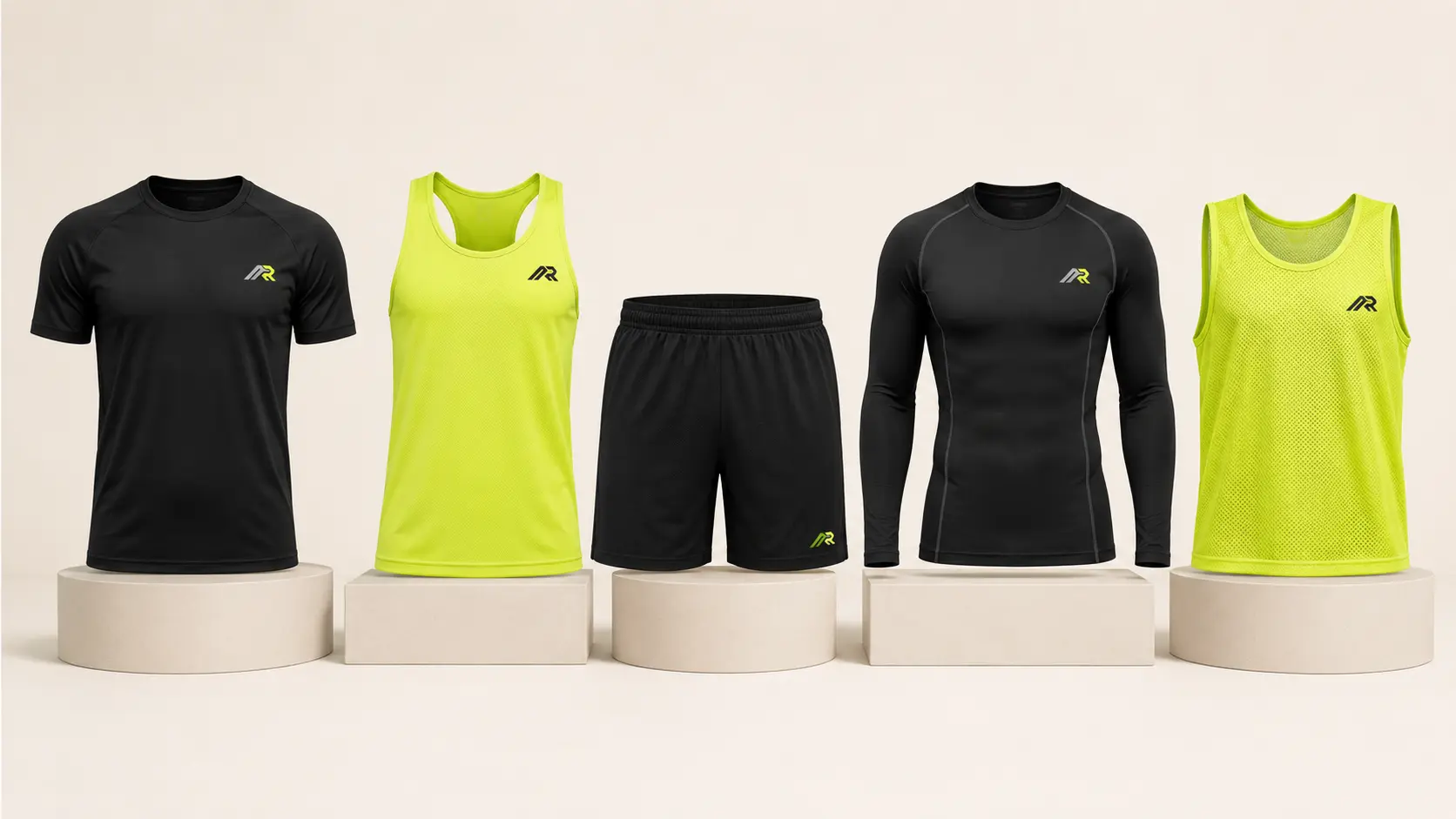
Training-range illustration from Athletic Rush. The pictured cuts do not establish shared sizing, material specifications or tested performance. View the source teamwear page.
Attach a readable identity and measurement record
Assign each physical garment a sample ID. Link it to the style, pattern revision, fabric reference, size, color and sample status. Put the same ID on its storage position and the digital record. A removable kit tag can carry this tracking information; it is separate from the garment’s required product and care information.
Agree the measuring points and condition: laid flat or otherwise specified, relaxed or extended where relevant, and before or after any identified care procedure. The public abstract for ISO 18890 describes garment measurement points and methods. Use that distinction to request a clear measuring map; this guide does not reproduce the standard or claim that a particular sample complies with it.
A buyer should be able to find the current chart without searching old messages. Add the chart version and controlled file link to the sample record. The tech-pack service can help connect these references. For recording dimensional decisions, use the separate garment measurement and tolerance guide; agree the actual limits for your style.
Fictional dealer example: A brand proposes three jerseys, three pairs of shorts and one warm-up top: seven garments in total. The jerseys and shorts are marked S, M and L within that project’s own chart; the warm-up is M only. The record shows limited coverage, not a validated complete range. A request to compare another warm-up size remains open until that garment is available. These are invented quantities and labels, not Athletic Rush stock, demand or test results.
A useful sample answers a named question and states what it cannot represent.
Plan the kit before ordering the samples. Share your fit families, size gaps and intended sales use. Request a sample-program proposal or discuss the matrix on WhatsApp.
Keep fit evidence separate from decoration choices
A neutral fit reference can stay useful while a separate decorated sample explains the intended finish. Identify what each garment demonstrates. If its fabric, pattern, seams or decoration differ from the proposed order, describe the difference before the buyer uses it to make a decision.
Request the exact material reference through fabric sourcing. Similar-looking knits should not automatically share one sample identity. When a supplier proposes another material, record whether a further fit or construction review is needed instead of relabeling the old garment as the new one.
For a sublimated jersey, printed training tee or embroidered travel top, define the artwork and application being shown. Discuss the appropriate decoration method and its review scope. A digital range illustration does not establish print feel, color matching, after-care appearance or the fit of a manufactured garment.
Log feedback against the relevant sample ID. Keep “likes the orange accent” separate from “accepted the garment revision for the proposed order.” Use the observation-to-revision worksheet for clearer corrections, adapting its streetwear examples to your teamwear program.
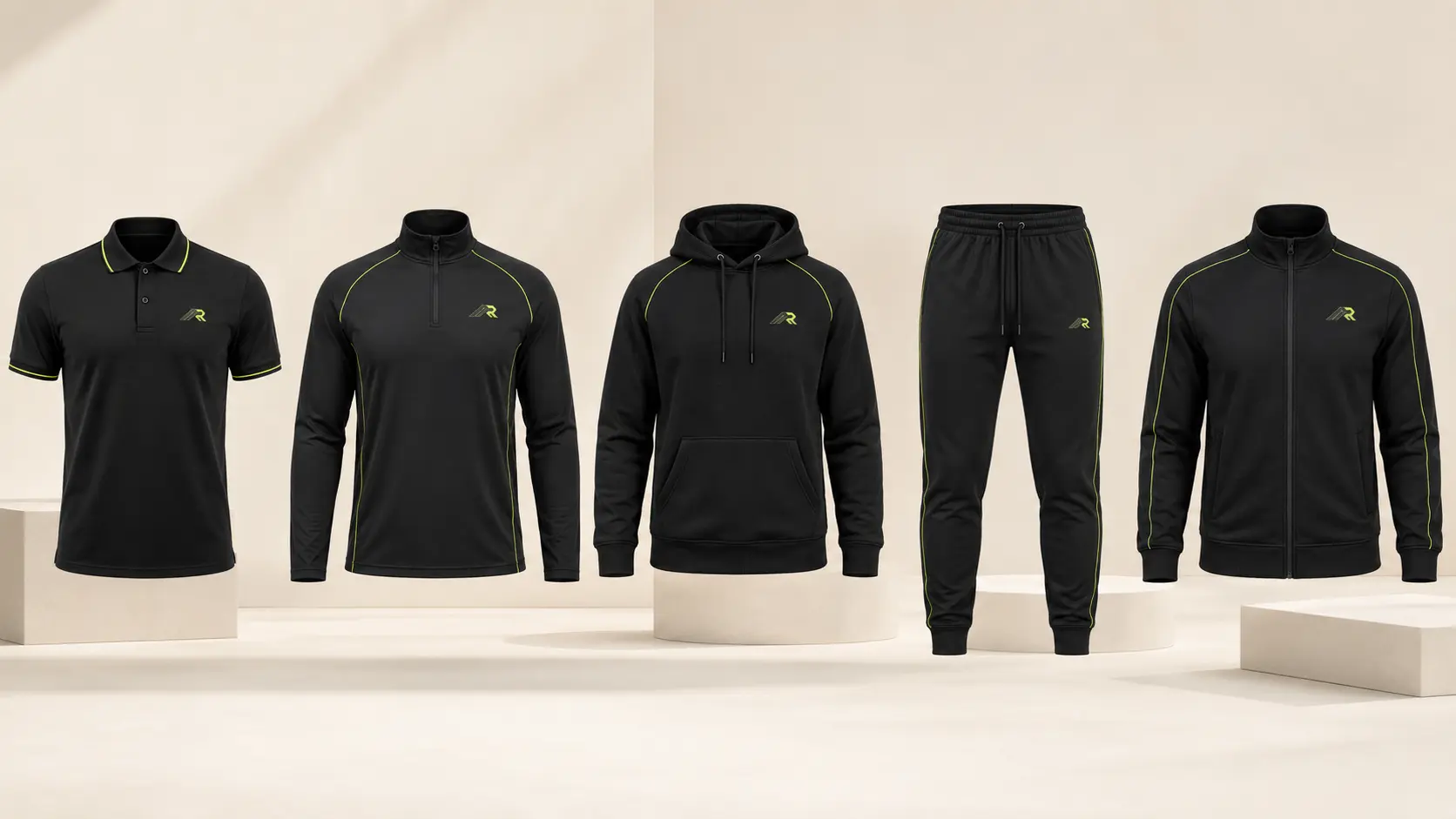
Travel-range illustration from Athletic Rush. Review each proposed layer and fit family through identified physical samples; no completed kit or customer order is implied. View the source teamwear page.
Control lending, returns and retired revisions
Maintain one kit register with sample ID, current holder, checkout date, expected return, condition and the linked review notes. Record the actual handoff and return rather than assuming that a meeting in the calendar means the garment moved. Keep any customer contact information in your private business records, not on a public sample tag.
Check each returned garment against the recorded condition. If it has been washed, altered, damaged or separated from its identifying tag, flag it before another loan. Decide whether it remains a fit reference, becomes a display-only item or needs replacement. Do not silently return an uncertain sample to the accepted set.
When a specification changes, identify the affected samples and charts together. Remove the obsolete revision from the lending pool while preserving the historical record. Ask your manufacturing and quality contact what replacement or confirmation work is needed. The checklist below supports that handoff; it is not a production inspection standard.
Dealer sample-kit release checklist
- Every garment has an ID, size and current approval status.
- Pattern, material and chart revisions are identified.
- Represented sizes and missing coverage are explicit.
- Fit and decoration reference roles are clear.
- Measurement method and review condition are recorded.
- Checkout, return and garment condition are updated.
- Obsolete revisions are held outside the lending pool.
Quote the sample program before expanding it
Send a sample matrix rather than requesting “one of everything.” Separate pattern-development work, size coverage, decoration examples, duplicate kits for representatives and replacement garments. Ask for these items to be identified in the quotation so an appealing kit total does not conceal an unanswered development question.
Athletic Rush offers development, sampling, cut and sew, decoration, finishing, QC and packing under one roof in Sialkot, Pakistan. The planning baseline is samples in about 7–10 days, bulk in about 14 working days and MOQ from 20 pieces. Final price, MOQ and timing are confirmed in the written quote for each style. Ask separately how sample-kit work and the later production order are quoted.
Agree who retains the accepted references and when the set should be refreshed. Expand coverage when a named buyer decision requires it; a larger bag by itself does not establish a more useful sales kit. Keep delivery and receiving time separate from the supplier’s production allowance.
Ordering for U.S. buyers: State inches, centimeters or both, and distinguish body guidance from garment dimensions. Agree any local display labels separately from the underlying chart. Share the receiving destination and required review date; do not promise a universal U.S.-to-European size conversion.
YOUR NEXT STEP
Build a kit your sales team can explain
Copy the brief and replace the brackets before sending it.
We are developing a dealer sample kit for [brand/range] in [market]. Styles and fit families: [list]. Required size coverage: [sizes per style]; missing coverage: [gaps]. Each sample needs [ID, revision and chart reference]. Decoration references: [artwork/method]. We need [number of kits] for [sales use], delivered to [destination]. Please quote development, sample garments, decoration and replacements separately, state the review work required, and confirm style-specific price, MOQ and timing in writing.
Request a dealer sample-kit quote · Talk on WhatsApp
Athletic Rush · Sialkot, Pakistan · kamran@athleticrush.co
Questions brands often ask
Does every teamwear style need a full size set?
Choose coverage according to the decisions the kit must support. A full run covers only the identified style and revision supplied; selected sizes should make their limitations clear.
Can one medium represent several jersey fits?
Do not assume so. Identify the pattern, material and chart for each fit family. Use separate references or clearly record which comparison is still unavailable.
Can an undecorated garment be a fit reference?
Yes, when its construction and material represent the intended product and its status is clear. Keep a separate decoration reference where needed and explain any differences.
What happens when a loaned sample comes back altered?
Record its condition and hold it from further fit use until reviewed. Decide whether to replace it, retire it or use it only for a clearly labeled display purpose.
What should a dealer send for a sample-kit quote?
Send the style and fit-family list, size coverage, quantities, material and decoration references, destination and unresolved decisions. Ask for the sample work and later production terms to be confirmed separately.
Sources and scope
Sources checked November 12, 2026: the public ISO abstracts for ISO 8559-1 and ISO 18890. Only their body-measurement and garment-measurement scopes are referenced; full standards were not reproduced or used as a compliance claim. The kit matrix and lending checklist are original planning tools. Quantities in the worked example are fictional. All three images are existing Athletic Rush website illustrations, not physical size-set, customer or test evidence.