 Sialkot, Pakistan
 Worldwide enquiries

A heavyweight T-shirt can make a strong first impression. The garment may feel substantial in the hand, create a defined outline and give a plain design a noticeable physical presence. But weight is only useful when it serves the product. A sample that looks impressive on a table can still feel cumbersome under a jacket or too rigid at the sleeve hem.
For a clothing brand, the decision is not simply whether a fabric qualifies as heavyweight. It is whether the finished tee gives your customer the intended look, comfort and care experience at an acceptable cost.
Treat heavyweight as a starting description, then approve the actual material, construction and garment together. This guide focuses on the trade-offs of a substantial tee, rather than repeating a general fabric-selection checklist. All images are illustrative concepts, not photographs of available Athletic Rush stock or evidence of laboratory results.
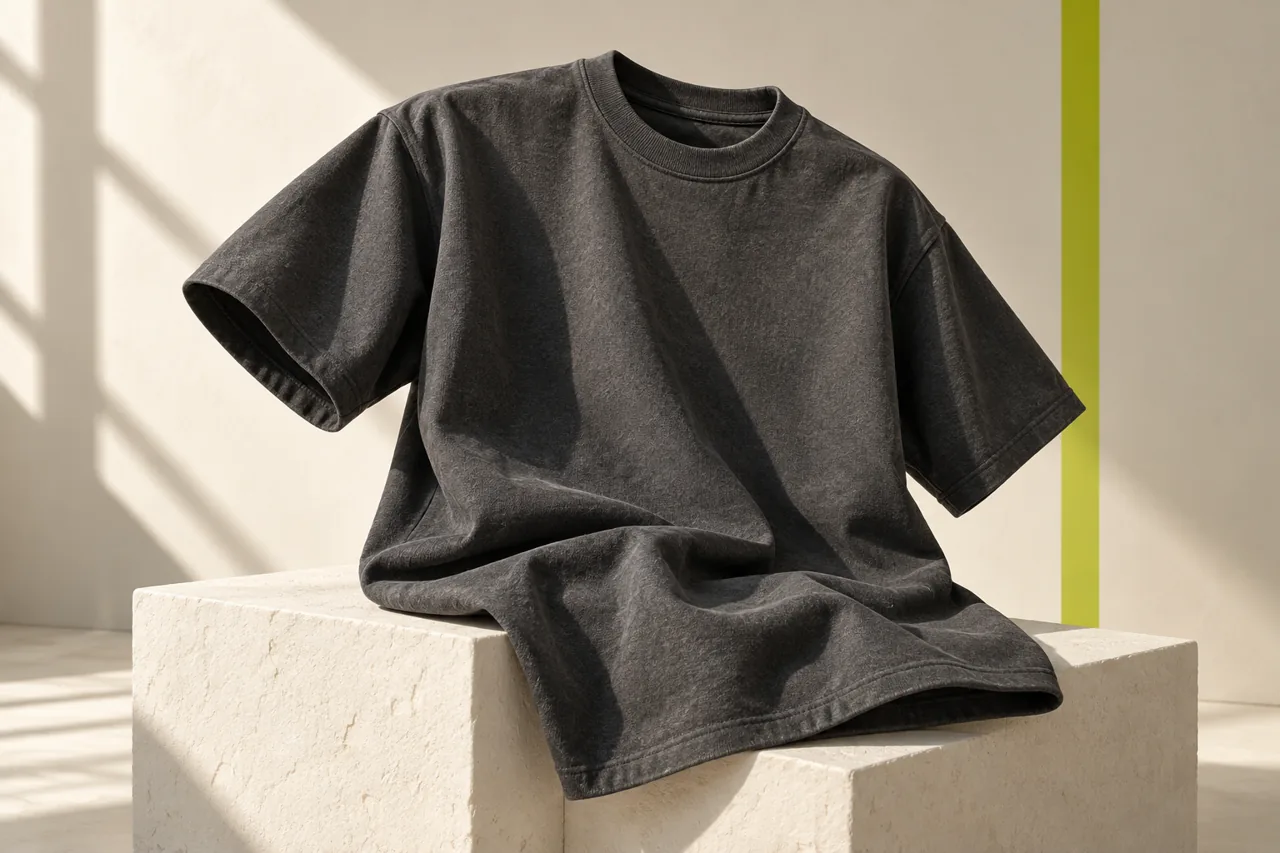
Ask what the weight number actually describes
GSM means grams per square metre: fabric mass per unit area. It does not describe the total weight of a finished T-shirt. A larger garment uses more material, and trims and construction also contribute to what the complete piece weighs.
The public description of ASTM D3776/D3776M identifies it as a method for measuring fabric mass per unit area. That measurement should not be treated as a general quality grade. If a supplier provides a test result, ask which sample, method and condition it covers.
A small swatch result also needs context. ASTM's description notes that its small-swatch option represents the sample tested, not necessarily the whole lot. For a bulk order, discuss how the proposed material will be identified and checked rather than assuming one swatch proves every roll is identical.
Ask the supplier to state the proposed GSM, fibre composition, construction and finishing condition in writing. Keep those details alongside a physical reference. If a quotation says only “heavy premium cotton”, there is still a specification conversation to have.
Do not create an arbitrary universal heavyweight threshold for your collection. Different suppliers can use the label differently. Agree the actual value and any permitted variation for your product, with a checking method that both parties understand.
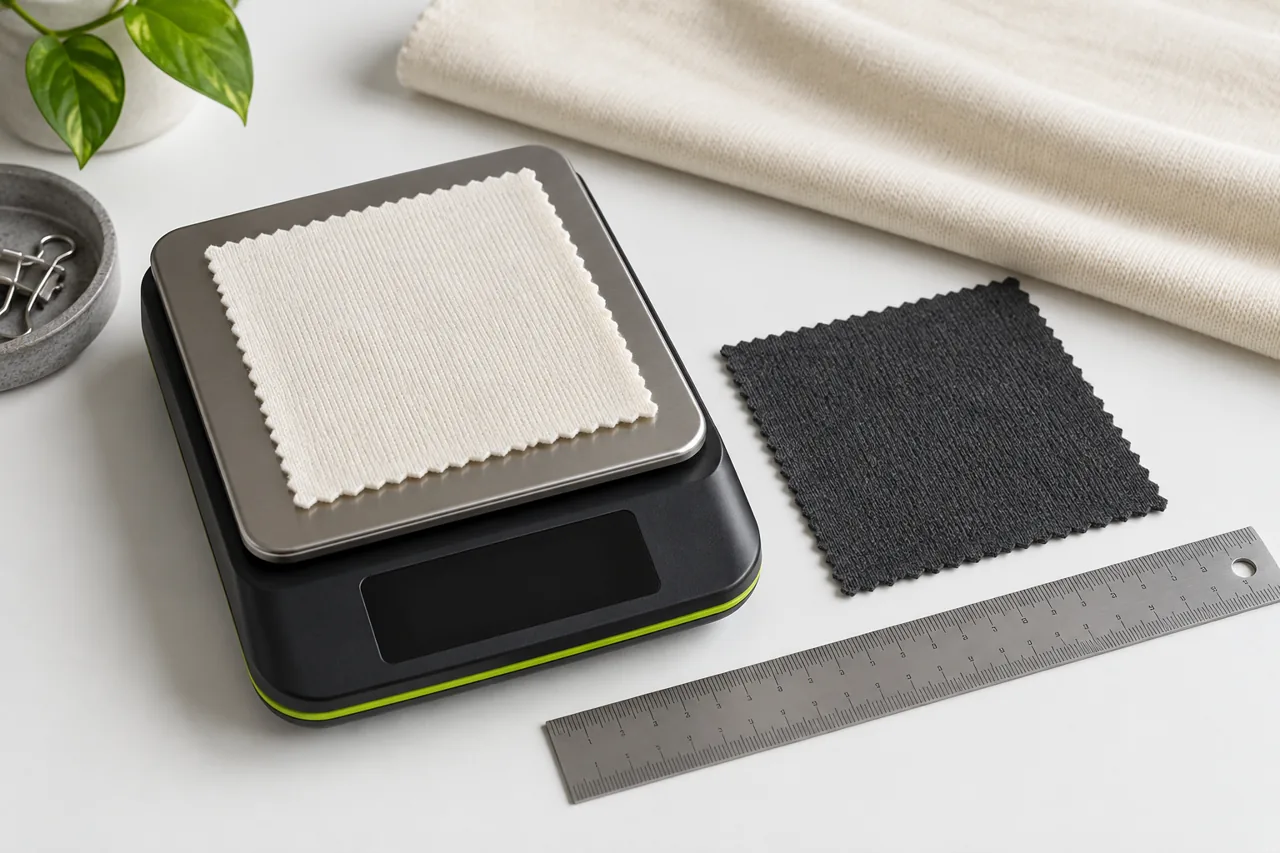
Separate substantial feel from stiffness
A tee can feel substantial without being rigid. Conversely, a finish or construction can make a fabric feel firm without that sensation telling you its mass. Describe these characteristics separately when discussing samples.
Handle the proposed cloth in more than one way. Let it fall freely, fold it, gather a small section in your hand and release it. Then compare the complete garment. These are practical observations, not standardised performance tests, but they help turn “nice quality” into useful feedback.
Write down what you want the material to do. For example: “The sleeve should keep a clear opening, while the body still folds comfortably when seated.” That brief is more informative than asking for the heaviest option available.
Avoid approving from a tightly folded retail presentation alone. Folding can exaggerate the impression of thickness and hides the way the garment hangs. Unfold the sample, put it on a representative wearer and review the front, side and back.
If the intended shape is also undecided, use the oversized versus boxy fit guide to separate proportion decisions from material decisions. Increasing weight is not a substitute for a suitable pattern.
Decide where and how the customer will wear it
Consider the product's real setting: an everyday standalone tee, an indoor layer, a cooler-season outfit or a graphic-led piece worn under outerwear. Each direction creates different questions for the sample review.
Do not infer comfort, breathability or seasonal suitability from GSM alone. The wearer experiences the entire garment, including its fit, construction, material and surrounding conditions. A fabric number cannot describe that whole experience.
Ask a representative wearer to try the sample in the intended outfit. Check sitting, walking and reaching, as well as standing for a photograph. Under an overshirt or jacket, look for unwanted bunching at the underarm, neckline and waist. Note the conditions of the review so the observations are not presented as universal results.
For a warm-weather collection, be especially clear about the reason for choosing a substantial tee. You may want its outline or hand feel, but the wearer still needs to find it appropriate for the intended conditions. Compare a sensible alternative instead of assuming that a premium position requires maximum weight.

Use a trade-off table before choosing the sample
A heavyweight direction can support a design goal while creating another issue to resolve. The following table helps organise the discussion without turning every characteristic into a benefit claim.
| Desired result | What to inspect | Possible trade-off | Useful evidence |
|---|---|---|---|
| A substantial hand feel | Actual cloth and full garment | More material mass without the desired softness | Physical reference and wearer feedback |
| A defined sleeve shape | Sleeve opening and its return after movement | An opening that feels too rigid or projects too far | Front and side sample review |
| A clean plain tee | Surface and colour consistency | Surface texture that differs from the intended finish | Approved colourway sample |
| A graphic-led front | Decorated area compared with plain cloth | Unwanted stiffness or distortion at the graphic | Decoration sample on the proposed fabric |
| Comfortable layering | Underarm, neck and waist in the intended outfit | Bunching or bulk under another garment | Wear trial with the intended layer |
| A durable product | The specific failure modes that matter | Weight used as a substitute for evidence | Agreed tests or documented evaluation |
| Predictable delivery cost | Finished packed sample | Higher mass or volume than assumed in the quote | Actual packed measurements and carrier quote |
The table is not a scorecard that makes the heaviest candidate win. Use it to decide whether the benefits you actually observe outweigh the compromises for this particular collection.
Keep the comparison focused. If every candidate has a different pattern, finish, colour and decoration, it becomes hard to identify why one feels better. Control the variables where practical, then confirm the final combination.
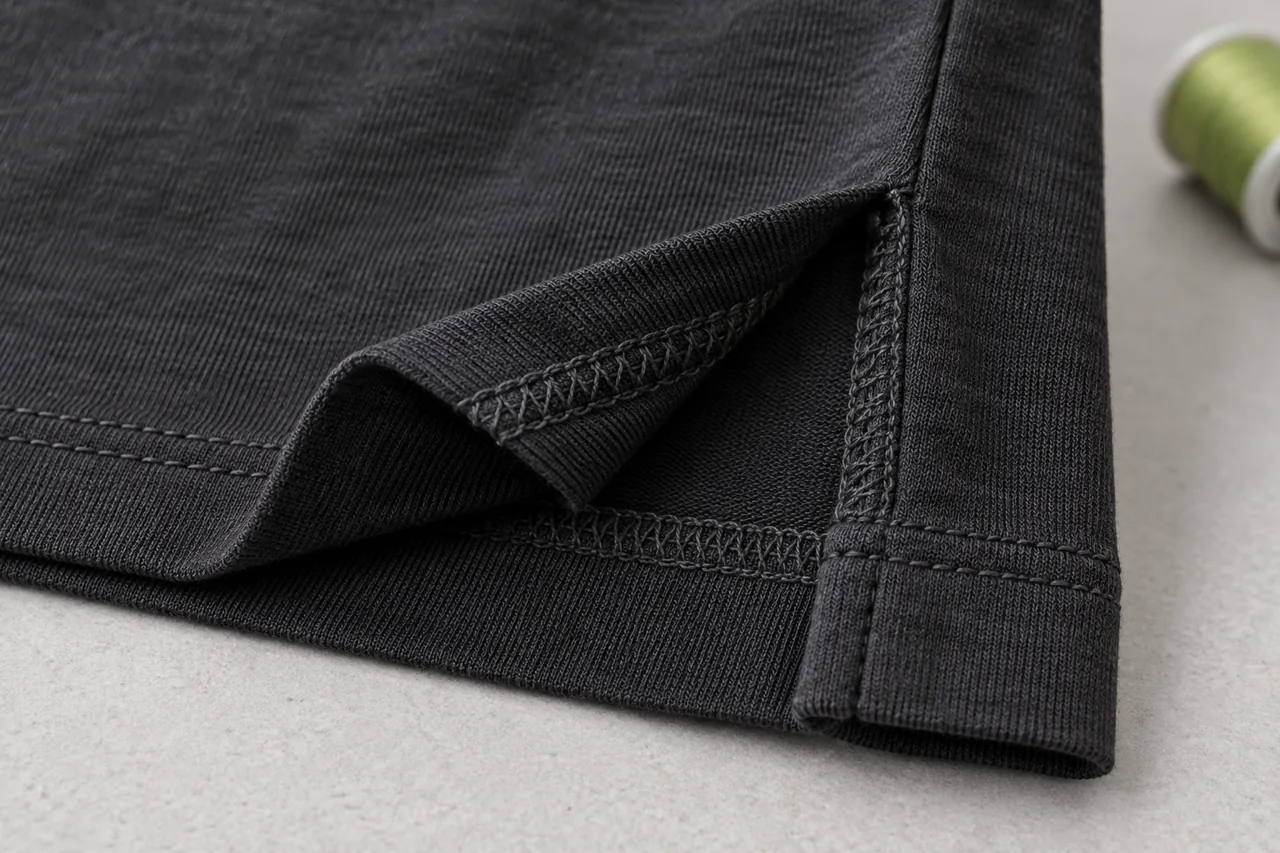
Inspect the places where fabric layers meet
A flat body panel does not show how the material behaves at a folded hem or seam intersection. Review those areas on the garment rather than approving construction from the fabric swatch.
Turn the tee inside out. Look at the sleeve hems, bottom hem, side-seam intersections, shoulder joining and neckline attachment. Check for unwanted ridges, uneven feeding, loose threads or visible distortion. Ask the supplier to assess any concern rather than prescribing a stitch change without understanding the cause.
Feel the areas that contact the wearer. A substantial material is not automatically uncomfortable, but an awkward join can create a local problem that the main panel does not reveal. Record the exact location and observation.
Also review the neckline as a complete assembly. The rib, seam and body cloth should work together. A collar that looks strong in isolation may not sit as intended on the proposed body. Confirm the rib reference and construction as part of the sample, not as an unspecified trim to be chosen later.
If a revised fabric is introduced after construction approval, ask whether these areas need checking again. Keeping the same pattern and stitch description does not guarantee an identical result in a different cloth.
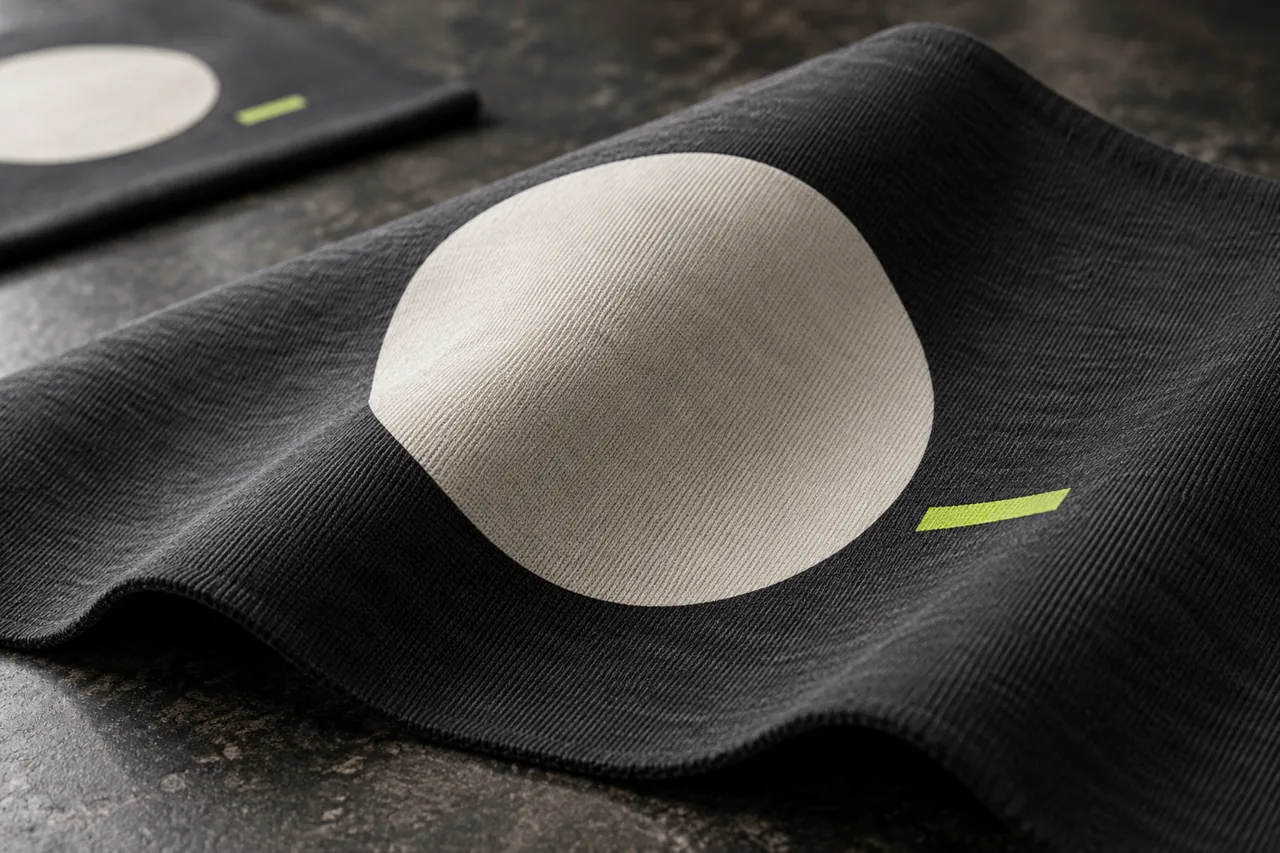
Test the decoration on the material you will actually order
A substantial base does not make every print or embroidery application suitable. Send the intended artwork direction early and ask for a representative decorated sample on the proposed material and colour.
Compare how the decorated area bends with the surrounding plain fabric. Look at appearance, edge definition and any unwanted change in handle or shape. For a large front graphic, assess the whole garment on the wearer, not just a small isolated print patch.
Review the agreed care result as well. A strong first photograph does not establish how the decoration will look after use or washing. Ask the supplier which sample and process the approval covers, and keep the artwork revision linked to that record.
Use the printing methods overview to frame the conversation. The production team should confirm the appropriate application for the specific artwork and material. Do not choose a method solely because it is associated with a fashionable finish.
When comparing costs, check that the quotations cover the same decoration area, colours and proposed process. A cheaper blank garment and a cheaper decorated finished tee are not necessarily the same commercial decision.
Ask what supports a durability claim
“Heavier” and “more durable” are different statements. Decide which failures matter for your product: surface pilling, abrasion, seam damage, colour change, distortion, print deterioration or another concern. Then ask what evidence addresses those specific concerns.
A general photograph of thick cloth does not establish a wear-life claim. Neither does a test result for a different construction or finish. If a supplier provides a report, check the sample identification, test date, method and result, and ask how it relates to your proposed order.
For claims that will appear in marketing, agree the evidence before writing the claim. Avoid statements such as “lasts twice as long” unless a suitable comparison genuinely supports them. A clear description of the material and approved construction is often more useful than an unsupported promise.
A practical sample evaluation can identify obvious issues. Keep its observations separate from formal testing evidence. Where formal testing is needed, agree the relevant method and acceptance criteria with a competent testing provider and the supplier.
Review the tee after its agreed care process
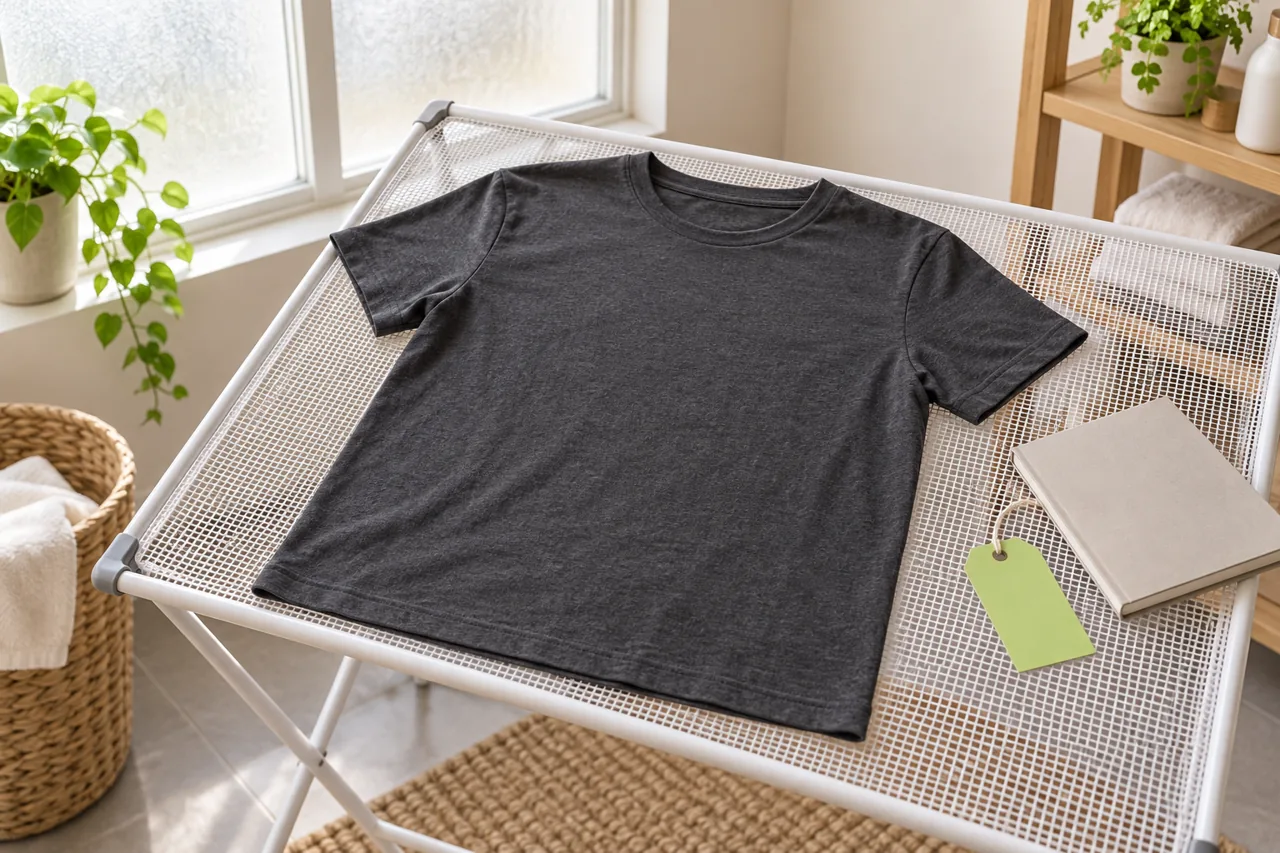
Keep an unused reference and evaluate a second sample through the agreed care process where possible. Follow the proposed garment care instructions for that evaluation and document what was done. The illustration below is a concept, not a universal recommendation to dry every tee in the same way.
Compare body length and width using the same measuring points before and after care. Also review seam position, neckline appearance, surface, colour and decoration. A tee can retain a substantial feel while losing the shape the customer expected.
Record observations separately. “The body became shorter” is different from “the side seam moved” or “the print area feels different”. Combining them into “failed wash test” without details makes the next development step less clear.
Do not accept a “pre-shrunk” description as a promise of zero dimensional change. Ask what result is expected for the proposed garment and what limits will be agreed. A supplier's care guidance should also be consistent with the complete garment, including decoration and trims.
Keep the care review attached to the same fabric and sample revision as the rest of the approval. If the finish changes afterwards, discuss whether the earlier result still applies.
Include the commercial consequences in the decision
Fabric mass is not the only input to price. Construction, material composition, finish, decoration, size mix, quantity and packaging can all affect the quotation. Compare the complete scope rather than treating a GSM difference as a direct price formula.
Ask for the finished garment and packed sample weights if logistics matter to your order. Do not estimate shipment cost from fabric GSM alone. Carriers may also consider package dimensions, and the relevant quotation should use the actual proposed shipment details.
Clarify whether the quote includes the approved rib, wash or finish, decoration and packing. If a cost reduction changes any of these, ask what needs to be sampled again. The cheapest revision is not helpful if it removes the feature that made the product worth developing.
Avoid adding a specification simply because it sounds premium. Every additional requirement should have a reason connected to the customer, the collection or a necessary quality control point.
A practical choice between two candidates
Imagine a brand comparing two proposed materials for one substantial graphic tee. Candidate A has the higher stated GSM. Candidate B feels substantial enough for the brief but is easier to layer under the intended overshirt.
The brand reviews both in the same reference pattern and comparable colour. It then checks the sleeve outline, neckline, hem intersections and planned graphic. After the agreed care evaluation, it compares the observations against its original brief.
If B meets the brief more convincingly, choosing it is not a downgrade simply because its weight number is smaller. If A gives a distinctive outline that matters to the design, the brand may choose it after addressing any construction or comfort concerns.
These are illustrative decisions, not actual Athletic Rush test results. The useful lesson is to write down why the chosen candidate fits the product, including any accepted compromise.
Send a brief that makes the decision easier
A good enquiry connects the intended result to the evidence you want to review. Include the following:
- Product role: standalone tee, layer, plain style or decorated piece.
- Desired feel and outline, with an authorised reference where available.
- Proposed material details, or a request for a focused shortlist.
- Intended colours, fit, size range and artwork direction.
- Construction areas that deserve particular attention.
- Care evaluation and any formal testing requirements.
- Planned quantity, destination and target timing.
- Decisions already approved and questions still open.
For example: “We want a substantial plain tee with a defined sleeve but comfortable body movement. Please propose a material and neckline combination, state the specification and sample scope, and identify what should be evaluated before bulk approval.”
That brief invites a useful development discussion without claiming that one weight number guarantees the outcome. For broader material comparisons, see the oversized T-shirt fabric guide.
Common buyer questions
What GSM makes a T-shirt heavyweight?
Do not rely on the label alone. Ask each supplier for the proposed GSM and material specification, then compare the physical sample against your brief. This guide does not set a universal cutoff.
Does a heavyweight T-shirt always last longer?
No such conclusion follows from weight alone. Ask for evidence addressing the relevant material, construction and failure modes before making a durability claim.
Is heavyweight fabric suitable for a summer collection?
It depends on the actual garment and intended conditions. Review a sample with representative wearers and compare alternatives. A substantial look does not remove the need to assess comfort.
Can heavyweight and oversized mean the same thing?
No. Weight concerns the material; oversized concerns the intended fit. A substantial fabric can be used in different silhouettes, and a roomy tee can use different fabric weights.
Can we approve a blank sample and add the graphic later?
A blank sample can support preliminary decisions, but the final decoration should be checked on the intended material and colour before approving the complete product.
What should be retained after sample approval?
Keep the accepted garment, material and trim references, artwork revision, measurements, agreed care or test records, and a dated decision stating exactly what was approved.
Discuss your heavyweight tee with Athletic Rush
Explore streetwear T-shirt development and send the intended product brief. Confirm the actual material options, sample scope, pricing and timing directly with the team.
Email kamran@athleticrush.co, message WhatsApp, or request a quote.