 Sialkot, Pakistan
 Worldwide enquiries

A team uniform proof is easier to approve when everyone is looking at the same logo files, colour references and placement instructions. A badge copied from a social profile may look acceptable on a phone yet leave unanswered questions when it is enlarged for a jersey. A sponsor may also have several logo versions, each intended for a different background.
Before requesting a final kit design, build a small artwork pack. This guide explains what to collect, how to describe placements and what to check before approving production. Confirm the accepted file formats and decoration requirements for your particular order with Athletic Rush; the checklist is a starting point, not a universal production specification.
1. Collect the best original artwork
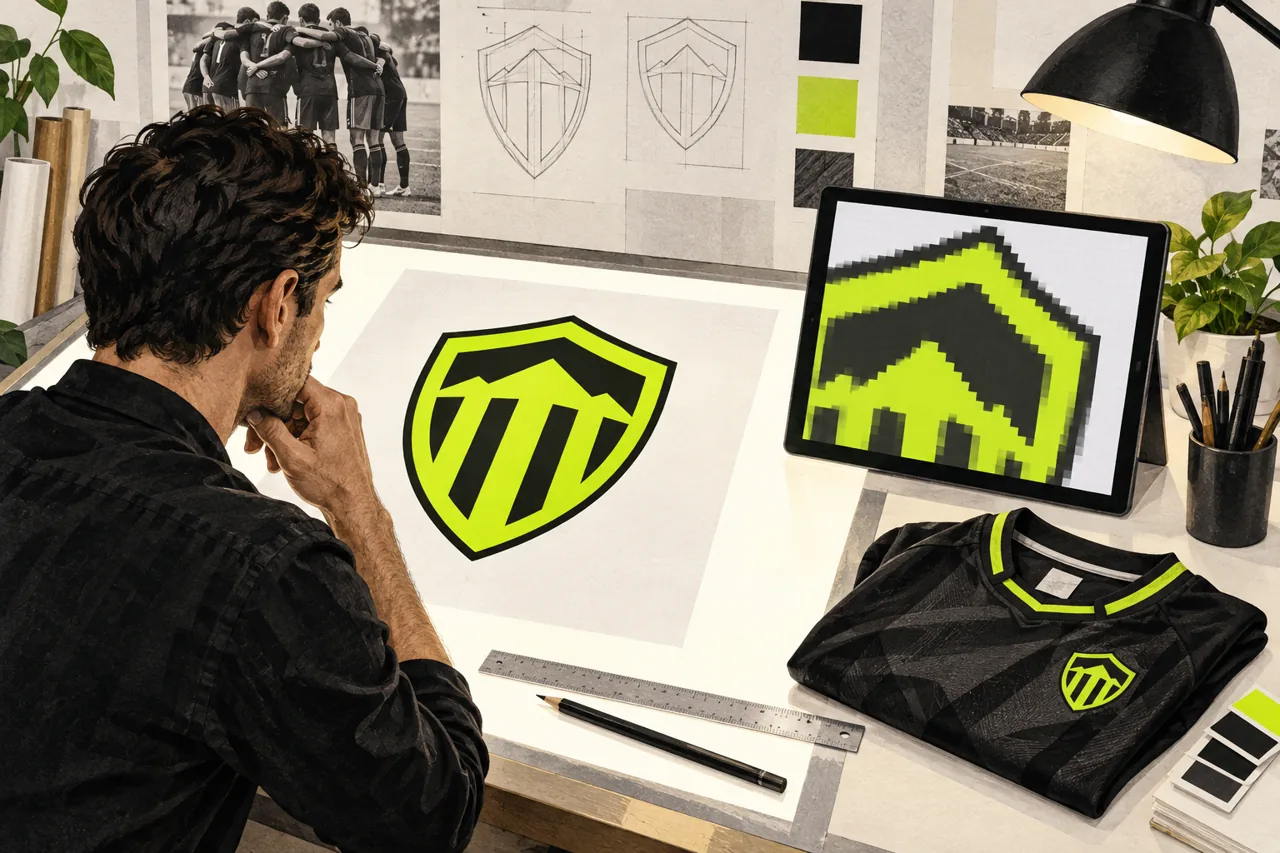
An original artwork file gives the designer a stronger starting point than a small screenshot. AI-generated educational illustration; the shield is fictional and this is not a photograph of Athletic Rush staff.
Ask the club or sponsor for the original logo artwork, along with its brand guide if one exists. Keep the club crest, each sponsor mark and any competition badge as separate named files. Add a simple preview so the recipient can recognise the intended version without opening specialist design software.
Vector artwork describes shapes mathematically and can scale without the pixelation associated with enlarging a fixed-resolution raster image. A file extension alone does not establish quality: a PDF can contain a small raster image. Ask the supplier to inspect the actual contents and suitability at the intended size. Adobe explains the distinction in its guide to raster and vector graphics.
If all you have is a JPEG, PNG or screenshot, send the best original available and explain the limitation. Ask whether artwork recreation is needed, what it would cost and whether you will receive a proof of the recreated mark. Renaming an image file does not restore missing detail. Avoid approving a redrawn badge without comparing the lettering, proportions and small features with your reference.
2. Identify the correct logo version and colours
Record which version belongs on a dark kit and which belongs on a light kit. Do not leave the designer to guess whether a white box behind a sponsor logo is intentional or simply part of the source image. Include any supplied spacing, minimum-size or colour instructions with that specific mark.
Use the sponsor's own reference for its brand colours. For the uniform, state the agreed colour reference and ask how it will be assessed on the selected fabric. A screen proof is useful for layout, but it should not be treated as a physical fabric colour approval. If colour matching is important to your club, ask what sample or other approval method is available before committing to bulk production.
Keep your instruction practical: “Use the white sponsor version on the black front panel; retain the clear space shown in the supplied brand guide.” This gives the designer a decision they can follow and a detail you can check later. Avoid informal directions such as “make it the usual green” when several shades have been used in previous seasons.
3. Show placement on the actual garment
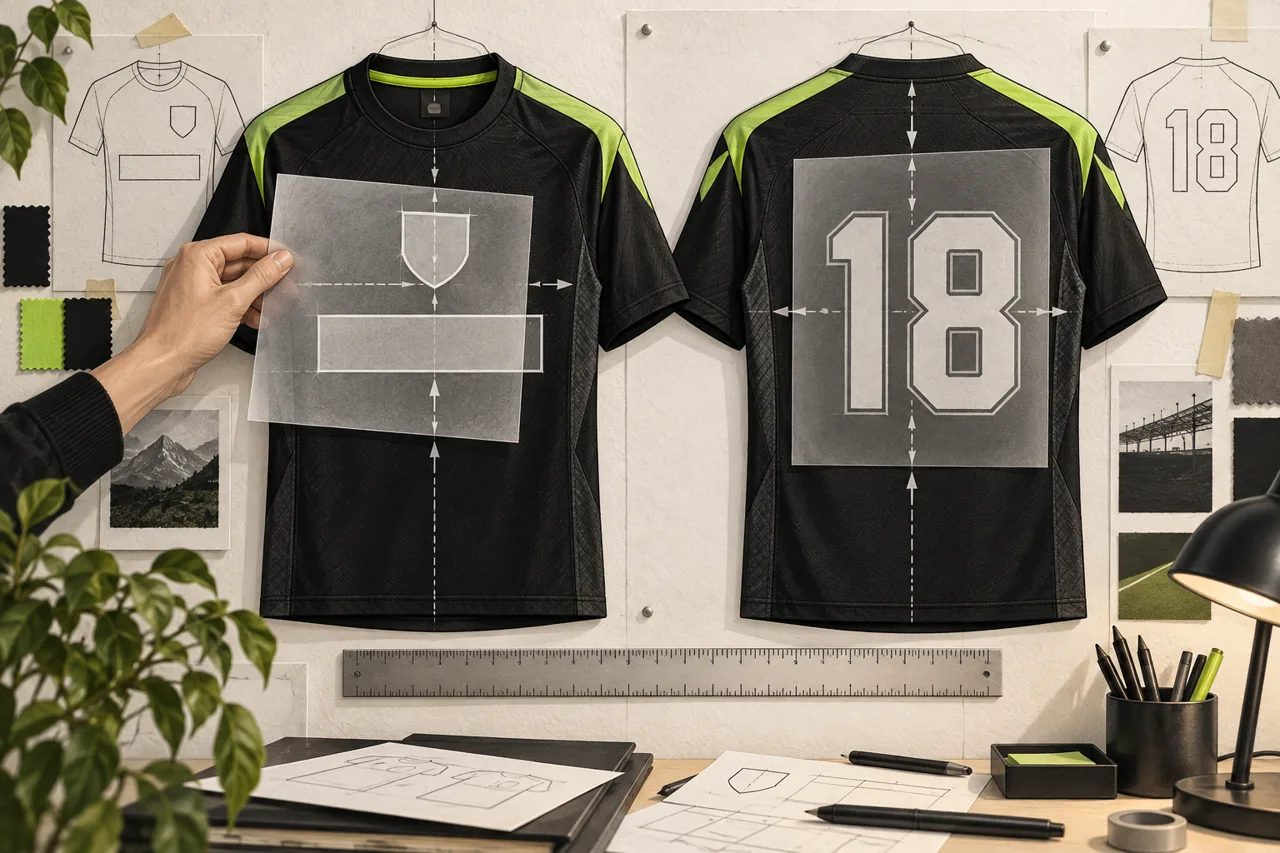
Show placement relative to the garment and confirm dimensions separately. The illustration is conceptual and does not specify a regulation size or an approved production measurement.
Provide a front and back reference and include sleeves, shorts or other pieces that require decoration. Name each item clearly. A chest badge on a jersey and a badge on a training top may require separate placement decisions even when they use the same artwork.
Ask the supplier to specify the proposed artwork dimensions and position using agreed reference points on the garment. Check whether the layout changes between youth and adult sizes. A design that appears balanced on a large adult template may not fit the same way on the smallest garment in your order.
Consider seams, panel joins, collars and areas that fold or stretch during wear. Ask how the chosen production method affects fine lines, small text and placement. Do not assume that a screen mockup proves every detail can be reproduced using every decoration technique. Where a detail matters, resolve it with the supplier before final approval.
4. Keep names and numbers in one controlled list
Send one current player list instead of correcting names through several separate messages. Include the exact spelling, number, garment type and size for every personalised item. Mark any deliberate duplicate numbers so they are not mistaken for an error.
Agree whether names are uppercase or mixed case, which number style is intended and where the name and number sit. Long surnames need particular attention: ask how they will fit within the available space and review the proposed treatment. Do not assume the designer should shorten a name or change its spelling to make it fit.
Use the team uniform size chart and player roster guide to organise the order alongside the artwork pack. Give the list a revision date and nominate one person to send the final approved version. If the roster changes after approval, ask the supplier to confirm what can still be changed before assuming the new details have reached production.
5. Review a single coordinated proof
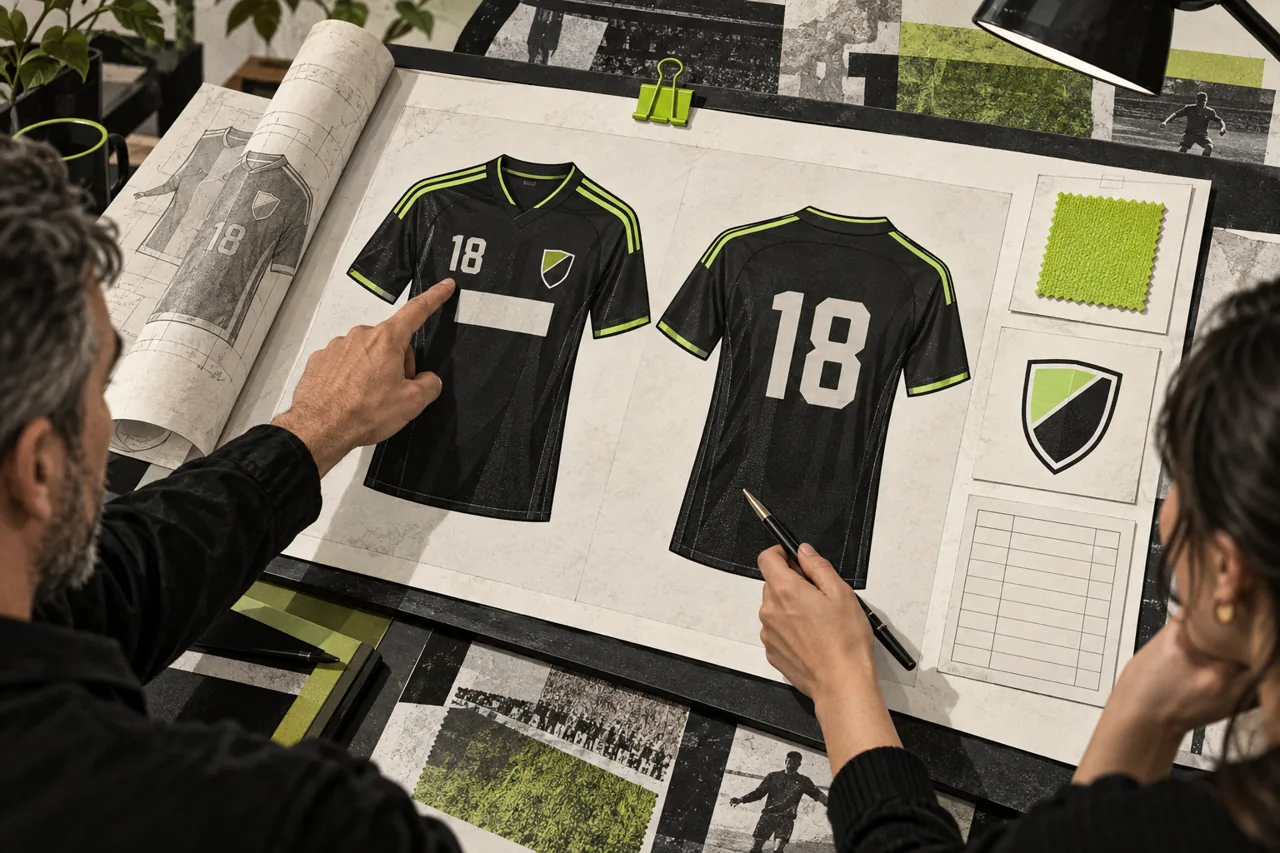
Review the layout and its supporting references together. AI-generated illustrative scene with fictional artwork; it is not evidence of a completed customer approval.
Request a proof that identifies the garment, artwork revision and colourway. Compare it with your source pack rather than relying on memory. Review both front and back, every additional decorated piece and any size-dependent variation that was agreed.
Before approving, check these points together:
- Club and sponsor marks use the correct versions and remain in proportion.
- Names, numbers and spellings match the latest roster.
- Proposed dimensions and placement are understood by both parties.
- Colour references and any required physical sample approval are recorded.
- The selected decoration method has been confirmed for the fabric and artwork.
- Any remaining substitutions or unresolved details are clearly identified.
For example, approving a front sponsor position does not also approve a changed back number style. List your corrections in one consolidated response, ask for an updated proof and review the updated areas before accepting the revision. Keep a copy of the final proof and written confirmation so a later replacement order has a clear reference.
6. Send an artwork pack with your enquiry
You do not need a perfect technical document before making contact. Send what you have and identify what still needs help. A useful enquiry includes the sport, garment types, approximate quantity, size range, delivery destination, required date, available logos and a rough placement reference.
Ask for confirmation of accepted artwork formats, any recreation or setup charges, the proof and sample process, and how changes affect the quotation or timing. Athletic Rush can then assess the actual enquiry; do not assume a universal minimum quantity, turnaround or included artwork service.
Contact Athletic Rush at kamran@athleticrush.co or WhatsApp +92 327 9008337. State that you need an artwork review for a custom team uniform order and mention any missing original files. If you are adding garments to an existing kit, also read the guide to reordering uniforms for new players.
Common artwork questions
Can I send a logo from WhatsApp?
You can send it as an initial reference. If the original file exists, supply that too and ask the designer to confirm whether the image has enough detail for the proposed use. A convenient preview should not automatically become the production master.
Do all sponsors need the same placement?
No single arrangement suits every team. Supply your sponsor's requirements and check the applicable competition requirements with your organiser. Have the supplier show the agreed arrangement on the actual garment proof before approval.
Does an approved mockup guarantee the fabric colour?
A layout mockup and a physical colour reference answer different questions. Agree how the colour will be checked on the chosen material and record any sample approval separately.
What should I save for the next order?
Keep the approved source files, final proof, colour reference, artwork dimensions, garment details and dated roster together. Preserve the previous approved version when a new season introduces changes, so the next enquiry clearly identifies which design you want repeated.