 Sialkot, Pakistan
 Worldwide enquiries

A basketball short can look right in a team mock-up and still feel wrong on the court. The waistband may sit lower than expected, the legs may catch during a defensive step, or a training pocket may add bulk where the player wants a clean side panel. Those problems are easier to discuss before the sample is approved than after the full team order arrives.
The useful starting point is a clear shorts specification: who will wear them, how they will be used, where the waistband should sit and how the garment should behave in motion. A label such as “medium” or a request for “the same fit as the picture” does not communicate all of that.
This guide helps clubs, schools and apparel brands turn a preferred silhouette into a sample brief. It covers finished-garment measurements, waistband construction, pocket choices, layering and practical fit checks. The illustrations show design concepts, not photographs of completed customer orders or evidence of a particular factory process.
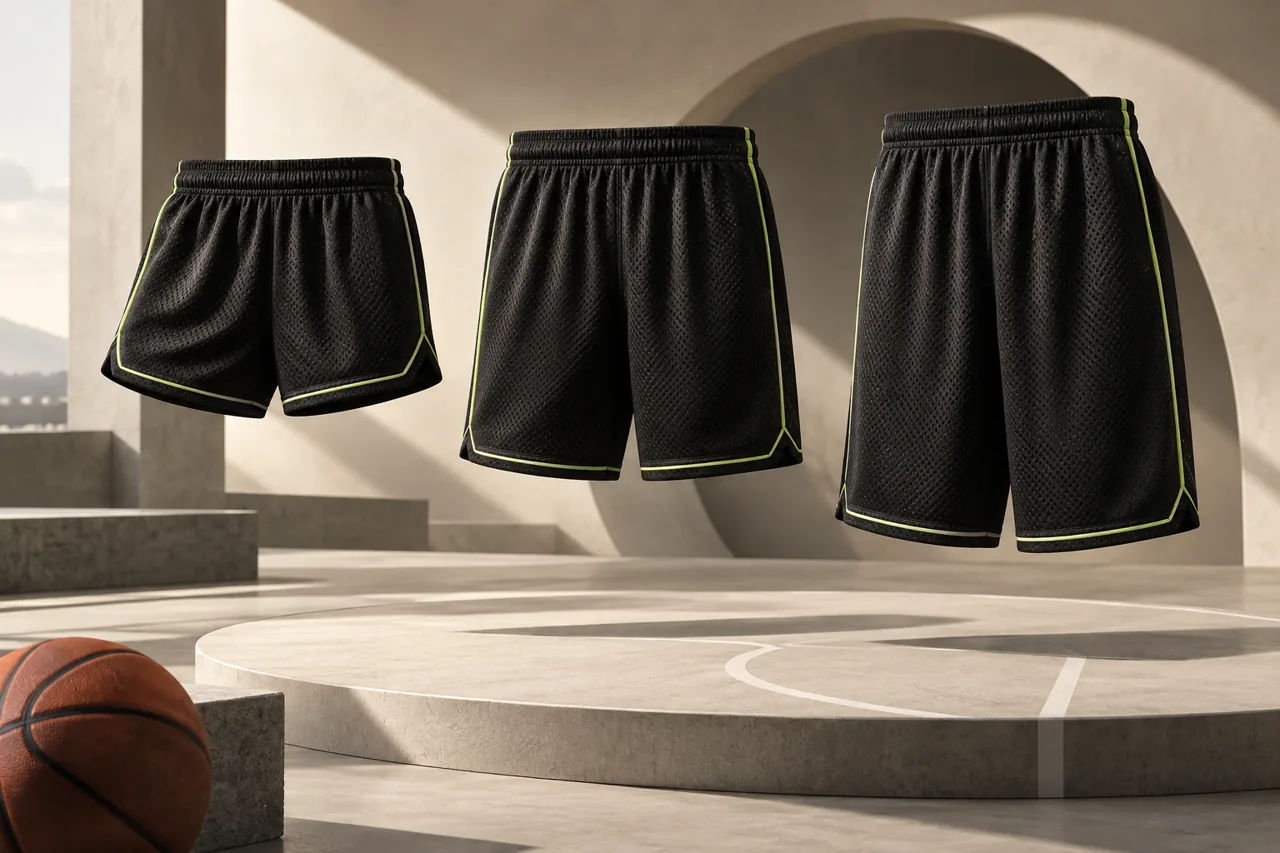
Start with the use: game kit, training or team travel
Write the intended use at the top of the brief. Game shorts, practice shorts and casual team shorts may share the club colours while needing different details. A feature that is useful while travelling does not automatically belong on a competition garment.
For game kit, confirm the organiser's current uniform requirements before committing to length, pockets, hardware or decorative details. Use the applicable season's rules, rather than assuming that a photograph from another league proves compliance. For competitions using FIBA rules, the official FIBA basketball rules page is a starting point; confirm which edition and competition-specific requirements your organiser applies.
For training, decide whether players actually need storage between drills and whether the team wants one garment for both practice and travel. For casual use, pocket convenience and the preferred off-court silhouette may carry more weight. Record these priorities instead of asking the sample maker to guess.
A brief can begin with a simple sentence: “Adult training shorts, worn at the natural waist over separate compression shorts, with a relaxed thigh and no built-in liner.” That is much more actionable than “comfortable basketball fit”. The example is a briefing format, not a specification suitable for every team.
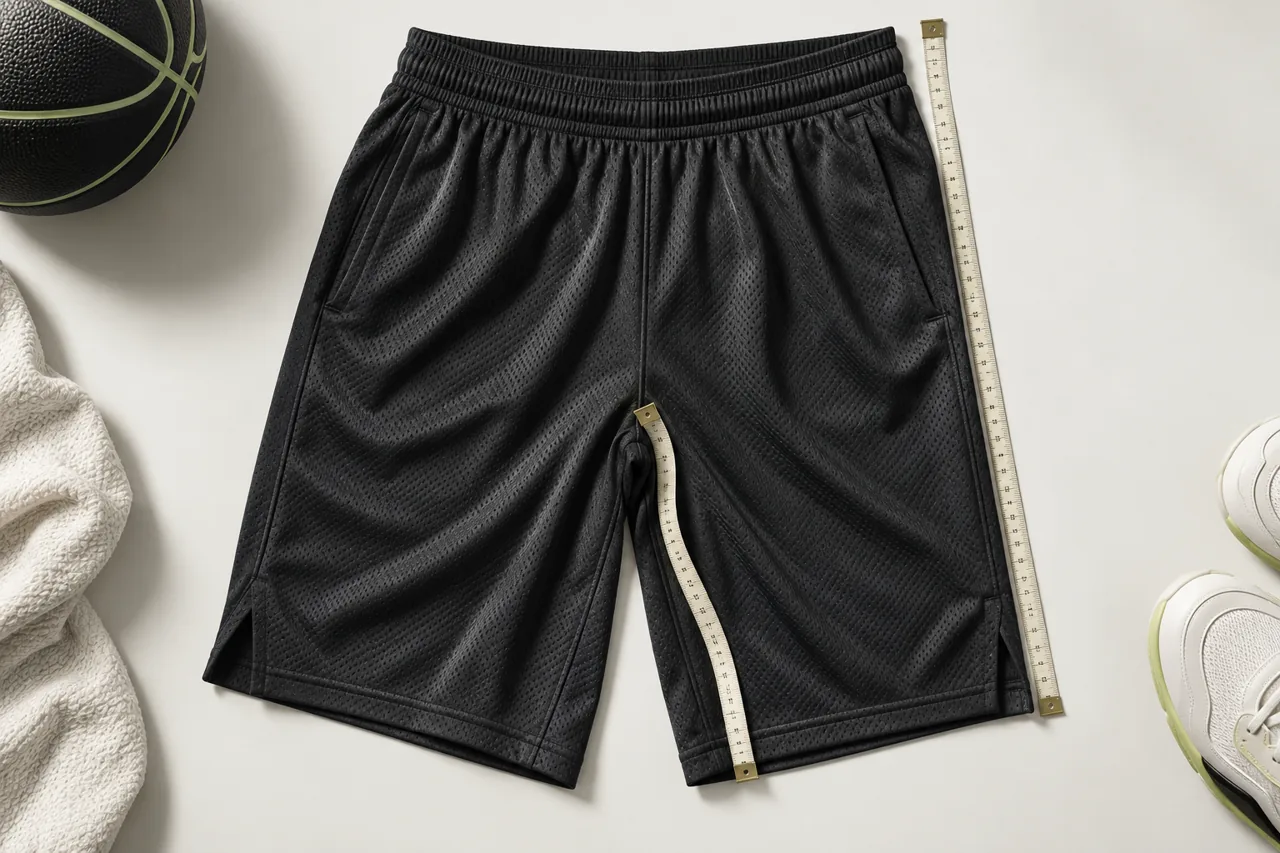
Define length with both inseam and outseam
Inseam is measured along the inside leg from the crotch junction to the hem. Outseam describes the outer length; the brief should state whether it starts at the top of the waistband and follows the side seam. Ask the manufacturer to use the same measurement method on the sample and the size chart.
These two dimensions work together. Two shorts can have the same inseam but different total lengths because their rise and waistband construction differ. The same garment can also appear longer when a player wears the waistband lower. That is why a product photograph alone is a poor measurement reference.
Choose the intended waistband position first. Then try a reference garment at that position and note where the hem falls while standing, sitting and moving. Record the reference size and whether the garment has already been washed. A worn favourite is useful as a visual reference, but its current dimensions may differ from when it was new.
If the team is deciding between two lengths, request a clearly documented comparison in the same base size. Keep other variables as consistent as possible so players are evaluating length rather than a simultaneous change in waist, fabric and leg width. Do not describe one option as universally “professional” and another as unsuitable; the intended use, wearer and competition requirements determine the choice.
Build a measurement sheet the sample maker can use
Keep body measurements and finished-garment measurements in separate columns or separate documents. A player's waist circumference is not the same thing as the relaxed width of an elastic waistband laid flat on a table. Mixing them is an easy way to approve the wrong fit.
Use one unit throughout the specification. For each measurement, record the point of measurement, target, agreed tolerance and sample result. Let the manufacturer confirm which tolerances are realistic for the proposed material and construction; a buyer should not invent a single tolerance for every dimension.
| Measurement or detail | What to define | What to check on the sample |
|---|---|---|
| Relaxed waist width | Flat width, garment unstretched, measuring position stated | Matches the agreed method and target |
| Waist extension | Agreed extension method and intended wearing range | Can be put on comfortably without excessive force |
| Inseam | Crotch junction to finished inner hem | Length and consistency between legs |
| Outseam | Start point, waistband inclusion and side-seam path | Overall length at the intended wearing position |
| Front and back rise | Start/end points and waistband treatment | Seated coverage and comfortable movement |
| Hip or seat width | Exact distance below the waistband for measurement | Room through the seat without unwanted excess |
| Leg opening | Flat hem width and whether measured along a curve | Freedom around the thigh during movement |
| Pocket and lining | Presence, opening, depth and construction | Comfort, bulk, coverage and intended use |
For a mixed roster, arrange a fit check with representative wearers rather than assuming that one adult sample confirms the youth range or every body shape. Our team size chart and player roster guide explains how to keep wearer details and order quantities organised.
Treat the waistband as a functional part of the fit
An elastic waistband has to hold the garment in place while remaining comfortable. A sample that looks tidy on a hanger can still feel restrictive when seated or need repeated adjustment during movement. Check it on the intended wearer, with the jersey worn as it will be during play.
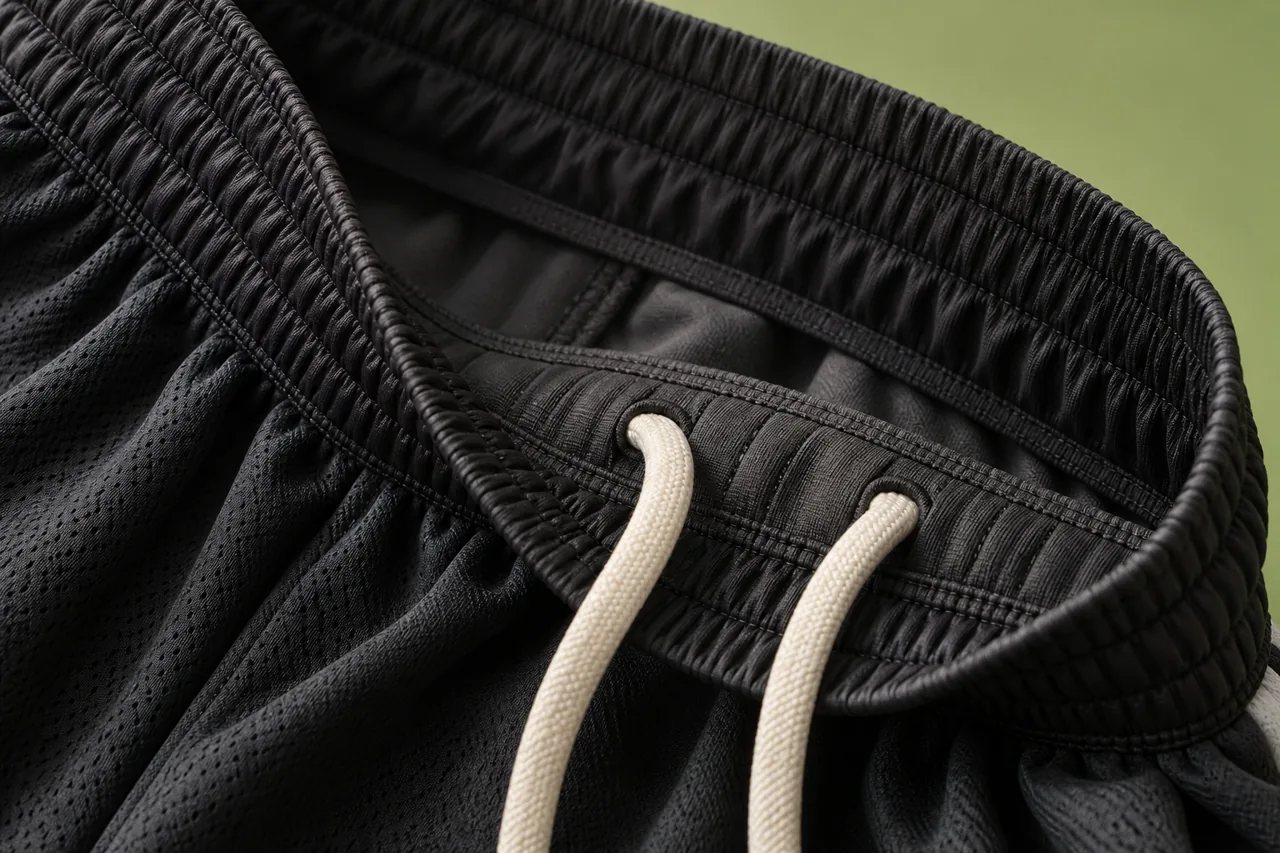
Specify whether a drawcord is wanted, where it exits and how the ends are finished. Check that it can be adjusted without disappearing into its channel. Look for twisting, rough contact points and bulky joins. For youth garments, discuss age-appropriate cord construction and applicable product requirements with the supplier rather than copying an adult detail unchanged.
Do not use the drawcord to compensate for a fundamentally oversized waistband. Likewise, do not reduce the whole garment merely because the waist needs adjustment; the seat and thigh may already fit correctly. Write the problem in terms of the affected area and ask for a targeted proposal.
For example: “The shorts stay comfortable through the thigh, but the waistband slips during lateral movement. Please review waistband retention while preserving the approved hip and leg measurements.” That feedback gives the sample maker a useful direction without dictating an untested construction fix.
Check movement before approving the silhouette
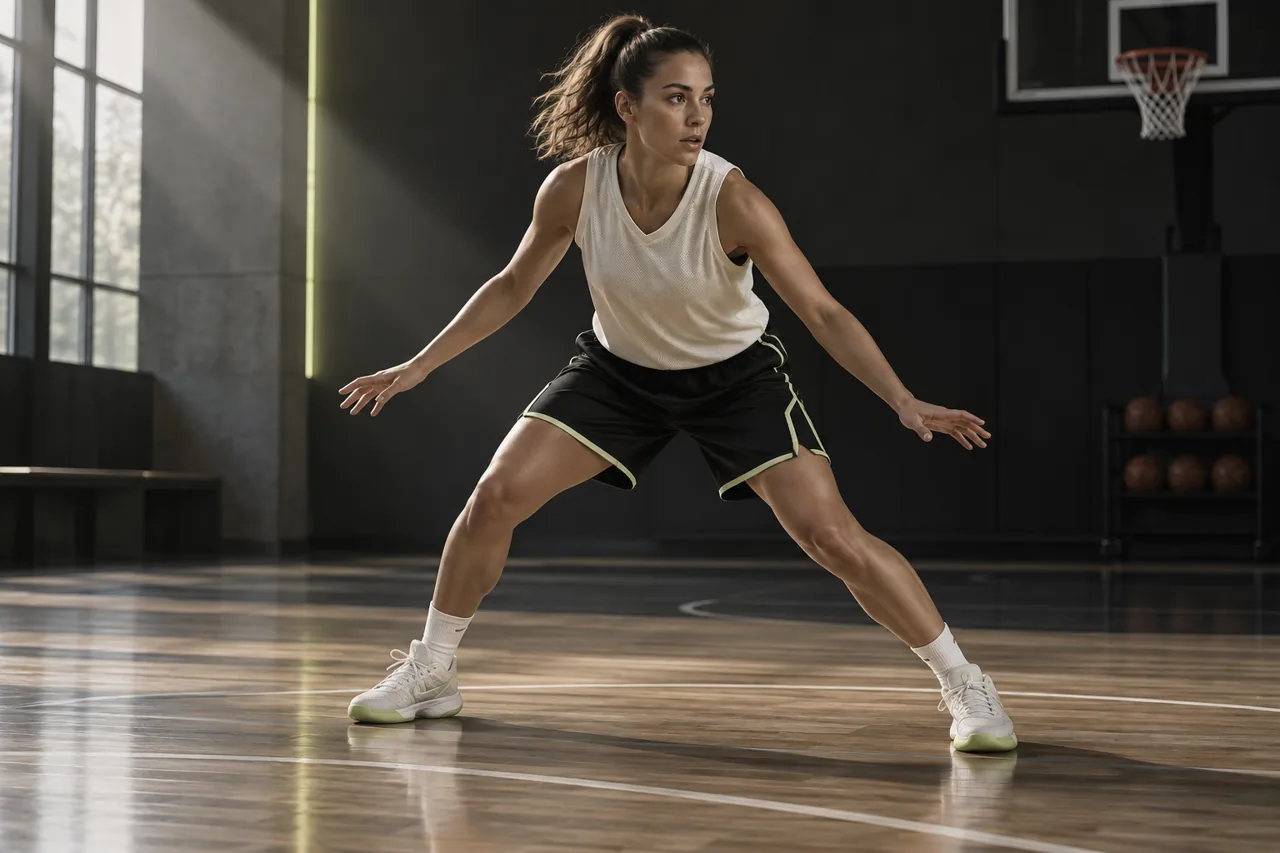
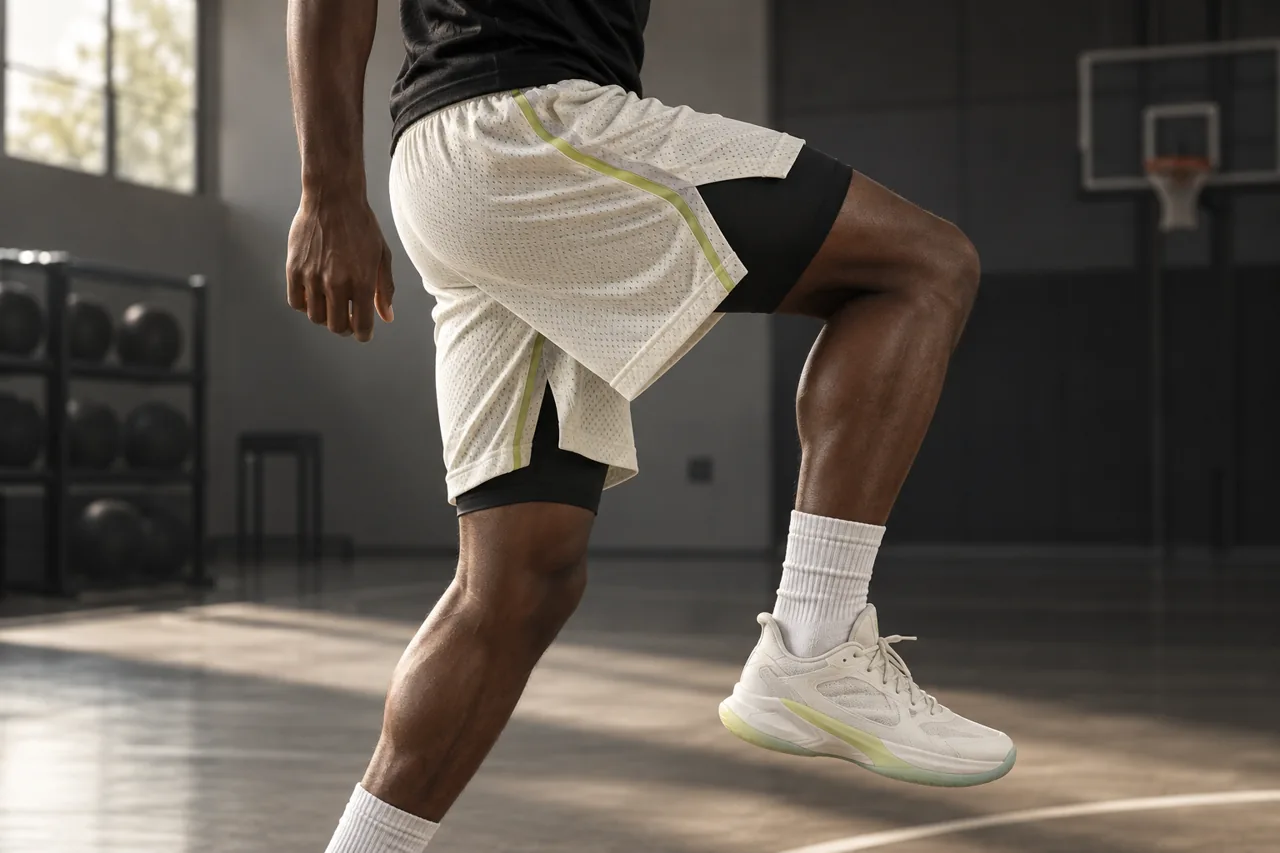
Ask the wearer to stand naturally, sit, take a controlled high-knee step and move into a comfortable defensive stance. These are practical fit observations, not performance or laboratory tests. Stop if anything feels uncomfortable; the purpose is to understand how the garment behaves during ordinary basketball movement.
Watch the waistband, crotch, seat and hem together. A hem that catches on the thigh may involve the opening width or garment balance, rather than simply the inseam. Pulling at the back while seated may need a rise or seat review. An outer short that rides up over a base layer should be assessed with that same layer in the next sample.
Record what happens instead of only writing “too tight”. Useful notes identify the motion and location: “During a lateral step, the inner thigh feels restricted,” or “When seated, the back waistband pulls downward.” Add front, side and back photographs with the wearer's consent where appropriate, and keep the waistband at the agreed position for each comparison.
Separate appearance feedback from comfort feedback. A player may prefer a shorter look while having enough movement in the current sample. That is a silhouette decision, not proof of a fit defect. Distinguishing the two helps the team choose changes deliberately.
Decide on pockets explicitly
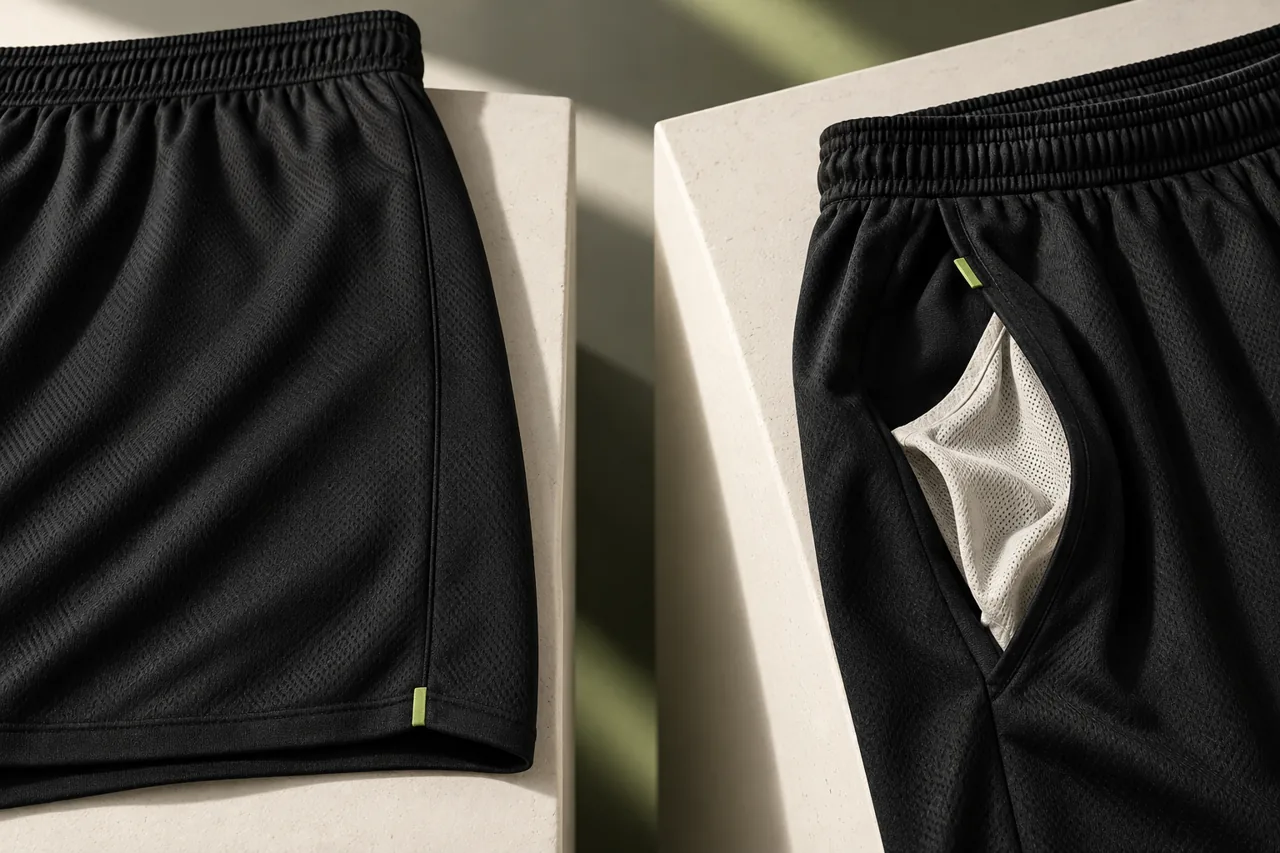
“Basketball shorts” does not tell the manufacturer whether pockets are required. Write “no pockets” when a clean pocket-free construction is wanted. For a pocketed training style, specify the pocket type and review the physical sample before approving it.
A pocket opening can affect the look of the side seam, and the pocket bag can add another layer against the leg. Check whether the opening gapes while standing or moving, whether the bag becomes visible below the hem, and whether the construction interferes with the side-panel artwork. If a closure is proposed, confirm its suitability for the intended activity and applicable rules before adding it.
For off-court storage, try the type of item the pocket is intended to hold while standing or walking. That does not mean players should carry those items during play. Make the use distinction clear in the product brief and any description prepared for customers.
If the team wants pocket-free game shorts and pocketed practice shorts, give them separate style references even when the colour scheme is identical. This prevents one approved detail being copied into the wrong order line later.
Review fabric and layering as one combination
Judge the shorts in the proposed production material. Fabric weight, stretch, surface feel and construction can change how the garment hangs and moves. A fit approved in a substitute fabric is a useful development step, but it should not silently become approval of a different final material.
Check coverage with the intended colour and base layer under ordinary indoor lighting. Light and dark colourways can look different in use. Bend and sit as well as standing still; a flat swatch does not show the whole garment's behaviour. The illustration below is a concept, so use the physical sample to decide actual coverage.
Clarify whether the style is unlined, has a separate lining or includes an attached inner short. A detachable or separately purchased compression layer is a different product arrangement from a built-in liner. Confirm which arrangement is included in the quotation and which garment the wearer is expected to provide.
If care testing is part of sample approval, agree the care method and assessment with the supplier and follow the garment's care instructions. Record observations before and after the agreed process. Do not infer shrinkage, colourfastness or long-term durability from a single photograph or an informal fit session. Our fabric selection guide provides a broader comparison framework.
Keep artwork placement tied to the finished garment
A side graphic that looks centred on a flat drawing may sit differently once the shorts are assembled. Review its position relative to the waistband, side seam and finished hem. Keep important marks clear of areas where a seam, pocket opening or fold would interrupt them.
Ask how placement changes across the size range. Do not assume the same artwork dimensions and offsets are appropriate for the smallest youth size and largest adult size. The manufacturer can propose a placement approach, but the approved version should be recorded alongside the size and construction references.
Photograph the approved sample from front and side with the garment hanging naturally. If the team changes the length after artwork approval, check placement again: a shorter leg can change the available space even when the logo file itself has not changed.
Send one consolidated approval note
Collect player feedback, resolve conflicting preferences and send one decision through the nominated team contact. Separate “approved”, “change requested” and “not yet checked” items. An attractive photo should not be treated as approval of measurements or details that nobody has reviewed.
A useful note includes the sample reference, base size, fabric reference, colourway, measurement sheet revision, pocket decision, artwork version and any unresolved points. If an updated sample is needed, name the changes and state which approved features should remain consistent. Ask for confirmation that the revision has been understood before moving forward.
Before authorising bulk production, check:
- The intended use and relevant competition requirements have been confirmed.
- The length, waist, rise and leg opening have been reviewed using agreed measurement methods.
- Representative wearers have assessed comfort and ordinary movement.
- Pocket, drawcord and lining details are explicitly recorded.
- The final fabric, colour and layering arrangement have been checked.
- Artwork placement and the proposed size range have been reviewed.
- Open corrections have been resolved and the final sample version is identifiable.
Common questions
Can I order shorts in a different size from the jersey?
Include separate jersey and shorts size columns in the roster and ask the supplier to confirm the order arrangement. Do not assume that a kit package automatically supports mixed sizes or that each player needs the same label in both garments.
Is inseam enough to specify the fit?
No. It describes inner leg length, but not waistband position, rise, seat room or leg opening. Combine it with a measurement sheet and a physical fit check so the supplier understands the whole garment.
Should all sizes have the same inseam?
That is a range-development decision to agree with the manufacturer. Some briefs prioritise a consistent nominal length; others use different lengths across sizes or fit groups. Review the proposed measurements and representative samples instead of assuming one approach fits every roster.
Can pockets be added after the first sample?
Ask the supplier to assess the change. Adding pockets affects construction and may affect appearance, cost or the development schedule. Treat the revised version as a new detail to review, not as an invisible addition to an already approved sample.
What should I send with my enquiry?
Send the intended use, approximate quantities, size groups, preferred silhouette, reference garment measurements if available, pocket and lining preferences, artwork and required delivery date. Mark unknown items as questions. Clear questions are more useful than filling gaps with guessed specifications.
Discuss your basketball shorts brief
Explore Athletic Rush basketball teamwear and share the fit and construction details your team needs. For the wider order process, read our custom basketball uniform ordering guide.
Email kamran@athleticrush.co, message us on WhatsApp, or start a manufacturing enquiry. Ask for confirmation of the proposed specification, sample scope, pricing and timing before committing to production.