 Sialkot, Pakistan
 Worldwide enquiries

A fabric can feel excellent as a small swatch and still disappoint once it becomes a fitted jersey. Pale panels may reveal more than expected when stretched. A comfortable shirt may pull across the shoulders during an overhead reach. Two materials sold under the same fibre name can feel quite different against the skin.
Choosing team uniform fabric works best when you connect the material to the garment, the players and the conditions where it will be worn. This guide gives a club buyer a practical way to compare samples, record the decision and send a clear fabric brief to Athletic Rush.
Your starting point: describe the use first, ask for comparable options second, and approve the actual garment before committing to the full order. A material name or a weight figure on its own is not a complete specification.
1. Build a use brief before asking for fabric
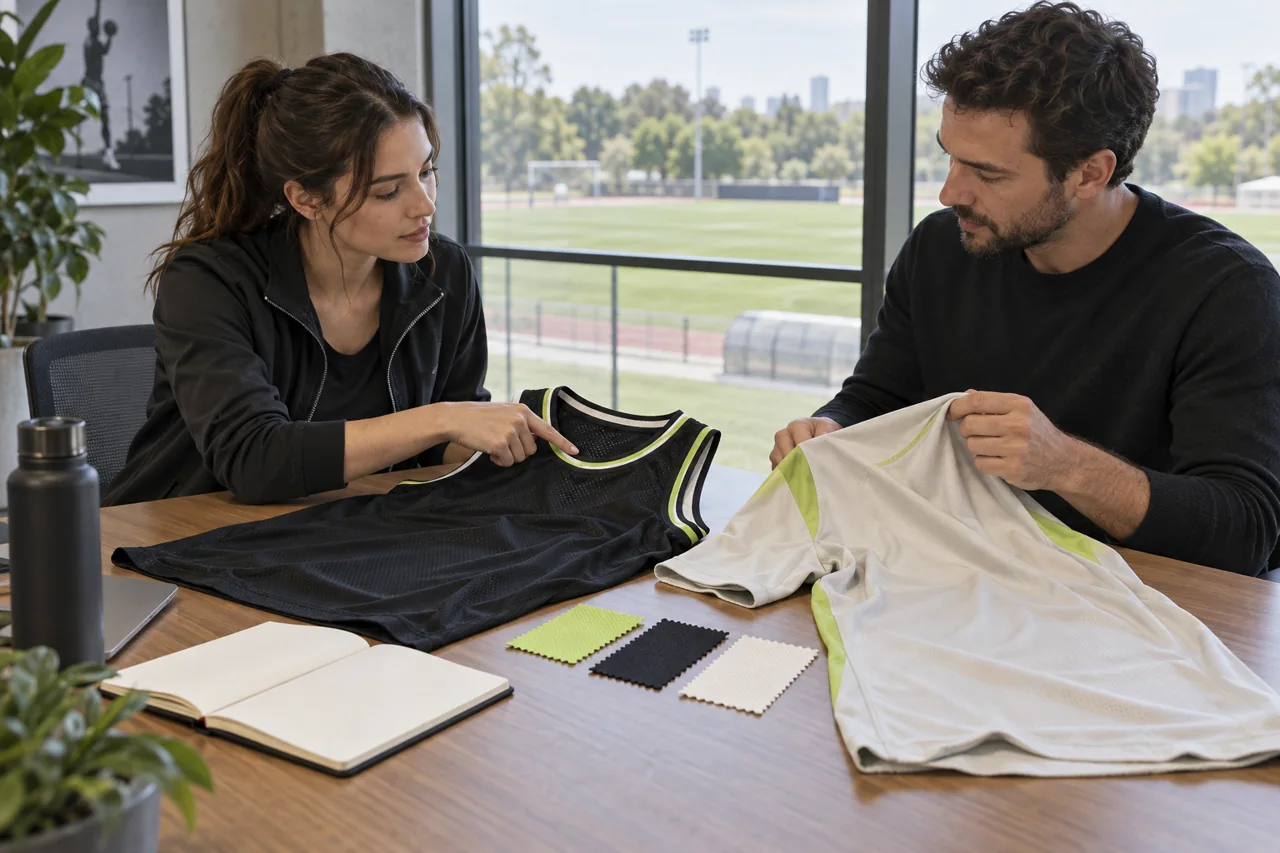
Start with the garment and its use: different kit pieces can need different material choices.
Write down the sport, garment type, expected playing conditions and intended fit. Separate match jerseys from warm-up layers and supporter shirts; they do different jobs. Tell the supplier whether players wear a base layer, whether the kit includes pale shorts or leggings, and whether frequent washing is expected.
For example, a loose basketball jersey for an indoor team and a close-fitting training top for outdoor sessions should not automatically share one fabric. The basketball buyer may prioritise drape and armhole comfort, while the training buyer needs to check stretch, recovery and coverage during movement. These are sample-selection questions, not fixed prescriptions for a particular textile.
Make the brief concrete:
- Garment: short-sleeved match shirt, shorts, dress, trousers or warm-up layer.
- Conditions: indoor or outdoor, likely heat, layers worn underneath and session length.
- Fit: relaxed, regular or close-fitting, with representative player sizes.
- Design: pale areas, dark panels, printed graphics and logo placements.
- Priorities: rank comfort, coverage, movement, durability and budget rather than calling all of them “best”.
You can explore Athletic Rush teamwear to identify the garment category before sending the brief.
2. Compare the whole fabric specification
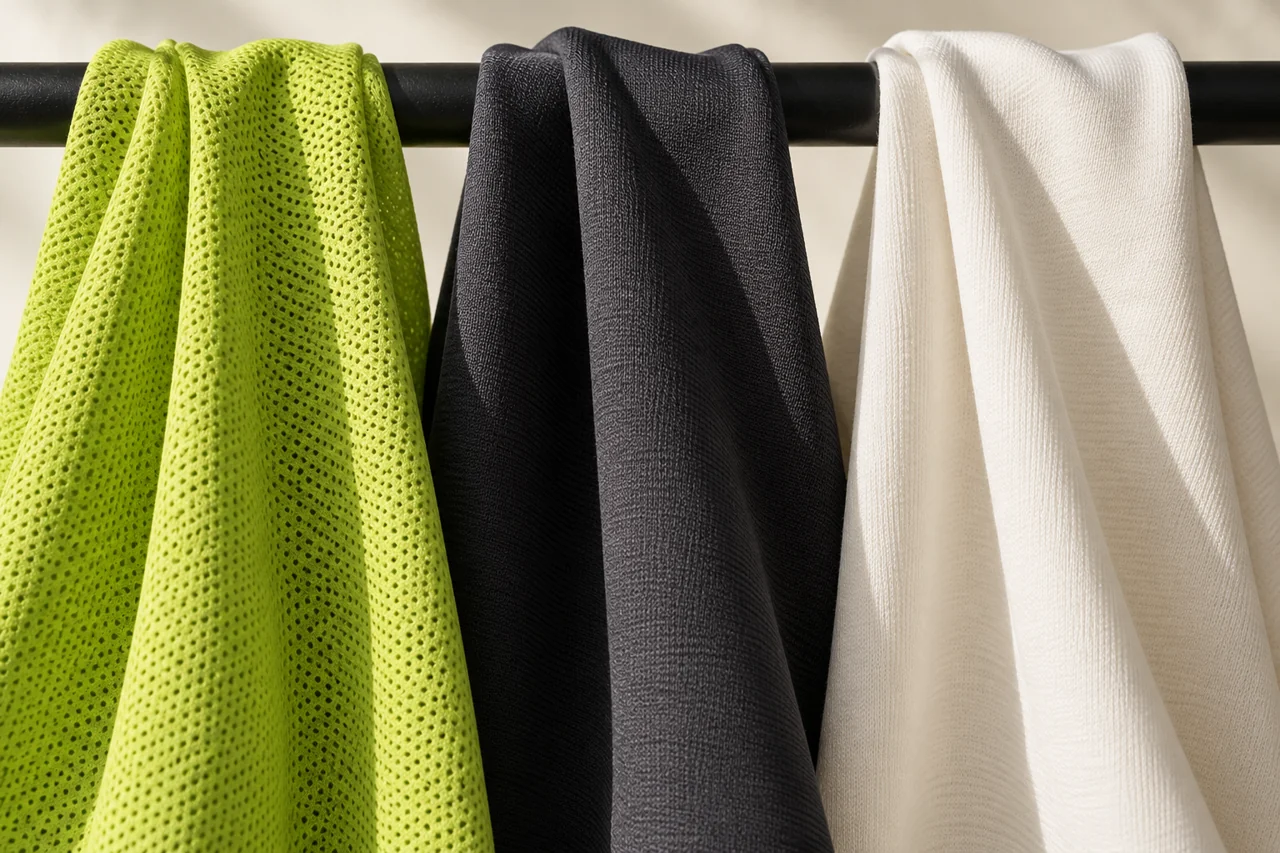
Compare surface structure and drape as well as colour. Illustrative fabric study; these swatches are not a confirmed Athletic Rush stock range.
Ask for the fibre composition, knit or weave description, fabric weight, stretch direction and any relevant finish. Give each proposed sample a reference such as A or B and keep that reference on every photograph and quotation. Otherwise, a later message saying “the lighter one” can refer to the wrong material.
GSM means grams per square metre: it describes mass per area. It does not, by itself, tell you whether a garment will be comfortable, opaque or durable. A weight comparison is most useful alongside construction, finish and a physical sample. Avoid choosing an arbitrary GSM because another team's jersey used that number.
Terms such as “performance” and “premium” need supporting detail. If moisture management is important, ask what the claim means for that specific material and whether relevant test information is available. Fibre name alone is not enough to establish performance: Cotton Incorporated describes several different constructions and treatments that change moisture handling and other properties in its product technology overview.
Keep a simple sample record with five fields: sample code, composition, construction, nominal weight, and intended garment. Add the supplier's stated tolerances where available. This becomes a useful comparison record rather than a collection of unlabelled swatches.
A sample comparison sheet you can actually use
Fill in this sheet for each option, keeping the same garment and colour in the comparison. A blank answer means the question is still open; it should not become an assumed approval.
| What to record | Sample A | Sample B | Decision it supports |
|---|---|---|---|
| Supplier reference, composition and construction | Record specification | Record specification | Are these the materials actually quoted? |
| Nominal GSM and stated tolerance | Ask supplier | Ask supplier | Are you comparing equivalent specifications? |
| Intended garment and fit | Record both | Record both | Does the sample represent your order? |
| Movement and recovery observations | Record pull or distortion | Repeat the same movements | Is the issue fabric, sizing or construction? |
| Pale-panel coverage | Check actual colour and fit | Use the same conditions | Does either option need a change? |
| Decoration and care review | Record result and conditions | Repeat the same checks | Is the finished garment acceptable? |
| Price, availability and unresolved points | Confirm in writing | Confirm in writing | What remains before approval? |
Example decision: Sample A feels lighter in the hand, but the pale panel does not give the coverage the team expects in the intended fit. Sample B meets that coverage expectation but feels warmer during the fitting. Ask for a revised panel or material option and compare again; choosing solely on weight would miss the trade-off. This is an illustrative buying scenario, not a claim about our available fabrics.
3. Check movement in the intended fit
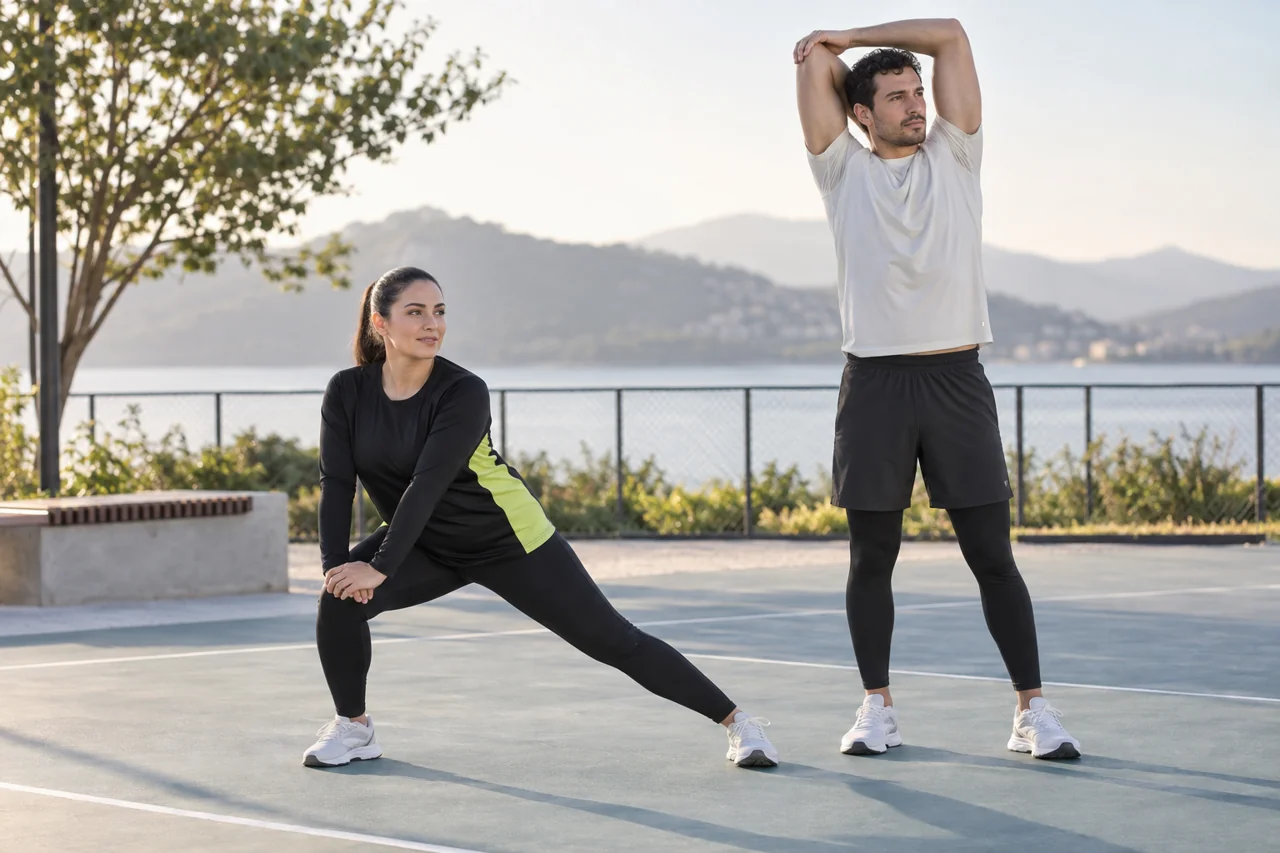
Use movements that belong to the sport. AI-generated educational scene; it does not show Athletic Rush staff or a verified product test.
Stretch is the fabric's ability to extend; recovery is how it returns after extension. Both matter when a garment repeatedly moves with the body. A hand stretch of a swatch can help you compare options, but it cannot replace a fitting sample with the intended pattern and seams.
Ask representative players to try the sample over their usual underlayers. For a shirt, include an overhead reach, a forward reach and a torso turn. For shorts or a dress, include a comfortable squat or lunge. Use normal playing movements and record where the garment pulls, rides up or feels restrictive.
If a shoulder feels tight, do not immediately order a stretchier material. The cause may be the pattern, size choice, seam position or fabric. Record the location of the restriction and ask the supplier to review it. After a change, repeat the same movement so the comparison is useful.
Use the team uniform size chart and player roster guide to keep garment measurements and player size decisions consistent. A stretch fabric should not be used to hide an inaccurate size allocation.
4. Review pale colours and coverage before approval
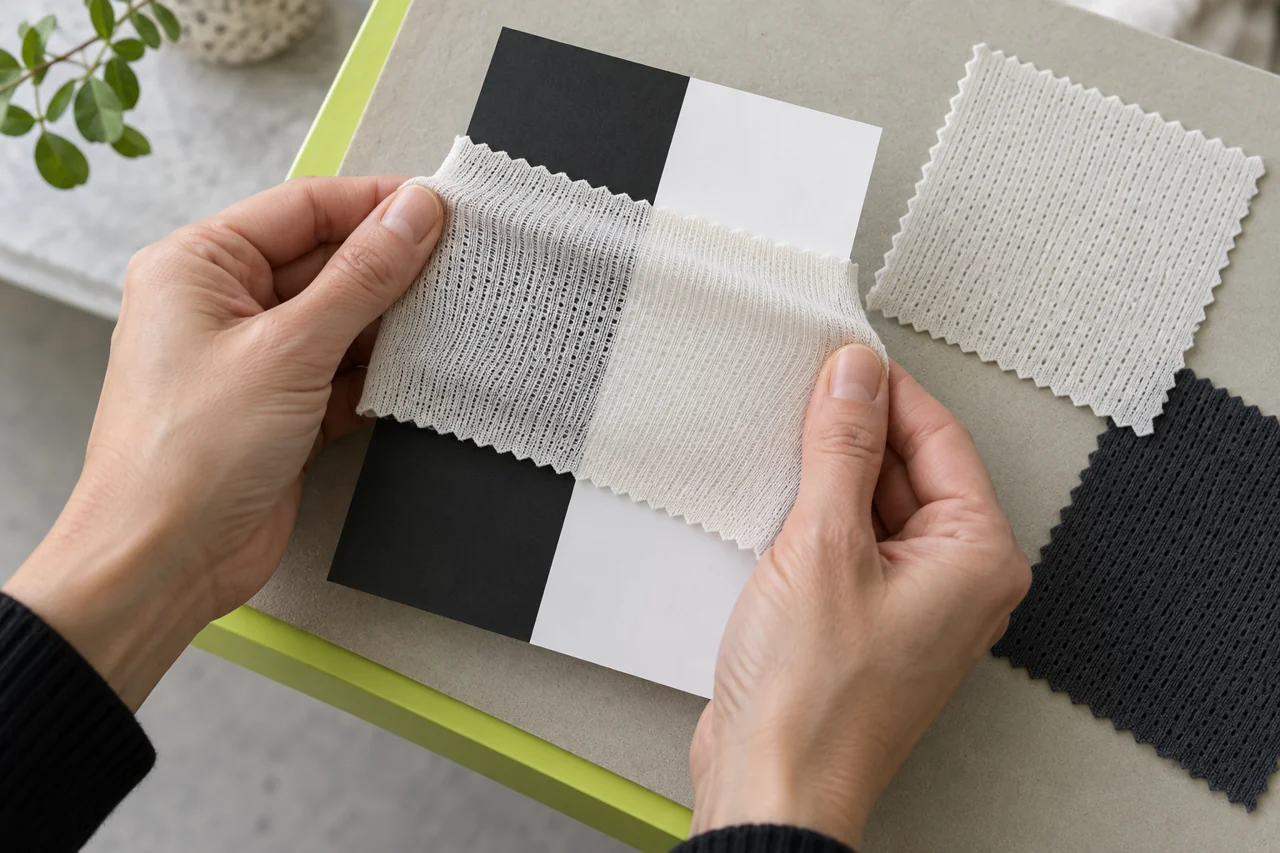
A contrast check helps identify questions to investigate in the actual garment. This illustration is not a laboratory opacity measurement.
Review pale areas in the finished colour and intended fit. A dark swatch is not enough to approve a white or very pale panel. Compare the material relaxed and gently extended, then check the garment under lighting similar to where it will be used. Give players privacy when assessing coverage over their normal underlayers.
If coverage is insufficient, discuss the actual options: an alternative construction, a different panel colour, a fit adjustment or a lining where appropriate. Each can change comfort, appearance or cost, so ask for a revised sample rather than approving from a verbal promise.
Do not turn a home swatch check into an unsupported claim such as “100% squat-proof”. If the order needs a defined performance threshold, agree the test method and acceptance criteria with the supplier. For ordinary team purchasing, the immediate decision is whether the reviewed garment meets the team's documented expectations.
5. Review fabric and decoration together
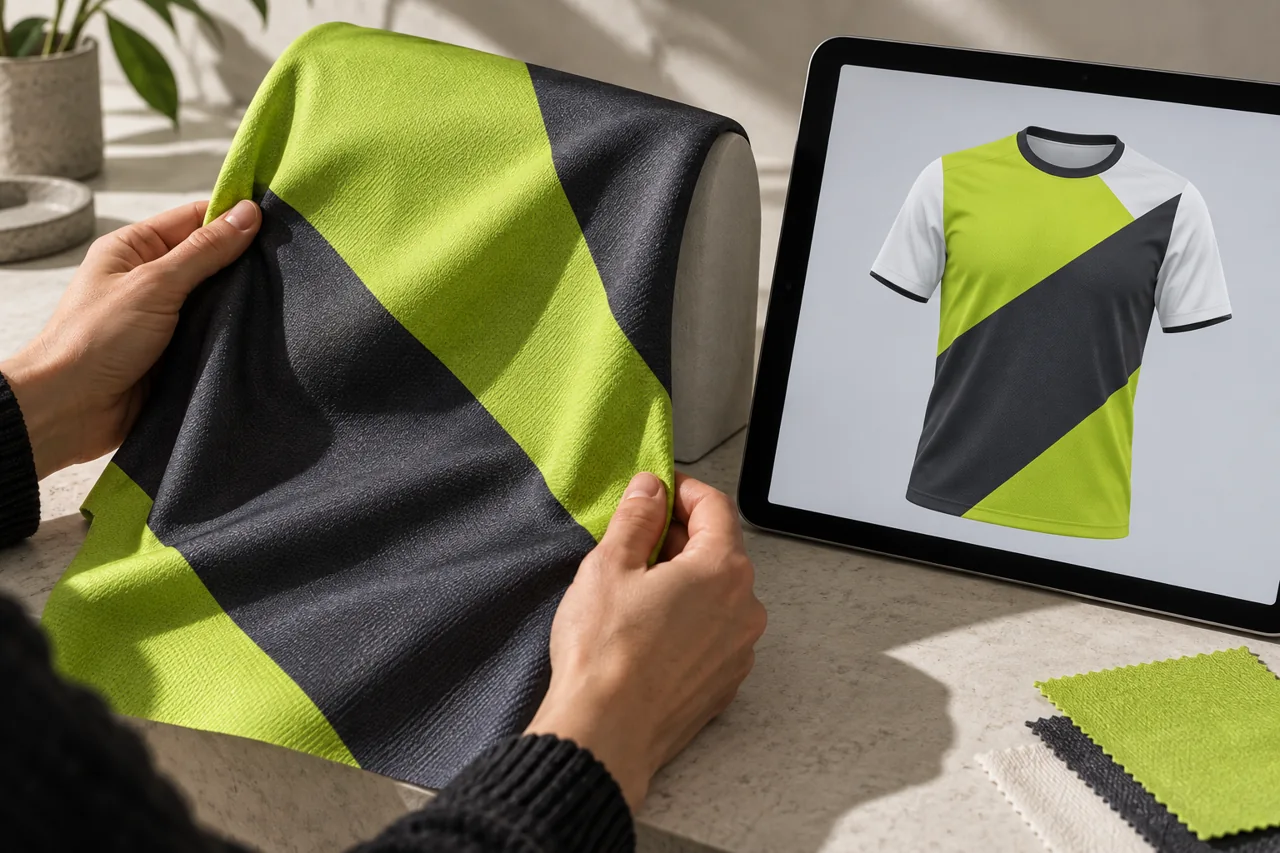
Review the design on the selected cloth, including how the decorated area looks when draped or extended.
Ask the supplier to confirm which printing or decoration method suits the selected material. Approval of a digital design establishes placement and appearance on screen; it does not establish the result on every fabric.
Request a representative decorated sample where colour, fine detail or a large graphic matters to the order. Inspect the print at normal viewing distance and close up. On a fitted area, check its appearance during normal extension. For applied decoration, discuss how its location and size affect the feel of the garment.
Keep the approved artwork version with the fabric reference. If either changes, identify what must be checked again. The logo and sponsor artwork guide helps organise those files and placement instructions.
6. Compare care and appearance after washing
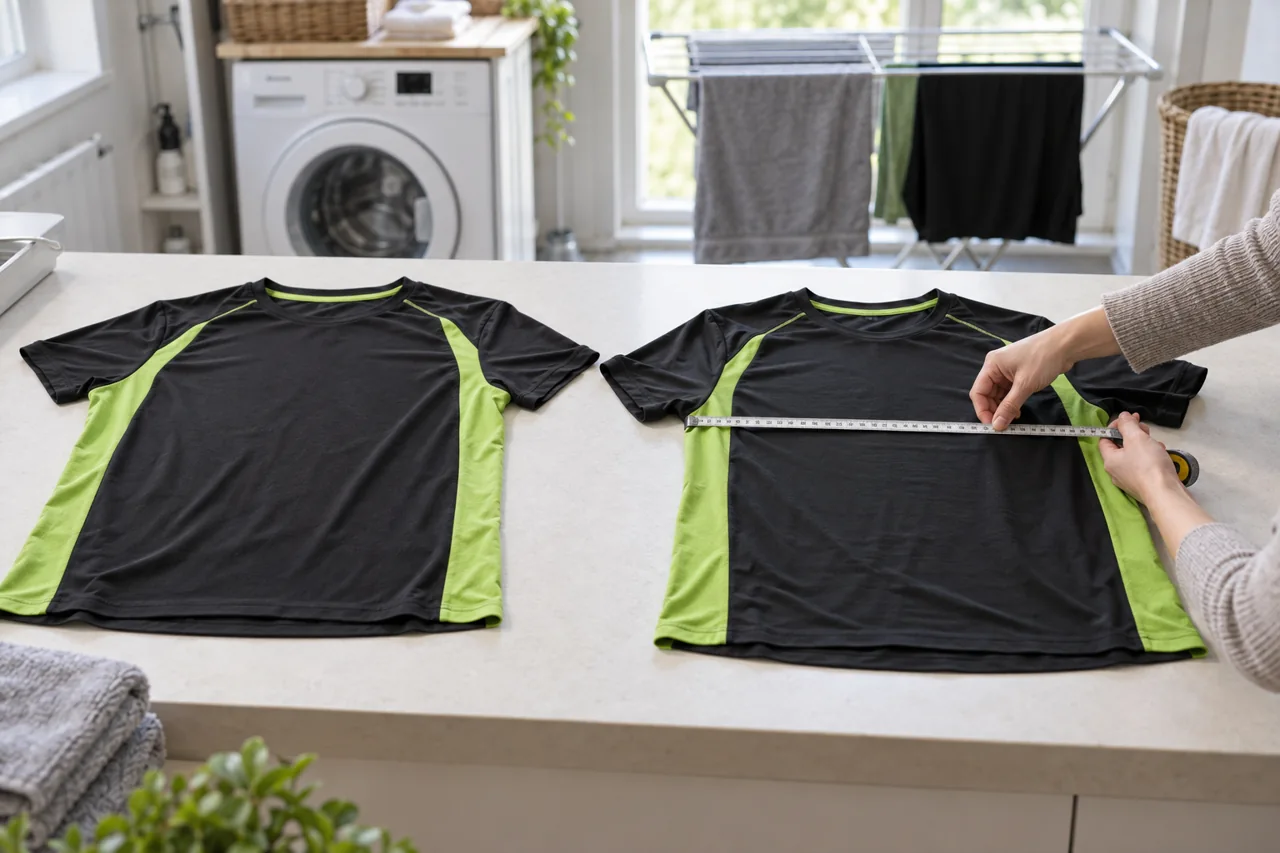
Keep the care conditions and measurements with your sample record so changes can be discussed clearly.
Ask for the proposed care instructions before placing the order, and check whether they suit how the team actually manages its kit. A material that needs care the team cannot follow may create avoidable problems later.
If you have permission to wash the sample, photograph and measure it consistently before and after following the supplied care instructions. Note changes in fit, surface appearance, seam shape, colour and decoration. Keep the washing conditions with the record. One home wash is a useful practical check, not proof of long-term durability or a substitute for an agreed laboratory test.
If a problem appears, send the observations and sample reference to the supplier before approving bulk production. Ask whether the recommended correction affects the material, finish, garment construction or care instructions. Avoid changing several factors at once without recording them, because the reason for any improvement becomes unclear.
7. Turn the comparison into a written approval
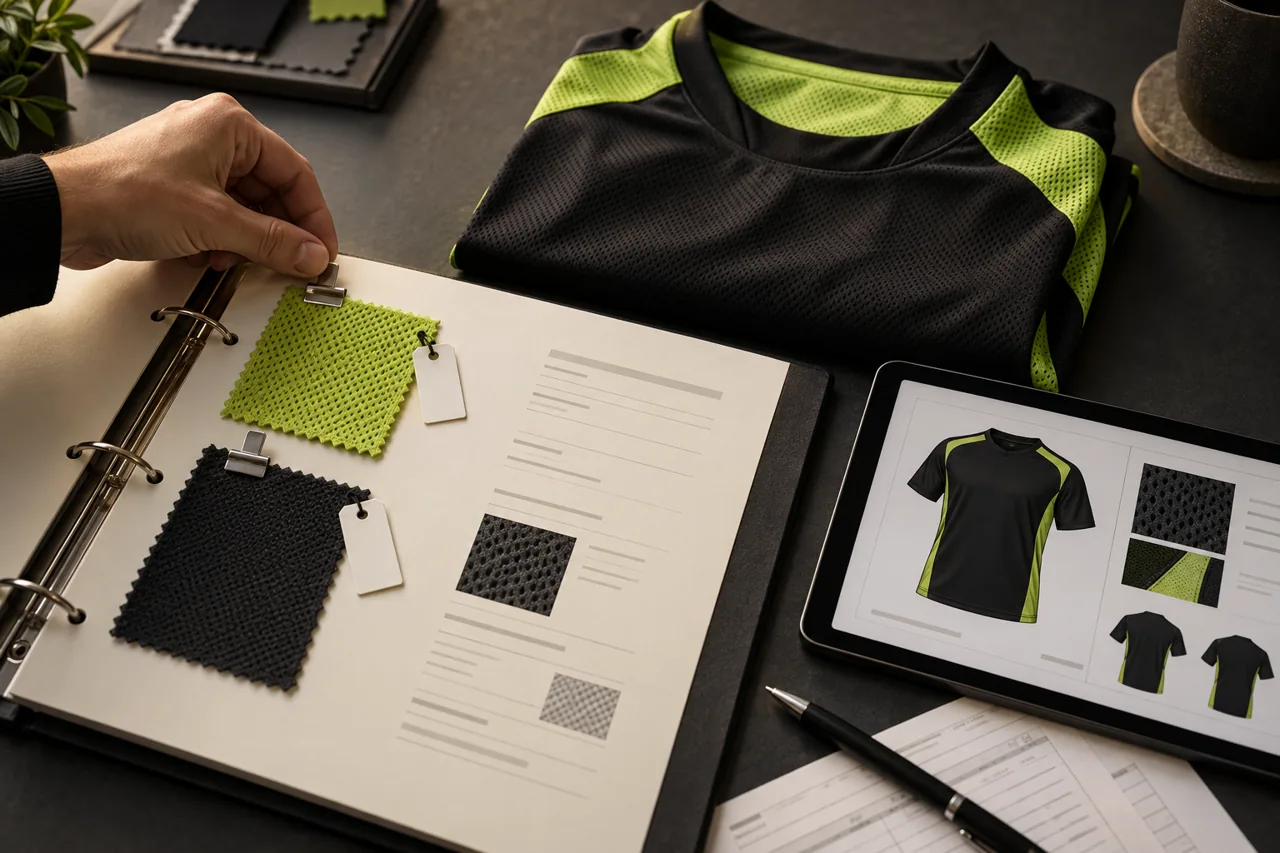
Preserve the approved material and garment reference together for production questions and future orders.
Before confirming the order, your approval record should identify:
- The chosen fabric reference and supplier specification.
- Which garments and panels use it, including any separate mesh or lining.
- The approved colours, decorated sample and artwork version.
- The garment measurements and fit sample that were reviewed.
- Agreed checks, tolerances, care instructions and unresolved exceptions.
- Whether any proposed substitution requires fresh approval.
For a repeat order, retain a labelled sample and the written record. If the exact material is unavailable later, compare the replacement explicitly instead of treating a similar name as an identical specification. Our guide to reordering uniforms for new players explains how to preserve the rest of the kit reference too.
Approve, revise or hold?
Approve when the material reference, fit, colour, decoration and agreed checks all match the reviewed sample and no required answer is missing.
Request a revision when you can identify a specific issue, such as a restrictive shoulder or an unacceptable pale panel. Describe the issue and the conditions in which it occurred, then review the revised sample.
Hold the decision when the sample uses a substitute fabric, the composition is unconfirmed or important care and decoration questions remain unanswered. Ask what needs to be supplied before the decision can move forward.
Send a clear fabric enquiry to Athletic Rush
Copy this brief into your enquiry and replace the bracketed details:
We are sourcing [garments] for [sport and team]. They will be used in [conditions] with a [fit] fit. Our main priorities are [three priorities]. The design includes [pale areas or important graphics]. Please suggest suitable fabric options and identify their composition, construction, weight and sample references. Please also confirm the sampling process, decoration compatibility, care instructions and any cost or availability differences. We would like to review a garment sample before final fabric approval.
Email kamran@athleticrush.co, send the brief on WhatsApp at +92 327 9008337, or start a manufacturing enquiry. Include quantities and target delivery date so the discussion covers the complete order. Availability, pricing and production timing should be confirmed for your specific project.
Questions buyers often ask
Is a heavier fabric always better?
No. Weight is one part of the specification. Compare it with the construction, intended fit, coverage and playing conditions. Choose the material that meets the agreed use, not simply the largest GSM number.
Can all garments in a kit use the same fabric?
Sometimes, but confirm suitability for each garment. A jersey, close-fitting short and warm-up layer may have different movement and coverage requirements. Record any different panel materials clearly.
Can I approve fabric from photographs?
Photographs help compare appearance, but they do not reliably communicate hand feel, recovery or comfort. Use labelled swatches and an appropriate garment sample when those properties affect the decision.
What happens if the supplier suggests a substitute?
Ask for the new specification, the reason for the change and any impact on price, timing or appearance. Review the affected sample checks before giving written approval.
The images in this guide are AI-generated educational illustrations. They explain the checks and do not depict actual Athletic Rush staff or stocked fabrics.