 Sialkot, Pakistan
Choose streetwear shorts pockets as a complete assembly: opening, usable space, pocket-bag material, attachment, edge finish and closure. Then check that assembly on the worn sample with the items your customer actually carries. A neat front photograph, a deep-looking pocket or a zip by itself cannot establish whether the pocket is suitable for the brief.
For a clothing-brand buyer, the practical question is: what should I specify and inspect inside the shorts before approving production? Start with a clear pocket job, look behind the opening, and separate ordinary fitting observations from any formal performance evidence you require. This guide concentrates on hidden construction; our streetwear shorts design guide covers the separate length, volume and outfit decisions.
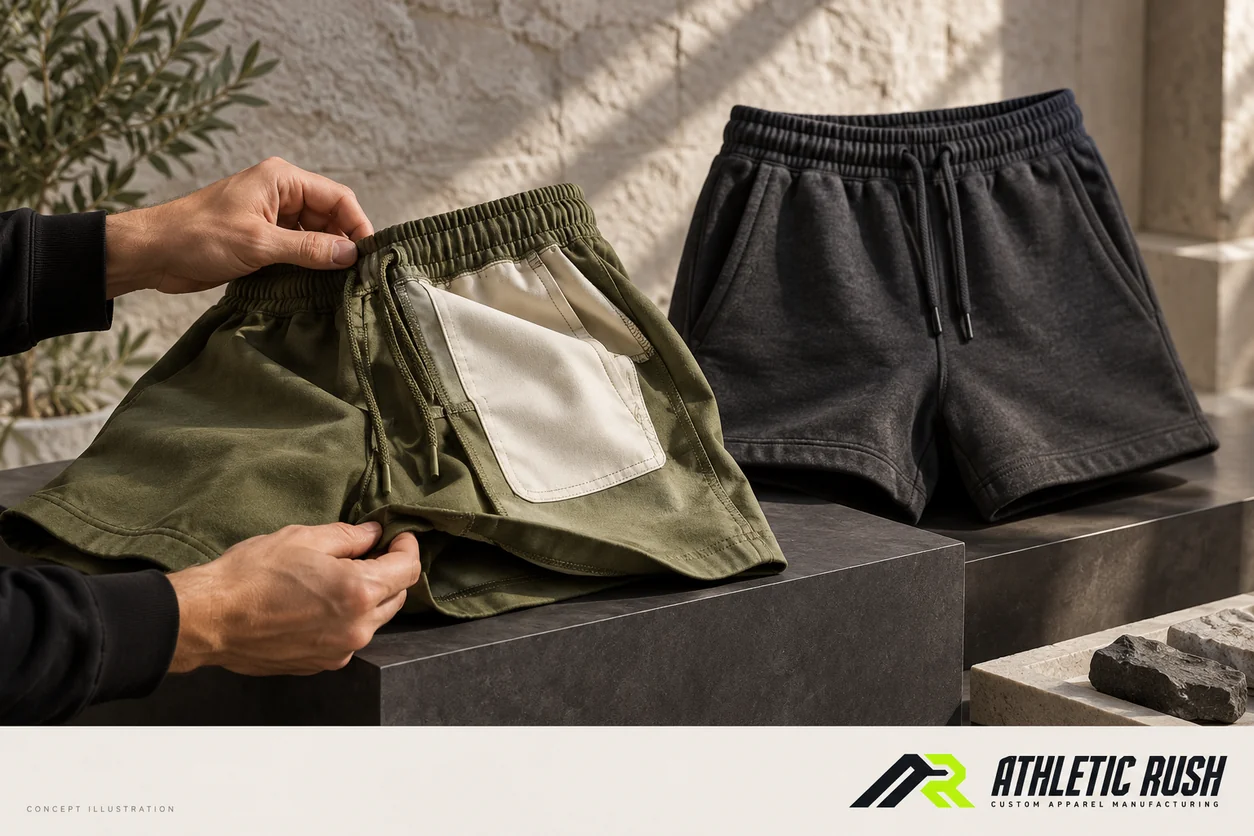
These six original images are conceptual illustrations of construction choices and inspection methods. They are not photographs of Athletic Rush inventory, customer orders or measured tests. The named garments below are illustrative development briefs, not offered product specifications.
Specify the pocket from the outside in
Give every pocket a job
Do not begin with “two deep pockets” and leave the rest for the factory to guess. Describe the intended use: hand access, carrying an identified phone with its case, holding a small set of keys, or providing an exterior design detail. Decide which pockets are intended to carry items and which are mainly part of the appearance.
Name the location and count: left and right front pockets, a rear pocket, an exterior patch pocket or another agreed arrangement. Give each a simple reference in the drawing, such as front-left P1. A clear reference lets the supplier connect the outside photograph, inside view, measuring record and any correction to the same assembly.
Three hypothetical examples show why one instruction does not answer every design:
| Proposed shorts | Pocket direction | What the supplier should show |
|---|---|---|
| Charcoal loop-back shorts with a side-seam opening | A low-profile exterior with an internal bag for ordinary hand access and an identified phone | The opening, complete inside bag and its attachments, plus standing and seated use |
| Olive woven shorts with a slant front opening | A visible angled opening with an agreed facing and internal bag | Exterior shape, reverse construction and the worn outline with pockets empty and then in use |
| Ivory woven shorts with an exterior patch pocket | A visible pocket panel as part of the design | Finished top opening, perimeter attachment and actual usable space on the worn sample |
These are options to develop, not a ranking of pocket quality. The intended item, wearer, shorts material and construction determine what needs to be reviewed. If several items are meant to be carried together, identify that combination rather than testing one item and extending the conclusion to everything.
Separate opening size from usable space
The opening is the entrance. The usable space is the room inside the completed pocket after its seams and attachments are sewn. A broad entrance does not establish depth, and a deep bag does not establish convenient access. Record both.
Ask the supplier to mark how opening length, bag depth and relevant widths will be measured. Identify the garment references, start and end points, units, finished condition and sample revision. State whether a measurement is taken along an angled opening, vertically or in another agreed direction. A value without its method may describe a different feature to another reviewer.
For an intended phone, name the actual model or provide its dimensions and case details in the private development brief. Keep identifying customer information out of public content. Use that item on the sample and record how it enters, where it sits and how it can be retrieved. “Phone pocket” alone does not specify an item or a retention requirement.
Do not infer capacity from an image with a hand partly inserted. Likewise, “full hand fits” is a fitting observation for that wearer, not a universal standard. Decide what the pocket must do, then retain evidence for that specific decision.
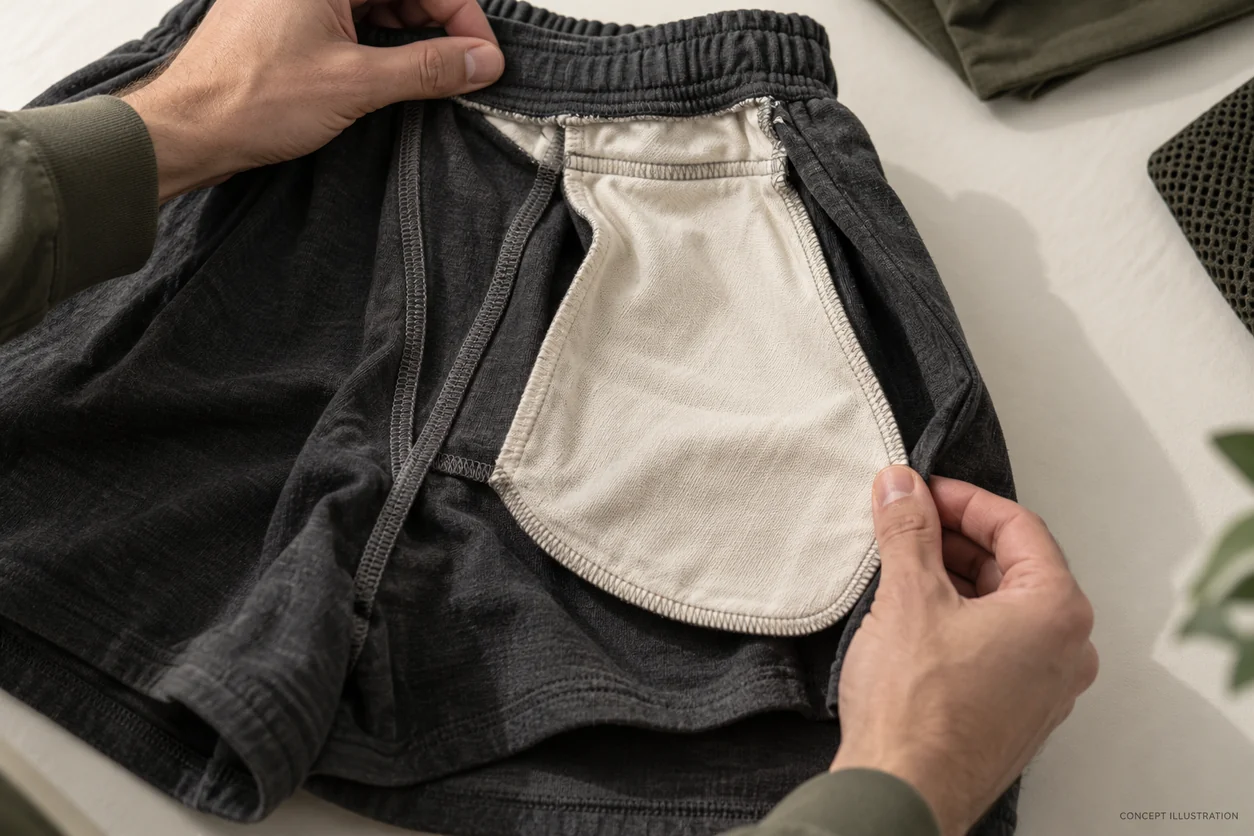
Understand which part creates the pocket
An internal pocket bag is the fabric assembly behind an opening that provides the storage space. A facing is the fabric treatment at the opening that contributes to its finish and appearance. An exterior patch pocket forms space between an added panel and the garment beneath it. The exact pattern and sewing route must be shown for the proposed shorts.
With a side-seam opening, ask where the entrance begins and ends and how the pocket joins the surrounding seam. With a slant front opening, ask which fabric is visible at the edge and how the bag sits behind it. With a patch pocket, identify the finished upper edge and the attached perimeter. A construction name should lead to a drawing and a physical example, not substitute for them.
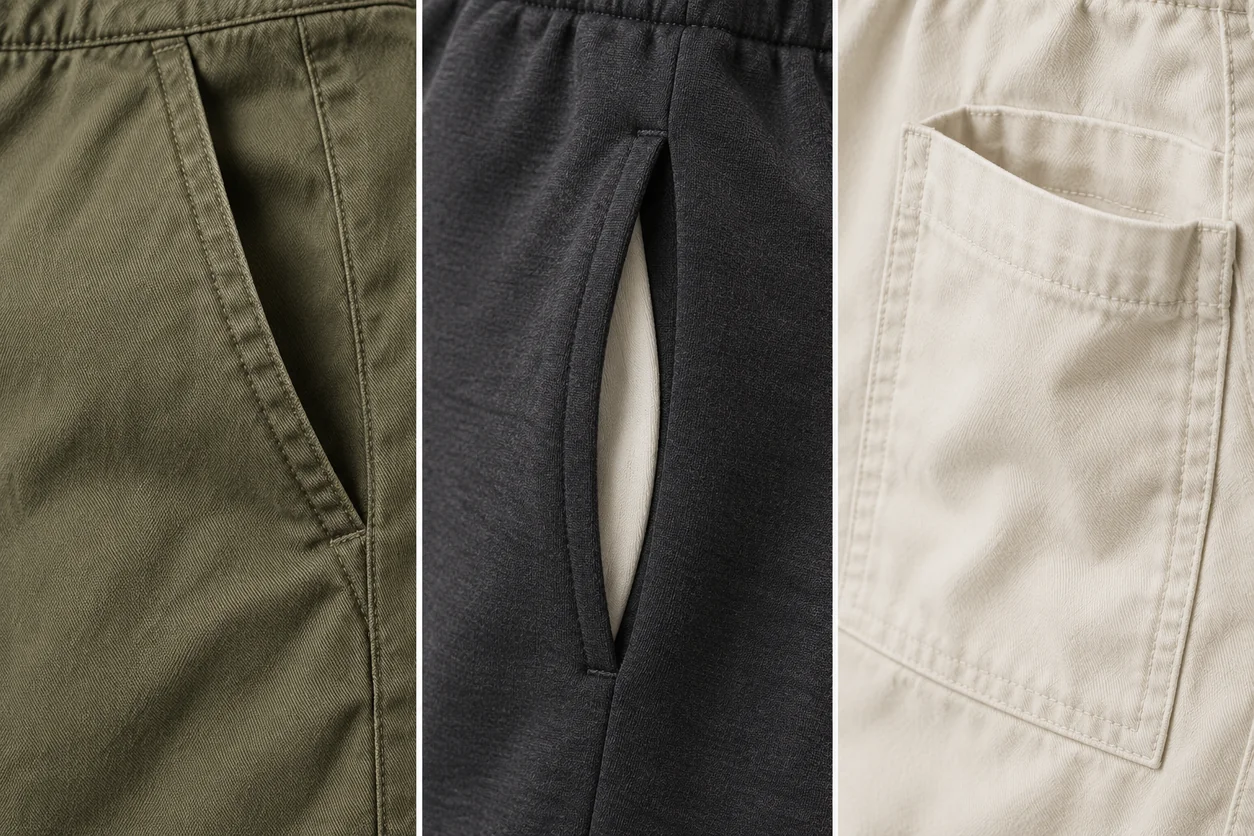
For a visually quiet charcoal short, an internal bag might be part of the chosen route; an ivory short with a contrasting patch pocket has a deliberately visible construction. Neither route is automatically more secure or more durable. Record the differences you want and inspect the resulting sample.
If the supplier proposes an additional small pocket inside a larger one, specify its purpose, position and access. Check whether the intended item catches between the compartments and whether it can be found and retrieved while the shorts are worn. The mere presence of a nested pocket does not establish that it solves the buyer's problem.
Make closure a separate decision
An open entrance, flap, button, snap or zip changes the user's sequence for reaching the item. Agree which action is intended and view it on the actual garment. For a zip proposal, inspect both the exterior and reverse side: operation, access, tape and seam finish, and the position of the pull when the wearer stands and sits.
Try inserting and removing the specified item without forcing it. Check that the closure can be operated after the item is inside and that the wearer can locate it normally. Ask the wearer to describe any point that presses or catches. Record the observation rather than diagnosing its cause from a single photograph.
A closing pocket can meet a particular retention brief, but a zip is not evidence of waterproofing, theft protection or unlimited carrying capacity. Any such claim needs its own appropriate evidence. For an ordinary streetwear brief, define the intended item and wearing situations first; do not add a technical promise because the trim looks familiar.
Turn the shorts inside out before judging the finish
Identify the bag material separately
The body fabric and pocket-bag fabric need separate references, even when the same material is proposed for both. Ask for composition, construction, colour, identifiable supplier reference and any relevant finish. Keep a swatch alongside the approved construction sample.
An ivory woven bag behind olive woven shorts, a charcoal bag behind charcoal knit shorts, or a mesh proposal creates different material combinations to review. Do not assume that a lighter, mesh or self-fabric bag has a particular comfort, strength or drying result just from its name. Review the actual material and finished assembly.
On lighter-coloured shorts, inspect the pocket outline and colour under agreed ordinary viewing conditions. If the bag is visible through the body or the item produces an unwanted outline, describe the issue with the identified sample and lighting. Ask for a revised material or construction proposal and check it again; do not treat one illustration as a universal opacity test.
Feel the opening, bag seams and nearby trim while the garment is worn. Ask the wearer whether any edge or component is uncomfortable during the agreed actions. Keep this practical feedback separate from a laboratory assessment of comfort or material suitability.
Trace the attachment rather than guessing it
Lay the shorts inside out and follow the bag from the opening to its lower seam and each connection to the garment. Ask the maker to identify what attaches to the side seam, waistband or other part of the proposed style. Designs can differ, so do not prescribe one attachment arrangement for every pair.
Record whether the bag is caught into another seam, otherwise attached, or deliberately free in a particular area. Look for an unintended opening, twisted assembly, a caught section that reduces access or a bag that appears to interfere with the hem. Compare both sides on a symmetrical design under the same conditions.
If the bag hangs below the intended shorts hem in use, tell the supplier when that happened and with which item. A correction may involve bag shape, attachment or another related detail. Ask for an explained proposal instead of simply ordering a shorter bag that might no longer fit the intended item.
Keep any allowed variation explicit. A deliberately different rear pocket should not be rejected because it differs from a front pocket. Conversely, two front pockets intended to match should be checked against the same drawing and measuring method.
Look at joining seams, edge treatment and reinforcement separately
A joining seam connects pieces. Edge treatment addresses a cut edge; it may be visible, covered or enclosed in the chosen assembly. Reinforcement is an additional construction detail at an agreed location. These descriptions answer different questions. An orderly-looking edge does not establish the strength of the joining seam, and a visible reinforcement does not establish the whole pocket's carrying performance.
Inspect for missed stitching, unintended openings, damaged material, loose ends that need finishing and uneven construction that differs from the approved example. Note the exact location and keep a close photograph with enough surrounding garment detail to identify it. Ask the supplier to explain the intended seam and reinforcement treatment for that area.
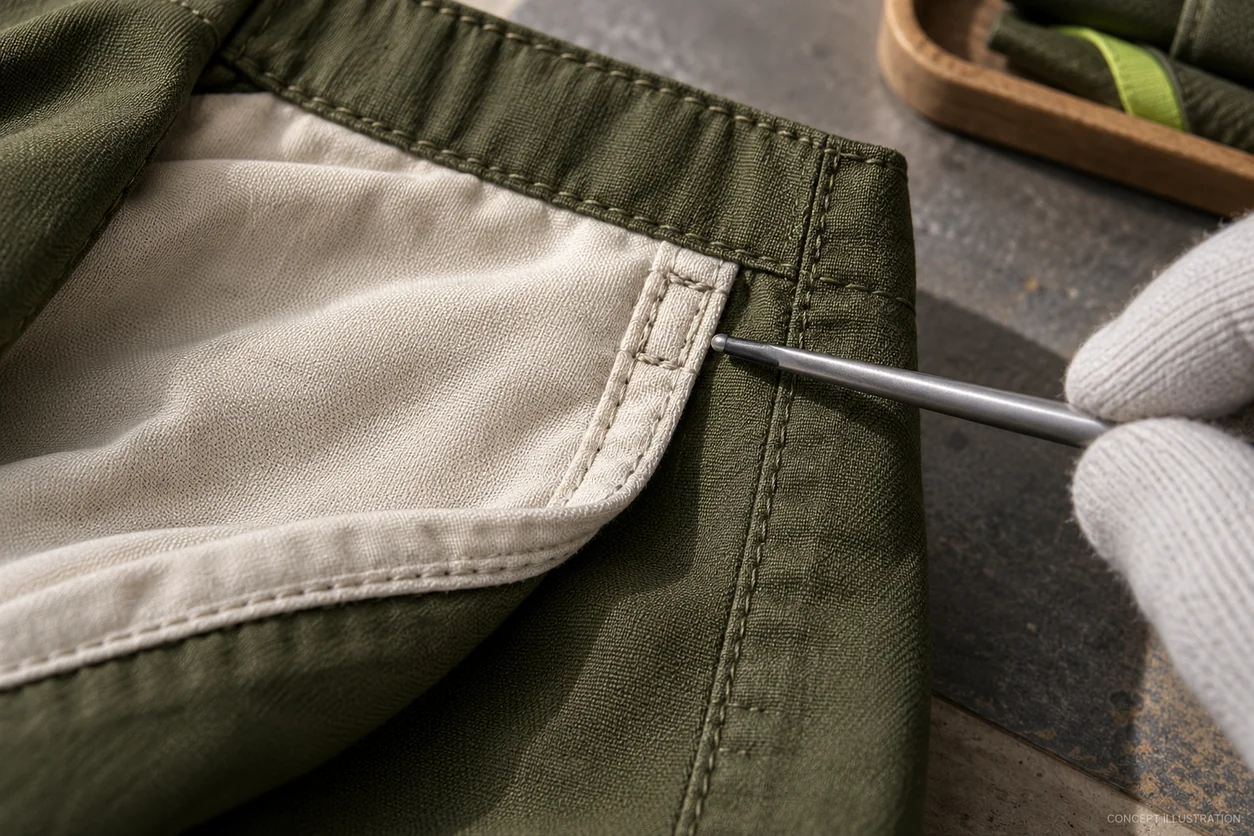
Avoid specifying “more stitches everywhere” as the correction. The supplier should propose a suitable assembly for the actual fabrics and intended use. Record the approved thread, seam and stitch references where relevant, but do not borrow a universal stitch count, seam allowance or reinforcement size from an online example.
For formal evidence on a woven sewn seam, ASTM D1683/D1683M's public scope describes seam-strength testing and explicitly limits what that test establishes about wear. Ask a competent testing provider whether its scope fits the proposed assembly and requirement. Do not apply a woven-seam result automatically to knit shorts, a closure or the complete pocket, and do not describe a visual check as that test.
Review access, carrying and care as distinct checks
Use a repeatable wearing sequence
Begin with pockets empty. Record the shorts size, material, revision and waistband position, then photograph the front, side and reverse construction. This establishes a useful reference before an item changes the outline.
Insert the identified item, stand normally, sit on an ordinary chair, retrieve it, and return to standing. Add another relevant action only if the brief calls for it. Keep the same item and sample identifiable throughout. These are practical sample observations, not a standardized retention or durability test.
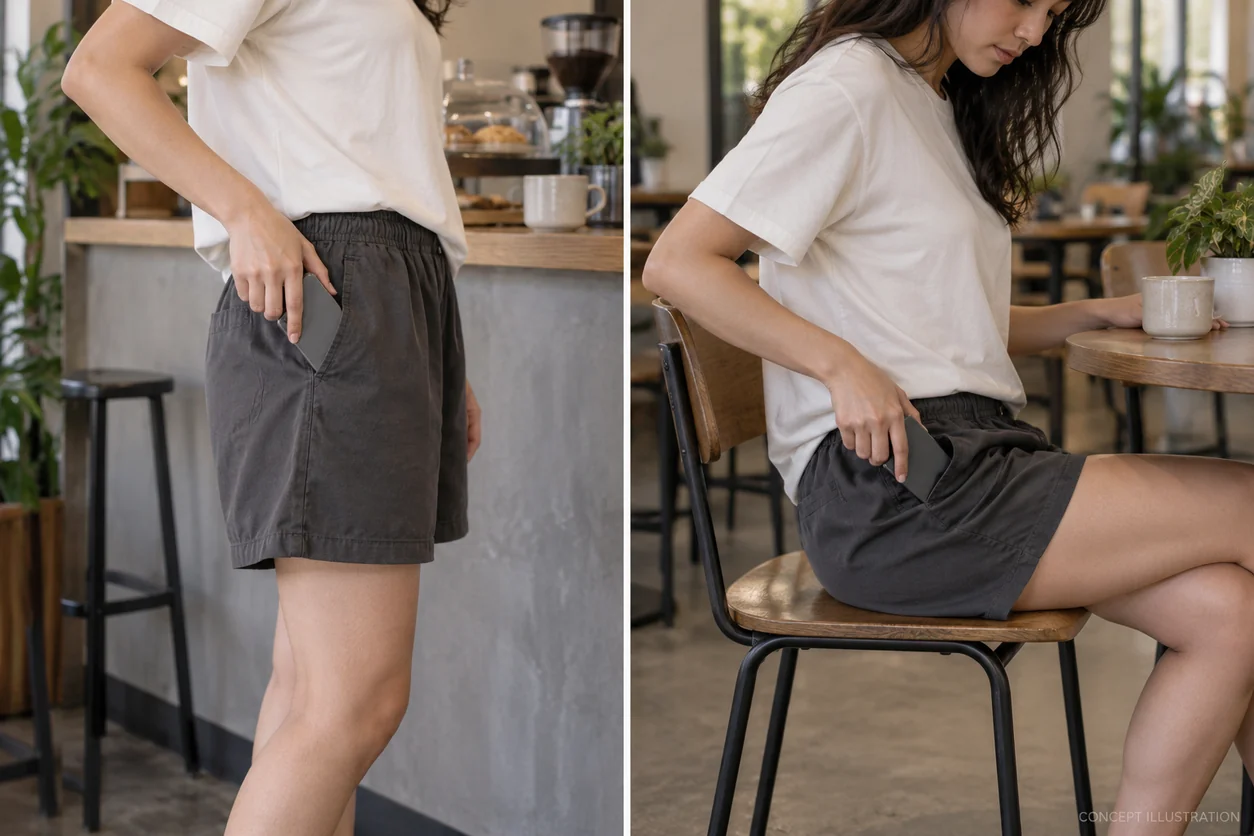
Check the entrance and usable space together. Can the item enter and leave in the intended way? Where does it settle? Does the opening remain as intended, does the bag show beneath the hem, and does the item create an unacceptable outline? Record the wearer's feedback about pressure or restriction. A favourable standing photograph does not answer the seated access question.
For a required retention outcome, agree the situations and acceptance criteria before reviewing the sample. Report any actual item movement or loss during those checks. Do not generalize a short fitting observation into a promise that objects will remain inside during every activity.
Compare the worn outline with the pocket empty and then in use. That is different from comparing two shorts with different bag materials, openings and patterns. If several details change at once, identify the result as another complete garment proposal; do not attribute it to one material alone.
Keep care observations tied to the complete garment
Agree the relevant care procedure with the supplier and use the proposed garment care instructions. Retain initial and after-care records for the same identified construction. Inspect the bag, opening, attachments, edge finish, closure and worn outline in the relevant condition.
Look for a change in appearance or function that needs investigation: an opening that no longer lies as approved, a bag that pulls at an attachment, a visible seam issue or a closure that behaves differently. Record what changed without assuming a cause. Different body and bag materials should be reviewed together in the complete sample.
AATCC TM150's public summary concerns garment length and width changes after home laundering and notes that some stretch fabrics may fall outside its application. A dimensional-change record is not, by itself, a pocket-retention, closure or seam-durability result. If formal testing is required, agree the appropriate methods, specimens and acceptance criteria with the testing provider.
No particular wash cycle, pass threshold or carrying load is prescribed here. Those belong to the actual specification and evidence plan. Keep practical fitting notes and formal test reports separately labelled so a later buyer can see what was approved.
Send a pocket schedule, not a general “looks fine”
A concise schedule can keep the hidden decisions visible. For each pocket reference, retain:
- The location, intended job, opening type and chosen closure.
- Defined opening and finished bag measurements, with their methods and units.
- Body and bag material references, facing treatment and relevant trim identification.
- A drawing or inside photograph showing attachment, edge finish and specified reinforcement.
- The exact item and wearing conditions reviewed, with initial and any after-care records.
- The sample revision approved and any size-range or testing requirement still outstanding.
This is a specification record, not a substitute for reviewing the sample. Decide how the opening, bag and attachment should be handled across the intended sizes. A front pocket approved on one wearer and one size does not establish suitable access for every size. Ask which further samples or construction checks are needed.
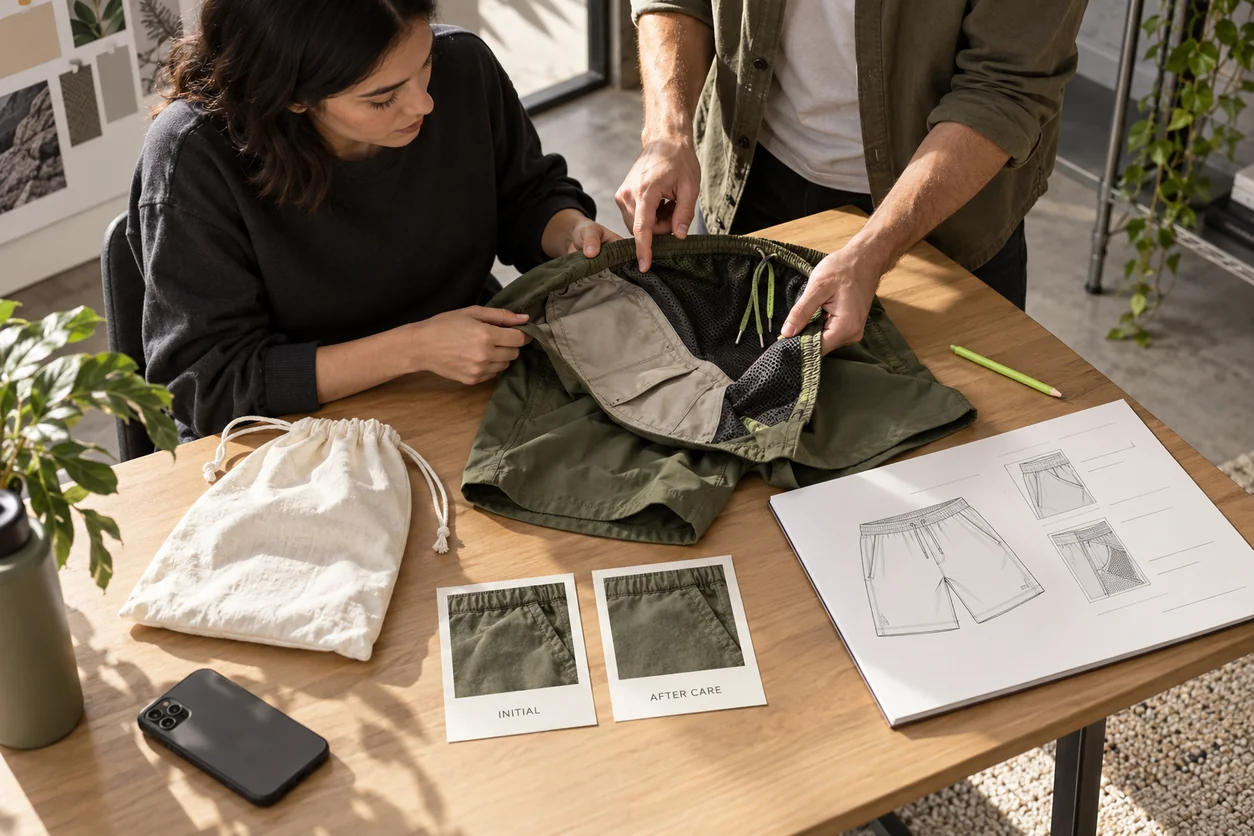
Use feedback that points to a visible problem and a reviewable next step:
| Observation on the identified sample | Focused request | Evidence needed next |
|---|---|---|
| The phone can enter while standing but is awkward to retrieve while seated | Review the opening and bag arrangement for the agreed item and wearing positions; retain the accepted exterior outline where possible | Revised sample with comparable standing and seated access records |
| The pocket bag appears below the hem when the intended item is inside | Explain a bag-shape or attachment revision that still accommodates the item | Inside view and worn side view with the same item |
| A specified opening corner has missed stitches | Correct that location to the agreed assembly and inspect the corresponding construction elsewhere | Identified revised detail and appropriate additional checks |
| The opening appearance changes after the agreed care procedure | Investigate the complete material and construction combination before proposing a correction | Traceable initial and after-care records for the revised sample |
For an illustrative olive-short brief, the buyer might write: “P1 and P2 must accommodate the identified phone with its case. The outside opening shape is accepted. Please show the internal bag dimensions and attachment drawing, then supply comparable standing and seated access views. The present bag appears below the hem with that item inside; explain the proposed revision and retain the accepted appearance where possible.”
This asks the maker to solve an identified problem without pretending to diagnose the pattern or seam engineering. Our cargo pocket placement guide covers the separate exterior position and access references if a cargo-style detail is part of the shorts design.
Questions about shorts pocket construction
Does a deeper pocket always hold a phone better?
No. Review the entrance, finished usable space, attachment, item and wearing situation together. Greater depth alone does not establish access or retention, and a revised bag still needs to work with the shorts hem.
Is mesh always the best pocket-bag material?
No material name establishes the result. Identify the proposed mesh or other fabric, then review its appearance, feel, assembly and required evidence on the actual shorts. Avoid a cooling, drying or strength claim without relevant support.
Do all pocket openings need the same reinforcement?
No universal arrangement is prescribed. Ask the supplier to explain the chosen treatment for the particular fabric, opening and use requirement, retain an approved example, and obtain formal evidence when the brief requires it.
Can I approve the pockets from outside photographs?
Exterior views help assess appearance. They cannot show every bag seam, attachment or concealed edge. Ask for inside photographs and inspect the physical assembly alongside worn access and item checks.
Bring the hidden details into the approval brief
For your next sample, identify each pocket's job and carrying item, define its opening and usable space, and request a clear inside view. Record material, attachment and closure decisions separately, then review the completed shorts in the intended wearing and care conditions. Keep unresolved requirements visible before approving bulk production.
Athletic Rush develops custom apparel from Sialkot, Pakistan. Explore our streetwear shorts development page, then send your pocket drawing and sample requirements to kamran@athleticrush.co or WhatsApp +923279008337.