 Sialkot, Pakistan
Why can two similar-looking custom hoodies receive different prices? A quotation covers a particular garment specification and order scope, not just the word “hoodie.” Before comparing amounts, identify the fabric, finished shape, hood and pocket construction, trims, decoration, quantity breakdown and packing. Then confirm which development and delivery costs are included.
For a clothing brand, the useful question is not “What is your cheapest hoodie?” It is “What will this exact hoodie cost to develop and produce, and what changes if we revise one detail?” A lower quotation may describe a genuinely simpler garment, a different material, fewer services, or an unresolved assumption. You need the written scope to tell the difference.
This guide uses three named examples—a relaxed pullover, a full-zip layer and a decorated heavyweight hoodie—to show where to look. It does not provide Athletic Rush prices, minimum quantities, fixed surcharges or a promise that a particular change will save money. Those need a quotation for the actual project.
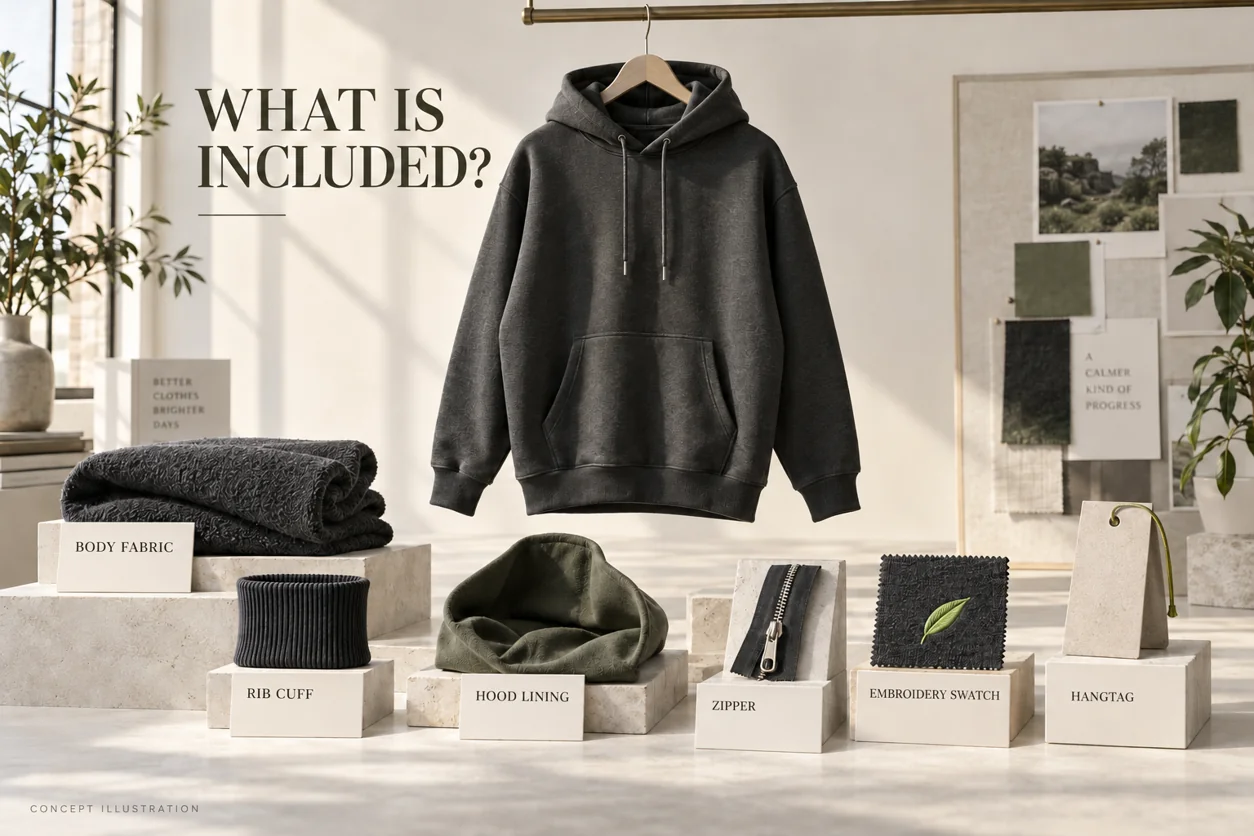
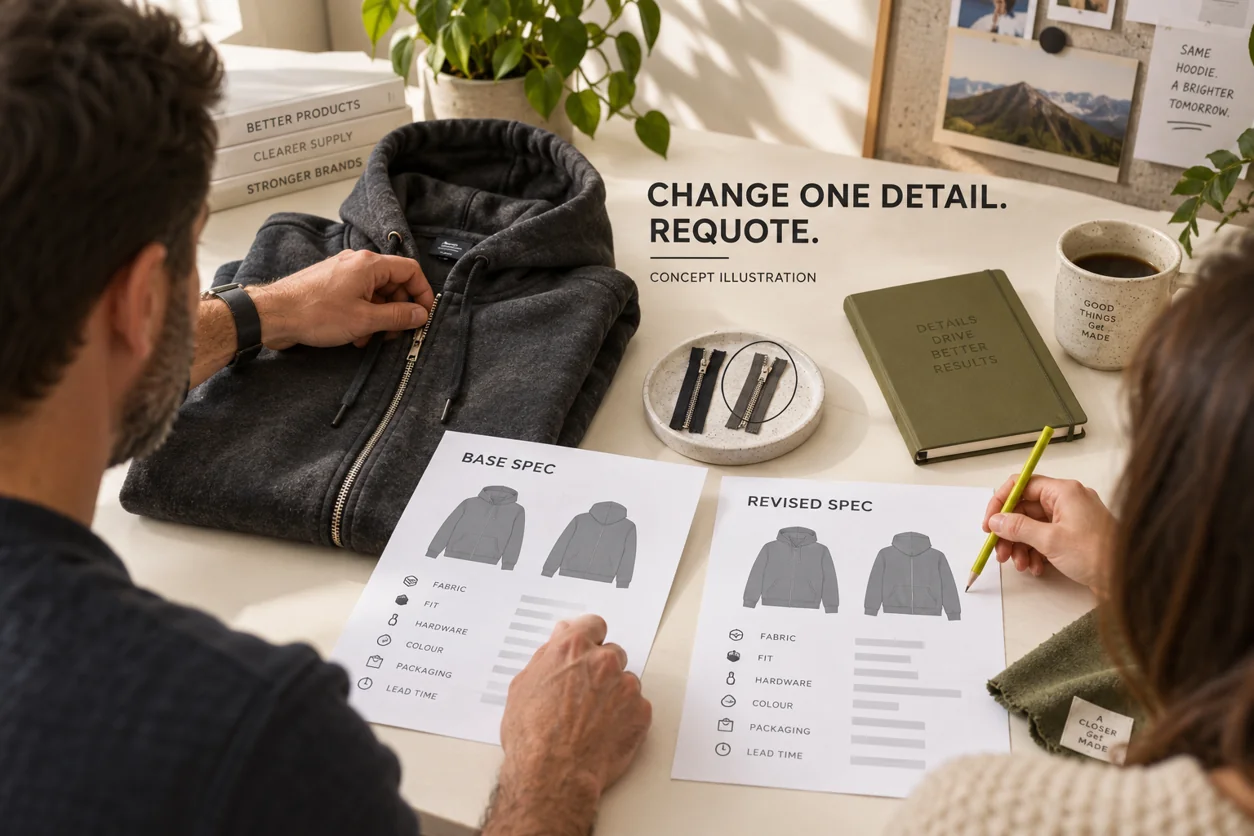
All six images are original conceptual illustrations. They are not photographs of current stock, actual quotations, customer orders or measured production tests.
1. Fix the garment specification before comparing the price
A front-view mockup communicates style, but it leaves many cost-relevant decisions open. Two charcoal pullovers can look similar on a screen while using different body fabrics, hood linings, rib, pocket finishing and artwork processes. Ask the supplier to identify what has been assumed, especially when you have not yet selected a physical reference.
Start with one versioned specification. Name the style, attach the latest drawing and measurement chart, identify materials and list undecided details. Give alternatives their own names, such as “A: self-fabric hood lining” and “B: separate lining material.” This makes it possible to request two clear offers instead of receiving one ambiguous price.
Fabric: a weight number is not a complete material description
Record composition, knit construction, finish, colour reference and the intended fabric weight, with the agreed method for checking it. Add a physical swatch reference when available. A buyer asking only for “heavy fleece” has not fully described the material to be quoted.
Do not assume equal fabric weight means equal material, appearance, hand feel or garment performance. Likewise, do not use a higher weight as proof that the more expensive garment is better for your customer. Review the selected material in the intended hoodie and agree the sample and care checks that matter to the product.
The garment shape matters to the brief too. Include the actual body and sleeve dimensions, hood construction, size range and size quantities. Ask the manufacturer to assess material requirements from those details. Guessing consumption from the garment's name or chest graphic gives you a weak basis for price comparison.
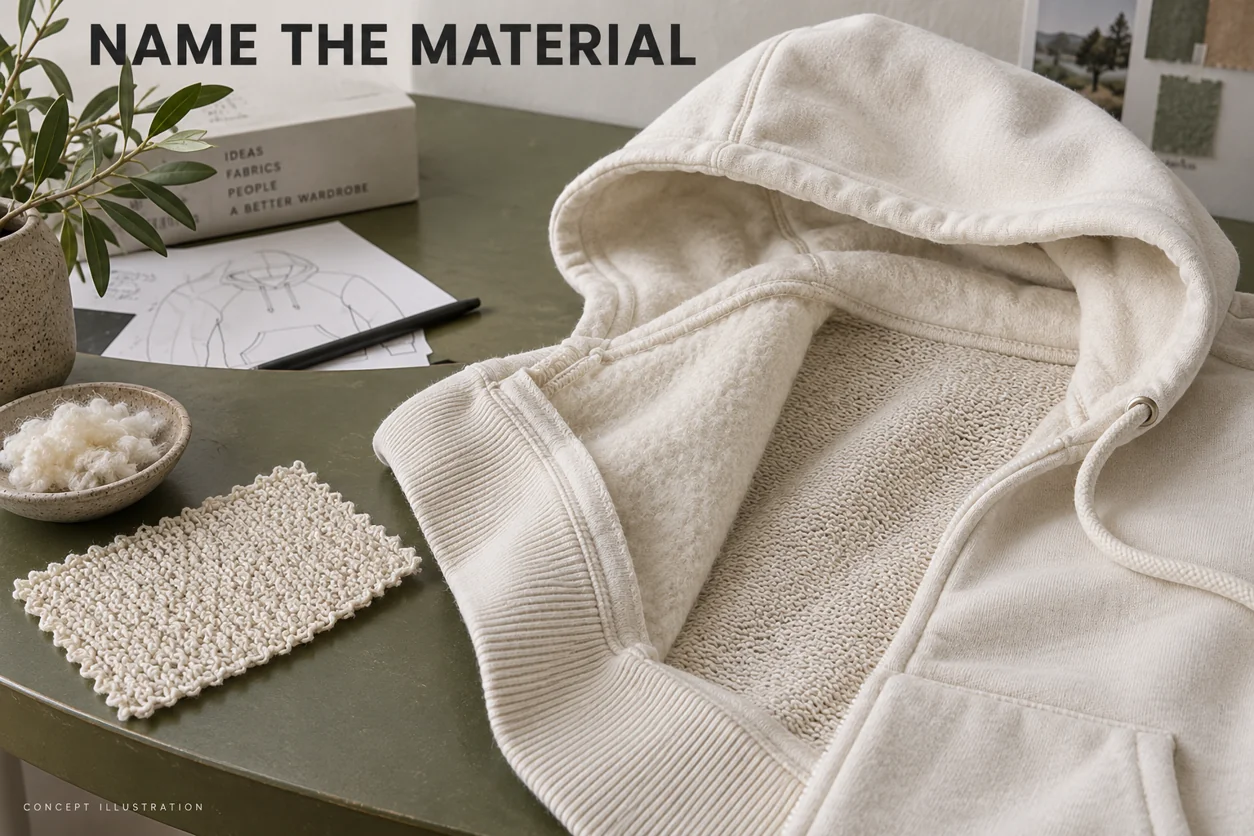
For example, a relaxed pullover with a longer body and a double-layer hood should not be compared with a shorter, differently constructed pullover as though only the price changed. First make the differences visible. You can then decide whether the more extensive specification is useful to your customer.
Construction and trims: inspect what the mockup leaves out
Turn the hoodie inside out and look at the places where parts meet. Specify the hood layers, pocket arrangement, seam and edge finishing, rib cuffs and hem, drawcord treatment and any openings. If there is a zipper, identify the required opening, component choice, length reference and appearance rather than write only “zip included.”
A full-zip hoodie and a closed-front pullover are different construction briefs. The opening, zipper attachment, pockets and artwork placement need to work together. Do not assume a universal surcharge for converting one into the other; request a revised specification and price for the complete garment.
| Hoodie example | Detail that must be explicit | Question for the quotation |
|---|---|---|
| Relaxed pullover | Body measurements, hood layers, pocket and rib specification | Which exact materials and construction are included? |
| Full-zip layer | Zipper components, opening, attachment and pocket layout | Does the offer cover the complete proposed zipper and finished garment? |
| Decorated heavyweight hoodie | Identified fabric, artwork method, finished size and locations | Which decoration and development steps are included for this version? |
| Any of these styles | Labels, packing, size-colour quantities and sample scope | What is included, excluded or still provisional? |
Use the table to expose differences, not to rank the examples from cheap to expensive. An actual quotation depends on the complete brief and the supplier's confirmed terms. Where a detail is optional, ask the supplier to price the named alternatives rather than silently substituting one.
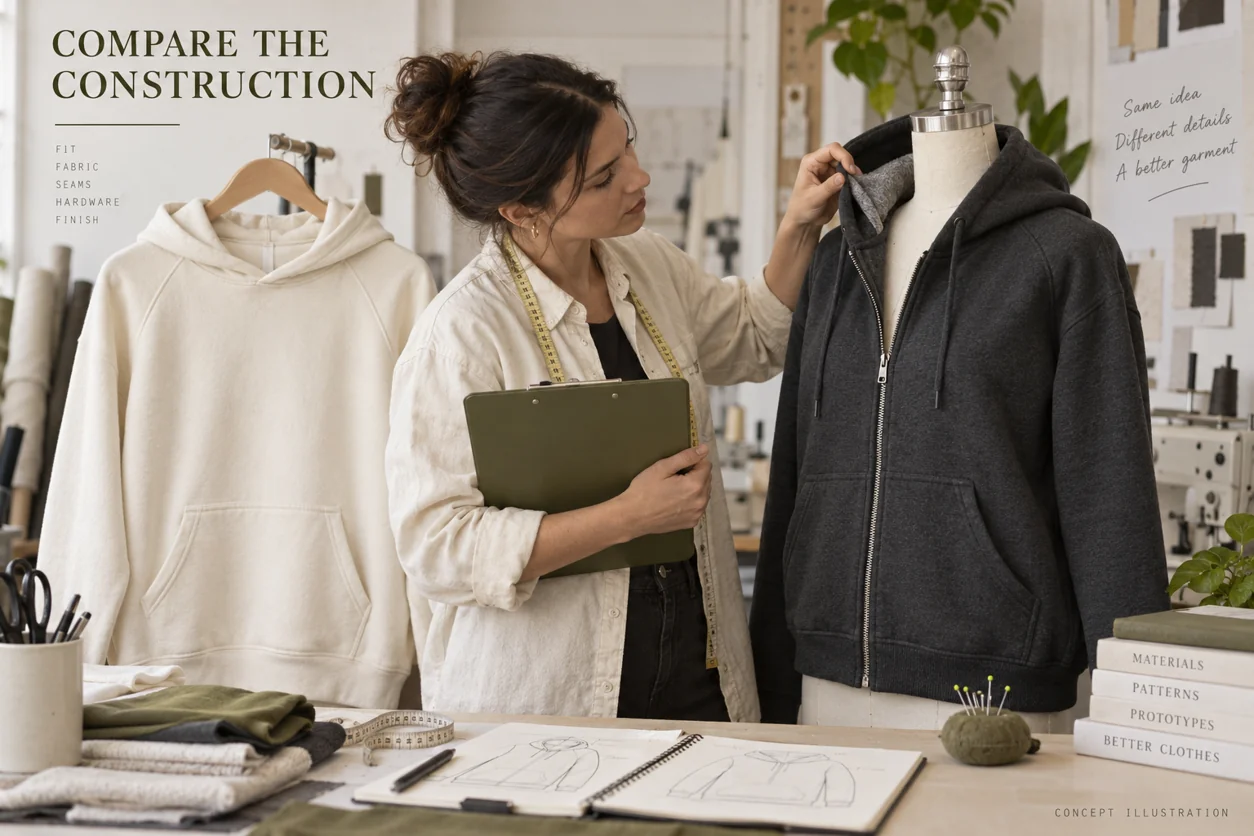
Our hoodie zipper selection guide helps define the front opening, while the double-layer hood guide explains why a lining description needs more than a generic label.
Decoration: the artwork file is only the starting point
Send the actual artwork and state the intended method, finished dimensions, colours and placement on each style. Identify the number of decorated locations. A chest mark alone is a different scope from the same mark plus a back graphic and sleeve decoration.
For embroidery, ask the supplier to assess the actual design and include any required digitizing and sample work in the offer. Do not estimate a finished price from the design's outline dimensions alone. For printing, specify the requested result and ask what setup, sampling and production process the supplier proposes for that artwork on that material.
Keep technical decisions connected to the physical result. Reducing a design or changing its method may change its appearance and feel, not merely the quotation. Request a sample of the proposed alternative before accepting it as equivalent to the original idea. A digital mockup cannot establish the finished texture or care result.
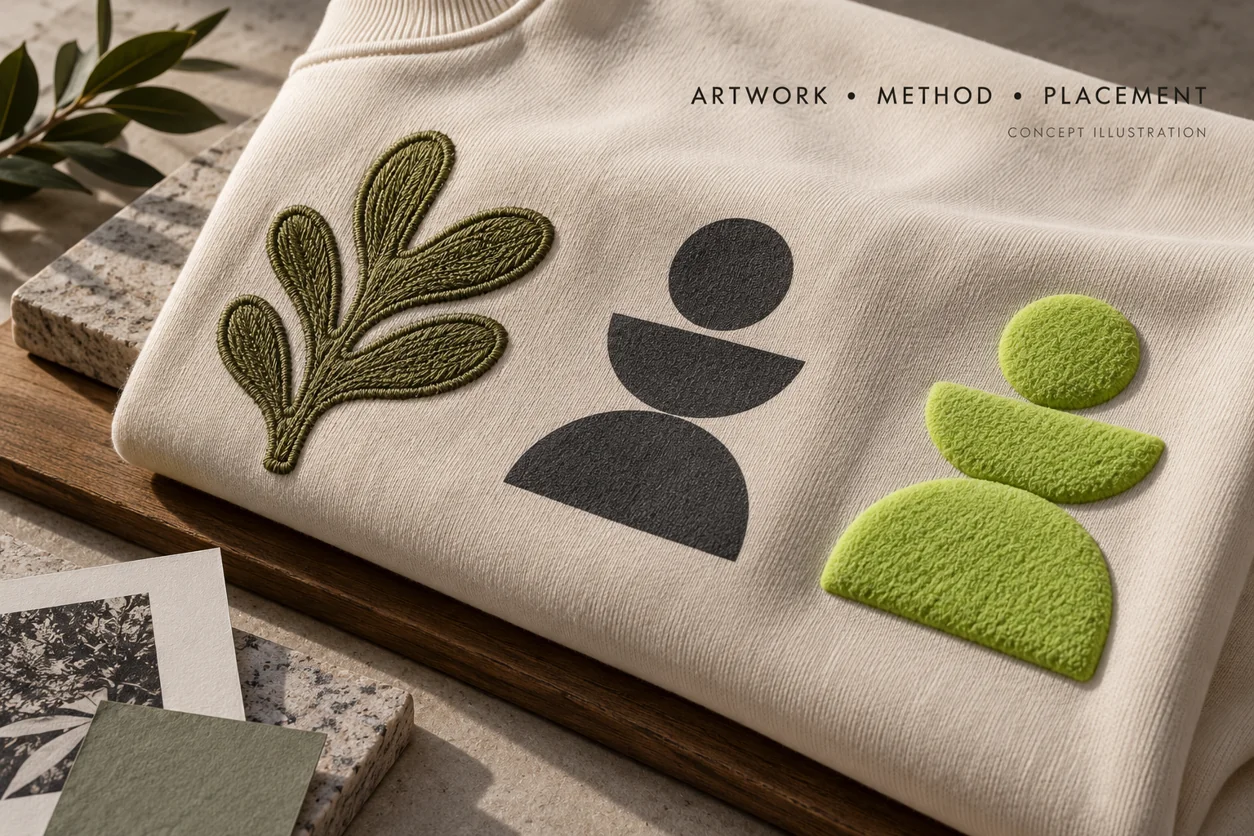
The puff-print sample approval guide provides checks for a raised effect. It does not supply a rate card, and neither does this article. Keep the decoration quote tied to the exact artwork version and garment material.
2. Separate the garment amount from the rest of the order
Even a clearly specified hoodie can be quoted on different commercial scopes. One offer might include individual packing and another might not. Sample charges, setup work or transport may appear separately. Ask for the structure of the offer before calculating a per-piece comparison.
Send quantities by style, colour and size
A total quantity is useful, but it is not the whole allocation. Provide the proposed breakdown and ask how any minimums apply: to a style, colour, fabric, decoration or another grouping. If you change the breakdown, ask whether the original quotation still applies.
Do not assume that doubling the order will halve the price, or that every size has the same quoted treatment. Ask for the prices at the quantities you are genuinely considering and record any conditions. Extra units create a different purchasing commitment even if the quoted unit amount falls.
Keep sample quantities separate from bulk quantities. Confirm which samples are included, how revisions are handled and whether any charge is credited later. A possible credit is not a confirmed credit until its conditions are written into your offer.
Include labels, finishing and packing in the brief
Describe the brand label, care and composition information supplied for the product, hangtags, folding method, individual packing and carton instructions. Identify who provides the artwork and information. If there is a retail packing requirement, show an example and ask the supplier to confirm the proposed materials and process.
Different packing options should be presented as alternatives with a defined purpose. For example, compare an individual bag and label arrangement with a paper sleeve arrangement only after deciding what handling and presentation the product needs. Do not remove a protective or identification step just because it is absent from the hero photograph.

Make the delivery basis visible
For an international order, ask what delivery scope the amount covers, where the named delivery point is, and which items remain your responsibility. Confirm currency, quotation validity and any separately charged services. Do not label a factory-side garment amount as a delivered total without checking the missing components.
The International Chamber of Commerce's Incoterms® 2020 overview explains that these rules allocate costs, risks and obligations between buyer and seller. If an offer uses an Incoterms rule, record the exact rule, named place and version; have the supplier and your logistics adviser clarify its application to the shipment. A shorthand such as “shipping included” does not resolve every responsibility.
You do not need to guess freight or import charges to make the comparison useful. Put an unresolved item in an “awaiting confirmation” column. Treat the resulting total as incomplete until the responsible party confirms it. This is more reliable than inserting a convenient estimate and later forgetting that it was provisional.
| Line to confirm | Record it as | Avoid this assumption |
|---|---|---|
| Garment production | Price and scope for the exact style and allocation | Every hoodie in a mockup is the same product |
| Development and setup | Included, separate, credited under stated conditions, or unresolved | Every sample or artwork revision is free |
| Labels and packing | Named materials and packing instructions | Packing in one offer matches another automatically |
| Delivery and related services | Stated basis, named place and responsible party | A unit garment amount is the final delivered cost |
| Optional changes | Separate priced version with its own assumptions | An alternative preserves every original feature |
Compare totals using the same included items
A simple worksheet can use the structure: garment quantity multiplied by its quoted unit amount, plus separately quoted development, packing and delivery items that are not already included. Use the supplier's actual line items and avoid counting the same charge twice. Keep unresolved amounts visible instead of treating them as zero.
For a mixed order, calculate each style or quoted group separately and then add them. Do not apply the lowest unit price in the offer to all garments. If you calculate an average per piece, state the quantity and included scope beside it so that the number can be interpreted correctly.
This worksheet organizes information; it does not establish a final landed cost or choose a commercial contract for you. Confirm the relevant delivery and import details for the actual order with the parties handling them.
3. Reduce scope deliberately, then approve the revised sample
When a quotation is above the intended budget, ask which defined changes can be reviewed. Start with the customer's reason to buy the hoodie. A signature shape or comfortable wearing result may be central to the product, while a second decoration location or elaborate presentation pack may be optional.
List what must remain unchanged and what you are willing to compare. Then ask for one named revision at a time, or a clearly documented package of changes. This lets you understand what the new amount actually buys.
A practical revision example
Suppose your concept is a charcoal relaxed pullover with a lined hood, chest embroidery, a large back decoration and individual presentation packing. You want to explore a simpler version without losing the intended silhouette.
Ask for a revised offer that keeps the approved fit, body fabric, hood construction and chest artwork, removes only the back decoration, and lists the packing option separately. The supplier can confirm whether that revision changes the amount and by how much. This example makes no claim about a particular saving.
If the supplier instead proposes a different fabric or decoration process, treat it as a new option and review the physical result. Do not write “same quality, cheaper” before you have agreed what equivalence means and checked the garment against it.
Inspect the garment associated with the accepted quote
Link the quotation version to the sample identifier. Review the finished measurements and intended fit, material reference, hood and pocket construction, trims, artwork placement and inside finishing. Confirm the care observations or tests agreed for that product. Check the proposed labels and packing too, not just the hoodie front.
If the sample differs from the quote, resolve the difference in writing before treating both as approved. State whether the garment must be corrected to the existing brief or whether the brief and quotation will change to match a newly accepted option. Do not leave the factory and buyer working from different versions.
Your final record should identify the accepted style, material and artwork versions, quantity allocation, sample reference, packing, quoted inclusions, exclusions and unresolved actions. A short clear record is more useful than a long message thread in which several prices refer to different garments.
Questions clothing brands ask about hoodie pricing
Does a heavier hoodie always cost more?
Do not use weight alone to predict a finished quotation. Ask for the actual material, garment specification, quantity allocation and included scope. Compare physical samples for the intended use, then compare written offers for those samples.
Is a zip hoodie always more expensive than a pullover?
A zip hoodie introduces a specified opening and zipper-related construction, but there is no universal price difference in this guide. Request complete quotations for the two designs rather than apply an assumed surcharge.
Can I get a useful estimate before the sample is finished?
You can request an estimate tied to the information available, provided assumptions and provisional items are stated. Ask what must be settled before the amount can be confirmed. Update the quotation when the approved specification changes.
What should I send to get a clearer quote?
Send a drawing or reference, measurement and fit brief, material direction, hood and pocket details, trims, artwork with finished dimensions and locations, style-colour-size quantities, label and packing requirements, and the delivery destination. Mark undecided items and request named alternatives instead of asking the supplier to guess.
Turn your hoodie idea into a comparable brief
Before choosing a price, make sure you can point to the garment and services it describes. Keep the base specification, identify optional changes and connect the accepted quotation to a checked physical sample. That gives your brand a clear basis for deciding which details are worth retaining.
For development with Athletic Rush, explore our hoodie manufacturing options, then send your specification and quantity breakdown to kamran@athleticrush.co or WhatsApp. Ask for the included scope and any unresolved choices to be stated with the quotation.