 Sialkot, Pakistan
 Worldwide enquiries

Plan a first T-shirt collection around one defined customer, a coherent visual idea and a manageable assortment. Decide the garment fits, colours, artwork, size range and quantities together before requesting production quotations. A collection is ready to order when each proposed product has a clear specification, an approved sample and a realistic route to sale—not simply when the graphics are finished.
This guide is for clothing-brand buyers turning an early streetwear concept into a first production brief. The example allocations below are planning exercises, not demand forecasts, minimum order quantities or Athletic Rush quotations.
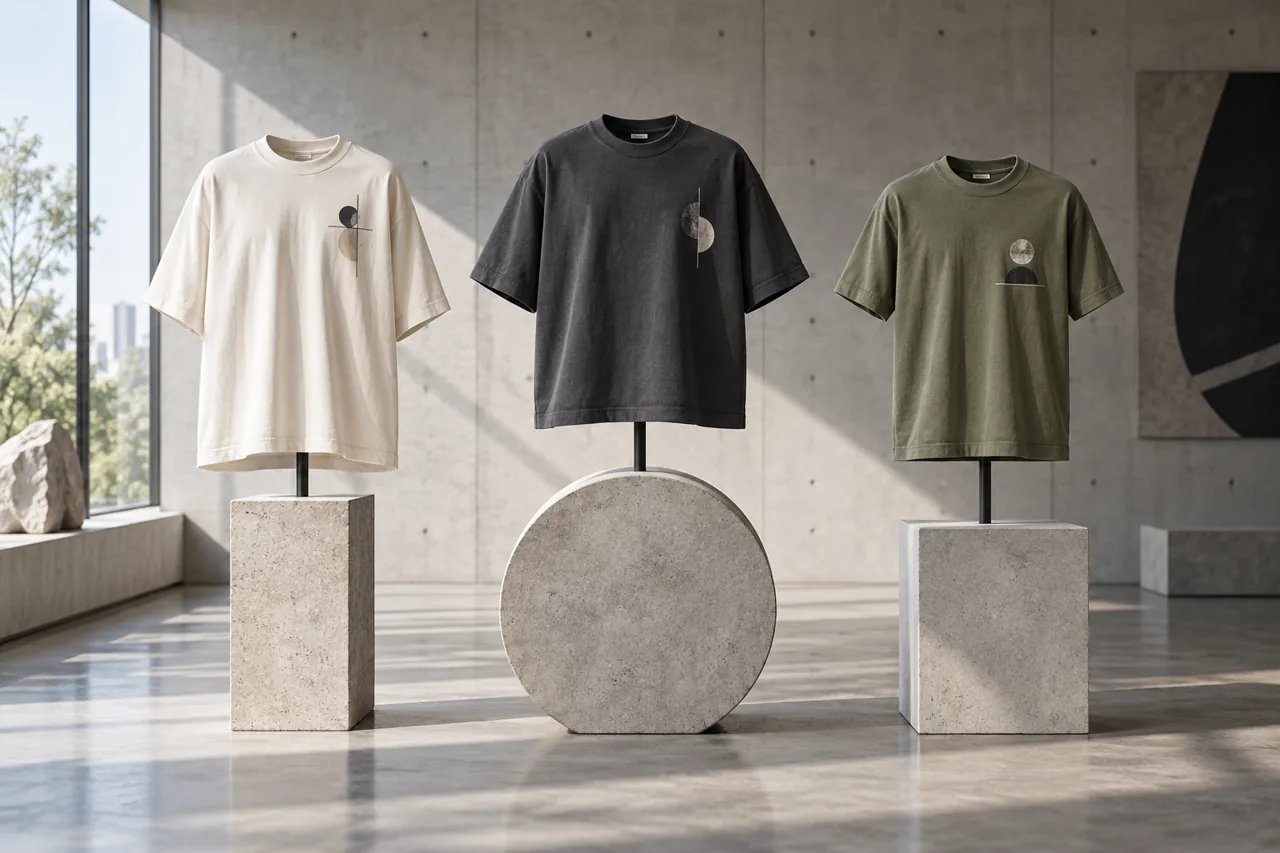
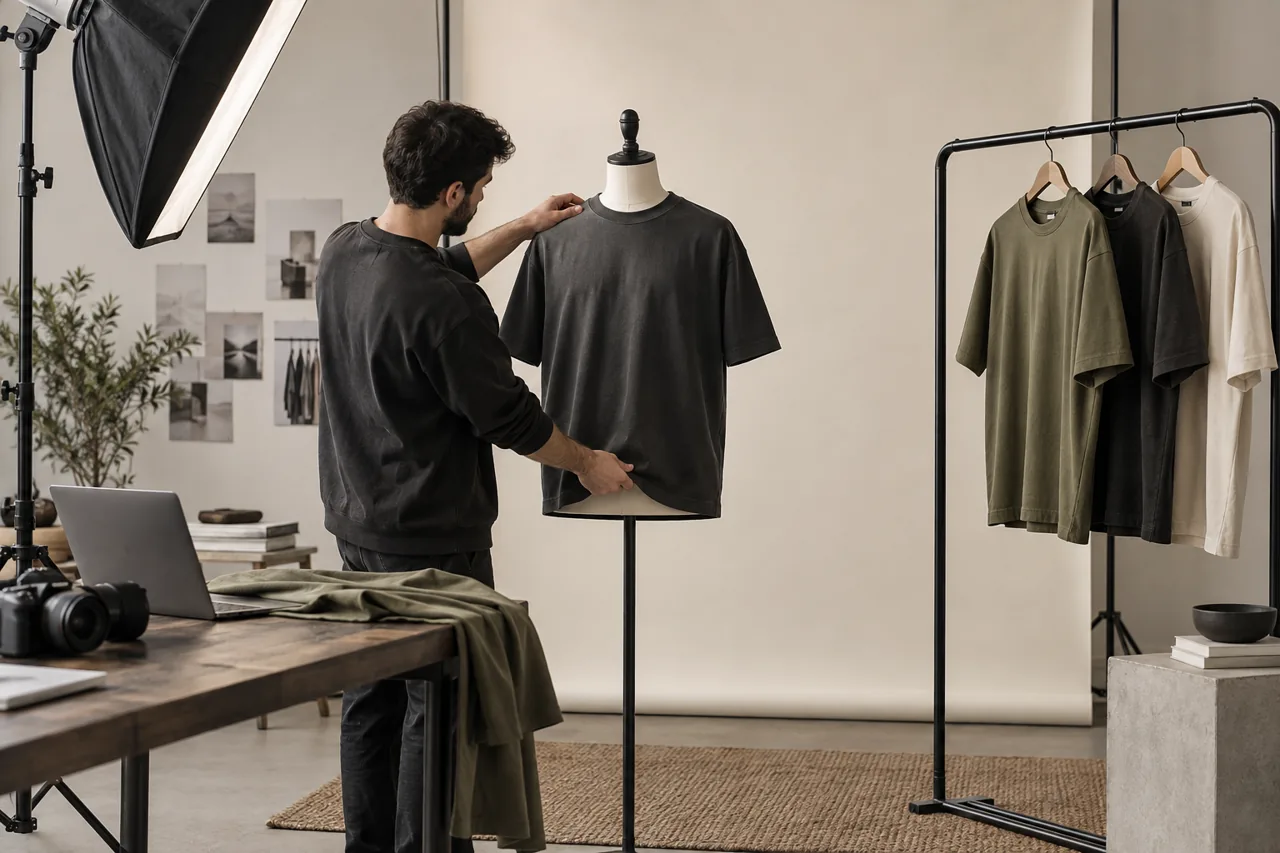
All six original AI-generated illustrations are conceptual planning scenes. They do not show Athletic Rush inventory, employees or completed customer orders.
Start with a customer and a reason to buy
Write a short description of the person you want to serve. Consider how they dress, when they wear a T-shirt, what fit they prefer and what they expect from a new brand. “Everyone who likes streetwear” does not help you decide between a short boxy body and a longer oversized silhouette.
Turn that description into a use case. A collection for layering under overshirts may need a different length and graphic position from a summer statement tee. Identify the visual promise too: understated everyday pieces, bold graphic storytelling or another specific direction. You do not need to cover every direction in the first launch.
Use evidence you can actually obtain. Ask prospective customers to compare sample fits, record recurring questions and distinguish expressions of interest from paid demand. Likes and compliments can guide discussion, but they are not a quantity commitment. Keep a note of what you know and what remains an assumption.

Create a one-paragraph collection brief before making a large artwork library. Include the intended wearer, use case, fit direction, colour mood, selling channel and the decision the first launch is meant to test. That paragraph becomes a useful filter when attractive but unrelated ideas appear later.
Give each style a role
An assortment should make sense as a group. A restrained entry piece can sit beside a stronger graphic item if both share the collection’s identity. Adding another tee simply because another graphic exists can increase sampling and inventory work without making the offer clearer.
One practical approach is to assign a role to every proposed style. The following is an example, not a required three-product formula.
| Proposed role | What it contributes | Question to resolve before ordering |
|---|---|---|
| Everyday foundation | An accessible expression of the brand | Does the fit and feel justify buying it without a large graphic? |
| Main graphic piece | The clearest statement of the collection idea | Is the artwork distinctive and feasible on the chosen garment? |
| Deliberate variation | A meaningful alternative in fit or visual treatment | Does it serve a different preference, or merely duplicate another item? |
Remove a proposed style if you cannot explain its role. Equally, do not force different fits into the launch just to make the range look larger. A single well-developed fit with a coherent design story may be easier to explain and manage than several underdeveloped silhouettes.
For fit decisions, use measurements and physical samples. Names such as oversized and boxy are starting points for discussion, not complete specifications. Link the fit choice to your T-shirt size chart, so the customer-facing description and manufacturing brief refer to the same garment.
Count sellable variants before expanding colours
Shopify’s product documentation distinguishes options such as size and colour from their purchasable combinations, or variants. Keep that distinction in your planning sheet even if you sell through another platform.
A style is not the same thing as a stock-keeping unit. For planning, treat each separately sold combination of style, colour and size as its own variant. Three styles offered in two colours and five sizes create thirty variants if every combination is offered. That arithmetic does not tell you how many units will sell; it tells you how many separate inventory positions you are creating.
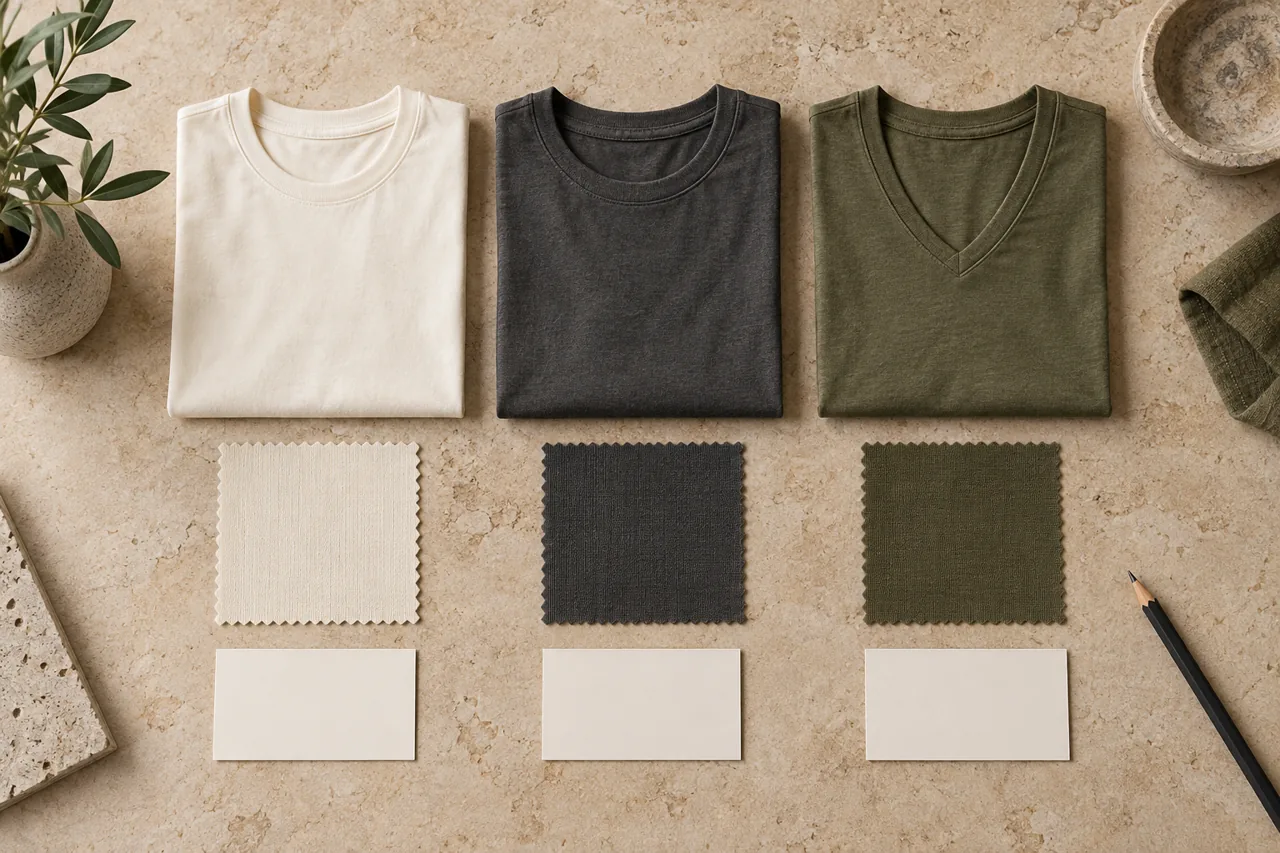
Compare a broad assortment with a narrow one before committing. More colours can offer choice, but each additional colour also needs specifications, imagery, allocation and potentially its own sampling discussion. Do not assume the manufacturer’s minimum applies to the total order: ask whether it applies per style, colour, print design or another grouping.
Keep the initial colour story intentional. Check that the artwork reads on every proposed garment colour, and identify any print-colour changes required. A graphic approved on ivory is not automatically an approved version on charcoal. If a colour adds little to the collection, consider removing it before paying for development.
Make a simple assortment sheet with one row for every proposed style-colour combination. Include its role, fit, fabric reference, artwork revision, offered sizes and planned quantity. Mark unresolved decisions visibly. A beautiful mood board cannot replace this working document.
Develop the garment before freezing the graphics
Choose a fabric and garment construction that support the intended product. Describe the desired hand feel, drape and visual weight, then ask for suitable physical options rather than assuming one fabric weight guarantees quality. A supplier’s proposed material needs to be assessed as part of the actual garment.
Review the fit sample separately from decoration where that helps isolate decisions. Confirm body length, chest width, shoulder position, sleeve shape and neckline against your measuring method. Then evaluate the artwork on that silhouette. A graphic may need a different scale or position when the garment proportions change.
For decoration, compare the relevant approach using our screen printing versus DTF guide. The choice should follow the artwork, material, feel and order requirements. Avoid advertising a process as inherently superior before the sample has demonstrated the result you intend to sell.
Record one current specification for each style. If you change the fit, artwork or fabric after a sample review, identify which decisions must be checked again. Version control is especially important when several people send feedback through different conversations.
Allocate sizes using evidence, not equal division
Equal quantities in every size may be convenient to calculate, but convenience is not evidence of customer demand. Use relevant sales history if you have it. For a first launch, document customer feedback, fit sessions or other signals and acknowledge their limitations.
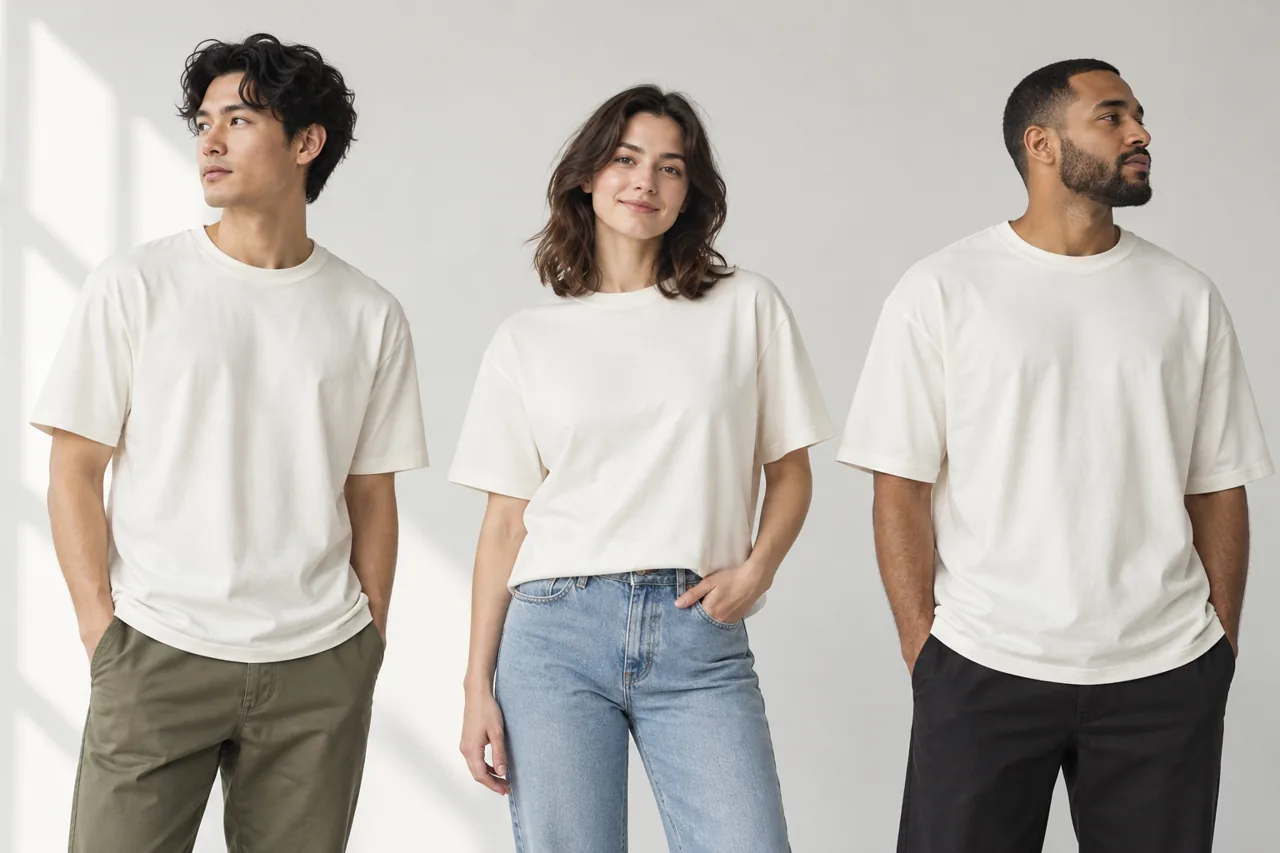
Suppose you are considering 120 units of one style-colour combination across five sizes. Dividing them equally gives 24 units per size. That is one possible allocation, not a recommended size curve. Before accepting it, ask whether your intended customer group and available evidence support equal demand. The correct answer may also depend on which sizes the garment genuinely fits well.
Do not reduce the size range merely to disguise unresolved fit work. Define the range you can develop and describe responsibly, then obtain the necessary sample evidence. Publish a clear measuring guide with the finished garment measurements you have verified. Avoid copying another brand’s chart onto a different pattern.
Ask how the supplier handles size breakdowns, production tolerances and permitted changes before the order is locked. Agree any quantity variation in writing. Keep customer demand assumptions separate from the supplier’s production constraints so you can see why each allocation was chosen.
Build a complete cost and cash plan
Compare quotations against the same brief. A low garment price is not a complete landed-cost comparison if another quotation includes development, labels or packaging. Request a clear description of what is included and what remains additional.
List sample development, production, decoration, labels, packaging, freight and applicable import costs. Then consider selling costs such as payment processing, fulfilment, returns and marketing. The exact treatment depends on your sales channel and destination; obtain current figures from the relevant providers instead of inserting generic percentages.
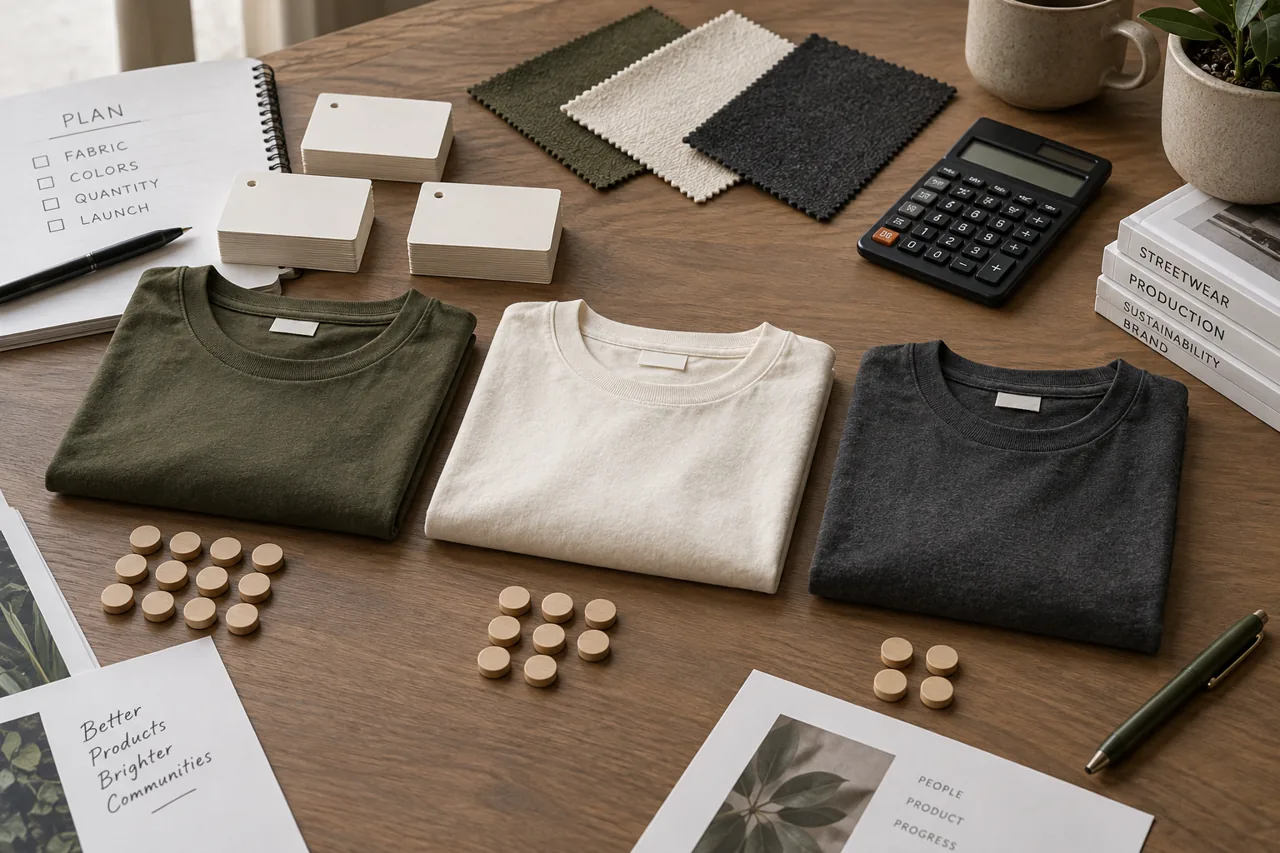
Separate profitability from cash timing. A launch that looks profitable per unit can still create a cash gap if production payments and shipping fall due before customer receipts. Write the payment milestones and expected dates alongside the production plan. Do not use hoped-for sales as if they were money already available.
Use scenarios rather than a single confident forecast. Compare what happens if sales are slower, if one colour sells more quickly than another, or if a sample needs revision. A contingency allowance should have a stated purpose. It does not replace a clear specification or an agreed remedy for a production discrepancy.
Approve samples and set a release gate
Before approving bulk production, identify exactly what each sample represents. Check the garment, artwork version, colour, position, labels and any agreed care assessment. Keep the approved reference and record outstanding points. Our print-sample approval guide provides a detailed process for the decoration review.
| Gate | Evidence to have | Reason to pause |
|---|---|---|
| Assortment agreed | Final style-colour list and size allocation | The proposed offer still changes between documents |
| Product approved | Identified sample and current specification | Material fit, colour or decoration points remain open |
| Order agreed | Scope, quantities, payment and delivery terms | Important costs or responsibilities are undefined |
| Launch prepared | Accurate imagery, measurements and product information | The sales page promises an unverified feature or date |
An approval message should name the style, specification revision and accepted sample. If only the artwork is approved, say so explicitly and keep production approval separate. A deadline should trigger a discussion about options, not a silent decision to skip the sample check.
Ask for a production schedule based on the actual brief and approval date. Work backwards from your intended selling date with the supplier, freight provider and your own receiving process. Leave time to inspect the delivery and correct product information before making firm customer promises.
Prepare the launch around the product you will deliver
Photograph the approved product when creating sales imagery. If you use concept visuals during development, label them clearly and replace or distinguish them before customers rely on them as evidence of the finished garment. Make sure the displayed fit, artwork and colour correspond to the offered variant.
Write product information that answers purchasing questions: fit, verified measurements, material information, decoration, appropriate care and delivery terms. Describe observed qualities precisely. Do not turn an early preference such as “we want a heavyweight feel” into an unsupported specification.
After launch, review results by variant as well as total revenue. Record sell-through, size questions, returns and recurring customer comments. A sold-out size and a slow colour are different signals. Use those findings to decide whether to reorder, revise or discontinue a variant rather than automatically expanding the next collection.
Keep the first launch’s learning objective in view. A controlled assortment makes it easier to understand which decisions worked. Growth can follow evidence; it does not require adding every possible colour or graphic at the beginning.
Frequently asked questions
How many T-shirt designs should a first collection contain?
There is no universal number. Choose the smallest assortment that communicates your idea and serves the intended customer while fitting your development and inventory capacity. Each design should have a clear role and an approved specification.
Can I use one sample to approve every colour and size?
Only if the agreed sampling plan genuinely covers the relevant questions. Different colours, dimensions and decoration combinations may need separate evidence. Ask the supplier what the sample represents and what it does not establish.
Should I take pre-orders before manufacturing?
Pre-orders are a business decision, not a substitute for product development. Before accepting them, understand the platform’s rules and your obligations in the market you sell to. Clearly communicate the product status and delivery terms, and have a plan for delays or cancellations.
What should I send when requesting a quotation?
Send the collection brief, style-colour sheet, size range, quantities, artwork references, material and fit direction, labels, packaging needs and destination. Identify unresolved choices so the quotation’s assumptions are visible.
Turn the collection idea into a manufacturing brief
Explore Athletic Rush streetwear, then send your first-collection brief to kamran@athleticrush.co or discuss it on WhatsApp. Include the customer, assortment, quantities and sample decisions you need to resolve. Request a quotation and timeline for that specific brief rather than assuming general minimums or delivery promises.