 Sialkot, Pakistan
 Worldwide enquiries

A team kit is handled by many people: players, parents, coaches and whoever takes the laundry bag home after a fixture. A useful care routine gives them the same instructions, without assuming that every jersey, printed number and training jacket can be treated alike.
This custom team uniform care guide helps a club organise washing, drying and storage around the instructions supplied with its actual garments. Start with the sewn-in care label and any written guidance for the decoration. If those instructions are missing or appear to conflict, ask the supplier before choosing a treatment.
The practical rule: identify the garment, check its care instructions, then choose the process. Fabric composition alone is not a complete washing instruction. A uniform can also contain trims, elastic, badges, transfers and closures that need to be considered.
1. Read the care label before setting a team routine
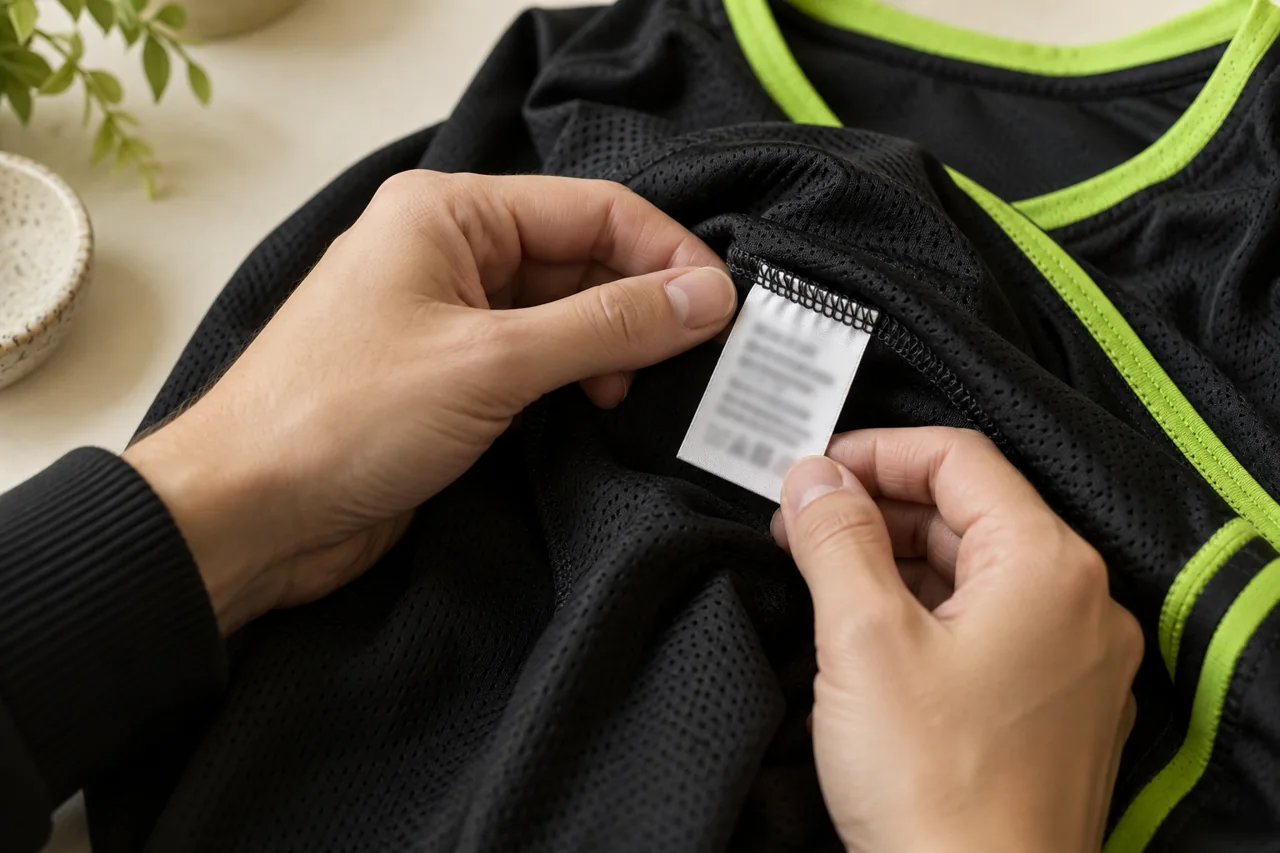
Use the instructions supplied with the finished garment, not a setting remembered from another shirt.
Keep a photograph of the label for each garment type in the club's kit record. A match jersey, warm-up jacket and pair of shorts may need different treatment even when their colours match. Record any additional instructions supplied for names, numbers or badges alongside the label photograph.
Care symbols describe permitted treatments, including washing, bleaching, drying, ironing and professional care. GINETEX explains that its labels communicate maximum permitted treatment; the maximum temperature should be selected from the care label rather than fibre content alone. Use its care-symbol explanation if a symbol is unfamiliar.
For your club, turn the garment-specific instructions into plain language. Avoid a blanket message such as “wash every kit the same way.” Instead, identify which instructions apply to which item. If a label is unreadable, send the supplier the order reference and photographs of the garment so the correct guidance can be located.
Before ordering future kits, ask for the proposed care requirements while comparing samples. Our team uniform fabric guide helps you include practical care questions in the material decision.
2. Sort the kit and identify items needing attention
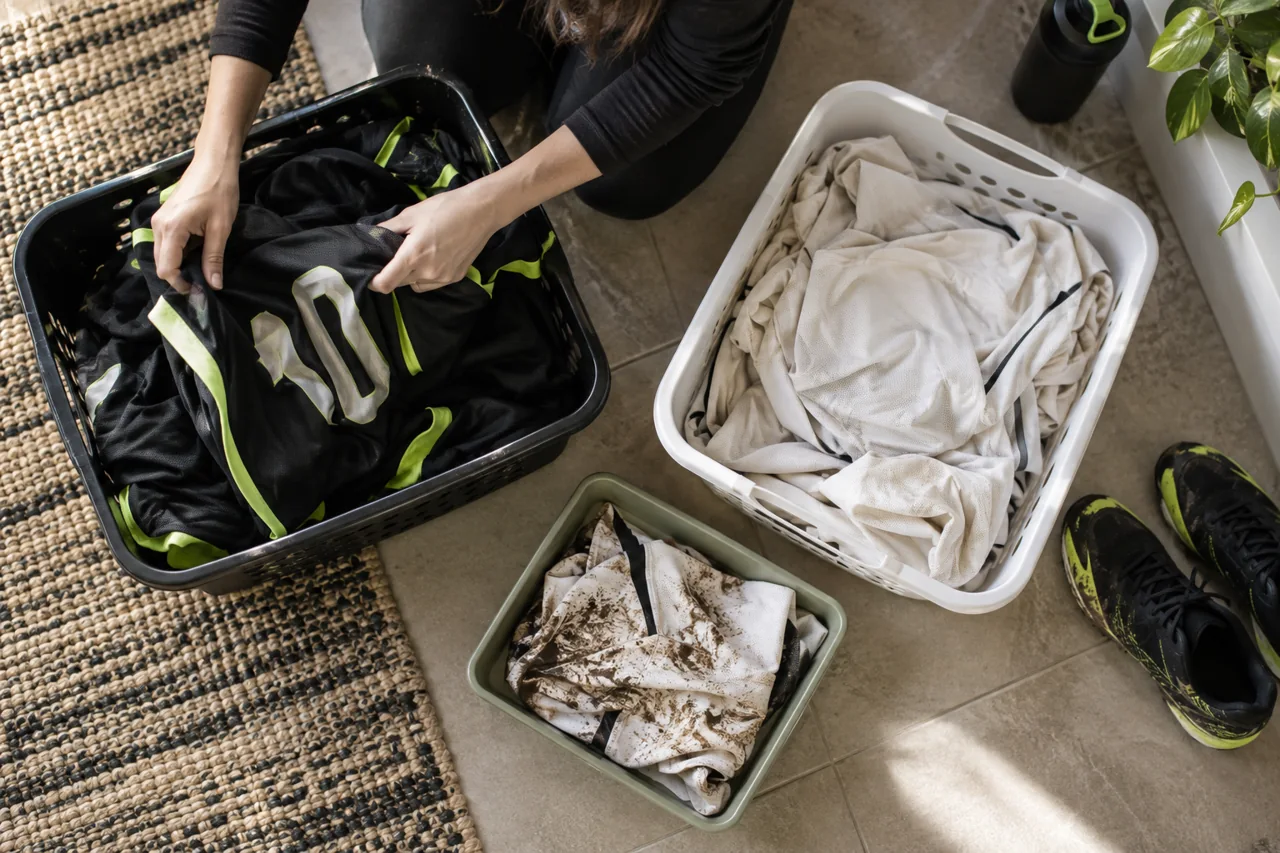
Prepare compatible groups before starting a wash.
Empty pockets and remove loose accessories. Check which items can share a wash according to their labels, colours and condition. Keep footwear and equipment out of a garment load. If a particular piece has a stain, damaged seam or decoration concern, set it aside for an appropriate decision rather than hiding it in the middle of the batch.
Check the supplier's preparation instructions for fastenings and whether the garment should be turned inside out or placed in a laundry bag. Follow the instructions for the actual item: a habit suitable for one kit is not automatically suitable for another.
If an item arrived with an unresolved issue, contact the supplier before washing or altering it. The delivery inspection checklist explains how to document a concern while the garment is still in its received condition.
For a stain, identify what is known about it and check both the garment instructions and the proposed treatment's directions. Do not experiment across the whole team's kit with an unfamiliar product. Ask for advice where compatibility is unclear, especially around decoration. Record what was used if you need to discuss the result later.
3. Match the wash to the instructions, not the deadline
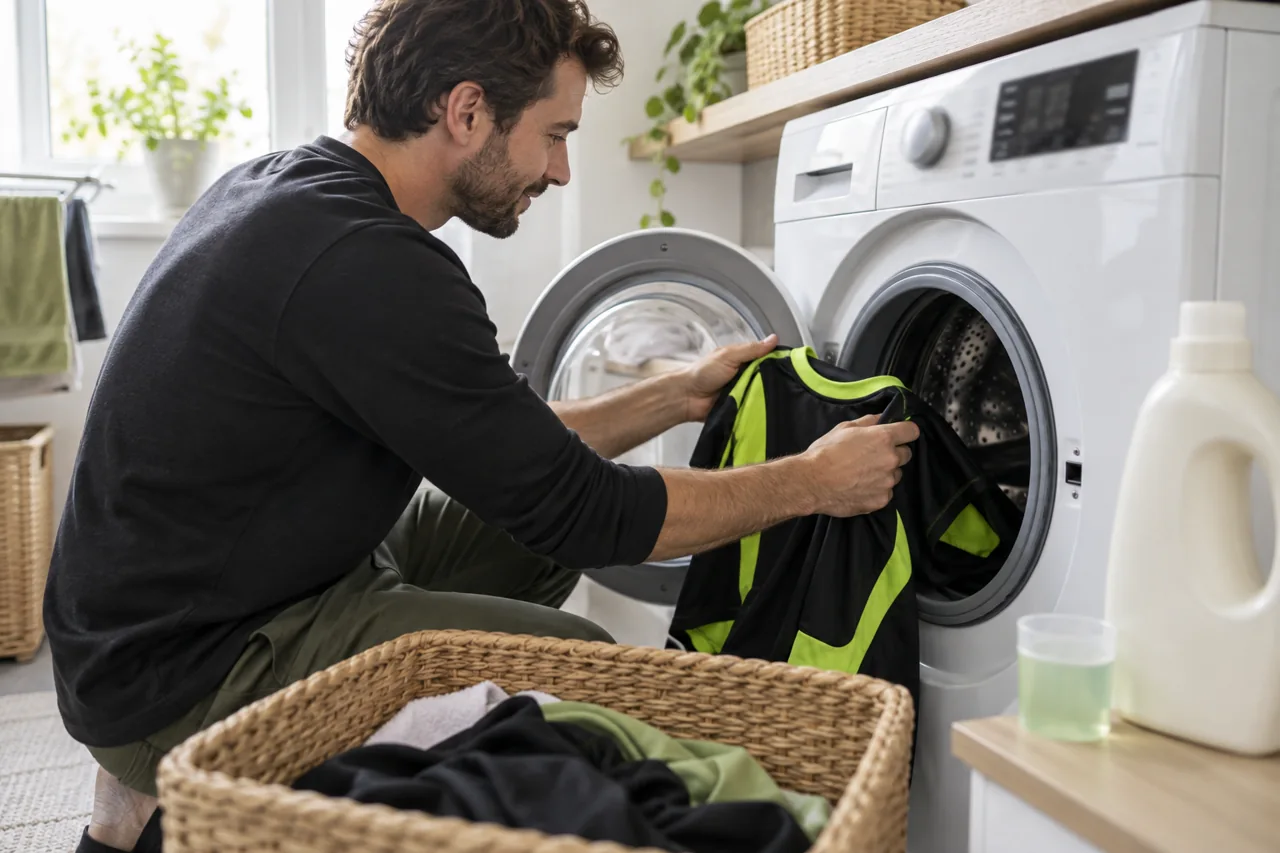
Choose the programme and products only after checking the care requirements.
Use the permitted washing method and temperature shown for the garment. Check the machine instructions when selecting a programme and loading the drum. A programme name alone may not tell you all its settings, so check the relevant temperature, spin and other options rather than assuming the default is suitable.
Use a compatible detergent according to its directions, including the guidance for the load and local water conditions. Do not add extra product simply because the kit was used for a difficult match. Bleach, softener, stain treatments and other additives should not be assumed suitable; check the care and product instructions before using them.
For a club laundry volunteer, the useful record is specific: which garments were washed, the programme and settings used, and any additional product applied. You do not need a long report for every routine wash. A short record becomes valuable if a new process produces an unexpected result.
If the team needs kit again quickly, plan enough time for the permitted wash and drying method. The next fixture does not change the garment's care requirements. Arrange spare kit or an earlier collection where necessary instead of relying on an unapproved shortcut.
| Decision | What to check | What to avoid assuming |
|---|---|---|
| Can these items share a wash? | Each item's instructions, colour and condition | Matching team colours mean identical care |
| Which temperature should we use? | The actual garment label and selected settings | All polyester kit has the same limit |
| Can we add a treatment? | Garment and product instructions | A familiar household product suits every decoration |
| How will the kit be ready on time? | Permitted drying method and available time | More heat is an acceptable shortcut |
4. Dry the garment using its permitted method
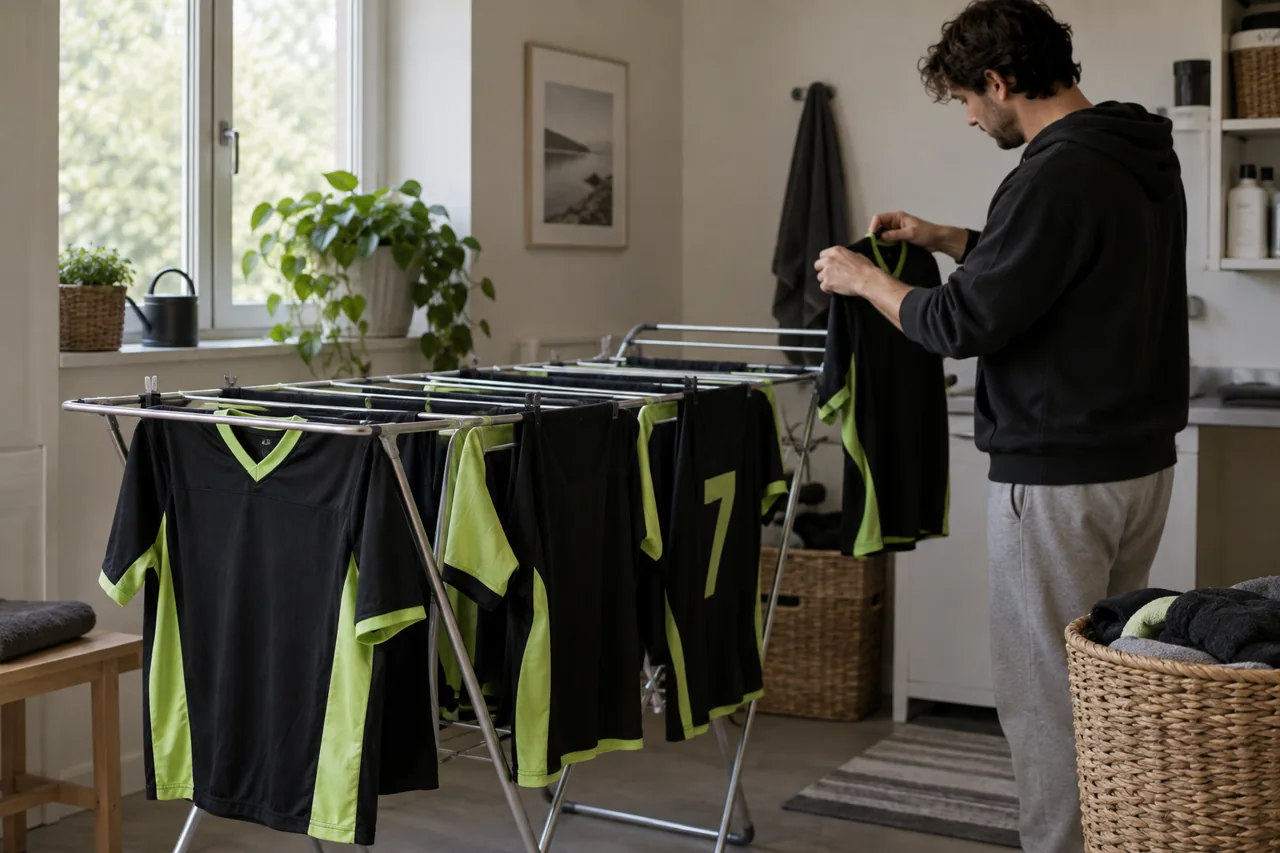
The drying rack is an example; follow the method permitted for your own garment.
Read the drying instructions separately from the washing instructions. A garment that can be machine washed is not automatically suitable for tumble drying. Where tumble drying is permitted, use the indicated conditions. Where natural drying is specified, check whether that means line drying, drying flat or another stated arrangement.
Organise enough space and time for the chosen method. Avoid piling items together during the drying stage. Before putting kit away, check that the whole garment is dry, including thicker areas such as waistbands and layered trims.
Do not substitute a radiator, iron or other heat source for the prescribed drying process. If the label permits ironing, also check the restrictions for decoration and the permitted temperature before proceeding. An instruction for the fabric should not be treated as permission to apply heat directly to every badge or number.
5. Store dry kit so it can be found and checked
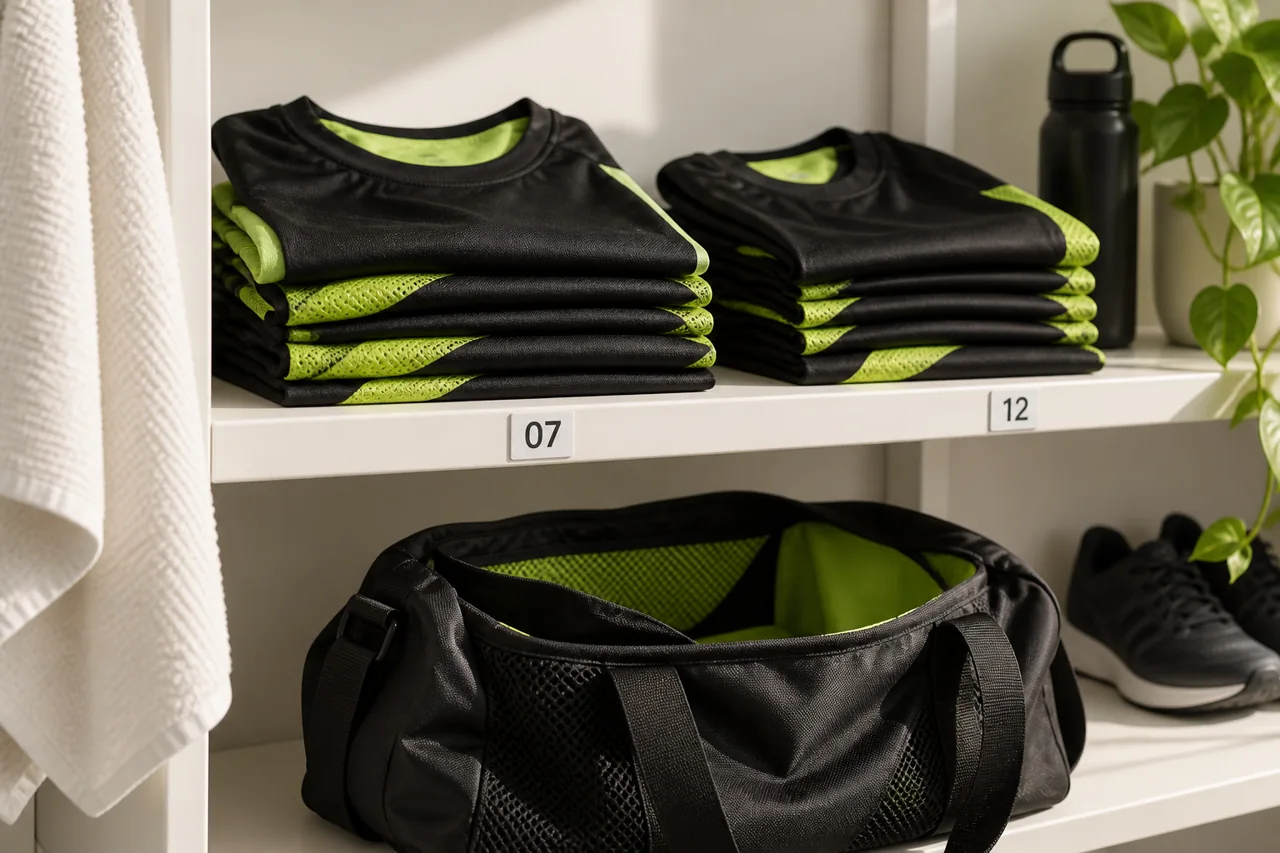
A clear storage system helps the next person find the right garment without unpacking everything.
Choose a clean, dry storage area and keep kit separate from used equipment. Store each garment in a way that suits its shape and the supplier's instructions. Avoid returning a damp item to a closed bag simply because the rest of the set is ready.
For shared club stock, organise by garment type and size, then track personalised items by player or number where appropriate. Keep spare kit distinct from garments awaiting repair or advice. A simple shelf or bag reference is usually more useful than a pile labelled only with the team name.
Before the next handout, check the count and any outstanding concerns. Update the club's allocation record when kit moves between players. Our size chart and player roster guide provides a starting point for keeping those records consistent.
At the end of a season, review usable stock before arranging replacements. Separate a sizing need from a care issue or an additional player's requirement. The uniform reorder guide explains which order details to retain for a future enquiry.
6. Give every kit recipient the same care information
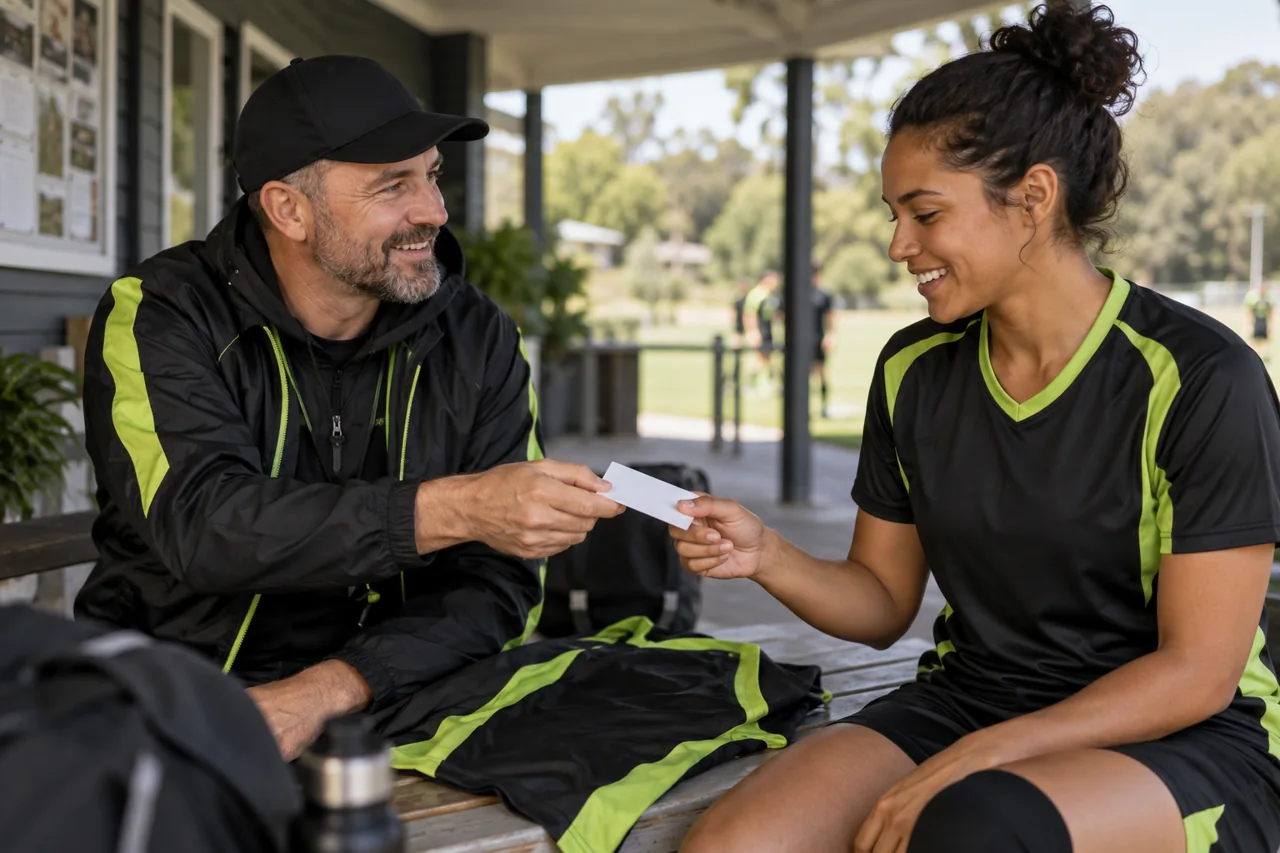
Share the confirmed instructions when the kit is distributed, rather than after a problem appears.
Choose one person to maintain the current care information. Include it with the kit handout and keep a copy where laundry volunteers can find it. If different garments need different treatment, identify them clearly. A training jacket should not inherit the match-shirt instructions merely because both are in the same bag.
Use this short handout structure and fill it from the actual garment guidance:
Garment or kit reference: [identify the item]. Please follow the attached care-label photograph and supplier instructions. Washing: [confirmed method and settings]. Drying: [confirmed method]. Decoration or other restrictions: [confirmed guidance]. If an instruction is unclear or a garment needs attention, contact [club kit organiser] before trying a different treatment.
Keep this card specific. Do not fill the blanks with guessed temperatures or a generic internet recipe. Update the card if a future order uses a different material or decoration method.
For an Athletic Rush care question, email kamran@athleticrush.co or message WhatsApp +92 327 9008337. Include the order reference, garment type, label photograph and the question you need answered. If something changed after cleaning, describe the products and settings used and attach clear photographs; this helps the supplier assess the situation without guessing.
A quick checklist for the next laundry volunteer
- Identify each garment and read its care instructions.
- Sort compatible items and set aside anything needing attention.
- Check preparation, washing settings and product compatibility.
- Use the permitted drying method and allow enough time.
- Put away only dry kit, with unresolved items kept separate.
- Return the correct pieces and share the same care information.
Common team kit care questions
Can every item in a uniform set be washed together?
Check each item's instructions first. Being sold or supplied as a set does not establish that all pieces have identical care requirements.
Is a cold wash always the right answer?
Use the garment's permitted method and the relevant product directions. A generic temperature recommendation cannot replace the instructions for the finished garment.
Can we tumble dry a jersey if we are short of time?
Only if its instructions permit it, using the specified conditions. Plan the turnaround around the actual care method rather than assuming a faster process is suitable.
What if a new order looks the same as our old kit?
Check its care information again. A similar appearance does not prove that the fabric, trims or decoration process are unchanged.
The images are AI-generated educational scenes showing fictional people and example garments. They do not establish care settings for a specific Athletic Rush product. Always use the instructions supplied with your actual kit.