 Sialkot, Pakistan
 Worldwide enquiries

The tournament date is fixed. Your kit schedule needs to account for much more than the time a jersey spends in production. Player details, artwork decisions, sample corrections, delivery and the club's own handover can each affect whether the right uniform reaches the right person before the team travels.
Start with the day players must have their kit, then work backwards with the supplier. This guide helps club managers build a custom team uniform order timeline, set clear approval deadlines and respond sensibly if the schedule changes.
The first question to ask: “Can you plan this exact order around our required arrival date?” Include the quantities, garment types and destination. A general production estimate is not confirmation that your particular order will arrive on time.
1. Set the kit-in-hand date before discussing production
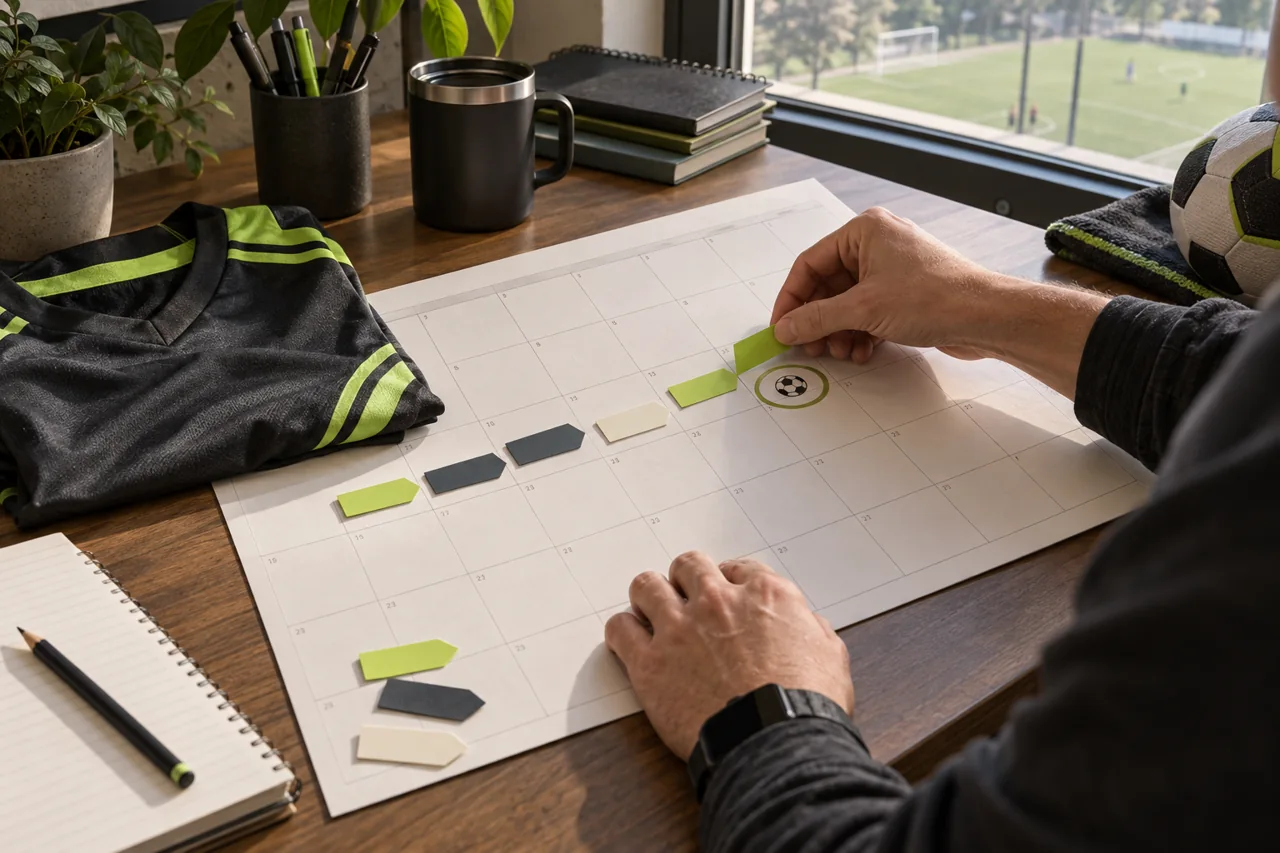
Write down three separate dates: the first match, the team's departure if travelling, and the date players should receive their uniforms. A delivery on match morning leaves little opportunity to check missing items, incorrect allocations or fit concerns.
Choose an earlier club receipt target that allows an inspection and an organised handover. Agree the allowance within your club rather than copying an arbitrary number of days from another team's order. A local weekend fixture and an overseas tournament have different constraints.
Tell the supplier which date is essential, which dates are preferences and where the shipment must physically arrive. Include a named receiving contact and any restricted receiving hours. If the team is travelling, avoid assuming a hotel or tournament venue can accept and hold a shipment without confirming it first.
Distinguish dispatch from arrival throughout the conversation. “Ready to ship” means a different milestone from “delivered to our club.” Ask what assumptions support the proposed arrival date, and have the supplier identify any delivery stages that remain estimates.
2. Give the supplier one complete tournament brief
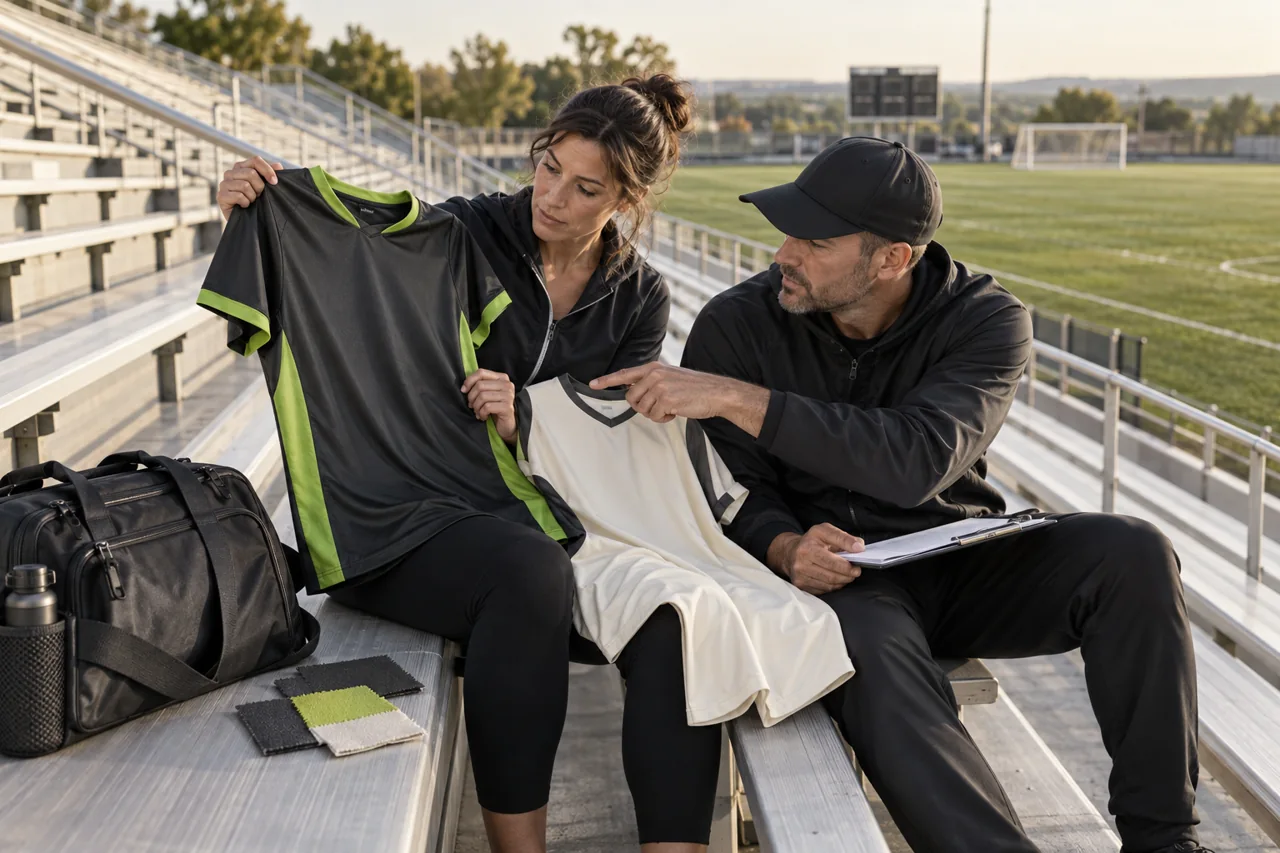
A useful enquiry describes the order that must meet the deadline. It should not rely on a single photograph and “we need these urgently.” Browse the Athletic Rush teamwear range, then separate essential match garments from optional training and travel items.
List each garment type, quantity, fit group and colourway. Identify home and alternate kits, goalkeeper or specialist garments where relevant, and any personalisation. Record which specifications are already approved and which still need development. A repeat of an approved kit and a new design needing a physical sample should not be assumed to follow the same schedule.
Ask the tournament organiser for the requirements that apply to your competition before approving the kit. Check the relevant colours, identification and sponsor placement with the organiser; do not assume a previous event's requirements still apply.
Make unresolved decisions visible. For example, write “sponsor artwork expected on [date]” rather than allowing the supplier to believe the artwork is final. Explain whether an optional warm-up top can arrive separately, but obtain a revised quotation before agreeing to split the order.
Buyer checkpoint: The schedule must refer to a defined order. If quantity, fabric, decoration or garment scope changes, ask the supplier to review the dates again.
3. Build a backward schedule with named owners
Ask the supplier to explain what must happen before production can start, how sample corrections are handled, and which milestones they can commit to. Confirm whether their quoted lead time uses working or calendar days and what event starts that clock. Do not assume it starts when you first send an enquiry.
Use a shared table like this. Fill in actual dates only after the club and supplier agree them; the rows are a planning framework, not an Athletic Rush turnaround promise.
| Milestone | Who confirms it | Evidence to keep | Agreed date |
|---|---|---|---|
| Players receive their kit | Club coordinator | Handover plan and player list | Fill in |
| Delivery and club inspection | Receiving coordinator | Delivery address and inspection slot | Fill in |
| Dispatch readiness | Supplier | Agreed checks, quantities and dispatch plan | Fill in |
| Bulk production completion | Supplier | Current order specification and progress update | Fill in |
| Production release | Club and supplier | Final approval pack and acknowledged start conditions | Fill in |
| Sample review and corrections | Named approver | Sample reference and resolved comments | Fill in |
| Artwork and player details frozen | Club coordinator | Final files and versioned roster | Fill in |
| Order scope and schedule agreed | Club and supplier | Written quotation and milestone plan | Fill in |
Work upwards from kit handover when assigning dates. Some preparation can happen in parallel, but do not overlap a dependent stage merely to make a spreadsheet look achievable. The supplier should identify when fabric, artwork and sample decisions must be complete for their production route.
Nominate one club coordinator and one backup. Coaches, sponsors and players may contribute decisions, but the supplier needs one authoritative approval record. Decide who can approve a cost or date change before an urgent question arrives.
4. Freeze the roster before personalisation is released
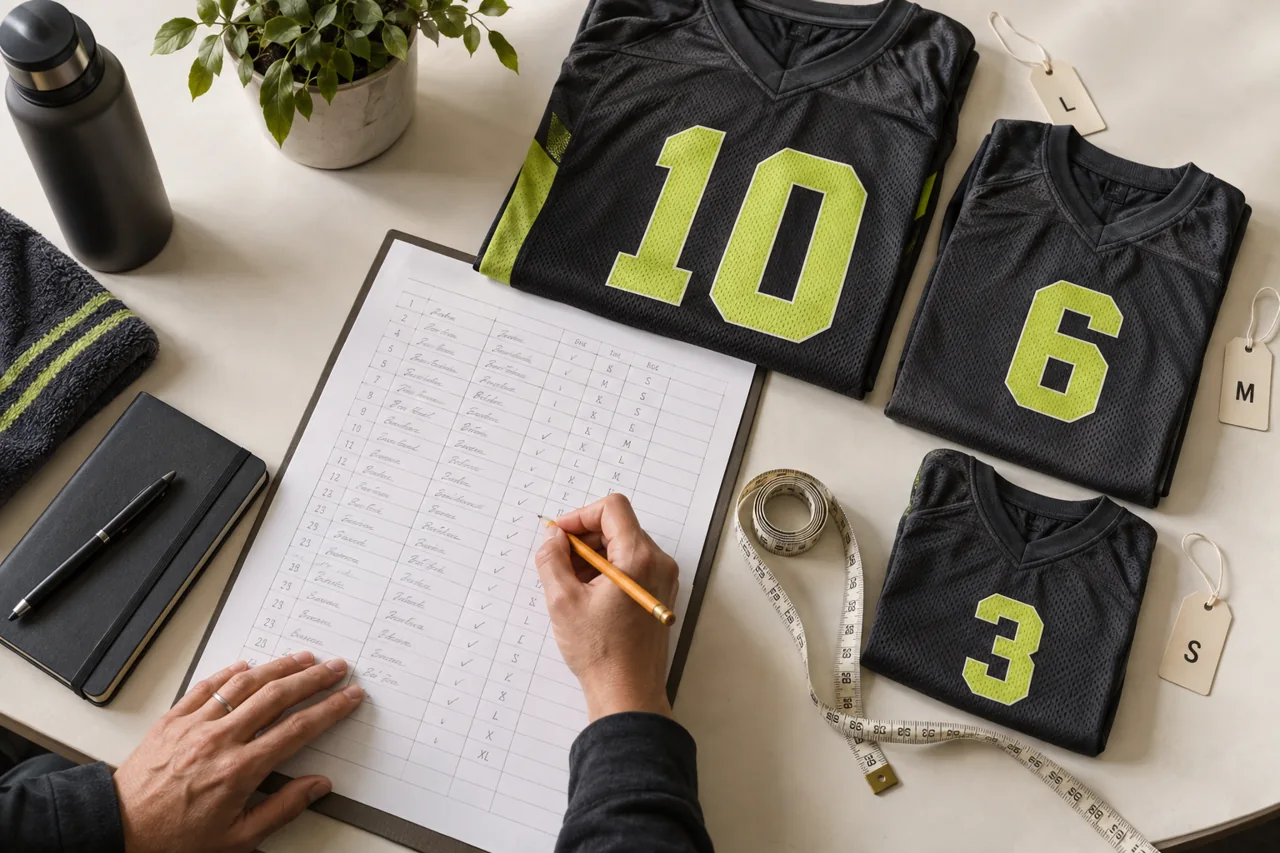
Collect player details early enough to resolve missing sizes and spelling questions before the supplier's agreed cutoff. Use one versioned roster with separate fields for each garment size, printed name, number and quantity. A message saying “the usual size” is difficult to reconcile with a production order.
Compare the roster totals with the quotation. If 18 players need a jersey and shorts, that is 18 sets containing 36 garments, before any spares or extras. Specify each spare's size and whether it needs a name or number; “two spare kits” alone leaves important choices unresolved.
Use the relevant sample and size chart to support decisions. Our size chart and player roster guide explains how to separate garment measurements from player allocations.
After the cutoff, keep requested changes in a separate log. Ask the supplier whether each change is still feasible and whether it affects price or delivery. Do not silently replace an approved spreadsheet and expect production to use the new one. A late player can be handled as a separate enquiry if that is the agreed practical option; see the new-player reorder guide.
5. Approve one complete production reference
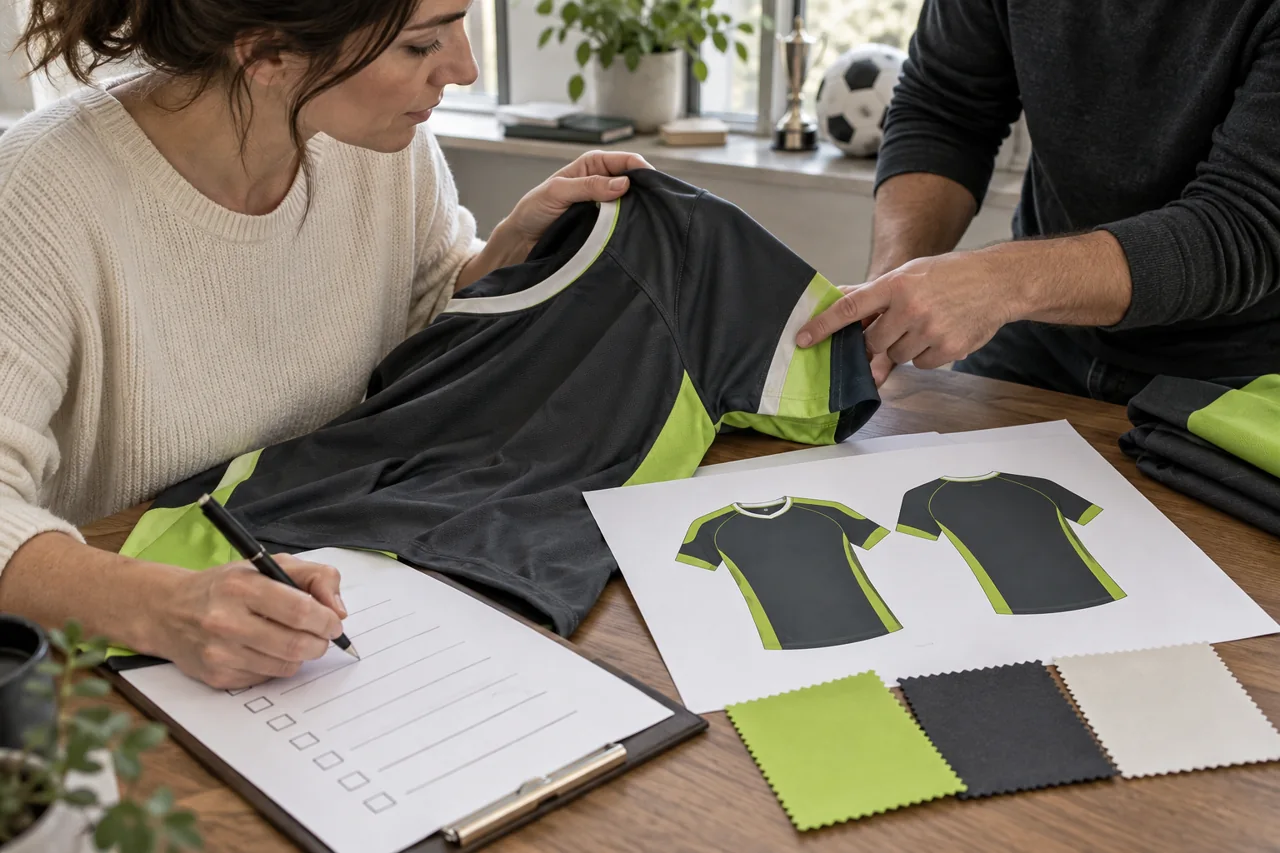
Gather the agreed artwork, fabric reference, colour selection, measurement specification, sample comments and roster into one approval pack. Label every file with the order reference and version. An approval should identify what was accepted, not simply say “looks good” beneath a long conversation containing several alternatives.
A screen mockup helps communicate design and placement, but cannot demonstrate physical fit or fabric feel. Agree which physical checks your order requires, how the sample will reach the reviewer and how comments will be returned. Reserve time to resolve a correction if one is needed rather than treating the first sample as automatically approved.
For a printed cut-and-sew order, the supplier may describe stages such as sublimation, cutting, stitching and final inspection. Record their proposed route and the approvals needed before it begins. Do not impose the same manufacturing sequence on every garment or assume a late artwork change is harmless once material has been printed.
Send consolidated feedback: identify the item, describe the issue, attach a clear reference and state the required decision. Keep resolved comments marked as resolved. Ask the supplier to acknowledge the final pack and confirm that the agreed start conditions have been met before treating production as released.
For help assembling the files, use the logo and sponsor artwork checklist. It complements the deadline plan without replacing sample approval.
6. Protect time for delivery, inspection and handover
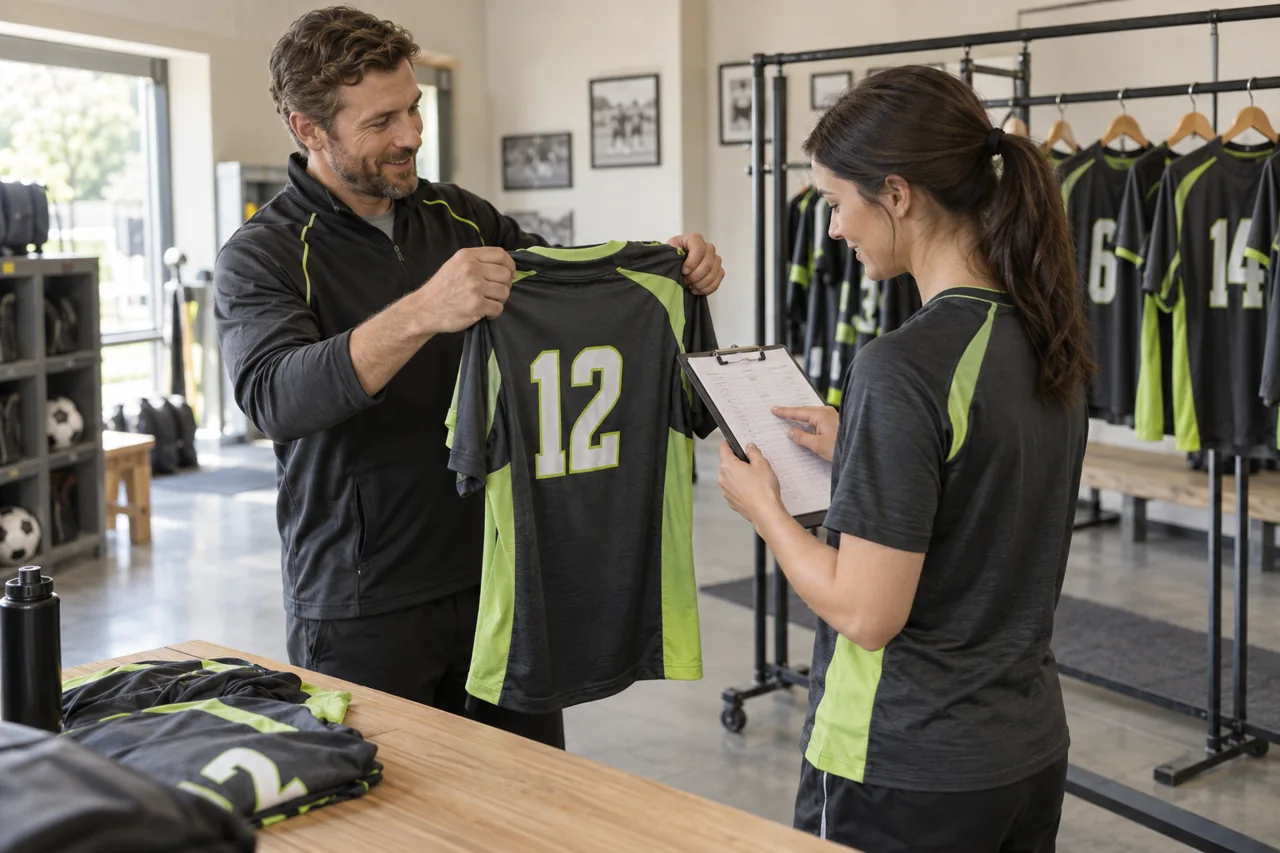
Agree the next progress update when production starts. Ask for an update against the milestones that matter to this order, including any unresolved risk and the next decision needed from the club. A photograph of work in progress is useful context, but it does not by itself confirm that every garment is complete or ready for dispatch.
Before dispatch, confirm the recipient, address, parcel information and the agreed delivery arrangement. Ask who will provide tracking and handle a delivery query. Where an international shipment needs documentation or recipient action, establish responsibilities with the supplier in advance; do not build the schedule on an assumed same-day clearance.
When the kit arrives, count and check it before distributing individual items. Compare names, numbers and garment allocations with the final roster, and document any issue promptly against the agreed specification. Use the team uniform delivery inspection checklist for that separate inspection step.
Schedule handover so absent players have a clear collection plan. Keep the final order pack for later questions and reorders. The order is operationally complete when the club can account for the kit, not only when a parcel has been marked delivered.
7. Decide the backup plan before a deadline slips
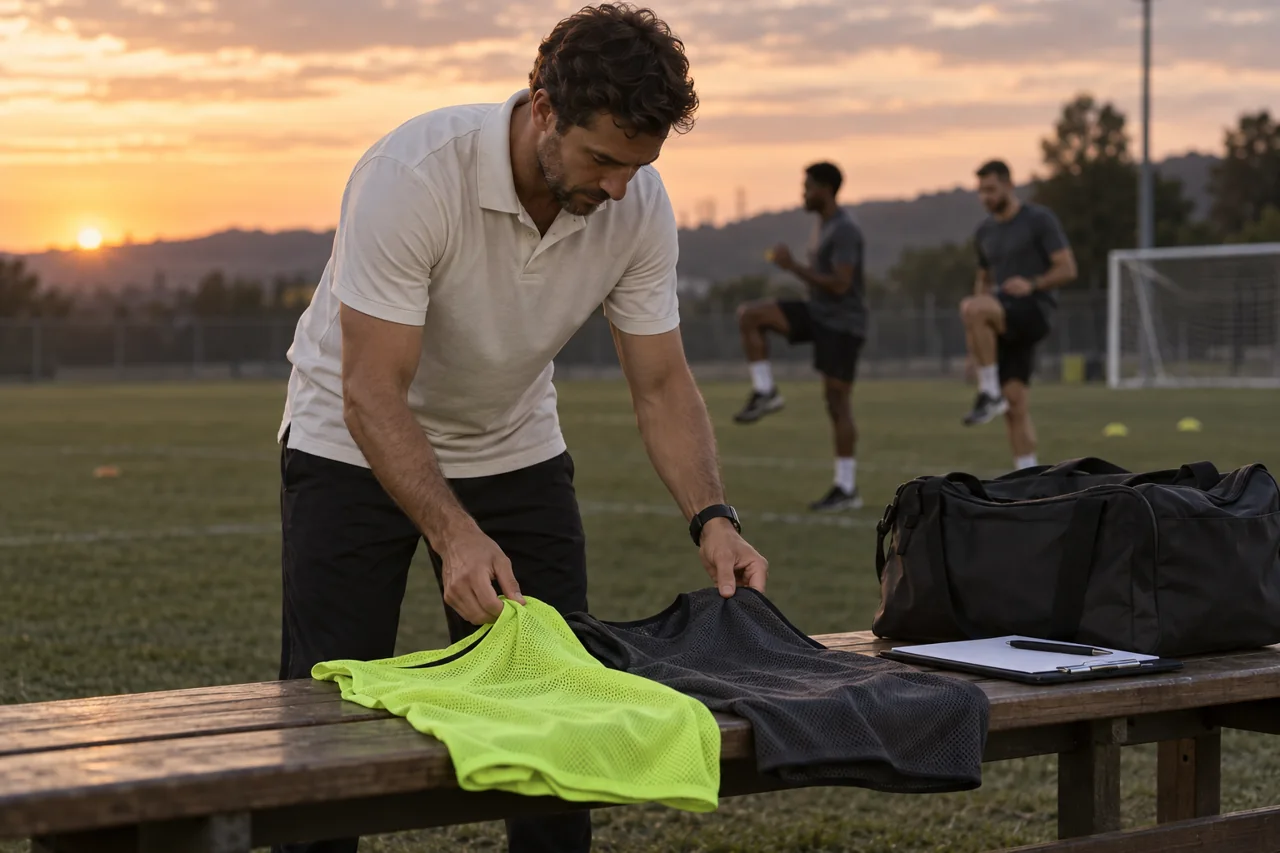
If a milestone moves, ask for the reason, the affected items and a revised plan. Separate what is confirmed from what is still estimated. Paying for faster transport cannot recover time in a production step that has not finished, so ask where the actual delay sits before choosing a remedy.
Options might include removing an optional item from the first shipment, agreeing a separately costed split delivery, or using existing kit while a later order is completed. The club and supplier must confirm feasibility and costs. Check any temporary match kit with the organiser; training bibs in the illustration are a planning example, not permission to use them in competition.
Keep the core specification under control. Do not accept an unspecified fabric or decoration substitute solely because the date is close. Record the proposed alternative and obtain the appropriate approval before production proceeds.
Example: a late sponsor decision
Suppose a club has final player sizes, but one sponsor has not approved its logo by the artwork cutoff. Tell the supplier immediately and ask which stage is affected. The club might obtain the missing approval, agree an acceptable revised design with the relevant parties, or accept a revised schedule. The right choice depends on the order and event requirements. Sending several provisional logos does not resolve the decision.
Copy this brief for your first enquiry
- Club and sport: [name and sport].
- Event, departure and player handover dates: [dates].
- Required delivery destination and club receipt date: [address area and date].
- Garments, quantities, fit groups and colourways: [itemised list].
- Artwork and sponsor status: [ready files and unresolved decisions].
- Size chart, roster and sample status: [available references].
- Essential first-delivery items and optional extras: [list].
- Approval contact and backup: [names and contact details].
- Questions: Please confirm feasibility, start conditions, sample stages, milestone dates and delivery assumptions for this order.
Send your brief to kamran@athleticrush.co, message WhatsApp +92 327 9008337, or use the Athletic Rush quote enquiry. Include the real deadline even if it is close so the order can be assessed against the actual requirement.
Common tournament kit timing questions
How many weeks before a tournament should we order?
There is no single lead time established by this guide. Ask for a schedule for your exact quantities, design, sample needs and destination, then include the club's inspection and handover time. Enquire as soon as the event requirements are known.
Does payment mean production has started?
Confirm the supplier's start conditions. An order may still require final artwork, sizes or sample approval. Keep an explicit acknowledgement of production release rather than inferring it from a payment or enquiry date.
Can we change a player's name after approval?
Ask immediately, referencing the approved roster and the exact change. Feasibility depends on the production stage. Obtain written acknowledgement of any accepted change and its effect on timing or cost.
Should we request daily progress photographs?
Agree useful update points with the supplier. A clear milestone update that identifies completion, open issues and required decisions is more actionable than repeated images without order context.
The images are AI-generated educational scenes with fictional people and example garments. They illustrate planning steps and are not photographs of Athletic Rush staff, facilities or a customer's order.