 Sialkot, Pakistan
Your first streetwear sample looks right, and you want to tell the factory to start the order. What exactly are you approving? Approve an identified garment version and a defined production scope, with the materials, size range, artwork, quantities and unresolved decisions recorded together. A good-looking sample or a message saying “looks great” does not explain which operations may begin or what still needs review.
For a new U.S. clothing brand or a creator preparing a first drop, this handoff connects product development to the garments you intend to sell. This guide gives you a practical production-release record, an illustrative readiness review and a way to handle changes without losing the approved reference. It does not turn a sample photograph into proof of bulk quality or promise that every project needs the same sample sequence.
Start on Athletic Rush's website: Explore Athletic Rush's streetwear development and manufacturing hub to identify the garment route. If the range itself is still being developed, review Athletic Rush's collection-development service before treating several unfinished product ideas as a production-ready order.
The Ridge Tee and Frame Hoodie used below are fictional teaching examples, not Athletic Rush stock, approved samples or customer orders. All six images are original AI concept illustrations. They do not show actual staff, a documented factory run, measured grading or inspection results.
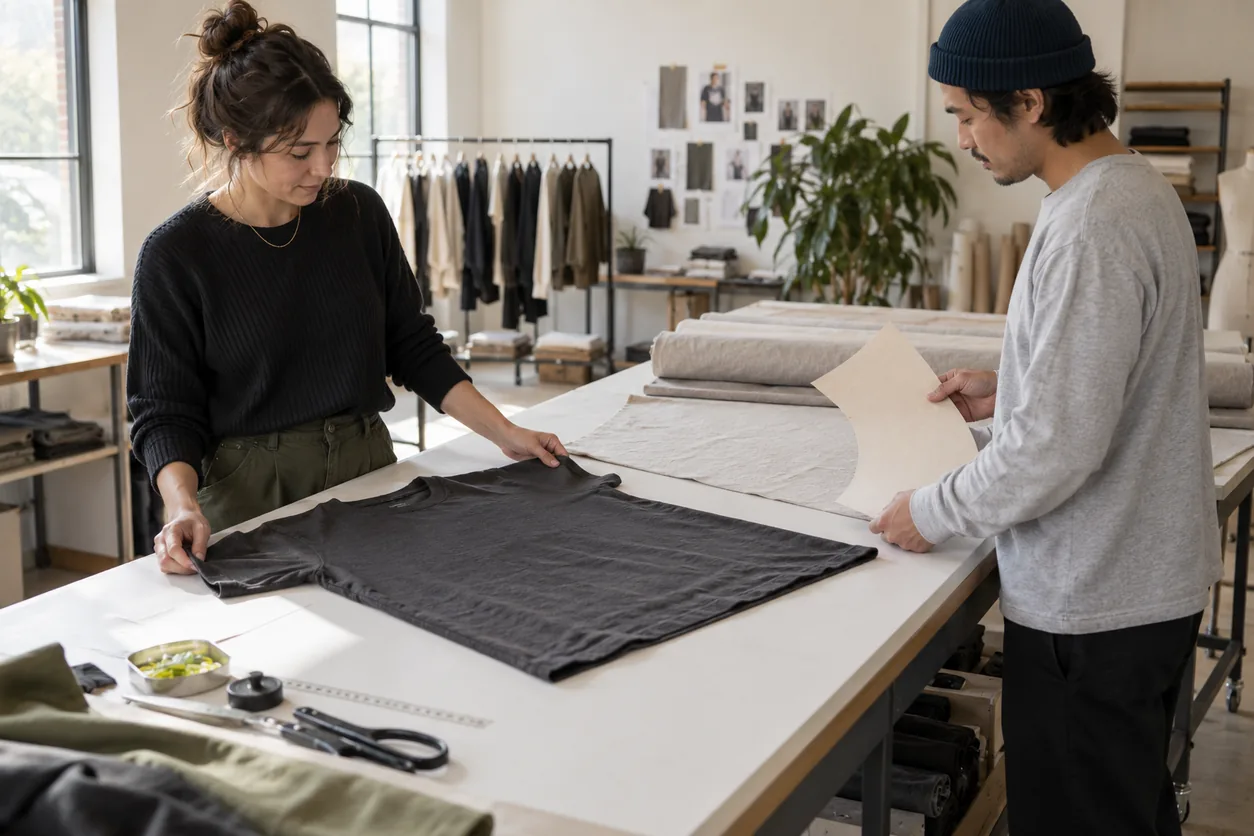
Concept illustration: the sample and the proposed production materials need an identified connection. The scene does not document an actual approval or cutting operation.
First establish what the sample actually represents
Ask the supplier to identify the sample's purpose, style reference, revision, size, color, materials and decoration. Record what differs from the intended bulk garment. A fit sample made with an alternative fabric might help a particular review, but its existence does not confirm that the proposed production material has been approved.
Techpacker's guide to garment sample types distinguishes development, fit, size-set, pre-production and top-of-production samples by their roles. Use that distinction to ask useful questions. Agree the meaning, contents and timing of each submission with your supplier rather than assuming a sample name guarantees its materials, origin or approval status. This guide does not prescribe a fixed number of samples or rounds for every brand.
For the fictional Ridge Tee, a charcoal medium could be the reviewed fit reference. If the proposed stone color uses a different material submission, or the order includes sizes not yet covered by the agreed review, name those gaps. Do not write “all approved” simply because the charcoal medium photographs well.
Keep the physical reference identifiable. Attach a removable reference tag or maintain another agreed identification method, and record the photographs and documents that point to it. Decide which reference the buyer and supplier retain and how any differences between their references will be resolved. A file called “final-final.jpg” should not be the only link between the reviewed garment and the order.
Connect a real Athletic Rush reference to your own developed sample
Athletic Rush website reference: Relaxed Midweight T-Shirt — True Black Tonal Mineral Wash. The live page presents a relaxed tee direction, a tonal mineral-wash appearance and front-and-back views. It is a useful visual starting point to identify in an enquiry; it is not evidence that your measurements, artwork or physical sample have been approved.
A clear progression would be: link the Athletic Rush reference, identify the changes you want developed, review the resulting physical sample, and then refer to that sample and its agreed specification in the production release. The fictional Ridge Tee remains a separate teaching example. Browse Athletic Rush's streetwear T-shirts if you are still comparing garment directions instead of approving one developed version.
Turn the approval into a record a supplier can follow
Keep one dated release record for each identified design. It should point to the current technical and commercial files; it does not need to reproduce every page of them. The purpose is to remove uncertainty about which version governs the next operation.
Use clear decision states:
- Released: the identified scope may proceed under the recorded instructions.
- Held: the named scope must wait for a stated decision or evidence.
- Revise and resubmit: a change is required before the affected scope can be reviewed again.
These are proposed workflow labels, not universal factory terminology. Agree how the supplier records and acknowledges them. If you authorize a limited operation while another issue remains open, identify that operation, the exclusions and the consequences with the supplier. If you cannot describe that boundary clearly, keep the affected bulk work on hold.
A production-release record you can copy
| Record field | What to identify | A question that prevents ambiguity |
|---|---|---|
| Design and revision | Buyer style reference, current specification and dated release | Are the drawings, measurements and component list from the same issue? |
| Physical reference | Sample ID, size, color, review condition and retained reference | What does this sample establish, and what is still represented only by a proposal? |
| Materials and components | Body fabric, rib, trims, color and finish references | Does the intended bulk assembly use these identified components? |
| Size and decoration scope | Size-chart revision, agreed range review, artwork and placement references | Which sizes and variants does the review actually cover? |
| Order identity | Pieces per design, color-size allocation, labels and packing references | Do the order and the approved product describe the same combinations? |
| Decision and exclusions | Released scope, held items and any required resubmission | Which operation may begin, and which must wait? |
| Checkpoints and response | Agreed production-review stage, evidence and named contact | Who reviews the response, and what happens if it differs? |
Ask the supplier to return an acknowledgement that uses the same design and revision references. Keep it with the release record. This is more useful than a thumbs-up attached to a long conversation containing several superseded photographs.
For the underlying packet, read Athletic Rush's streetwear tech-pack and sampling-brief guide. That guide helps define the product before and during development. This release record answers a narrower next question: what identified product and work are now allowed to move forward?
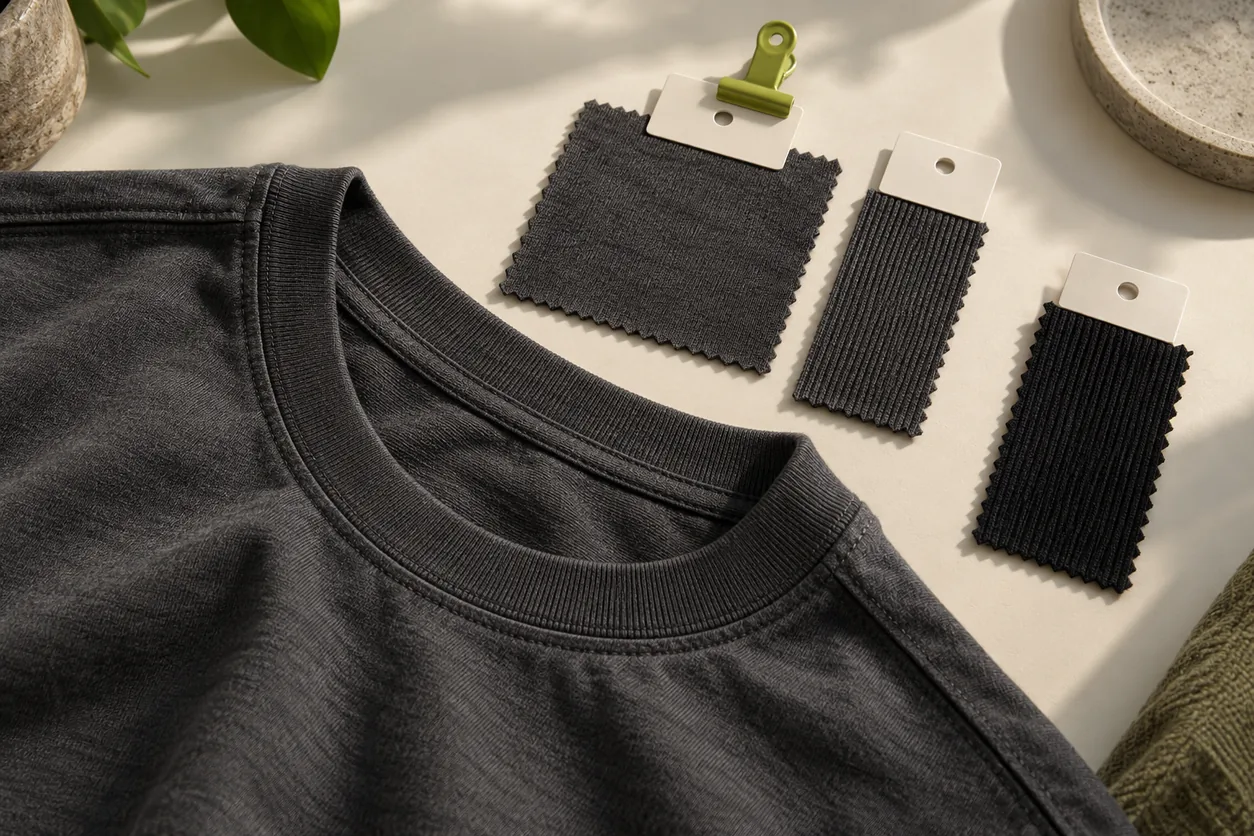
Concept illustration: identify the complete assembly and its component references. Similar-looking swatches do not establish matching composition, performance or approval.
Review one first-drop example without giving a blanket approval
Imagine a proposed first range of 60 Ridge Tees in two colors and 30 Frame Hoodies in one color. Those are 90 physical garments across two proposed designs. The example quantities illustrate the handoff; they are not a demand forecast or a recommended launch size.
Athletic Rush's confirmed minimum is 30 pieces per design, with one to three colors and mixed sizes within that same design. Each different design requires its own 30 pieces. Ask Athletic Rush to confirm the actual design grouping and any project-specific constraints; do not pool different designs into one qualifying total.
Suppose the buyer has reviewed a charcoal Ridge Tee in medium and the main Frame Hoodie fit, but some other decisions remain open. The following is a fictional readiness review, not a record of an Athletic Rush order.
| Evidence or gap in the example | What it establishes | Useful release decision |
|---|---|---|
| Charcoal Ridge Tee medium reviewed against the identified chart | A decision about that sample and review scope | Record the exact reference; do not extend it automatically to every color and size. |
| Stone bulk fabric proposal has not been connected to the reviewed tee | The stone proposal still needs a decision | Hold the affected scope until the material reference and any needed garment review are resolved. |
| The proposed size range has a chart, but its agreed review is incomplete | Written dimensions exist; range review remains open | Identify the sizes and evidence still needed before releasing that scope. |
| Front artwork is current, while an old back file remains in the shared folder | The attachment set is inconsistent | Issue one current artwork set and remove the old version from the active instructions. |
| Frame Hoodie body fit is reviewed, but its final rib proposal changed | The complete proposed assembly differs from the reviewed version | Identify the changed component and agree the affected review before release. |
| Label text and final allocation are still drafts | The finished-order instructions are incomplete | Resolve the content and quantity references, then record what is released or held. |
The point is not to create more paperwork than the order needs. It is to make a small order explicit enough that neither party has to infer whether “approved” meant fit, color, decoration or the complete production proposal.
For the quantities, use Athletic Rush's size-and-color order matrix guide. A correct total does not identify the intended color-size mix. For garment dimensions, review Athletic Rush's measurement-tolerance guide rather than borrowing a universal allowance or treating a sample's measured value as a new target.
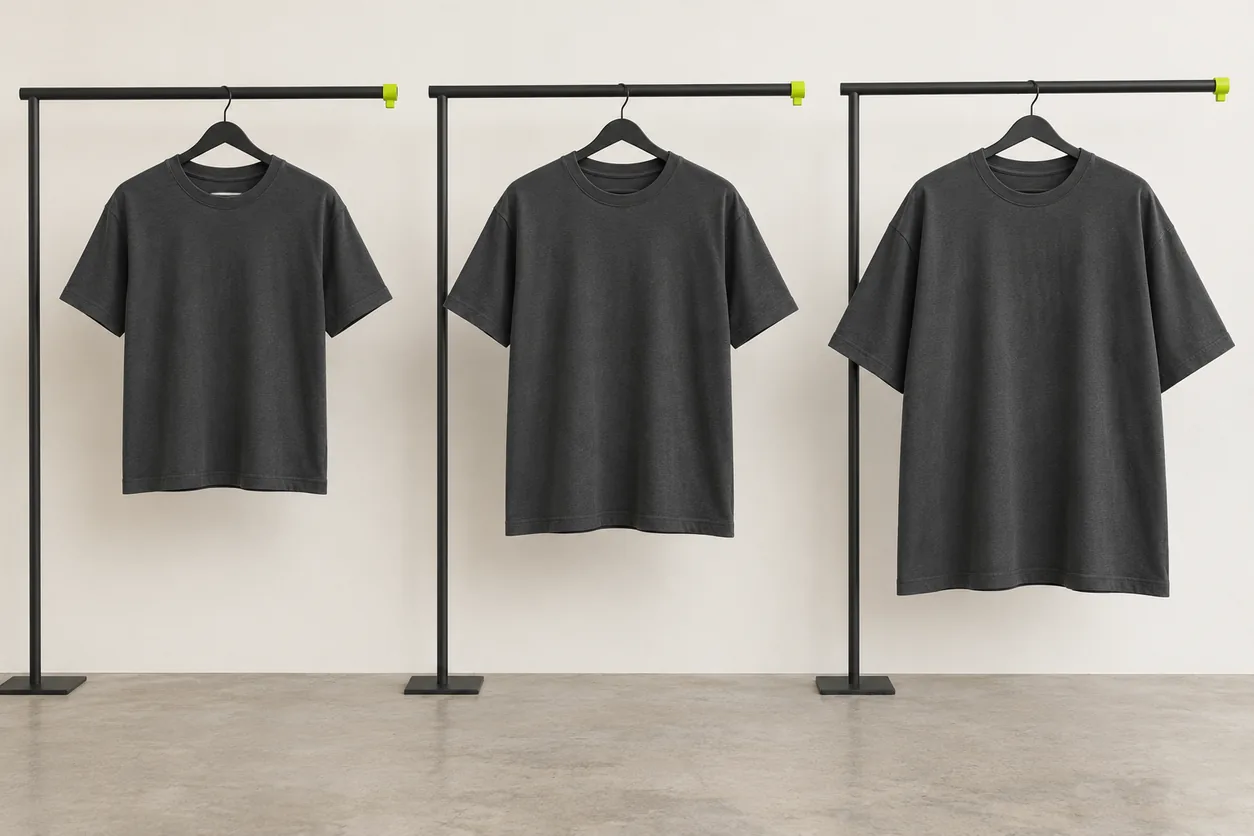
Concept illustration: one reviewed sample size does not establish the entire proposed range. These garments are not a measured grading chart or evidence of approved fit.
Close the decisions that sit outside the main fit review
Materials and finish: identify the production fabric, color and component references alongside the garment. Ask whether the sample used the intended materials and whether any substitution is proposed. If the desired washed appearance has an agreed range of variation, keep the relevant physical references and written decision connected to the release. Do not ask a concept image to define an exact finished appearance.
Artwork and application: connect the current front and back files to the intended application, dimensions, position and agreed size-range treatment. Confirm that a change in garment size or construction has not left the placement instruction unclear. Athletic Rush's print-sample approval guide develops the physical decoration review; a correct digital file alone does not replace it.
Hoodie assembly: the Frame Hoodie's reviewed body fit should remain connected to its hood, pocket, rib and trim proposals. A changed cuff or body fabric may require a further affected review rather than an automatic carryover of the old decision. Use Athletic Rush's streetwear hoodie development page to identify the relevant garment discussion; do not apply a tee approval to the hoodie.
U.S. label content: a brand logo is not a complete labeling brief. The FTC's textile and wool labeling guidance explains that most covered products need fiber content, country of origin and the responsible business's identity; clothing care labeling is covered by a separate rule. Confirm the applicable content, placement and responsibilities for your actual product before approving the labels. A label artwork approval is not proof that every U.S. requirement has been met.
Commercial scope: the quotation, sample decision and order should point to the same product and quantities. If a requested correction changes a material, operation or service, ask whether the quotation and timing need revision. Athletic Rush's manufacturing-quote comparison guide helps resolve that commercial scope without treating an unanswered item as included.
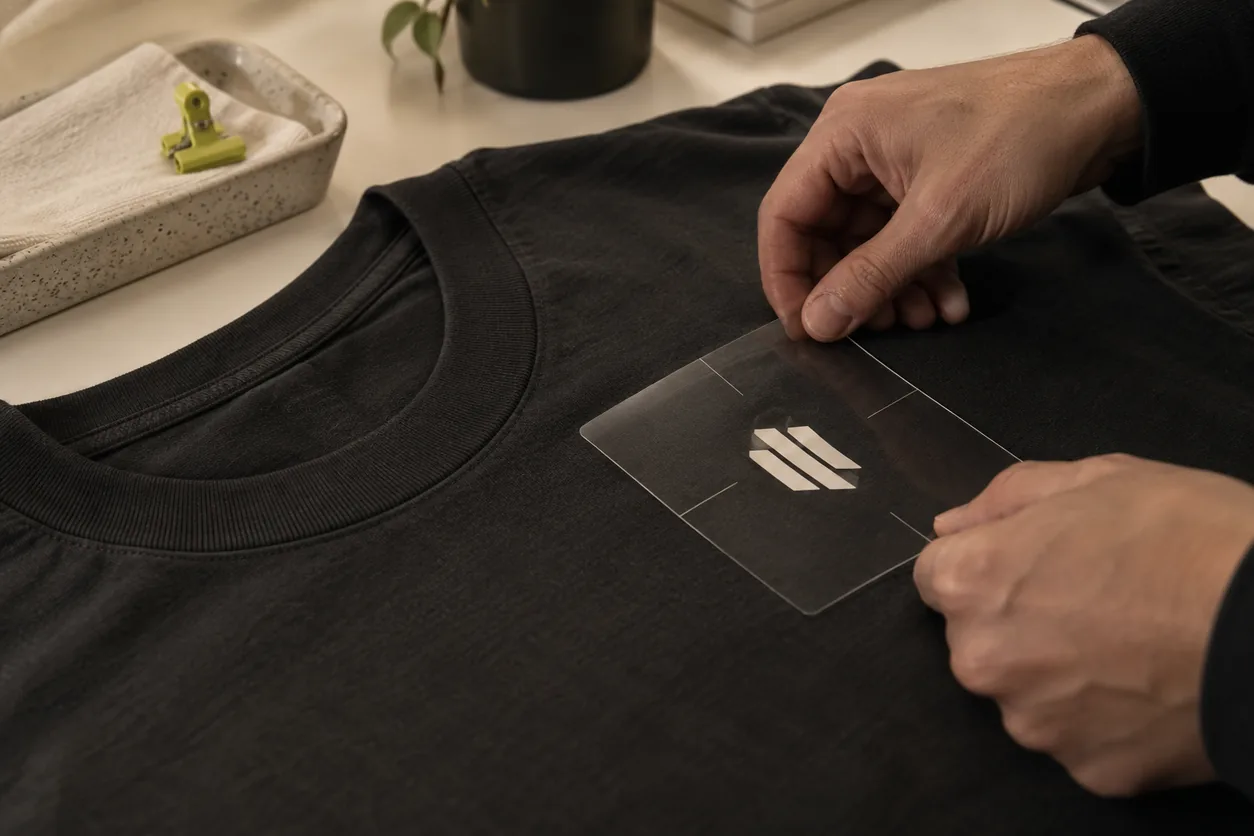
Concept illustration: preserve the link between the garment, artwork version and placement reference. The template shows an illustrative review action, not a measured result or an actual production approval.
Agree what will be checked once production starts
An approval reference describes the intended result. It does not inspect the later batch. Before production begins, agree what evidence you want from the actual work, when the review occurs, who responds and how an unresolved difference affects further work.
For the Ridge Tee, an agreed early-production review might identify the actual material, size, artwork and construction represented by the submitted garments. Record which pieces were checked and which characteristics were assessed. For the Frame Hoodie, the scope might include the complete assembly and its revised rib reference. These are proposed review subjects, not claims about a standard inspection package included in Athletic Rush's quotation.
Make the checkpoint early enough for the decision you intend it to support. If the concern is a proposed decoration placement, agree when it can be reviewed before the relevant work proceeds further. Do not wait until the whole order is packed and then describe that check as approval to begin decoration. Confirm practical arrangements and any cost or schedule effect with the supplier.
If a discrepancy appears, record the affected design, version, material or operation and identify what needs to pause or be reviewed. Ask for a proposed resolution and decide which references must change. Do not silently accept a substitution because the original approval message is already in the conversation.
Keep development approval separate from a final batch inspection. SGS's description of final random inspection includes sampling against defined criteria and checks covering finished quality, quantity, packaging and labeling. It describes a service with an agreed scope; it is not evidence that Athletic Rush uses SGS, that your order has been inspected, or that every garment has been checked. Agree the inspection approach for your own order rather than borrowing a percentage or calling one attractive sample a batch result.
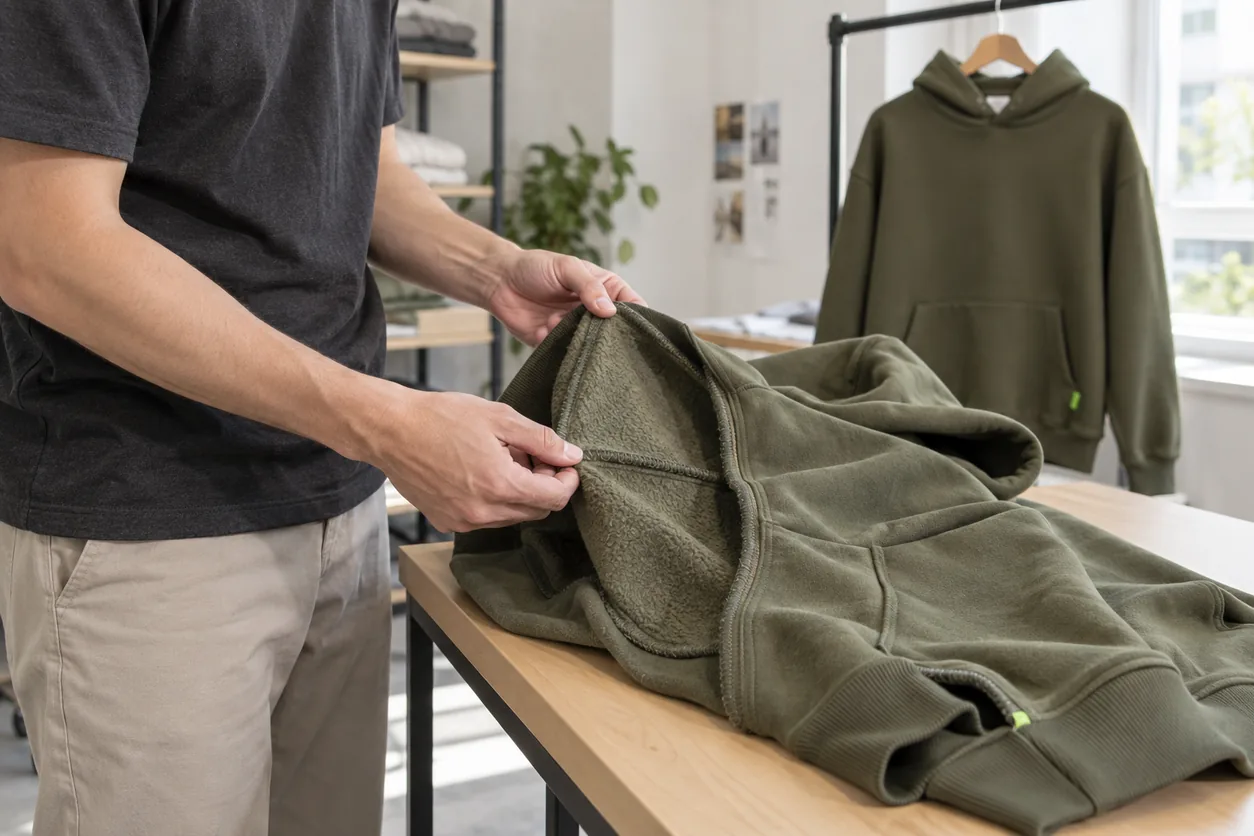
Concept illustration: review actual production evidence against an identified reference. This scene is not a factory audit, a documented inspection or a claim about tested garment performance.
Keep the release connected through packing and delivery
Carry the design and quantity references into the agreed packing instructions. A carton count cannot by itself confirm that the intended colors and sizes are present. Ask for the identification and packing information needed to reconcile the finished garments with the approved allocation; agree the service and its scope in the order.
Separate an approval to manufacture from an approval to ship when the project has further checks before dispatch. State any required inspection, quantity reconciliation or document review and who makes the decision. Do not assume that every supplier uses the same release steps or that an unresolved sample comment will automatically stop a shipment.
Keep sample development, revisions, bulk production and shipping on separate lines in the plan. Athletic Rush's confirmed sample production is 4–6 working days. Bulk production is 8–10 working days for orders up to 100 pieces; larger-order timing depends on quantity. Shipping time is separate. Confirm when the quoted production period starts and how open approvals or revisions affect it. These production terms do not establish a U.S. arrival date while review or shipping decisions remain open.
For a creator-led drop, a campaign image or planned announcement can be ready before the garment is ready for bulk. Keep the public launch plan conditional on the actual product and delivery decisions. Neither a follower response nor a good sample photograph establishes that the production and shipment stages are complete.
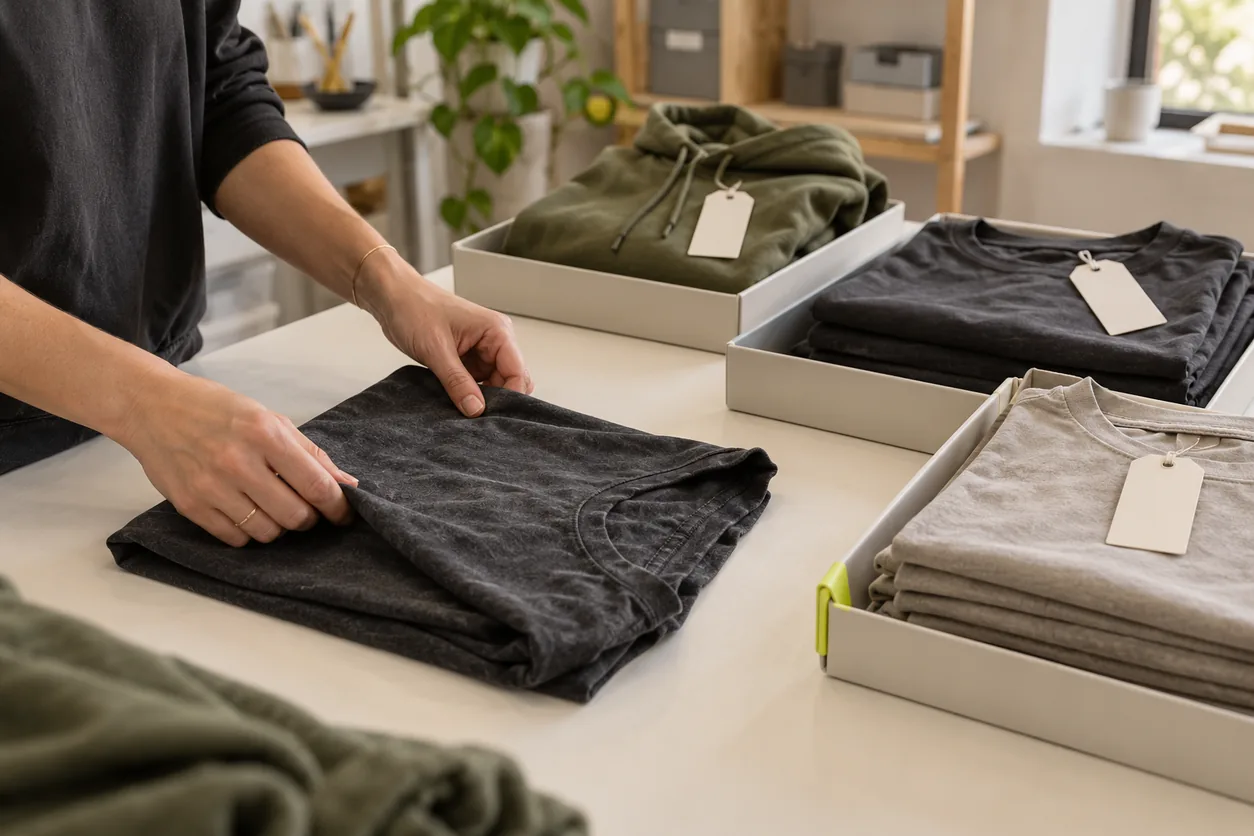
Concept illustration: preserve garment and assortment identity through the handoff to packing. The trays do not show an actual counted order or shipment.
Send a release message with a clear boundary
Use your completed record and current attachments to write a concise message. Replace the bracketed fields with real references; the wording below is an illustrative communication aid, not a completed approval.
For [design/reference], use specification [revision/date], physical sample [ID/size/color], materials [references], artwork [revision] and allocation [version]. We release [identified production scope] under those instructions. The following items remain held: [items and required decision]. Please acknowledge the exact references, the operations that may start, the agreed production-review checkpoint and any effect on quotation or timing. Do not substitute materials or use superseded files without an identified proposal and our decision.
If everything required for the intended bulk scope is not ready, say so directly. If you are releasing only a limited part, confirm the boundary and implications with the supplier before it proceeds. Avoid an unqualified “approved” followed by a list of unresolved essentials that contradict it.
Keep later changes traceable: what changed, which decision it affects, which new reference applies and what may proceed afterward. Keep correction details in the versioned sample-review record, and use the release record to state the production scope after those decisions.
Questions new clothing brands ask at the handoff
Does approving a fit sample approve the whole bulk order?
Only the scope actually identified in the decision is clear. Record what the sample represents and what else remains open: production materials, color, size range, decoration, labels, allocation or commercial terms. Agree a complete release rather than asking the supplier to infer it from a fit comment.
Must every order use the same pre-production sample sequence?
This guide does not set a universal sequence or sample count. Agree the purpose, materials, sizes, review evidence and decision for each submission with the supplier. A familiar sample name is less useful than a precise explanation of what the garment represents and what its review allows next.
What if the supplier proposes a different fabric after approval?
Identify the proposed substitute and the affected garment or operation. Ask what evidence and review are needed, and record the decision and revised references before releasing the affected scope. Do not describe the changed proposal as the original approved product.
Is an approved sample enough to prove the finished batch is correct?
No. It is a reference for the intended product within its documented scope. Later production and finished-order checks need their own agreed evidence and decisions. A sample review, a photograph and a sampled batch inspection answer different questions.
Bring Athletic Rush a release record that can be discussed
Athletic Rush manufactures in Sialkot, Pakistan, and welcomes U.S. clothing-brand enquiries. Request an Athletic Rush streetwear production discussion with your product-reference link, current tech pack, physical sample identity, proposed design quantities, artwork, decision record, open items and intended U.S. destination.
If you are not ready to release bulk, ask which development or sample-review step should come next. Email kamran@athleticrush.co or send the identified sample brief to Athletic Rush on WhatsApp. The useful next step is a written agreement about the product, the unresolved decisions and the exact work that may proceed.