 Sialkot, Pakistan
You find an open cuff seam in a delivery of sweatshirts, then notice a tee that looks different from the approved reference. What should you send the manufacturer? Build one traceable record for each concern: identify the garment, show the whole piece and the exact location, attach the agreed requirement, state how many pieces you actually checked, and ask for a specific review or resolution proposal. Preserve the original evidence and record what will be checked before any proposed action is accepted.
This guide helps a new U.S. clothing brand or a creator preparing a first streetwear drop turn “some pieces look wrong” into a useful discussion. It focuses on documenting a concern after you find it. Your agreed order specification, inspection arrangements and commercial terms still govern the particular order.
Start with Athletic Rush's streetwear development and manufacturing hub to identify the garment family and development context. A report becomes easier to interpret when the product, approved version and observed difference all have clear identities.
The Mesa Crew sweatshirt and Drift Tee below are fictional teaching examples. Their case numbers, quantities and observations are illustrative, not actual Athletic Rush orders, test results or customer experiences. Six teaching images are original AI concept illustrations; a separate Athletic Rush website catalogue reference is identified beside its source.
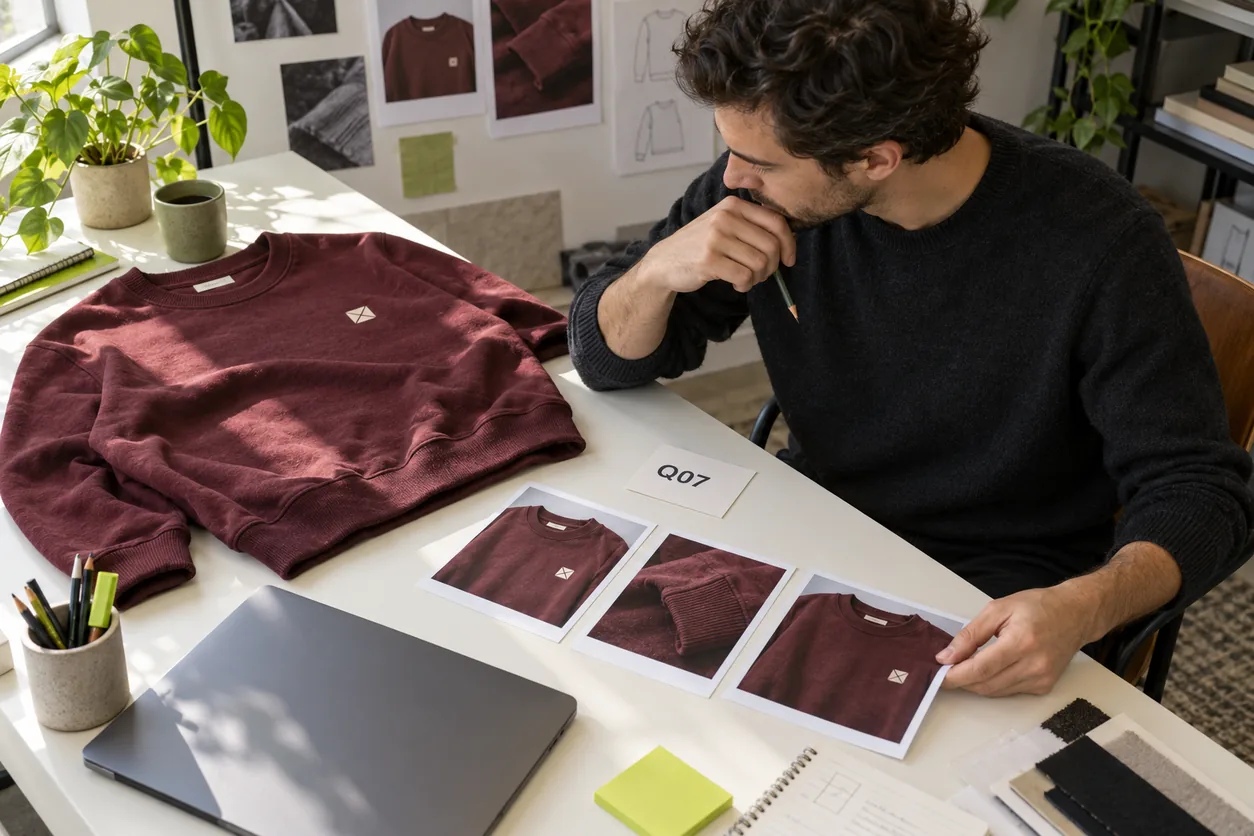
Concept illustration: keep the garment, photographs and reference together under one case identity. This scene does not document a real quality claim.
Give the concern an identity before explaining it
A phone message saying “the red ones have bad stitching” leaves several questions open. Which red? Which size? Which order? Which seam? Has the garment been washed, worn or altered since receipt? Give each concern a short case reference, then connect that case to the physical pieces and the order.
For Mesa Crew, a useful starting record might read: “Case Q07, order MC-04, Mesa Crew revision C, oxblood, size M, piece tag Q07-01, received condition, left cuff joining seam.” Include the observation date and the person recording it. Use a removable case tag or an identified bag without marking or damaging the garment. Keep any existing garment and carton identifiers visible.
Distinguish the garment's design revision from the report revision. A revised description of a concern does not automatically change the approved product. Save the original report and record the reason for a correction, especially if a piece was initially assigned to the wrong size or carton.
The approved basis should be identifiable too: a retained sample, signed specification, size-chart version, artwork file or recorded packing instruction. Athletic Rush's streetwear tech-pack and sampling brief guide explains how those references fit together. Attach or cite the relevant approved item rather than assuming the supplier knows which old screenshot you mean.
If the original requirement was never settled, say so. “We prefer a shorter body” and “this piece exceeds the agreed finished length” require different conversations. The first may be a new development request; the second needs the measurement, method and agreed limit.
Separate what you see from what you think caused it
Write the observable feature first. For Q07, “an opening is visible at the left cuff joining seam in the relaxed garment” gives the supplier a location and a condition to investigate. A photo alone does not establish a machine setting, material fault, operator error or the stage at which the opening arose.
Keep five fields separate: the observation, the agreed requirement, the extent of your check, the action you are requesting, and the evidence needed to close the case. This lets the supplier question a measurement or propose an investigation without losing the original concern.
ASQ's problem-solving guidance supports defining a problem with facts, examining causes and verifying the resulting action. Here that principle becomes a practical reporting discipline: label an explanation as a hypothesis until evidence supports it. A repaired piece can demonstrate that an action addressed that piece; it does not by itself establish why the issue occurred or whether other pieces share it.
| Report field | Useful entry for fictional case Q07 | What still needs confirmation |
|---|---|---|
| Observation | Opening visible at the left cuff joining seam, received condition | Supplier's examination of the identified piece and construction |
| Requirement | Refer to Mesa Crew revision C and retained approved sample MC-C | Which requirement and reference govern this feature |
| Check extent | Four identified pieces checked; one shows this observation | Condition of pieces outside that recorded check |
| Requested next step | Review evidence and propose how to examine and address the identified concern | Agreed scope, responsibilities, timing and disposition |
| Closure evidence | Traceable recheck of the agreed action against the same requirement | Whether the action is acceptable and whether a broader check is needed |
Avoid turning the language of a report into an accusation. Neutral detail makes it easier to resolve a difference of interpretation. If a seam is difficult to see in a photograph, ask what additional view or physical review would help. If the concern relates to safety or legal compliance, involve the appropriately qualified person rather than asking a photograph to answer that question.
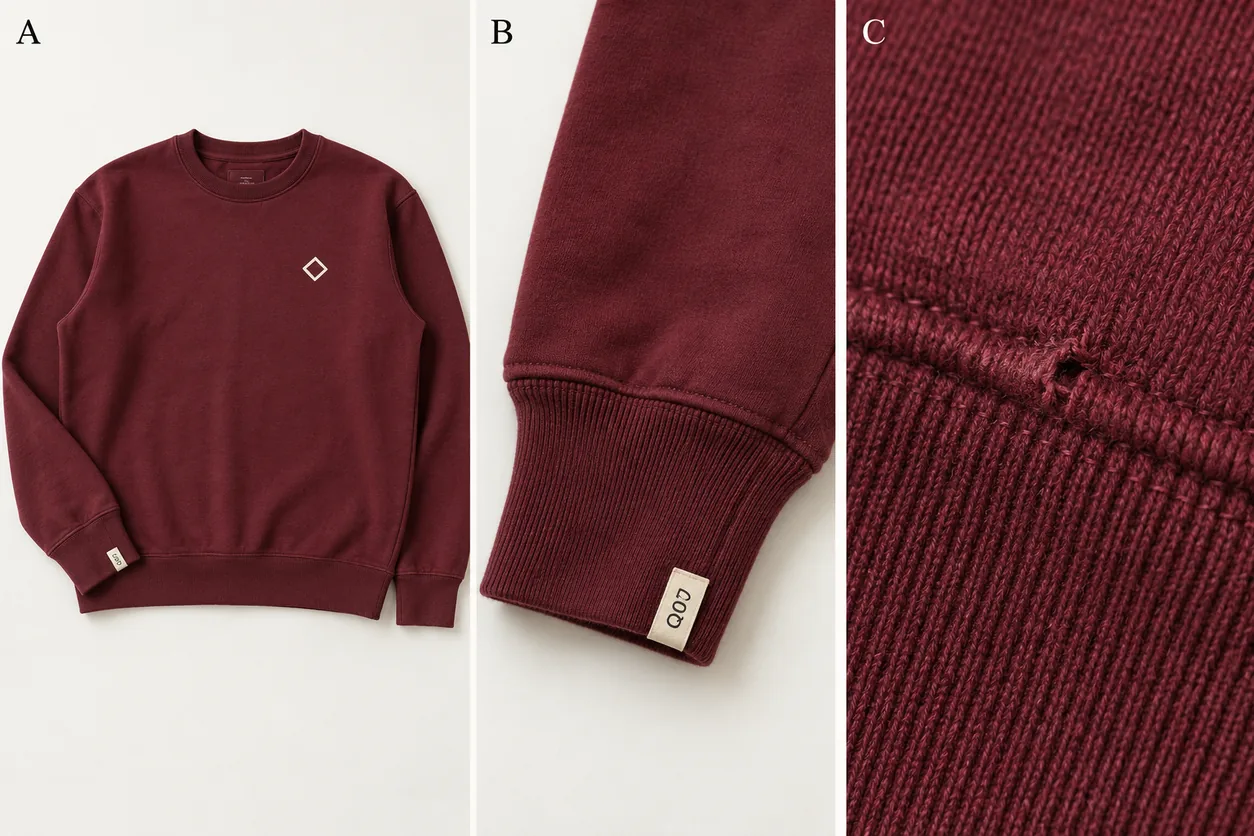
Concept illustration: whole garment, location and detail answer different questions. The depicted opening is fictional; the image establishes no cause, severity classification or production result.
Make a photo sequence that another person can follow
Use an overview-to-detail sequence for each identified piece:
- Whole garment: front and back where relevant, with the case tag visible and the garment in a relaxed, clearly described condition.
- Location view: enough surrounding construction to establish the side and exact part of the garment.
- Detail view: a sharp image of the feature, plus an inside or reverse view if that helps explain it.
- Comparison view: the identified approved reference and questioned piece under comparable conditions, with their identities kept visible.
Give the files stable names such as Q07-01-overview, Q07-01-left-cuff and Q07-01-inside. If several pieces show similar concerns, photograph and identify them separately. A collage of six close-ups can conceal that all six came from one garment.
Preserve the original files. An annotated copy can show an arrow or numbered location, but keep the unannotated version as well. Record which file belongs to which piece. Cropping can help direct attention after the overview exists; it should not remove the context needed to interpret the observation.
For color or finish concerns, use a neutral background and consistent light for the comparison. Avoid filters and dramatic exposure changes. Camera, display and lighting differences limit what a remote viewer can conclude about color. A physical comparison may still be needed; a photograph cannot certify a shade match.
Consider the intended appearance before labeling variation a defect. Athletic Rush's live Boxy Cropped T-Shirt — True White Clean Reactive Solid reference presents a particular clean solid direction. It can help identify a proposed visual starting point. It does not establish your approved color standard, a tolerance, stock availability or the condition of a delivered piece. The broader T-shirts and tops design catalogue contains other directions; cite the specific reference used for your order rather than treating every finish as interchangeable.
Athletic Rush reference image: a clean solid tee
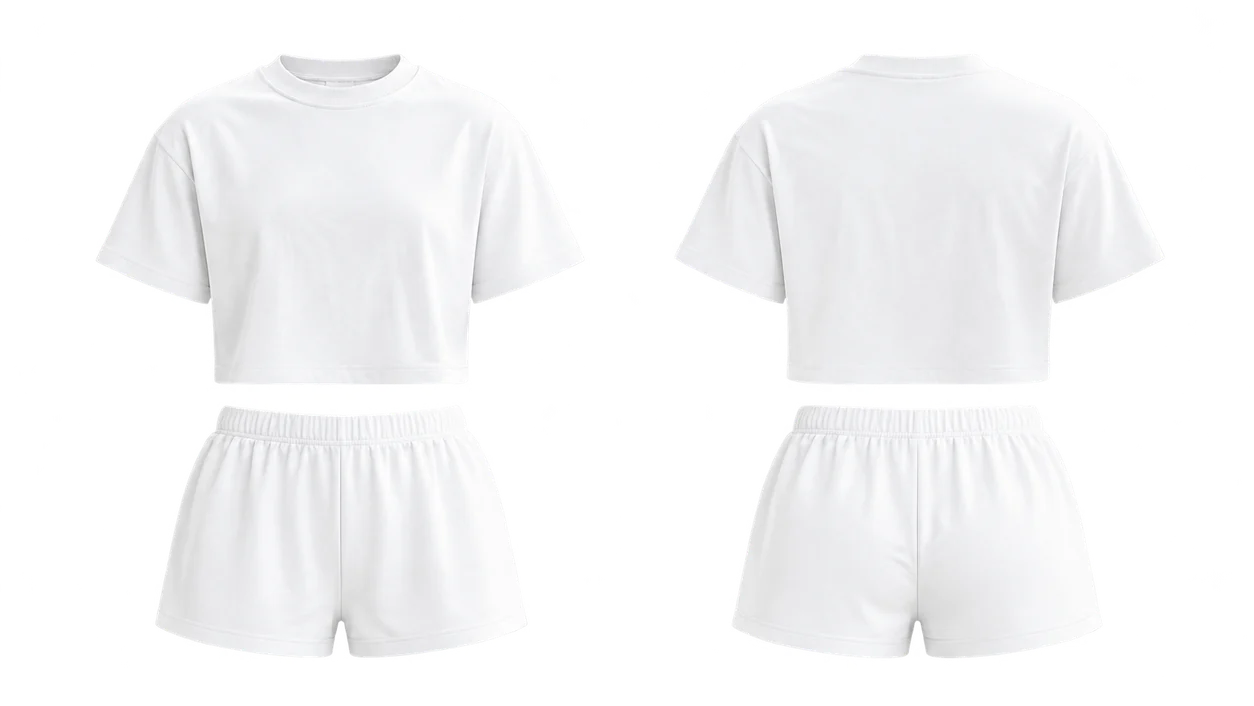
Website catalogue illustration from the Athletic Rush Boxy Cropped T-Shirt — True White catalogue page, including the coordinating bottoms shown in that source image. The background has been cleaned for presentation. This is a design reference, not a photograph of an inspected sample or proof of stock.
If the intended look includes fading or variation, compare against the agreed physical range and finish notes. The garment-washed streetwear development guide helps define that appearance target. A difference from a clean-solid product image is not sufficient evidence against a deliberately washed design.
Keep personal addresses, customer names, parcel labels and private screens outside the image. Include business and garment information needed to understand the concern, and use the agreed communication channel. A useful report rarely needs a customer's complete order details in a public or widely forwarded photograph.
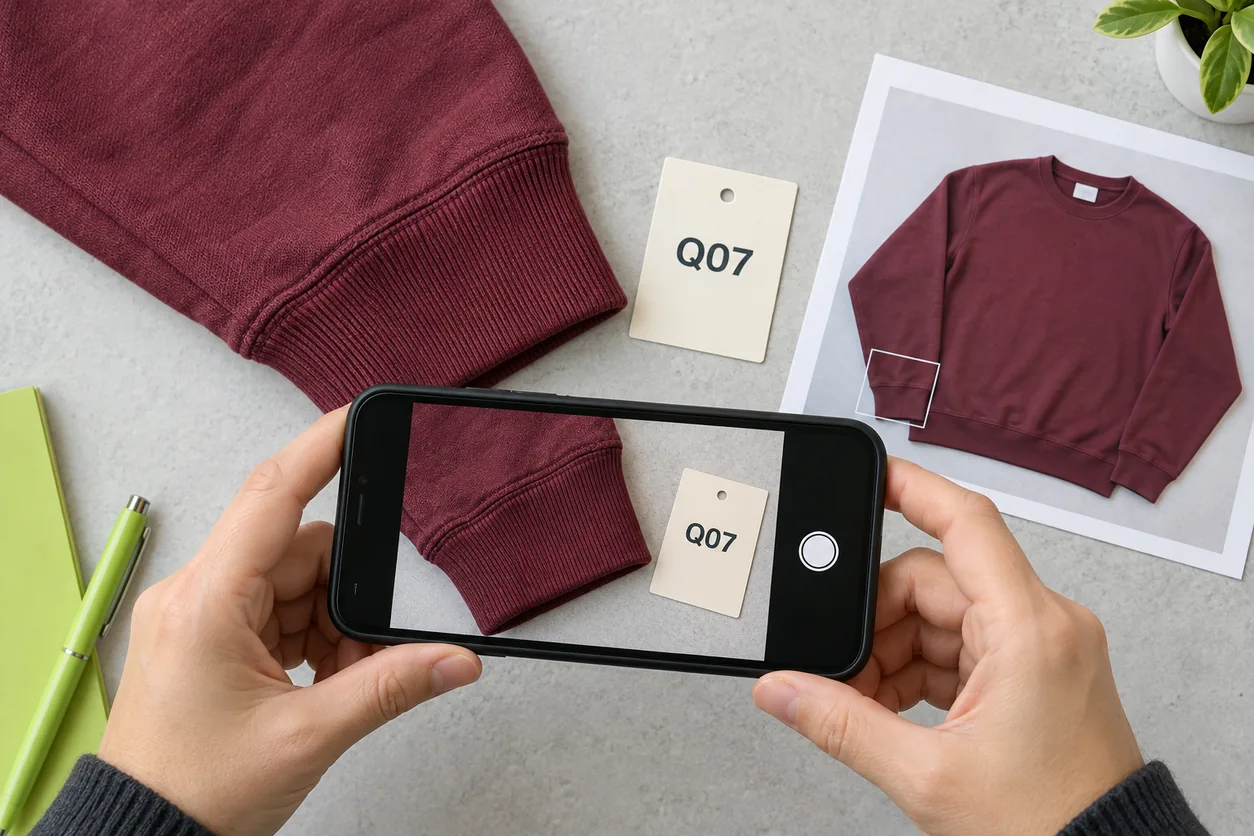
Concept illustration: keep the case identifier in view and save both overview and detail. The phone display is an illustration, not a captured customer evidence file.
Record measurements and counts without overstating them
For a dimensional concern, state the measurement point, units, garment condition, preparation and method. Identify the chart revision and agreed allowance. Reposition and measure again using the same agreed method if an initial reading is unclear; retain both readings with an explanation rather than quietly replacing the first.
For Drift Tee case Q12, a clear entry might say: “Body length measured flat from the specified shoulder point to the hem, received and unwashed, using chart DT-B.” Add the actual reading and the agreed target and limit from that order. Do not borrow a tolerance from a different garment or invent one after seeing the result. Athletic Rush's garment measurement tolerance guide explains the relationship between a target, a permitted range and a recorded reading.
A ruler in a photo provides context only when its scale, position and reference points can be interpreted. A tilted camera or a ruler placed away from the feature may mislead. Include the written method and readings; a single close-up should not have to carry the entire measurement record.
Counts need equal care. Record the number delivered, the number actually checked, the number of distinct pieces with each concern, and the combinations observed. A piece with a seam opening and a mispositioned label is one affected piece with two findings.
For an illustrative example, suppose you receive 60 Mesa Crews, check 12 identified pieces and find three observations on two garments. The report should say “three findings on two of the 12 pieces checked; 48 pieces have not been checked in this review.” Those numbers describe the review. They do not establish the defect rate of all 60 garments, and they do not describe a formal acceptance sampling plan.
ASQ's check-sheet guidance describes a prepared form for collecting observations consistently. Define your concern categories and counting rules before using the sheet widely, try the form on a small set of records, and correct ambiguous labels. A buyer's recording sheet is a practical aid, not a certification or an automatically valid sampling plan.
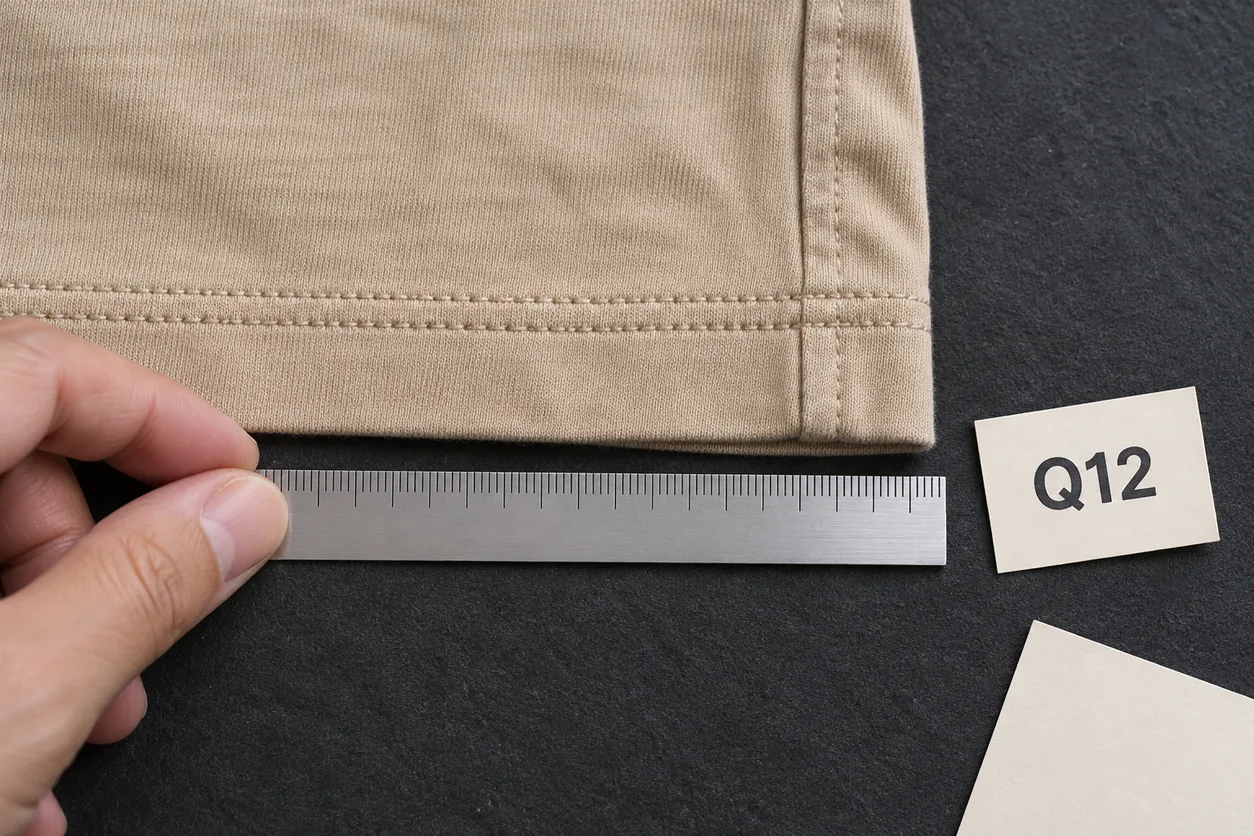
Concept illustration: a scale and case label help explain an observation. The ruler has no usable numerical reading and establishes no measured result or acceptable limit.
Use the evidence that fits the type of concern
A report should change with the question. A color comparison, a seam observation and a missing-size count need different evidence and different next actions.
| Concern being reported | Evidence to include | Specific request to make |
|---|---|---|
| Seam opening or loose assembly | Whole piece, exact seam location, relaxed outside and inside views, received or later condition | Ask how the identified pieces should be examined and what action is proposed |
| Print or embroidery difference | Artwork revision, overall placement view, detail, scale and surface condition | Ask which feature differs from the approved reference and how the proposal will be checked |
| Color or finish inconsistency | Identified physical reference, comparison conditions, piece and batch identities where available | Ask whether remote review is sufficient or a physical comparison is required |
| Dimensional difference | Chart revision, measurement points, units, condition, actual readings and agreed limits | Ask for a method-matched review before discussing a dimensional correction |
| Missing or mixed variant | Approved size-color matrix, carton or bag identity, piece labels and reconciled counts | Ask for a line-by-line quantity reconciliation and proposed disposition |
For a quantity concern, keep identity and arithmetic together. The streetwear packing instructions guide explains the connection between the garment, pack and carton list. Photographing an unopened carton can establish its label, but it does not prove its contents. Record what was actually opened and counted.
For an issue noticed after washing or wearing, disclose that condition and the relevant history. Keep the received-condition evidence separate. The color and fit after washing review guide explains why dimensions, appearance and worn fit need their own records. Avoid presenting a home observation as a standardized laboratory result.
Send a decision brief, then control the reply
Keep the first message short enough to act on. Give the supplier the case summary, evidence index, relevant requirement and requested next step. Attach the detailed log rather than forcing the reader to reconstruct it from an unstructured chat history.
You can copy and adapt this brief:
- Order and case: [order reference], [case reference], [report revision and date].
- Product: [design, color, size, garment revision and physical piece identifiers].
- Condition: [received/unwashed, or the documented care and use history].
- Observation: [what is visible or measured, where, and under what conditions].
- Requirement: [approved sample, chart, artwork or packing reference and version].
- Check extent: [pieces received, pieces reviewed, distinct pieces with concerns and unreviewed scope].
- Evidence: [overview, location, detail, comparison and measurement/count files].
- Current handling: [where the identified pieces are held and their current status].
- Requested next step: Please review the identified concern, say what additional evidence or examination is needed, and propose the action, scope, timing and recheck evidence for agreement.
- Open questions: [specific unresolved points]. Please identify any difference between your understanding and this report.
For Q07, a narrow request could be: “Please review the left-cuff observation on Q07-01 against MC-C. Confirm whether the attached inside view is sufficient or whether you need the physical piece. Propose how this piece and any further agreed scope should be checked. Please identify the evidence needed before a proposed action is accepted.”
Avoid assuming a free replacement, refund, return authorization or fixed remedy. Agree responsibilities, costs, logistics and timing against the applicable terms. Do not send goods back, alter the evidence piece or announce a revised launch date on the strength of an unconfirmed proposal.
Keep the supplier's reply alongside the report. If the reply concerns a different piece, reference or condition, resolve that identity mismatch first. Record who agreed to the proposed action and the exact scope. A response saying “we will fix it” still needs a defined action and a way to evaluate the result.
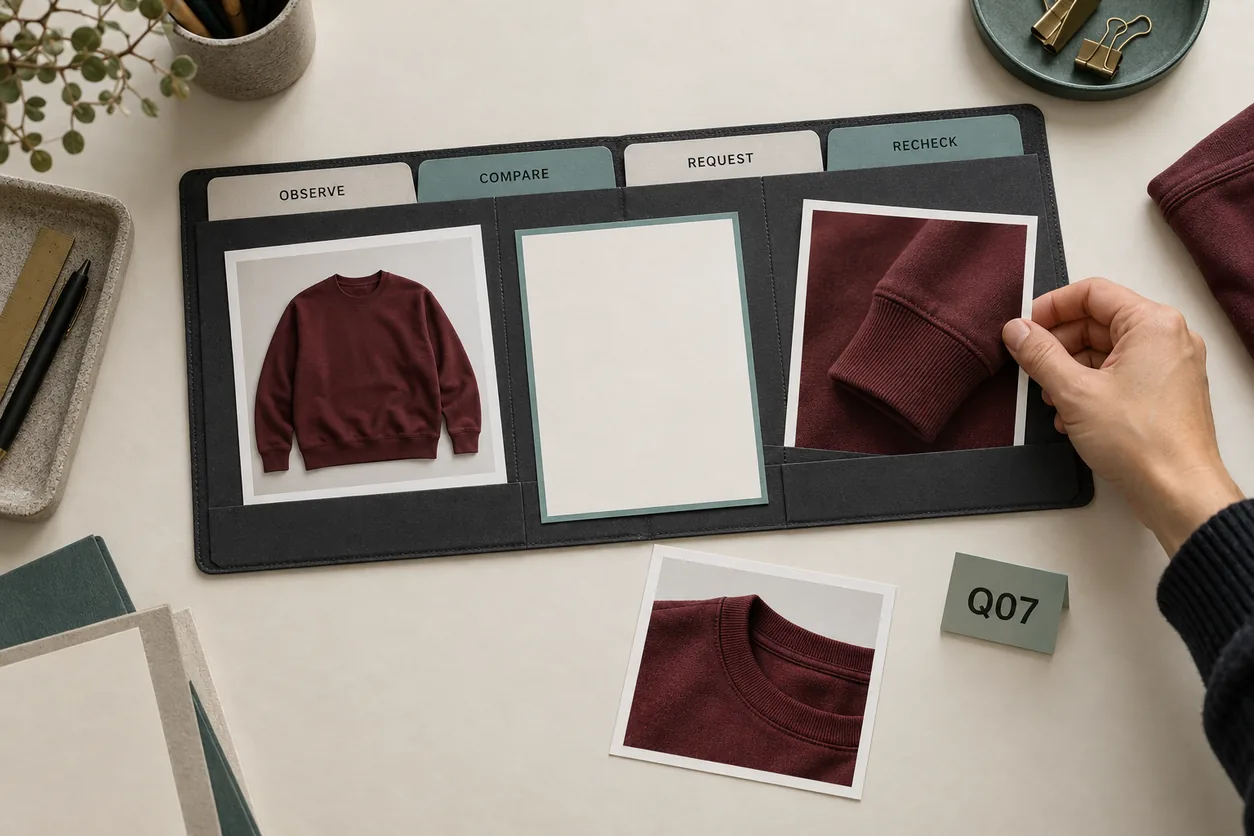
Concept illustration: separate evidence from the requested decision and later verification. The blank folder is a teaching aid, not a completed inspection or claim file.
Close the case with a recheck and a stock decision
Identify the original concern and the proposed action separately. If a piece is repaired or replaced, connect its new record to the original case. Retain the original evidence, compare the result against the same agreed requirement, and record any new concern introduced by the action.
Write the outcome precisely: “Q07-01 rechecked against the agreed cuff requirement on [date]; result [observation]; status [agreed decision].” Include which pieces were covered. Closing one case does not silently clear all other pieces, and one satisfactory replacement does not establish the cause of the original finding.
Keep physical possession separate from availability for sale. Shopify's inventory-state documentation distinguishes on-hand quantities from available quantities and describes unavailable stock held for reasons including quality control or damage. Apply the equivalent distinction in your own system; this is not an assumption that your brand uses Shopify.
For a small first drop, clearly identify the pieces held for review and prevent their accidental inclusion in fulfillment. Record who can change that status and what evidence they need. A report does not become resolved merely because a customer launch date is close.
Finally, separate immediate correction from recurrence prevention. Rechecking a repaired cuff addresses that piece. A broader cause investigation and verified process action need their own evidence and agreed scope. Keep unresolved questions visible instead of closing them with a guessed cause.

Concept illustration: keep the original case and recheck proposal identifiable. The scene does not show an accepted repair, a test pass or actual Athletic Rush staff.
Questions new brands ask about quality reports
Is a close-up photograph enough to report a garment problem?
It can begin the conversation, but include the piece identity, whole-garment view, location, relevant requirement and condition. Add inside or comparison views when useful. Color, dimensions and possible causes may require evidence beyond photographs.
Should I call every difference a defect?
Describe the difference and identify the requirement first. Some variation may belong to an agreed finish, some may remain undefined, and some may differ from a confirmed specification. Record the question and request a review rather than inventing an acceptance limit.
Can I use a few checked pieces to describe the whole order?
State the actual checked population, findings and affected-piece count. Do not present an unplanned small review as a whole-order defect-rate estimate or formal sampling decision. Agree any broader inspection scope separately.
Can I request the same solution for every affected piece?
List the pieces and concern types, then ask for an appropriate proposal. A packing mix-up, dimensional question and seam opening may need different handling and evidence. Confirm each action and its scope before treating it as agreed.
Build clearer requirements before the next order
A useful quality report also exposes gaps in the original brief. If a target, viewing condition, measurement method or packing identity was unclear, resolve it in the next controlled specification. For development-stage changes, use Athletic Rush's sample-correction feedback guide. Keep that revised development decision separate from the record of an existing order concern.
Athletic Rush manufactures in Sialkot, Pakistan, serving U.S. clothing-brand enquiries. Its owner-confirmed minimum is 30 pieces per design, allowing one to three colors and mixed sizes within that same design; each different design requires its own 30 pieces. Samples take 4–6 working days. Bulk production takes 8–10 working days for orders up to 100 pieces; larger orders depend on quantity. Shipping time is separate. These are development and production terms, not a promise about a particular quality-case remedy or resolution date.
For a new collection, send your garment reference, intended fit, material and decoration direction, size chart and proposed approval records through Athletic Rush's streetwear collection-development service or request a quotation and sample discussion. For an existing Athletic Rush order concern, contact kamran@athleticrush.co or Athletic Rush on WhatsApp with the order reference, concise observation and evidence index, and ask which channel and next review step to use.