 Sialkot, Pakistan

Your first streetwear drop has sold, and you want another run of the same tee. Is “repeat our last order” enough? Identify the last approved production version, state what must stay the same, ask the manufacturer to disclose any proposed changes, and confirm the new quantity, approval work and quotation before production. A familiar design name does not identify the fabric, fit, artwork, components and finish that made the original garment.
For a new U.S. clothing brand or creator-led label, a reorder has two separate decisions: what product you intend to repeat, and how many pieces you now need. This guide connects those decisions without assuming that an earlier price, material supply or approval automatically carries forward.
Use Athletic Rush's streetwear development and manufacturing hub to identify the garment direction, then build the reorder around your own approved records. The Cedar Tee in charcoal and Slate Zip hoodie in dusty blue below are fictional teaching garments. Their references and quantities are illustrative, not actual Athletic Rush products, customer orders or sales results. Six teaching images are original AI-generated concepts; a separate Athletic Rush website catalogue reference is identified beside its source.

Concept illustration: recover the identified reference and documents before asking for a repeat. The scene does not show actual Athletic Rush staff, customer records or stock.
Recover the version that actually went into production
Start with the previous order reference and the final approved garment specification. Bring together the retained sample, measurement chart, artwork files, component list, color and finish references, labels, packing instructions and the record of any final changes.
An early sample can remain useful history while differing from the garment that was released. For example, Cedar Tee revision R1 might have been approved with a shorter sleeve than the first prototype. If the buyer sends the prototype photograph and says “same as before,” the manufacturer receives two conflicting references.
Ask the supplier to identify the pattern, size grading, artwork and material references they hold for the previous run. Confirm whether those files are still available and usable for this order. Do not assume a factory retains every tool, screen, pattern or production file indefinitely, or that the same file name means the same revision.
Techpacker's version guidance describes saving identifiable document versions when changing stages or sending updates to a manufacturer. Apply the same discipline in whichever system you use: identify the version being repeated and keep a traceable record of differences. This does not require buying a particular software product.
A useful baseline sentence is: “Repeat Cedar Tee production revision CT-R1 from order CT-01, using the identified retained reference and attached specification. The new size-color quantities are in CT-02-Q. Any proposed material, construction, finish or artwork difference needs our review before substitution.”
Athletic Rush's streetwear tech-pack and sampling brief guide helps organize those linked records. The reorder should point to an identifiable product baseline rather than recreate the whole design from memory.
Decide whether you are repeating, extending or revising
A new piece quantity does not necessarily change the garment. A new fabric, fit or graphic may. Make that distinction explicit before discussing what approval work can reasonably be reused.
| Proposed order | What the buyer intends to retain | What needs a new decision |
|---|---|---|
| Same Cedar Tee, different size quantities | Identified fit, materials, finish and artwork | Exact allocation, current availability, quotation and agreed evidence for the repeat |
| Existing style in an additional color | The identified construction and intended fit | New color reference, decoration contrast and relevant material/component comparisons |
| Same name, different jersey proposal | The desired appearance and use | Material differences, resulting garment behavior and the appropriate revised sample scope |
| Shorter body or different sleeve shape | Selected unchanged features | Pattern revision, measurements, grading and fit review |
| Slate Zip with a different zipper or rib | The intended hoodie direction | Component compatibility, appearance, operation and any affected assembly checks |
These are planning categories, not a supplier's automatic design-counting rule. Athletic Rush's confirmed minimum is 30 pieces per design, with one to three colors and mixed sizes within that same design. Each different design requires its own 30 pieces. Ask how your exact proposals are grouped before applying that minimum; do not assume a past purchase creates a special smaller reorder minimum.
A request to add a new graphic or change the silhouette should identify the revised proposal separately. Keeping the old product name can help your internal merchandising, but it must not hide a manufacturing change.
For a real visual starting point, Athletic Rush's Oversized Zip Hoodie — True Black Stone Wash reference describes a dropped-shoulder, roomy full-zip direction with a stone-washed appearance. It differs from the fictional dusty-blue Slate Zip. The page is a development reference, not evidence that a particular material, finished measurement or previous customer version is available to reorder.
Athletic Rush reference image: the named wash and zip silhouette
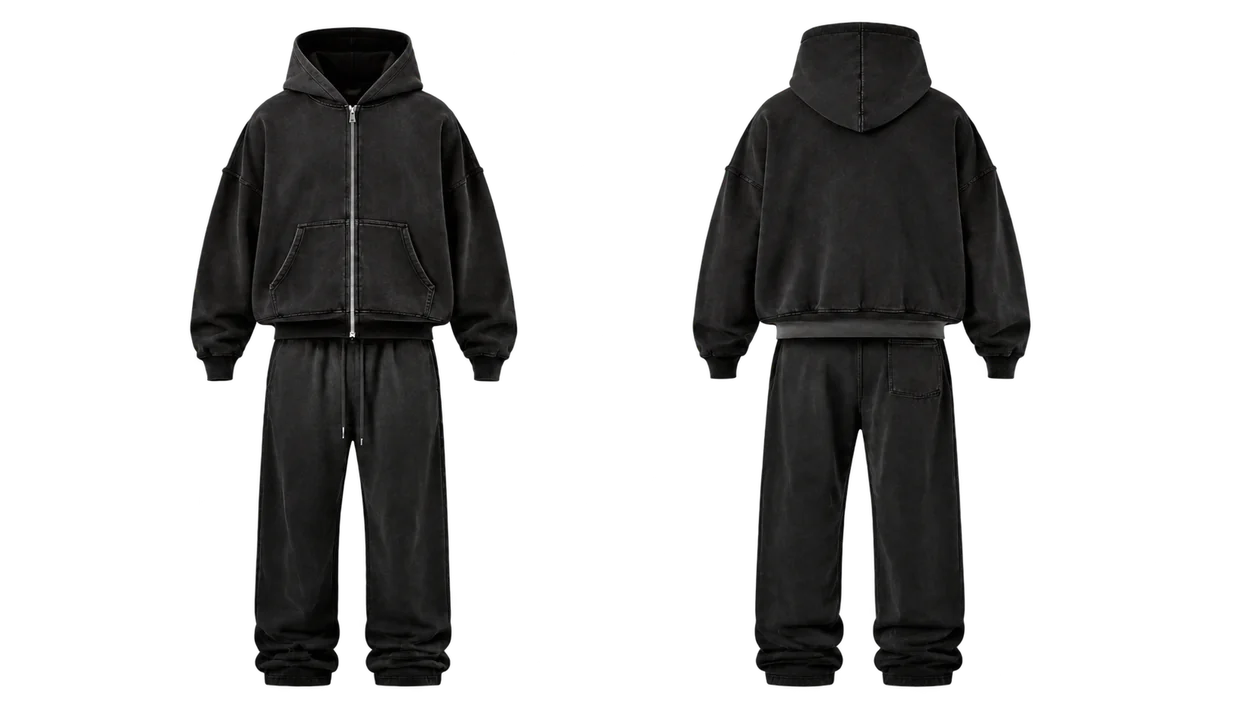
Website catalogue illustration from the Athletic Rush Oversized Zip Hoodie — True Black Stone Wash catalogue page, including the coordinating bottoms shown in that source image. The background has been cleaned for presentation. This is a design reference, not a photograph of an inspected sample or proof of stock.
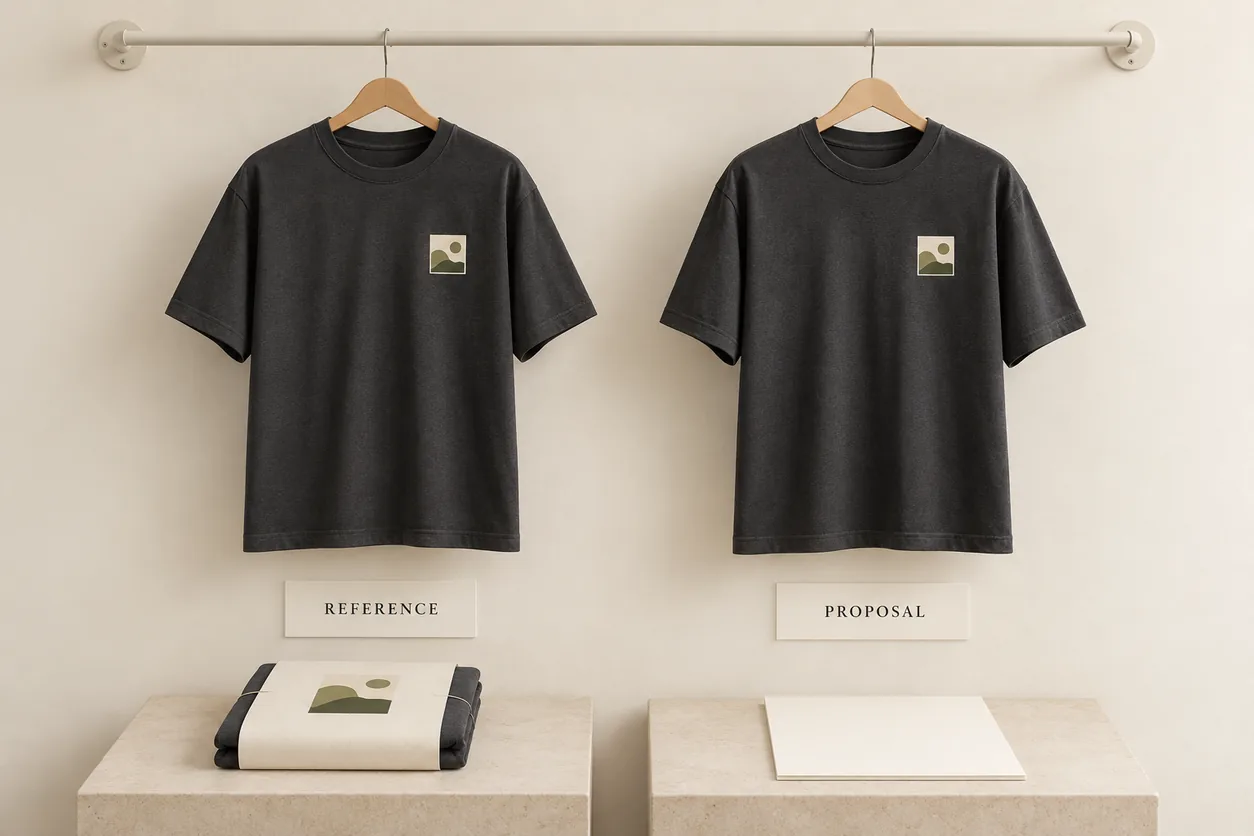
Concept illustration: similar-looking garments still need separate identities. Their proportions and marks are teaching visuals, not measured comparison results or approved production samples.
Reconfirm the material and component system
Ask what the supplier proposes to use for the new run. Record the body fabric, construction and finish references, rib, thread, zipper or other hardware, decoration materials and labels. Ask which items repeat the earlier reference and which need a proposal.
For Slate Zip, a new blue body fabric can raise questions about the rib, zipper tape and thread as well. A swatch that looks close on its own does not answer how those components look together on the built hoodie. Compare the relevant assembly with the identified target before treating the material decision as complete.
For Cedar Tee, distinguish “same named shade” from a documented comparison to the physical reference. Ask how the supplier will identify the proposed material or production lot and what comparison evidence is appropriate. Do not present a phone photograph as proof of an exact shade match.
AATCC EP9's public scope summary describes a procedure for visually comparing textile specimens with a standard to describe color differences. That supports using a defined reference and comparison method. The public summary does not provide a universal acceptable difference, a complete procedure or evidence that your garments have been tested.
Agree what a meaningful appearance range looks like for a deliberately washed product. If a softened edge or uneven finish is part of the design, repeating the garment means discussing that intended character rather than asking for a camera-identical copy of one photograph. Athletic Rush's garment-washed streetwear development guide explains how to separate overall shade, local contrast, surface appearance and feel.
Ask for a written alternative if an earlier component cannot be supplied as proposed. The useful reply identifies what changes, why it is proposed, which other features may be affected, and what the buyer needs to review. Avoid silently accepting a “similar” replacement because its individual description sounds close.
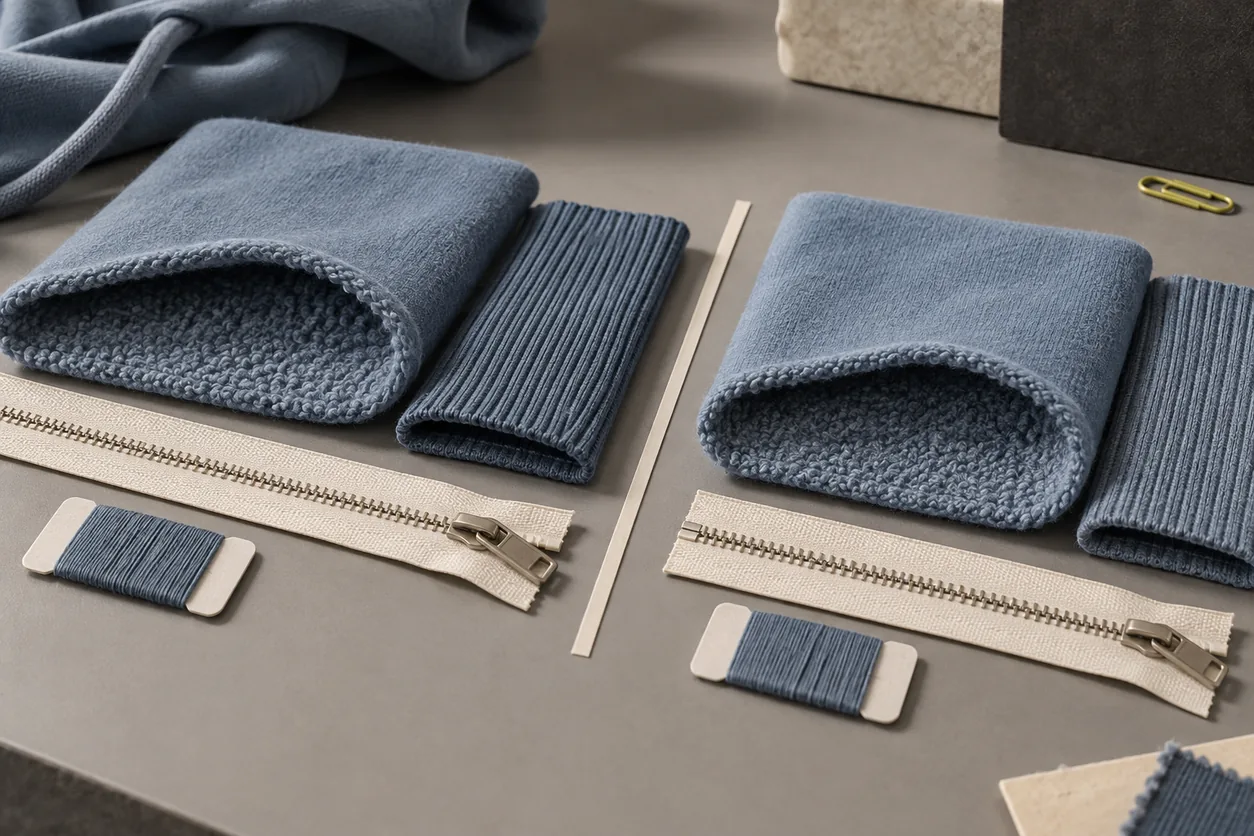
Concept illustration: compare the body and related components as a system. The visible differences establish no measured color value, material specification or acceptable limit.
Protect the fit when a change seems small
Keep the correct pattern and size-chart revisions attached to the reorder. Confirm the intended finished-garment condition and measuring method. A change to material, finish, construction or pattern can require a different review scope even if the retail size labels remain S through XL.
For Cedar Tee, suppose the buyer wants the original chest width but asks for a shorter body. Write that as a pattern proposal with identified changed and unchanged points. Ask how the change affects the remaining sizes and the overall fit. Do not describe the new garment as an unchanged repeat simply because the artwork is identical.
For Slate Zip, consider the relationship between zipper length, body length, rib and the intended opening. A component proposal may affect how the complete garment sits. Ask for the relevant built sample or evidence instead of approving the component in isolation.
The garment measurement tolerance guide explains how to connect a target, defined measuring point and agreed permitted range. Retain the applicable limits where agreed, and identify any proposed revision before inspecting the new result. Do not widen a limit after the fact just to make an unexpected measurement appear acceptable.
Choose the evidence around the change. An unchanged identified artwork file may not need a redesigned graphic proof, but a new print method or material proposal can create fresh appearance or performance questions. Agree the checks needed for the actual order; this article does not prescribe an automatic number of new sampling rounds.
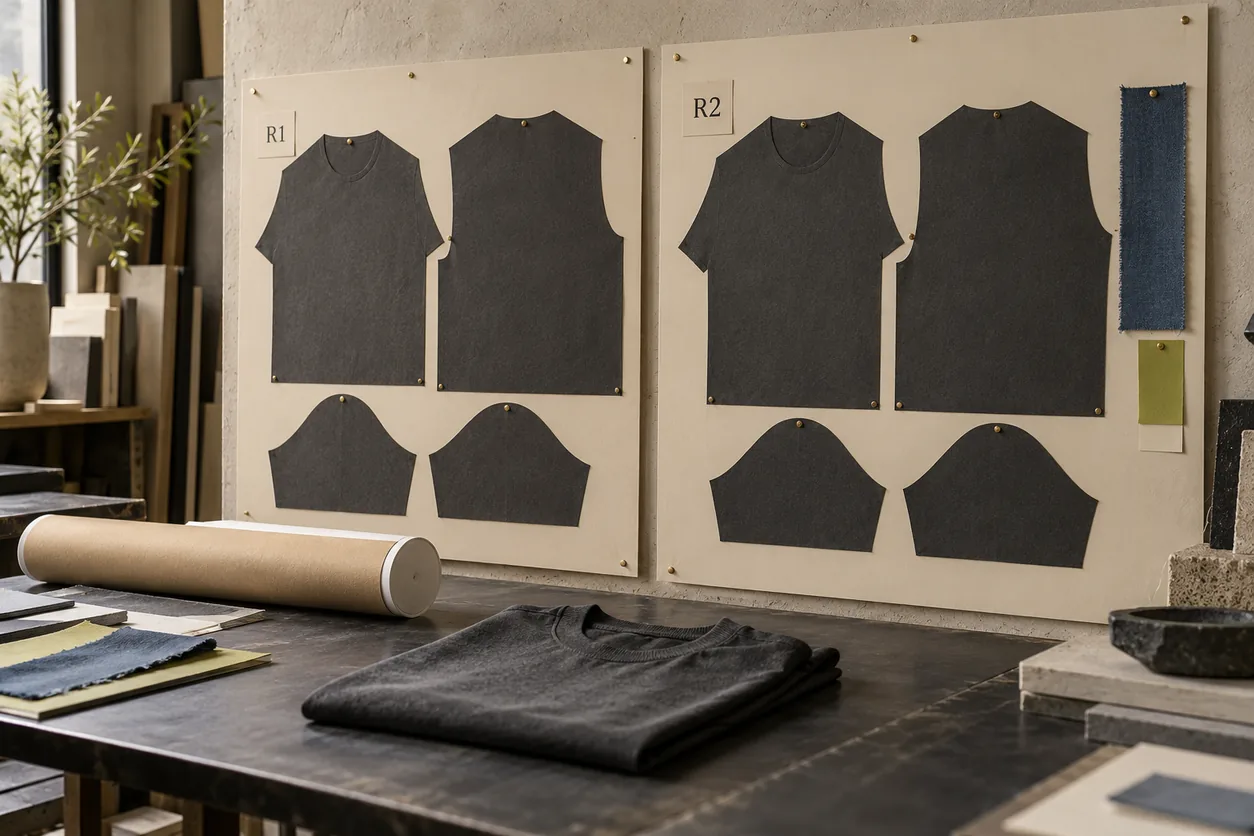
Concept illustration: keep a revision visible instead of hiding it inside a repeat-order name. These paper shapes are not usable production patterns or grading instructions.
Calculate the new quantity from usable records
Review the earlier drop by style, color and size. Separate completed sales, returns, unresolved quality concerns, commitments and stock that was available to buy. A product that sold out early had a different selling opportunity from one that remained available throughout the period.
A creator's successful launch event or social-media response can explain why you want to investigate a repeat. It does not establish a future sales rate. Record the dates, audience, promotion and product version behind the comparison, and make any forecast assumptions visible.
Shopify's inventory-report documentation currently notes that, from October 1, 2026, inventory reports use On hand rather than Available quantities, with earlier data retaining its prior basis. On-hand figures can include committed and unavailable pieces. If you use those reports, check the metric definition and period before treating a reported quantity as free stock. Other systems need their own definition check.
The following fictional planning example shows why the distinction matters. Assume one Cedar Tee design has 34 pieces physically on hand: 25 available, five already committed and four held for review. For a proposed planning horizon, the buyer assumes 38 additional sales that exclude those existing five commitments and wants 18 available pieces left at its end.
| Planning item | Illustrative pieces | How to use the figure |
|---|---|---|
| Physical stock on hand | 34 | Reconcile its status before using it |
| Already committed | 5 | Excluded from the available figure below |
| Held for review | 4 | Keep separate until the relevant decision clears them |
| Available now | 25 | 34 minus 5 minus 4 |
| Assumed additional sales in the planning horizon | 38 | An assumption for this example, excluding the five existing commitments |
| Desired available balance at horizon end | 18 | A chosen planning assumption |
| New pieces needed with no other replenishment | 31 | 38 plus 18 minus 25 |
| Alternative: 10 additional usable, uncommitted pieces arrive in time | 21 | 38 plus 18 minus 25 minus 10, conditional on that receipt |
The first scenario gives 31 pieces. The second gives 21 only if those ten incoming pieces become usable and uncommitted in the relevant time. Do not count that receipt twice, treat it as available before receipt, or subtract the existing five commitments again after already excluding them from the 25 available.
The arithmetic does not select a purchase quantity for your brand. The 21-piece scenario also sits below Athletic Rush's confirmed 30-per-design minimum. The buyer must review the assumptions, proposed order and commercial constraints; the spreadsheet is not permission to place an order or a promise of a minimum exception.
Then allocate any confirmed quantity across its actual color-size combinations. The streetwear size-and-color breakdown guide explains that matrix and its totals. A second purchase need not repeat the first size split, but a changed split should have an identified basis rather than be described as a proven universal U.S. size curve.
Ask for a current quotation and a written difference list
Send the old order reference and the new proposal together. Ask the supplier to return a current quotation and identify differences from the baseline. Reconfirm the scope of garment production, development work, decoration, packing, inspection and shipping; an earlier invoice is history, not a current offer.
A concise difference list can record:
- Feature or document: the exact material, component, measurement, artwork or packing reference.
- Earlier baseline: the identified version that was used before.
- New proposal: repeat as identified, or the specific alternative being offered.
- Review needed: physical comparison, revised garment, document clarification or other agreed evidence.
- Decision and scope: unresolved, approved for a specified purpose, or requiring another proposal.
For example: “Slate Zip zipper tape reference SZ-Z1 is unavailable as proposed. Please identify the alternative, explain the effect on the assembled hoodie, and confirm what sample or comparison is needed before we decide.” This is more useful than approving an unnamed “equivalent zipper.”
The streetwear manufacturing-quote comparison guide helps reconcile the returned offer. Confirm a current timeline for the exact quantity and outstanding work. Keep shipping, receiving and your own release decisions separate from the factory's production period.
For a U.S. drop, avoid announcing a fixed restock date while material, sample or approval questions remain open. Decide what evidence you need to make that announcement responsibly. A repeat order can still contain unresolved work; the word “reorder” does not remove it.
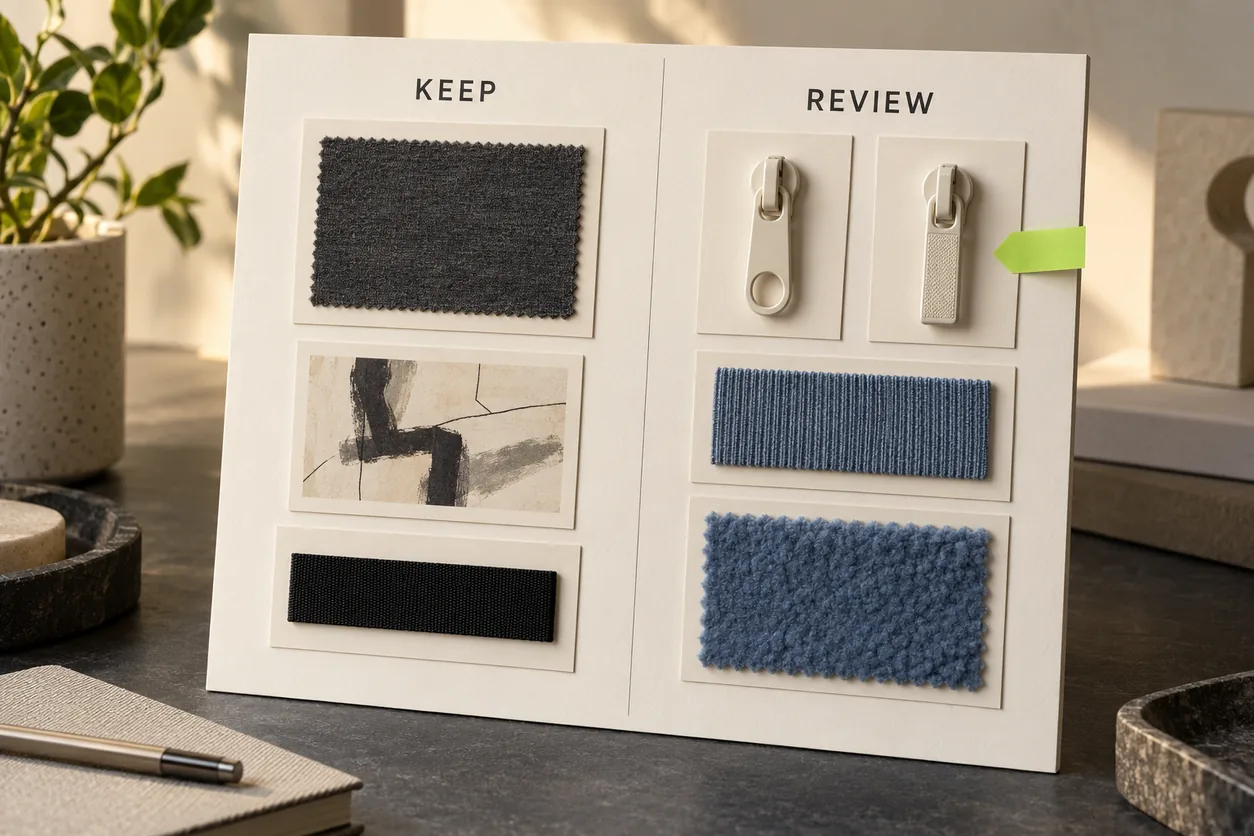
Concept illustration: preserve agreed features while identifying proposed changes. The board does not record an actual supplier substitution, approval or commercial offer.
Keep reference history clear when reviewing the new run
A frequently worn tee can answer a useful question about a customer's experience, but it may no longer represent the original received condition. Keep its wearing and care history separate from the retained production reference.
For Cedar Tee, label the retained reference, any used comparison garment and the new proposal distinctly. If the buyer intentionally wants the softened feel or appearance of the used piece, describe that as a new target to develop. Do not quietly substitute it for the earlier approval standard.
Store the agreed records so another team member can find the governing version. Identify which reference represents the new run, what changed and which earlier files remain historical. Keep evidence of an exception tied to its exact scope; approval of one revised trim should not imply approval of all other changes.
When finished goods arrive, inspect them against the agreed reorder references and scope. Athletic Rush's finished streetwear order inspection guide explains how to record actual check coverage, findings and release decisions. A clear reorder brief supports that inspection; it cannot establish the condition of goods that have not yet been made.
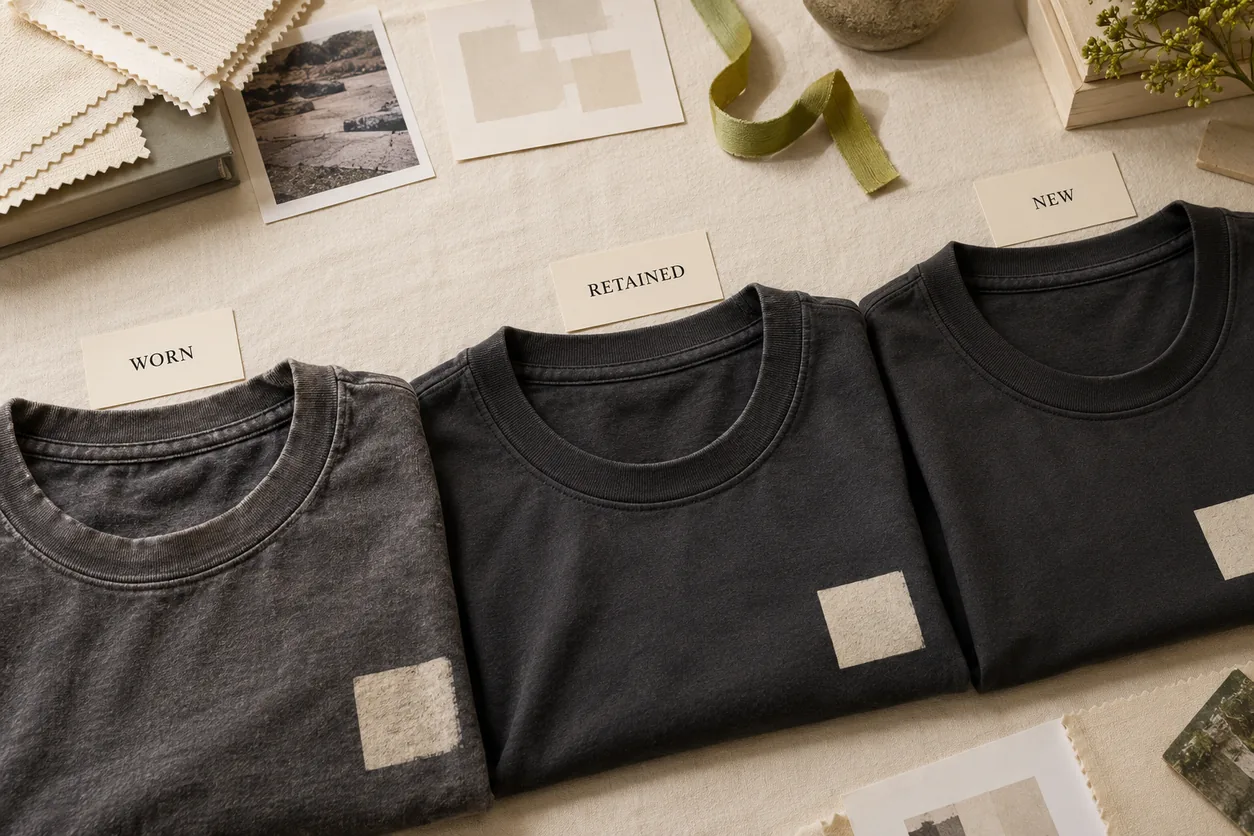
Concept illustration: different use histories need separate identities. The fade and fabric appearance are generated visuals, not measured laundering, durability or production results.
Copy this repeat-order enquiry brief
Use the fields relevant to your actual project and keep unresolved items visible:
- Previous order: order reference, design identity and final production revision.
- Product baseline: retained garment reference, chart, material/components, artwork, labels and packing versions.
- Repeat scope: features that must remain as identified.
- Requested changes: one specific entry per change, with the reason and affected references.
- New quantity: proposed design total and complete color-size allocation; evidence and assumptions behind it.
- Supplier confirmation: files held, current material/component availability and every proposed substitution.
- Approval evidence: what needs to be reviewed before the new production decision and who makes that decision.
- Quotation and timing: current scope, exclusions, outstanding sample work, production timing and separate shipping arrangements.
- Receiving plan: destination, inspection scope and how the actual goods will be connected to the agreed version.
A useful opening message is: “Please quote a repeat of Cedar Tee CT-R1 from order CT-01 using the attached references and new allocation CT-02-Q. Identify any difference in proposed fabric, finish, components, pattern, artwork or packing. Please state unresolved decisions and the evidence needed before production authorization. Our required destination is [U.S. location]; please separate production and shipping timing.”
Questions buyers ask about a second streetwear order
Can I reorder without making another sample?
Ask which earlier evidence remains applicable and what has changed. The required review depends on the actual material, construction, fit, artwork and finish proposal. Confirm the scope with the supplier; a past sample does not automatically answer every question about a changed order.
Does a reorder have a lower minimum?
Athletic Rush's confirmed rule is 30 pieces per design, with one to three colors and mixed sizes within that same design. Each different design requires 30 pieces. This guide establishes no separate reduced reorder minimum. Confirm the grouping for the actual proposal in the quotation.
Can I add a color and keep everything else the same?
Identify the new color and ask which material, component and decoration comparisons it requires. A familiar pattern can remain the intended baseline while the new color still needs its own decision. Avoid treating the name of the shade as complete approval evidence.
What if I only have a worn garment from the previous order?
Disclose its history and ask what files or retained references the supplier holds. Use the garment to explain the intended result, then identify what must be reconstructed or developed. Do not claim it represents an untouched original approval standard.
Turn the repeat into a controlled new order
Send the previous order identity, your exact repeat-and-change list, the new allocation and your unresolved questions through Athletic Rush's quotation form. If the proposal has become a substantial redesign, use the streetwear collection-development service to define that work before treating it as a simple repeat.
Athletic Rush manufactures in Sialkot, Pakistan, serving U.S. clothing-brand enquiries. Samples take 4–6 working days. Bulk production takes 8–10 working days for orders up to 100 pieces; larger orders depend on quantity. Shipping time is separate. Confirm the actual project sequence and any outstanding approvals. Confirm the U.S. restock date separately after shipping and receiving work are planned.
Email kamran@athleticrush.co or discuss your Athletic Rush reorder brief on WhatsApp. The next useful step is a confirmed product baseline, a visible list of changes and a current quotation for the actual order.